


How condensate recovery improves steam system thermal efficiency




Returning hot condensate to a boiler system can reduce the fuel needed to produce steam because the returning water carries heat that would otherwise be discharged. It can also reduce the need for fresh makeup water and the chemicals used to treat it. The benefit is strongest when a plant has a steady flow of clean condensate close enough to the boiler house to recover without excessive heat loss or pumping cost.
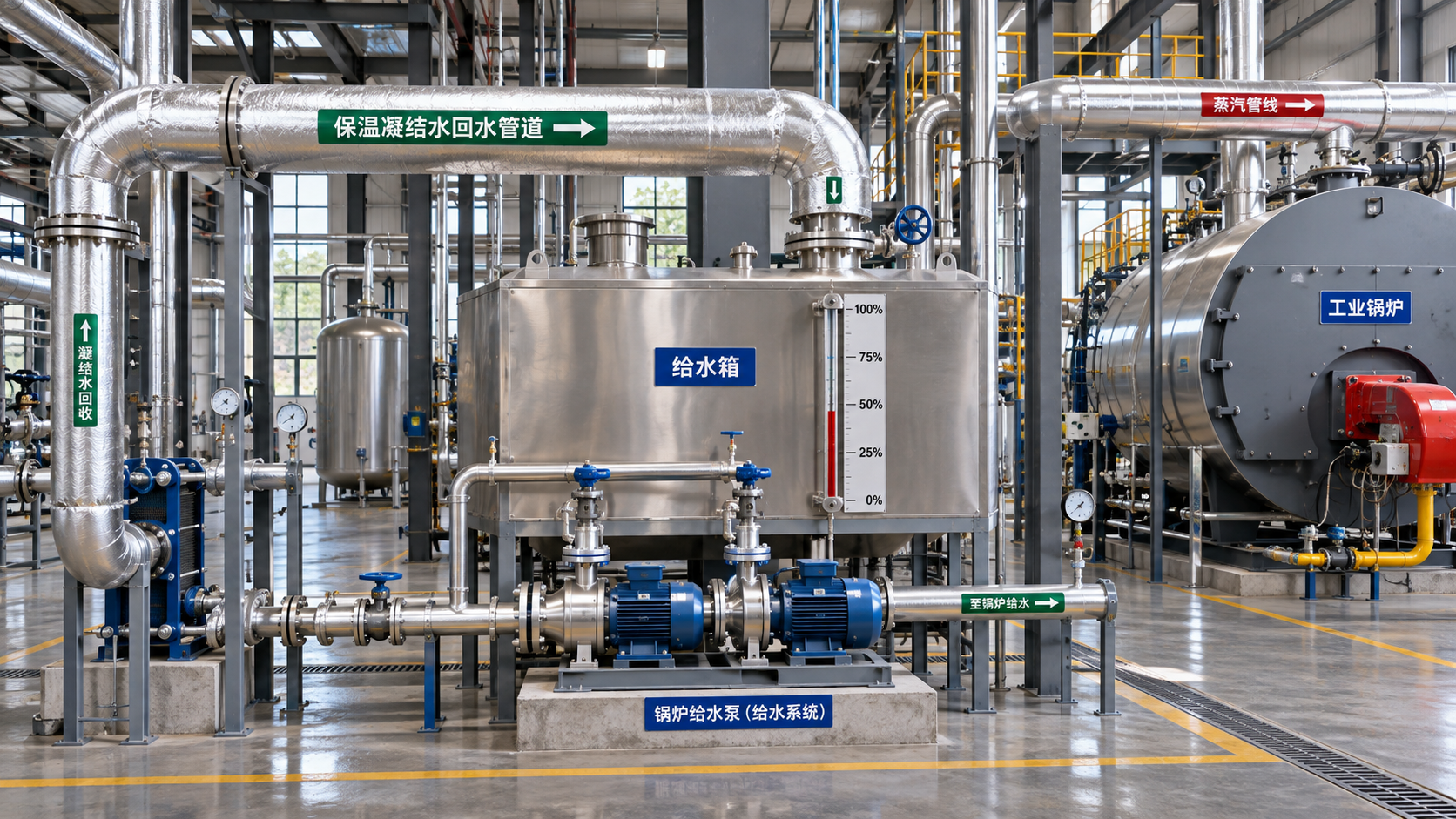
For thermal efficiency optimization for steam systems, the decision depends on more than the temperature of the condensate. Pressure, flash steam, return-line backpressure, water quality and the way the boiler plant handles varying flows all affect how much useful energy reaches the feedwater. A recovery project should therefore be evaluated as a change to the whole steam and feedwater circuit.
Where the energy savings come from
Steam transfers latent heat to a process as it condenses. The resulting condensate still contains sensible heat: energy associated with its temperature. When that condensate returns to the feedwater system, the boiler needs less additional heat to bring the water back to steam conditions than it would if the same mass were supplied as colder makeup water.
That distinction matters when estimating savings. Condensate recovery does not recover all the energy originally delivered by the steam. Much of the steam’s latent heat has already served its purpose in the process. The recoverable benefit comes primarily from retaining the sensible heat of the condensate and, where practical, using flash steam formed as its pressure falls.
A higher return rate can also reduce water-related costs. Less makeup water generally means less raw water to pretreat, less chemical treatment demand and, depending on feedwater chemistry and boiler operating limits, potentially less blowdown. These benefits vary with the plant’s water balance and treatment program; they should be calculated separately from the direct fuel saving.
For a first estimate, compare the enthalpy of the returned condensate with that of the makeup water it displaces. Multiplying the enthalpy difference by the mass of condensate recovered gives an estimate of the heat retained. Converting that heat into fuel savings requires an appropriate boiler efficiency and an allowance for losses in the return system. Use a consistent accounting boundary so that heat recovered in a flash vessel or feedwater tank is counted only once.
For example, if a continuous condensate stream replaces the same mass of colder makeup water, its value depends on the measured temperatures, flow and operating hours. A hot stream that runs only during occasional batches may be less valuable over a year than a cooler stream available throughout production. The estimate should also reflect whether the recovered water actually displaces makeup or causes another hot stream to be discharged.
Follow the condensate through pressure changes
Condensate leaving a steam trap may be at a pressure above that of the return header or receiver. When its pressure drops, some of the liquid can flash into steam. The amount depends on the upstream liquid enthalpy and the pressure at the receiving point. A return pipe carrying both flash steam and liquid behaves differently from a line carrying liquid alone.
Flash steam can be useful if it has a suitable low-pressure heat demand, such as a compatible heating process or feedwater heating arrangement. If it is vented, some recoverable energy leaves with it. A flash vessel can separate steam from liquid, but the vessel only creates value when the separated steam has a reliable use and the downstream pressure is compatible with that use.
Recovering flash steam also changes the return-system design. The volume occupied by steam can be large compared with that of the liquid condensate, influencing pipe sizing, pressure drop and flow stability. Simply connecting a high-pressure condensate source to an undersized common return can raise header pressure and reduce the pressure differential across steam traps.
That reduced differential may prevent traps from draining equipment effectively. Heat exchangers can flood, heat transfer can fall, and temperature control can become unstable. Equipment operating at a variable steam pressure is especially sensitive: when its steam pressure falls, a return header that was acceptable at full load may impose too much backpressure. Evaluate the lowest expected pressure differential, including static lift, rather than sizing only for peak condensate flow.
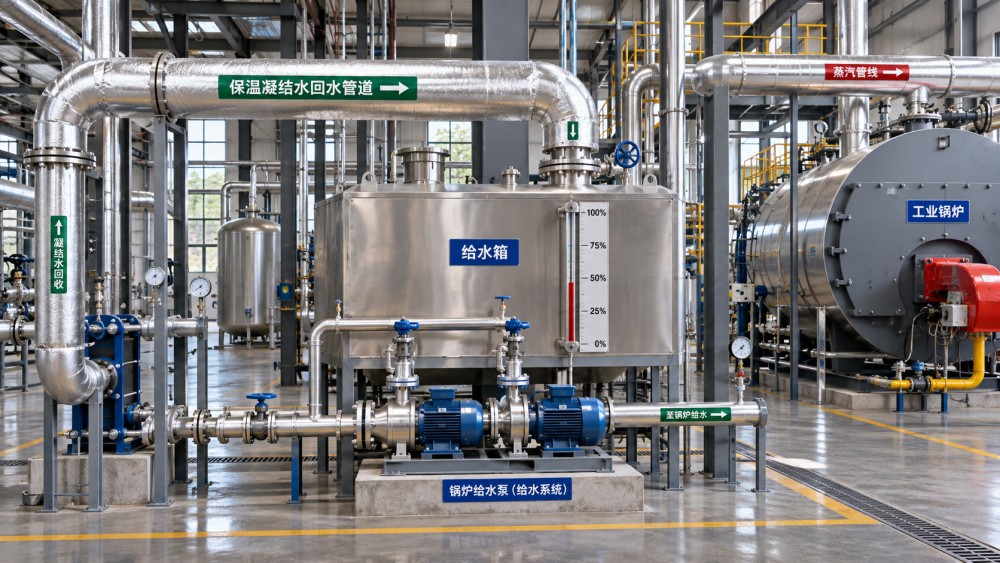
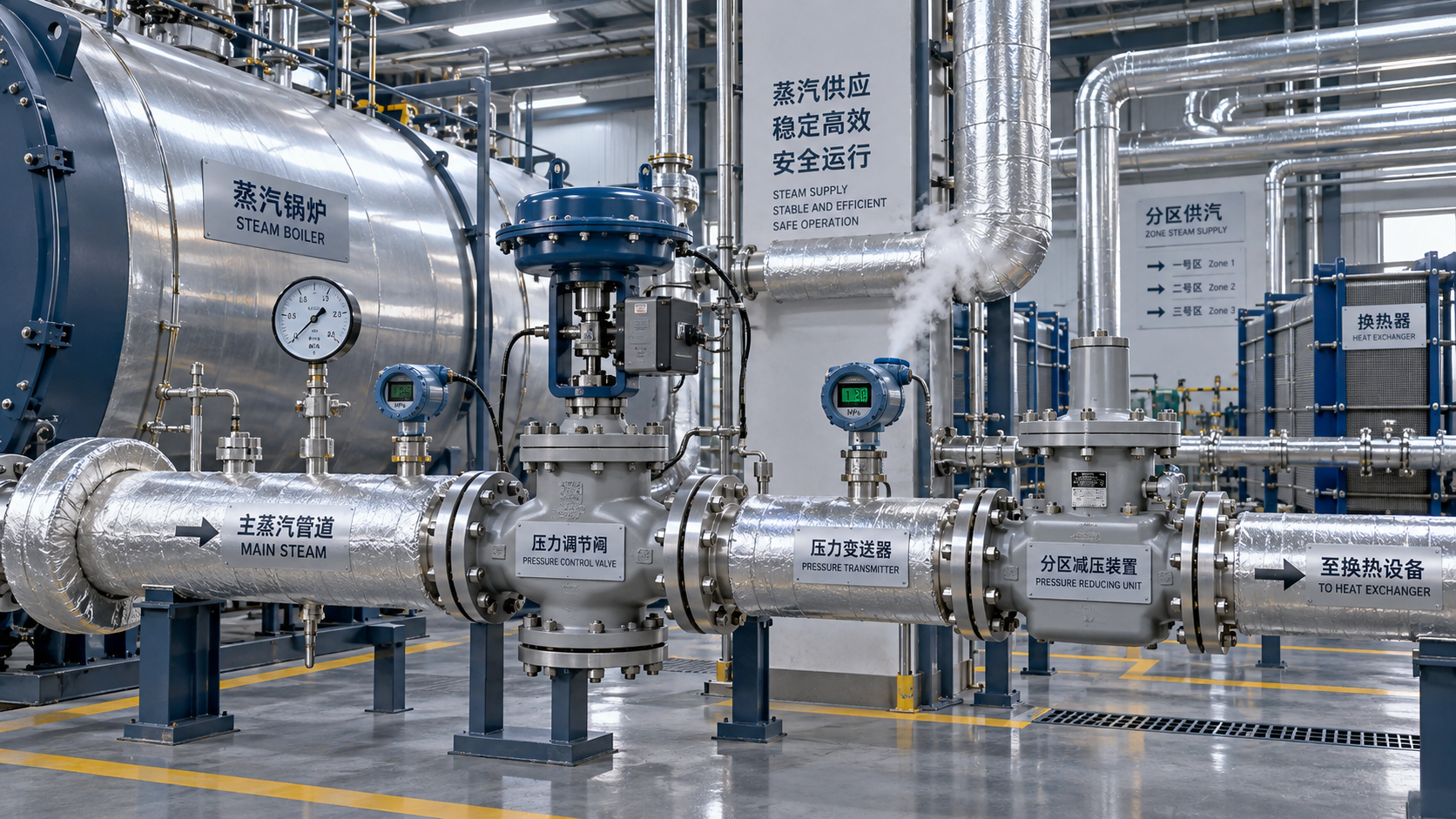
A useful system diagram should show each steam user, trap, pressure-reducing point, return header, receiver and feedwater destination. Mark elevations and likely flash-steam paths. This makes it easier to distinguish a source that can drain by its own pressure from one that needs a pumping arrangement or a separate return route.
When recovery is attractive—and when it needs more work
Clean condensate from continuous heat-exchange duties is often a strong candidate. Its flow and operating hours can be measured, and a stable return makes it easier to match receiver and pumping capacity to the load. The economics improve when the condensate is hot, the alternative makeup water is cold, and fuel, water and treatment costs are significant.
Long distances, dispersed users and intermittent operation complicate the calculation. A return main may lose enough heat to reduce the benefit, particularly if insulation is poor or the line remains hot between batches without carrying much condensate. A small, remote stream can still be worth recovering, but its annual heat value must support the installed cost of piping, insulation, pumping, controls and maintenance.
Different pressure levels also deserve attention. Combining sources can be practical, but a high-pressure source discharging into a shared header may interfere with lower-pressure equipment. Separate headers, staged flash recovery or local pumping may be more suitable where operating pressures and flow patterns differ substantially. The choice depends on the actual pressure profile and receiving conditions, not simply on the total condensate flow.
Open receivers introduce another trade-off. They can collect fluctuating flows and provide a convenient point for pumping, but vented flash steam and tank heat losses reduce the heat returned. A pressurized arrangement may retain more useful energy, provided its pressure controls, equipment ratings and downstream heat demands support safe, stable operation.
Water quality determines whether condensate can return
Condensate is valuable feedwater only when its quality is compatible with the boiler and water-treatment program. Leakage across a heat exchanger can introduce process material into the condensate. Depending on the application, contamination may include oils, chemicals, dissolved solids or other substances that impair treatment, cause deposits or carry over with steam.
Assess the credible contamination paths for each source before combining returns. A low-risk heating coil and a process exchanger with a possible product leak need not have the same monitoring or isolation arrangement. Once questionable condensate has mixed with a large clean return, separating it can be difficult and the volume requiring diversion can increase.
Monitoring should target the contaminants that matter for the process. Conductivity can help detect some forms of contamination, but it will not reliably identify every contaminant. Temperature, pH, specific analytical measurements or periodic sampling may be appropriate depending on the risk. Where contamination can occur suddenly, an automatic diversion arrangement may be justified; its setpoints, response time and failure behavior need to be considered alongside the monitoring method.
Recovery also changes the chemistry balance. More condensate return usually reduces makeup demand, but it does not remove the need to control corrosion, dissolved gases and boiler-water concentration. Confirm that the deaerator or feedwater tank can handle the revised temperature and flow, and review the treatment program against the actual returned water quality.
Measure performance at the boiler-house boundary
The most useful baseline combines steam production, condensate return, makeup-water flow, feedwater temperature, fuel consumption and operating hours over representative production conditions. Where possible, measure individual condensate streams before they join a common header. This helps identify sources with the highest annual value and reveals whether a proposed connection will affect other users.
A simple condensate return percentage can indicate progress, but it does not by itself establish thermal savings. A plant may return more water while losing additional flash steam at a receiver, or it may recover a smaller mass at a much higher temperature. Compare both mass and enthalpy at consistent points in the system.
For a proposed project, the evaluation should cover:
- Recoverable flow: measured condensate quantity, temperature, pressure and hours of availability, including batch variation.
- Usable heat: heat delivered to feedwater or another dependable load after return-line, receiver and vent losses.
- Hydraulic compatibility: trap differential pressure, header backpressure, static lift, two-phase flow and pump capacity across the operating range.
- Water quality: contamination sources, monitoring, diversion provisions and compatibility with boiler treatment.
- Net economics: avoided fuel, makeup water and treatment costs against installation, electricity, maintenance and any additional operating costs.
After installation, compare performance over production periods that resemble the baseline. Changes in steam demand, operating schedules or makeup-water temperature can otherwise obscure the effect of recovery. Metering the return flow and temperature, together with makeup and fuel where practical, provides a stronger basis for verification than relying on a design return percentage.
The best opportunities are those where heat can reach a dependable use without compromising drainage or feedwater quality. If a proposed return raises backpressure at a process exchanger or introduces uncertain contamination, the design needs to resolve that constraint before the projected boiler-house saving can be treated as dependable.
Ready when you are. Send us a message to get started.
Related News
- How condensate recovery improves steam system thermal efficiencyAuthor :Thermal Energy Strategist

- How does boiler burner control respond to changing steam demand?Author :Thermal Energy Strategist

- How to size an industrial steam boiler for your facilityAuthor :Thermal Energy Strategist

- Do low-emission steam boilers use less fuel?Author :Thermal Energy Strategist

- When high-pressure waste heat recovery boilers make economic senseAuthor :Thermal Energy Strategist

- How steam generation efficiency shapes thermal power system designAuthor :Thermal Energy Strategist

- Boiler Optimization: Cutting Fuel Use Without Compromising Steam ReliabilityAuthor :Thermal Energy Strategist

- How to size thermal fluid systems for stable process temperaturesAuthor :Thermal Energy Strategist

- Industrial Boiler Heat Recovery: Diagnosing Lost Savings in Existing PlantsAuthor :Thermal Energy Strategist

- Boiler Heat Recovery Systems: Sizing Waste-Heat Recovery for Stable Steam LoadsAuthor :Thermal Energy Strategist

- Can Condensing Boilers Cut NOx Emissions Without Creating Corrosion Risks?Author :Thermal Energy Strategist

- Low-NOx Boilers Industry Trends: What New Rules Mean for Plant UpgradesAuthor :Thermal Energy Strategist

- A Practical Roadmap for Industrial Steam System Decarbonization ProjectsAuthor :Thermal Energy Strategist

- Industrial Steam System Vendor Comparison: Criteria Beyond Equipment PriceAuthor :Thermal Energy Strategist

- How to Choose an Industrial Steam Generator for Load Profile, Fuel, and RedundancyAuthor :Thermal Energy Strategist

- When Does a Heat Recovery Steam Generator Make Economic Sense?Author :Thermal Energy Strategist

- How pressure control prevents unstable steam supply in industrial systemsAuthor :Thermal Energy Strategist

- How excess air affects boiler efficiency in steam systemsAuthor :Thermal Energy Strategist

- When a Refinery Steam Turbine Should Prioritize Process Steam Over Maximum OutputAuthor :Thermal Energy Strategist

- Which boiler upgrades deliver the fastest efficiency cost reductionAuthor :Thermal Energy Strategist

- What to check before choosing a steam generation systems supplierAuthor :Thermal Energy Strategist

- When do industrial boiler systems cost less than electric heatAuthor :Thermal Energy Strategist

- How to Compare Boiler Systems in Latin America by Fuel Cost and ComplianceAuthor :Thermal Energy Strategist

- How to Size Low-Pressure Industrial Steam Systems for Stable Heat DemandAuthor :Thermal Energy Strategist

- Low Emissions Boilers: What to Compare Before You ChooseAuthor :Thermal Energy Strategist

- Low-NOx Boilers Cost Breakdown: Upfront Price, Fuel Savings, and PaybackAuthor :Thermal Energy Strategist

- Boiler Combustion Systems: Common Causes of Unstable Fuel PerformanceAuthor :Thermal Energy Strategist

- Hot Water Industrial Boilers: When Efficiency Gains Justify ReplacementAuthor :Thermal Energy Strategist

- What Boiler Efficiency Really Means in Daily Operation and Energy BillsAuthor :Thermal Energy Strategist

- Boiler Efficiency Testing Methods That Expose Heat Loss and Fuel WasteAuthor :Thermal Energy Strategist

- Industrial Burner Systems: Key Factors for Safe Heat OutputAuthor :Thermal Energy Strategist

- Gas-Fired Boiler Combustion Technology: Key Efficiency and Emissions Trade-OffsAuthor :Thermal Energy Strategist

- Unfired Heat Recovery Steam Generators: When Do They Pay Off?Author :Thermal Energy Strategist

- How to Evaluate Steam Generation Systems Electric for Process Heat ProjectsAuthor :Thermal Energy Strategist

- Thermal Power Systems for Industrial Heating: Common Sizing Mistakes to AvoidAuthor :Thermal Energy Strategist

- Low-NOx Condensing Boilers: How to Compare Efficiency and EmissionsAuthor :Thermal Energy Strategist
![]()