



A Practical Roadmap for Industrial Steam System Decarbonization Projects




A Practical Roadmap for Industrial Steam System Decarbonization Projects
Industrial steam system decarbonization has moved well beyond an engineering discussion about boiler fuel. For many manufacturers, processors, utilities, and large facility operators, it is now tied to energy-cost exposure, carbon reporting, customer expectations, operational resilience, and capital allocation. The difficult part is that a steam system is rarely a single asset. It is an interconnected thermal network in which generation, pressure reduction, distribution losses, condensate return, process demand, and control logic all influence the final carbon and cost outcome.
That is why replacing a boiler before understanding the steam balance can create an expensive mismatch. A site may install lower-carbon heat generation while continuing to lose energy through failed traps, uninsulated fittings, excessive venting, poor condensate recovery, or an oversized pressure header. The strongest projects usually begin with a simple principle: reduce avoidable demand first, then match the remaining thermal load with the most practical low-carbon supply pathway.
For decision-makers, the goal is not to select a fashionable technology. It is to build an investment sequence that protects production, improves thermal efficiency, and leaves room for future changes in electricity prices, fuel availability, carbon rules, and process requirements.
Start with the Steam System You Actually Have
Many industrial sites know their annual fuel consumption but cannot clearly explain where steam is used, at what pressure it is needed, how much condensate returns, or how load changes by shift and season. Those gaps make technology selection unreliable. A decarbonization study should therefore begin with a heat-and-mass balance that is detailed enough to support decisions, not merely an annual emissions calculation.
The baseline should distinguish between useful process steam and avoidable system demand. Useful demand may include sterilization, drying, reaction heating, humidification, cleaning, tracing, or turbine drive. Avoidable demand often hides in leaks, malfunctioning steam traps, uncontrolled flash steam, pressure levels set higher than the process needs, standby losses, and poor boiler sequencing. These issues are unglamorous, but they often determine whether a later electrification or renewable-fuel project is correctly sized.
A practical survey normally reviews boiler operating records, fuel and water data, stack conditions where available, feedwater quality, blowdown practices, distribution pressure profiles, trap maintenance, insulation condition, condensate temperatures, and major process users. Temporary metering may be justified when load profiles are uncertain. The purpose is not perfect instrumentation everywhere; it is to resolve the assumptions that materially affect investment decisions.
Steam quality also matters. A food plant, pharmaceutical facility, semiconductor-support operation, or chemical process may have requirements that limit how heat can be supplied or recovered. A change that looks efficient at plant level can be unacceptable if it compromises cleanliness, pressure stability, temperature control, or validated process conditions. Decarbonization must work within the actual duty, not an idealized energy model.
Build the Business Case Around Demand Reduction Before Fuel Switching
The first phase of industrial steam system decarbonization is often a modernization program rather than a major energy-source replacement. It can include repairing leaks and traps, recovering condensate, improving insulation, reducing unnecessary pressure, optimizing boiler staging, tuning combustion equipment, and using controls to avoid operating multiple boilers inefficiently at low load.
These actions do not eliminate the need for a long-term fuel strategy, but they make every later option easier to justify. A smaller and more stable demand profile can reduce the electrical connection required for electric boilers, reduce biomass storage needs, lower the renewable-fuel volume required, or allow a heat-pump project to focus on a clearly defined temperature band.
Condensate deserves particular attention. Hot condensate is already treated water carrying useful thermal energy. Poor return rates increase boiler make-up water, chemical treatment, fuel use, and wastewater handling at the same time. Yet return improvements must be assessed carefully: contamination risks, backpressure, pipe corrosion, flash-steam behavior, and process segregation can all affect what is feasible. The right question is not simply “Can condensate be returned?” but “Which streams can be returned safely, at what temperature, and with what operational controls?”
Choose the Supply Pathway by Temperature, Load Shape, and Site Constraints
After demand reduction opportunities are understood, the supply-side decision becomes more disciplined. There is no universal replacement for combustion-based steam generation. The sensible pathway depends on required steam pressure and temperature, annual operating hours, grid capacity, fuel logistics, available waste heat, process criticality, and the organization’s tolerance for price and supply risk.
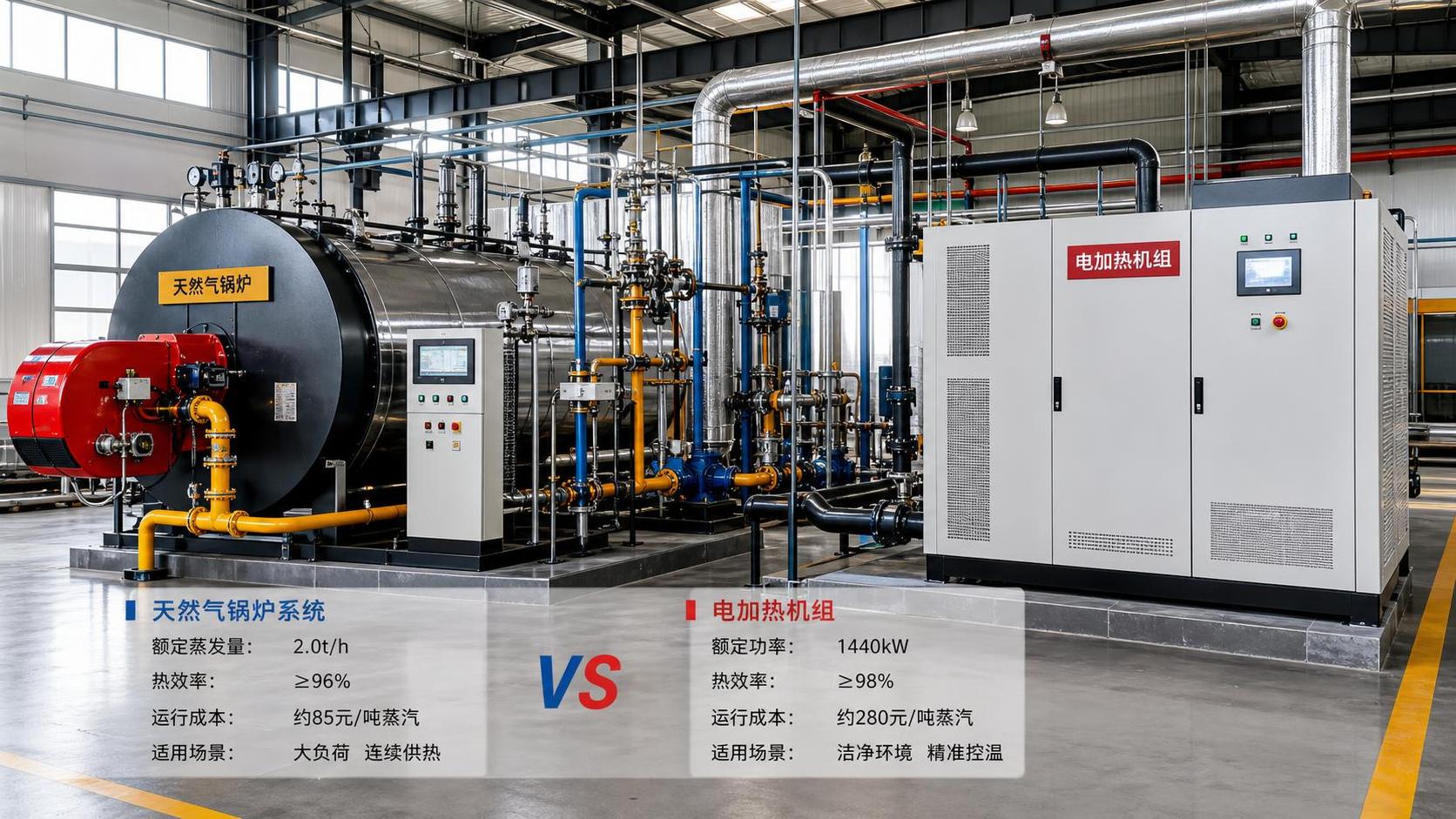
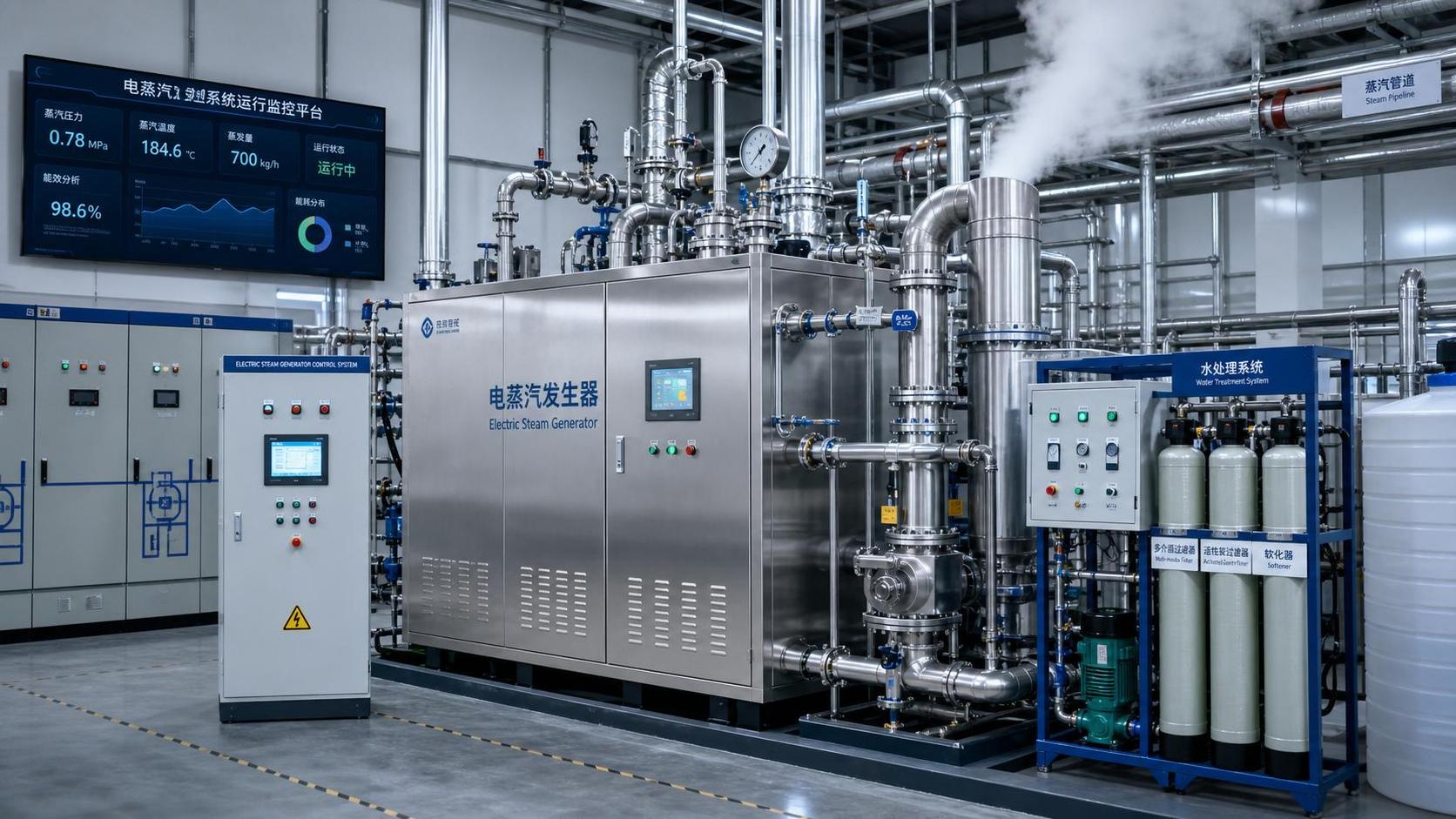
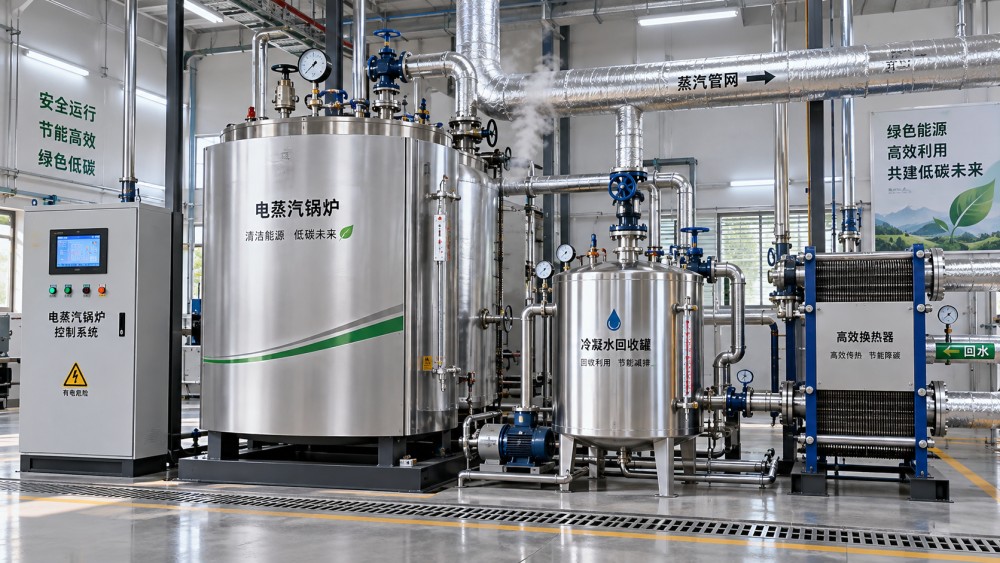
Electric steam generation is often discussed as a direct route to lower on-site emissions. That may be operationally attractive, but the full decision requires more than comparing boiler efficiencies. Electrical infrastructure upgrades, transformer capacity, peak-load exposure, utility connection timing, and the carbon characteristics of purchased electricity all need review. In some settings, an electric boiler is most valuable as a flexible peak unit while a different asset serves steady demand.
Heat pumps can be highly relevant where the process does not require high-pressure steam at every point of use. They may reduce the steam burden by serving hot-water loops, preheating feedwater, supporting wash processes, or upgrading recoverable heat. Their economics rely on temperature lift, heat-source availability, runtime, and integration quality. A heat pump should not be evaluated in isolation from cooling demand, refrigeration systems, compressed-air heat recovery, or heat exchanger performance.
Treat Distribution and Controls as Core Project Scope
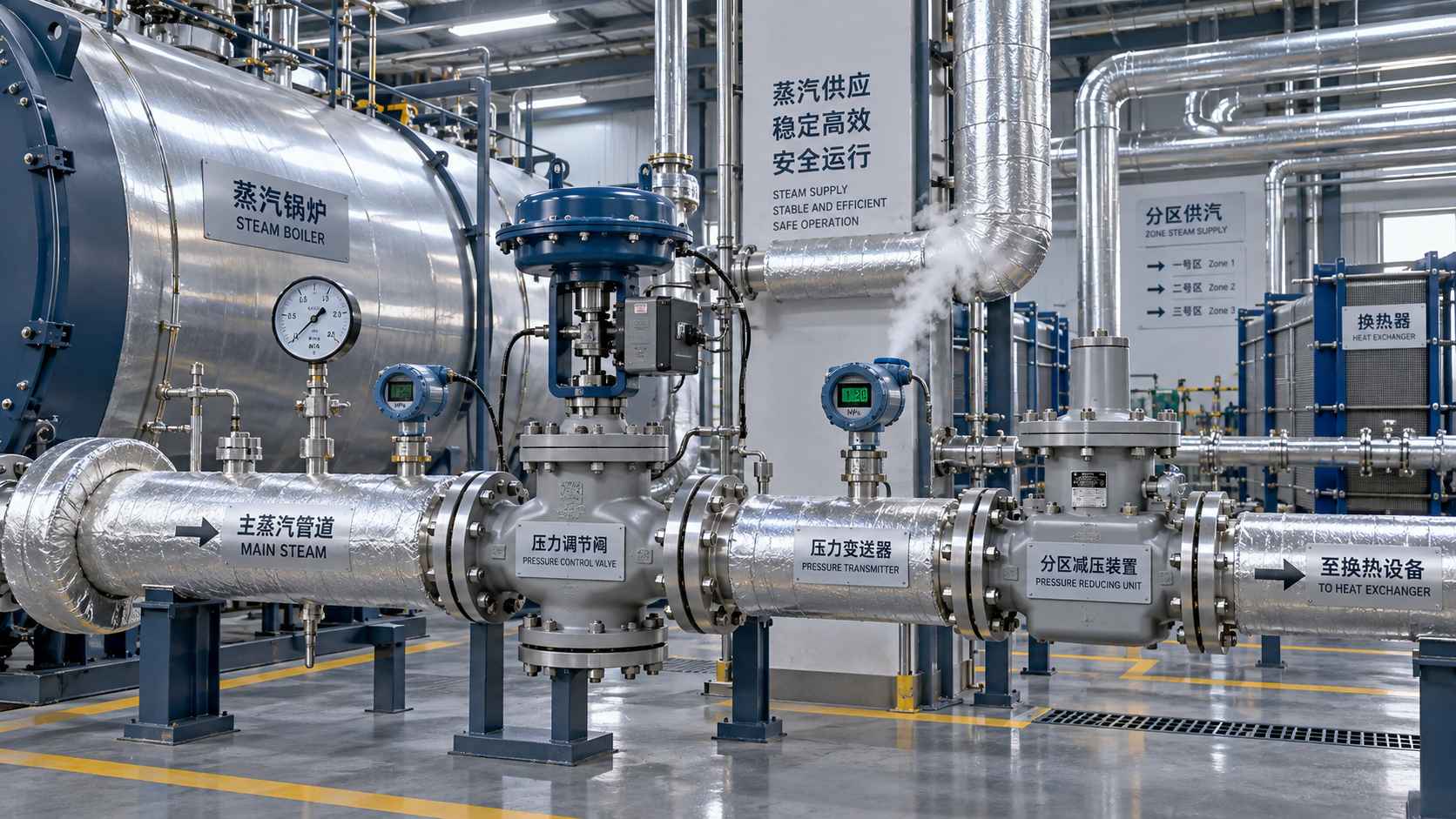
A new heat source connected to an old distribution system will inherit the old system’s weaknesses. Steam pressure should be assessed at the point of use, not only at the boiler outlet. Pressure-reducing stations, separator performance, drain arrangements, valve sizing, and condensate backpressure can influence process stability and usable energy recovery.
Controls are equally important in hybrid systems. A plant needs clear logic for when each thermal asset operates, how it responds to load changes, and what happens during a utility interruption or equipment fault. Poor sequencing can erase the value of efficient equipment. Good control design combines production requirements with energy signals, equipment limits, and maintenance constraints; it does not simply chase the lowest instantaneous energy price.
This is where cross-system visibility becomes useful. Waste heat from compressors, refrigeration equipment, cooling loops, or vacuum processes may not replace steam directly, but it can reduce the steam required for adjacent duties. GTC-Matrix follows these thermal and compression links closely because industrial energy systems are rarely optimized within one equipment category. Decisions about oil-free compression, microchannel heat exchangers, low-NOx boilers, and heat recovery increasingly intersect at the plant energy balance.
Stage Capital Decisions Instead of Betting on One Forecast
Energy prices, carbon-accounting expectations, utility capacity, and fuel availability can change faster than a boiler house investment cycle. A robust roadmap therefore separates no-regret actions from decisions that depend on external assumptions. Metering, trap management, condensate improvements, insulation repairs, and control upgrades are often useful across several future scenarios. A major fuel conversion, by contrast, may depend heavily on local supply terms, grid agreements, safety approvals, or site permitting.
A staged project can preserve options. For example, a facility may first reduce losses and install metering, then prepare piping, switchgear space, or control architecture for future electrification. It may add a heat-recovery loop before committing to a larger heat-pump installation. It may retain a reliable existing boiler as contingency capacity while validating a new lower-carbon steam source under real production conditions.
The financial model should show more than a simple payback period. It should test downtime exposure, maintenance capability, spare-parts strategy, utility upgrade lead times, fuel-price sensitivity, production growth, and the cost of failing to meet process demand. Carbon benefits should be calculated with transparent boundaries and assumptions that can be revisited as procurement contracts or reporting requirements evolve.
Governance Matters as Much as Equipment Selection
Steam projects often stall because responsibility is fragmented. Operations protects uptime, engineering focuses on technical fit, finance asks for a defensible return, procurement evaluates contracts, and sustainability teams track emissions. All are correct to do so, but they need a shared decision framework. The project sponsor should establish a common baseline, agree on the critical operating constraints, and define which assumptions require external verification before approval.
Useful governance questions include: What steam loads are truly critical? Which process users can accept lower-temperature alternatives? What redundancy is required? Who owns meter data and verifies savings? What operational training is needed? Which local technical, environmental, and safety requirements must be confirmed before final design? Clear answers prevent a decarbonization target from becoming a late-stage engineering conflict.
For leaders navigating these choices, market intelligence is most valuable when it connects technical evolution with commercial reality. GTC-Matrix’s Strategic Intelligence Center examines the relationship between thermodynamic performance, pneumatic power, energy markets, and industrial demand across sectors such as pharmaceuticals, semiconductors, and food production. That perspective is useful because the best steam strategy is seldom decided by boiler technology alone.
A Decarbonization Roadmap Should Be Designed for Revision
The most credible industrial steam system decarbonization projects are not built on the assumption that one technology will remain optimal forever. They create a cleaner, better-measured, more controllable thermal system that can adapt as infrastructure and economics change. Begin with a validated steam baseline. Remove avoidable demand. Map heat sources and sinks across the site. Compare supply pathways against process conditions and practical constraints. Then invest in phases, with performance measurement and contingency planning built into the delivery model.
Before committing capital, confirm the parameters that are easy to overlook: actual pressure at the process, peak and minimum load, condensate quality, electrical connection capacity, heat-source temperature, maintenance resources, required availability, and local approval requirements. Those details determine whether a project merely changes equipment—or genuinely improves the thermal center of the operation.
Related News
- How to size thermal fluid systems for stable process temperaturesAuthor :Thermal Energy Strategist

- A Practical Roadmap for Industrial Steam System Decarbonization ProjectsAuthor :Thermal Energy Strategist

- Industrial Steam System Vendor Comparison: Criteria Beyond Equipment PriceAuthor :Thermal Energy Strategist

- How to Choose an Industrial Steam Generator for Load Profile, Fuel, and RedundancyAuthor :Thermal Energy Strategist

- When Does a Heat Recovery Steam Generator Make Economic Sense?Author :Thermal Energy Strategist

- How pressure control prevents unstable steam supply in industrial systemsAuthor :Thermal Energy Strategist

- How excess air affects boiler efficiency in steam systemsAuthor :Thermal Energy Strategist

- When a Refinery Steam Turbine Should Prioritize Process Steam Over Maximum OutputAuthor :Thermal Energy Strategist

- Which boiler upgrades deliver the fastest efficiency cost reductionAuthor :Thermal Energy Strategist

- What to check before choosing a steam generation systems supplierAuthor :Thermal Energy Strategist

- When do industrial boiler systems cost less than electric heatAuthor :Thermal Energy Strategist

- How to Compare Boiler Systems in Latin America by Fuel Cost and ComplianceAuthor :Thermal Energy Strategist

- How to Size Low-Pressure Industrial Steam Systems for Stable Heat DemandAuthor :Thermal Energy Strategist

- Low Emissions Boilers: What to Compare Before You ChooseAuthor :Thermal Energy Strategist

- Low-NOx Boilers Cost Breakdown: Upfront Price, Fuel Savings, and PaybackAuthor :Thermal Energy Strategist

- Boiler Combustion Systems: Common Causes of Unstable Fuel PerformanceAuthor :Thermal Energy Strategist

- Hot Water Industrial Boilers: When Efficiency Gains Justify ReplacementAuthor :Thermal Energy Strategist

- What Boiler Efficiency Really Means in Daily Operation and Energy BillsAuthor :Thermal Energy Strategist

- Boiler Efficiency Testing Methods That Expose Heat Loss and Fuel WasteAuthor :Thermal Energy Strategist

- Industrial Burner Systems: Key Factors for Safe Heat OutputAuthor :Thermal Energy Strategist

- Gas-Fired Boiler Combustion Technology: Key Efficiency and Emissions Trade-OffsAuthor :Thermal Energy Strategist

- Unfired Heat Recovery Steam Generators: When Do They Pay Off?Author :Thermal Energy Strategist

- How to Evaluate Steam Generation Systems Electric for Process Heat ProjectsAuthor :Thermal Energy Strategist

- Thermal Power Systems for Industrial Heating: Common Sizing Mistakes to AvoidAuthor :Thermal Energy Strategist

- Low-NOx Condensing Boilers: How to Compare Efficiency and EmissionsAuthor :Thermal Energy Strategist
![]()
- Low Emissions Boilers for Food Processing: Key Compliance and Fuel Cost FactorsAuthor :Thermal Energy Strategist

- Steam System Efficiency Calculation: Key Inputs That Change the ResultAuthor :Thermal Energy Strategist

- How to Evaluate a Steam Boiler Components Exporter Before OrderingAuthor :Thermal Energy Strategist

- Burner Systems Troubleshooting: Common Efficiency Loss CausesAuthor :Thermal Energy Strategist

- EU PED Q2 Rules Require Digital Compliance TagsAuthor :Thermal Energy Strategist

- Thermal Power Systems: Key Efficiency Risks in Daily OperationAuthor :Thermal Energy Strategist

- Low-NOx Combustion Boilers: Key Efficiency and Compliance ChecksAuthor :Thermal Energy Strategist

- Low-NOx Combustion Boilers: Key Specs That Affect Emissions and Fuel UseAuthor :Thermal Energy Strategist

- Low-NOx Combustion Boilers: Key Compliance RisksAuthor :Thermal Energy Strategist

- Thermodynamics Analysis for Boiler Heat-Loss ReductionAuthor :Thermal Energy Strategist

- Industrial Thermal Systems: Common Operating RisksAuthor :Thermal Energy Strategist