When a Refinery Steam Turbine Should Prioritize Process Steam Over Maximum Output




In a refinery, chasing the highest mechanical output from a turbine can be the wrong objective when the real bottleneck sits in the steam network. Project managers usually feel this conflict during revamps, utility balance reviews, or grassroots design stages: one team wants more power recovery, another needs stable medium- or low-pressure steam for heaters, reboilers, stripping columns, and other process users. When the steam system is tightly integrated with production, a turbine that delivers dependable exhaust steam at the right pressure may create more site value than one optimized for maximum electrical or shaft output.
The issue is less about whether power generation matters and more about what the refinery is trying to protect. If process steam shortfall forces auxiliary boilers to run harder, limits crude throughput, destabilizes unit operations, or reduces flexibility during load swings, then turbine output alone is an incomplete measure of performance. For project owners, that changes how the equipment should be selected, how energy savings should be calculated, and how commercial comparisons should be made.
Why maximum output is not always the most profitable target
A refinery steam system is usually a cascade, not a single-use utility. High-pressure steam may be generated in boilers or heat recovery units, then expanded through drivers or letdown stations before being used at lower pressure levels. In that structure, the exhaust condition of a turbine has operational value. A turbine that extracts or exhausts steam into the process can displace pressure-reducing valves, improve thermal utilization, and support unit stability.
If a project team evaluates a turbine only by shaft power, it may favor a condensing arrangement that extracts more work by pushing exhaust pressure down. That can look attractive on paper, especially where electricity prices are high or mechanical drive demand is large. The tradeoff is that the site receives less useful process steam from the turbine exhaust. The missing steam must then be supplied elsewhere, often by firing additional fuel in boilers or by reducing operational flexibility in another part of the site.
For a refinery, that replacement cost is not just a utility line item. It can show up as:
- higher fuel consumption in package or central boilers,
- reduced steam margin during startup, shutdown, or upset conditions,
- less stable pressure control at critical headers,
- additional capital in condensers, cooling systems, or electrical infrastructure,
- more exposure to production losses when steam demand shifts quickly.
In many applications, the best turbine is the one that fits the site heat balance, not the one with the highest standalone power figure.
When process steam should take priority
There are several conditions where preserving process steam is usually the stronger decision.
The refinery has chronic steam header sensitivity
Some refineries operate with narrow pressure margins on medium- or low-pressure headers. A slight mismatch between generation and demand can affect multiple units at once. Where this is the case, using a turbine as a controlled pressure-reduction and energy-recovery device often has greater system value than maximizing power extraction. A back-pressure arrangement can support header stability while still recovering useful work from pressure drop that would otherwise be lost across a valve.
Thermal demand is more critical than electrical offset
Projects often compare turbine output against grid power purchases or motor drives. That is only half of the picture. If the facility continuously needs exhaust steam for reboilers, deaerators, tracing, tank heating, sour water stripping, or similar services, then the thermal demand is firm. In such cases, sacrificing process steam to gain extra output may simply transfer cost from the electrical account to the fuel gas account.
Throughput depends on steam availability
Some units can tolerate limited variation in steam supply; others cannot. Where steam affects stripping efficiency, fractionation, or heat input to critical equipment, steam shortages can restrict production rates or force operating compromises. A turbine that guarantees process steam delivery under normal operating loads can protect throughput more effectively than a machine sized for peak output under ideal conditions.
The project needs simpler utility integration
Condensing systems often require more supporting equipment: condensers, vacuum systems, cooling water integration, larger condensate handling, and added control complexity. Those elements are not inherently negative, but they do matter when plot space is tight, cooling water is constrained, or schedule risk is high. If the refinery already needs the exhaust steam, directing it to the process may reduce integration complexity and lower the number of interfaces that can delay commissioning.
Back-pressure versus condensing: the decision is really about site balance
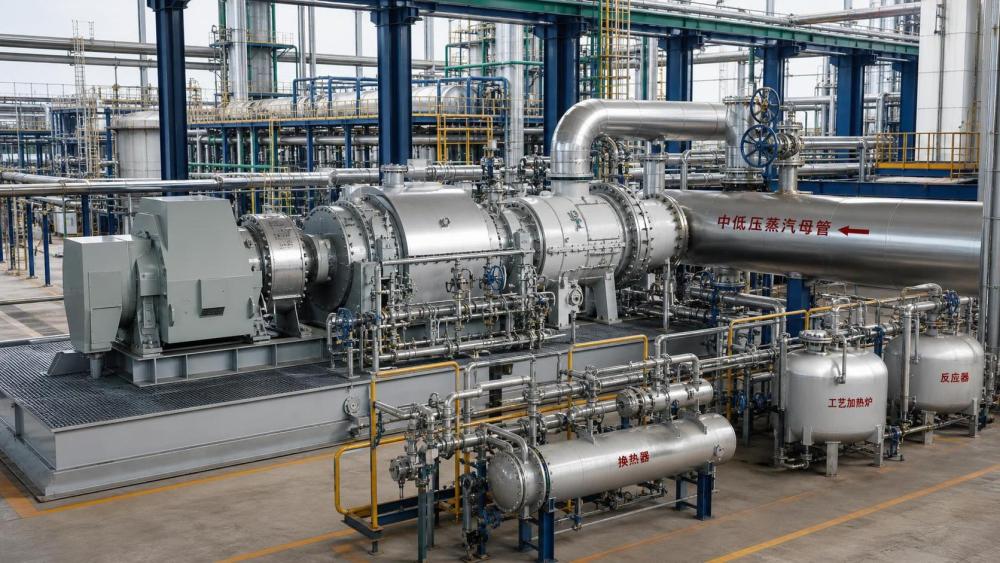
For project teams comparing turbine arrangements, the practical question is not which design is more advanced, but which one aligns with the steam and power profile of the refinery. A useful reference on this comparison is Steam Turbine selection in back-pressure and condensing refinery applications, especially when the site must weigh exhaust steam value against higher standalone power recovery.
Back-pressure turbines are typically favored when exhaust steam has direct use at a controlled downstream pressure. Condensing turbines are typically favored when the priority is to maximize work extraction and the site either has limited need for exhaust steam or can supply process steam economically from other sources. Between those two ends lies the real project challenge: many refineries need both, but not in equal proportions across all operating modes.
Questions project managers should force into the evaluation
Many turbine studies become biased because they start from equipment efficiency rather than refinery constraints. A more reliable review begins with a few operational questions.
What is the true cost of one ton of replacement steam?
This should include more than boiler efficiency. Fuel quality, firing flexibility, water treatment load, emissions implications, startup behavior, and spare generation margin all affect the cost of replacing turbine exhaust steam. If the site is already close to boiler capacity during seasonal peaks or turnaround recovery periods, the marginal value of process steam may be much higher than the base utility model suggests.
Which operating mode is the design case?
A turbine can look ideal at full-rate, steady-state conditions and become troublesome during reduced throughput, hot weather, or partial unit outages. Project teams should test the concept against the operating modes the refinery actually sees most often, not just the single point that produces the strongest power number. The best arrangement is often the one that remains useful across normal variation in steam demand.
Can the steam network absorb the selected exhaust condition?
Back-pressure performance only creates value if the downstream users can reliably consume the steam at that pressure and flow. Otherwise, the system may need venting, bypassing, or pressure control actions that erode the benefit. The review should include header pressure control philosophy, minimum and maximum process demand, and the consequences of sudden driver load changes.
What happens during upset or islanded operation?
Refineries do not run permanently at textbook conditions. Trips, header swings, boiler maintenance, and unit restarts should be part of the selection logic. A configuration that protects process steam in abnormal conditions can reduce startup delays and limit cross-unit disruption. That resilience often matters more to operations than a higher output figure achieved under stable conditions only.
Common mistakes in turbine selection for refinery services
One frequent mistake is treating the turbine as a standalone prime mover instead of as a component in the total steam balance. This can lead to overvaluing shaft output while underestimating the cost of replacing lost exhaust steam elsewhere.
Another is assuming the condensing option is automatically the more efficient choice. It is more efficient at converting steam enthalpy into mechanical work, but not necessarily more efficient for the refinery as a whole if the exhaust steam would have been fully utilized by the process. Site efficiency and machine efficiency are related, but they are not identical.
Teams also sometimes overlook the control burden. A turbine integrated into process steam service affects header pressure stability, bypass logic, and operating procedures. If the selected configuration needs frequent intervention to balance power generation against steam supply, the theoretical gain may be offset by operating complexity and higher trip exposure.
Procurement documents can create another problem when they define guaranteed power too tightly while giving limited attention to exhaust steam conditions, turndown behavior, or off-design reliability. For refinery service, the data sheet should reflect the real operating objective. If process steam matters, then exhaust pressure range, steam quality, header interaction, governing behavior, and bypass arrangements deserve the same scrutiny as output guarantees.
What to check in FEED, bid review, and acceptance planning
For project managers, the right turbine decision often depends on getting the front-end questions right before vendor comparison begins.
- Steam balance basis: Confirm seasonal, normal, startup, and upset steam demand by pressure level, not just annual averages.
- Operating envelope: Review minimum and maximum driver load, expected load swings, and whether the turbine must support variable process demand.
- Exhaust steam use: Identify actual downstream consumers, their pressure tolerance, and whether any part of the exhaust flow could become surplus.
- Auxiliary systems: Compare the practical impact of condensers, vacuum equipment, cooling water demand, drains, and condensate return arrangements.
- Control philosophy: Check how the machine will behave during header pressure excursions, process unit changes, or grid disturbances.
- Mechanical reliability: Examine valve arrangement, overspeed protection, rotor service conditions, maintainability, and the site’s ability to support outages.
- Commercial scope clarity: Make sure performance guarantees match the refinery objective, rather than rewarding only one operating point.
Acceptance planning should also reflect application reality. For a refinery-driven decision, factory and site verification should not focus narrowly on rated output. The more meaningful question is whether the installed system can maintain the required steam and load response across the expected operating envelope without forcing the plant into unstable utility balancing.
The strongest choice is often the one that protects optionality
Refinery projects live with uncertainty: feed slate changes, future debottlenecks, emissions constraints, power pricing shifts, and utility system modifications can all alter the economics after commissioning. A turbine configuration that preserves process steam optionality may age better than one tuned for the highest immediate output. That is especially true where steam can become the limiting utility during expansion or where boiler additions would be difficult later.
For project leaders, the decision should be framed in refinery terms: Does the turbine strengthen the site’s steam architecture, or does it pull value out of one part of the system while creating a deficit in another? When the answer points to header stability, thermal demand, and operating flexibility, prioritizing process steam is usually the more disciplined choice.
Ready when you are. Send us a message to get started.
Related News
- When high-pressure waste heat recovery boilers make economic senseAuthor :Thermal Energy Strategist

- How steam generation efficiency shapes thermal power system designAuthor :Thermal Energy Strategist

- Boiler Optimization: Cutting Fuel Use Without Compromising Steam ReliabilityAuthor :Thermal Energy Strategist

- How to size thermal fluid systems for stable process temperaturesAuthor :Thermal Energy Strategist

- Industrial Boiler Heat Recovery: Diagnosing Lost Savings in Existing PlantsAuthor :Thermal Energy Strategist

- Boiler Heat Recovery Systems: Sizing Waste-Heat Recovery for Stable Steam LoadsAuthor :Thermal Energy Strategist

- Can Condensing Boilers Cut NOx Emissions Without Creating Corrosion Risks?Author :Thermal Energy Strategist

- Low-NOx Boilers Industry Trends: What New Rules Mean for Plant UpgradesAuthor :Thermal Energy Strategist

- A Practical Roadmap for Industrial Steam System Decarbonization ProjectsAuthor :Thermal Energy Strategist

- Industrial Steam System Vendor Comparison: Criteria Beyond Equipment PriceAuthor :Thermal Energy Strategist

- How to Choose an Industrial Steam Generator for Load Profile, Fuel, and RedundancyAuthor :Thermal Energy Strategist

- When Does a Heat Recovery Steam Generator Make Economic Sense?Author :Thermal Energy Strategist

- How pressure control prevents unstable steam supply in industrial systemsAuthor :Thermal Energy Strategist

- How excess air affects boiler efficiency in steam systemsAuthor :Thermal Energy Strategist

- When a Refinery Steam Turbine Should Prioritize Process Steam Over Maximum OutputAuthor :Thermal Energy Strategist

- Which boiler upgrades deliver the fastest efficiency cost reductionAuthor :Thermal Energy Strategist

- What to check before choosing a steam generation systems supplierAuthor :Thermal Energy Strategist

- When do industrial boiler systems cost less than electric heatAuthor :Thermal Energy Strategist

- How to Compare Boiler Systems in Latin America by Fuel Cost and ComplianceAuthor :Thermal Energy Strategist

- How to Size Low-Pressure Industrial Steam Systems for Stable Heat DemandAuthor :Thermal Energy Strategist

- Low Emissions Boilers: What to Compare Before You ChooseAuthor :Thermal Energy Strategist

- Low-NOx Boilers Cost Breakdown: Upfront Price, Fuel Savings, and PaybackAuthor :Thermal Energy Strategist

- Boiler Combustion Systems: Common Causes of Unstable Fuel PerformanceAuthor :Thermal Energy Strategist

- Hot Water Industrial Boilers: When Efficiency Gains Justify ReplacementAuthor :Thermal Energy Strategist

- What Boiler Efficiency Really Means in Daily Operation and Energy BillsAuthor :Thermal Energy Strategist

- Boiler Efficiency Testing Methods That Expose Heat Loss and Fuel WasteAuthor :Thermal Energy Strategist

- Industrial Burner Systems: Key Factors for Safe Heat OutputAuthor :Thermal Energy Strategist

- Gas-Fired Boiler Combustion Technology: Key Efficiency and Emissions Trade-OffsAuthor :Thermal Energy Strategist

- Unfired Heat Recovery Steam Generators: When Do They Pay Off?Author :Thermal Energy Strategist

- How to Evaluate Steam Generation Systems Electric for Process Heat ProjectsAuthor :Thermal Energy Strategist

- Thermal Power Systems for Industrial Heating: Common Sizing Mistakes to AvoidAuthor :Thermal Energy Strategist

- Low-NOx Condensing Boilers: How to Compare Efficiency and EmissionsAuthor :Thermal Energy Strategist
![]()
- Low Emissions Boilers for Food Processing: Key Compliance and Fuel Cost FactorsAuthor :Thermal Energy Strategist

- Steam System Efficiency Calculation: Key Inputs That Change the ResultAuthor :Thermal Energy Strategist

- How to Evaluate a Steam Boiler Components Exporter Before OrderingAuthor :Thermal Energy Strategist

- Burner Systems Troubleshooting: Common Efficiency Loss CausesAuthor :Thermal Energy Strategist