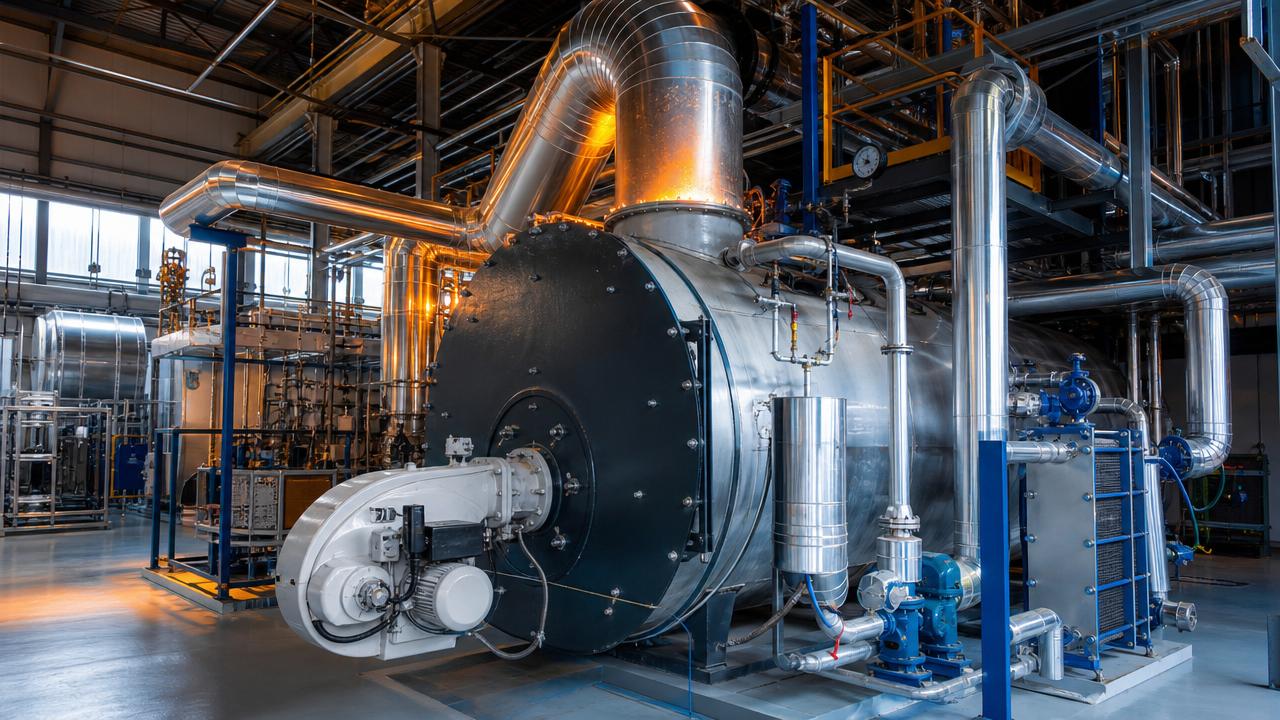
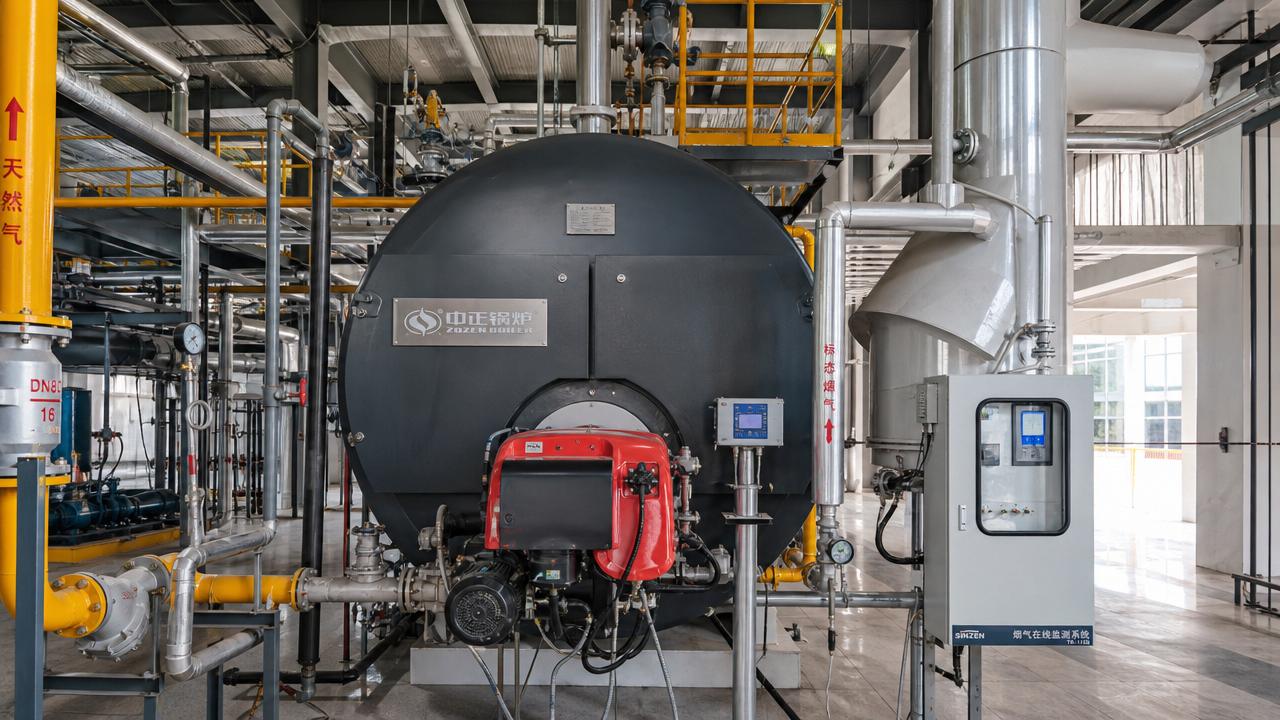
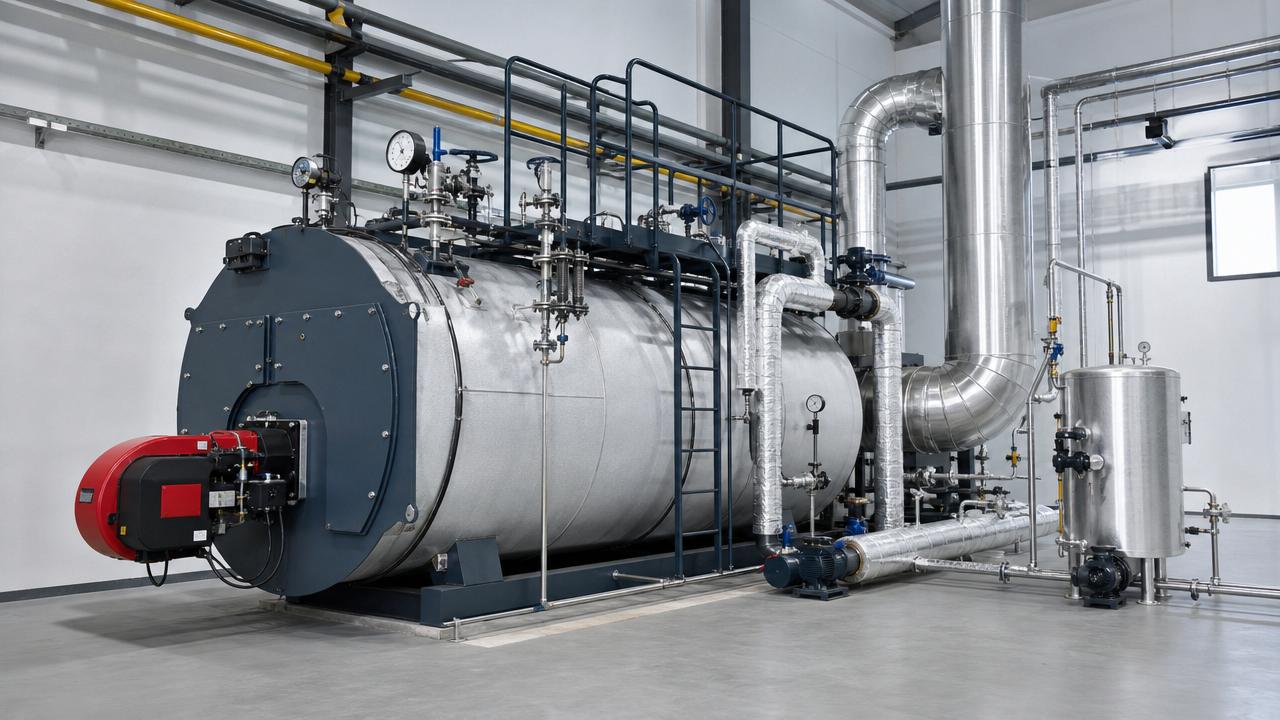
How pressure control prevents unstable steam supply in industrial systems




How Pressure Control Prevents Unstable Steam Supply in Industrial Systems
Stable steam is essential to process safety, product quality, and energy efficiency. In industrial steam systems, pressure control prevents unstable supply by balancing boiler output, distribution demand, and rapid load changes.
For technical evaluators, the central question is not whether pressure control is necessary. It is whether the selected control strategy can maintain usable steam conditions during realistic operating disturbances.
A well-designed pressure control approach protects downstream equipment, reduces fuel waste, limits condensate problems, and gives operators predictable response during production changes, boiler transitions, and maintenance events.
This article examines the mechanisms behind pressure instability, the control functions that matter most, and the evaluation criteria for specifying reliable industrial steam systems pressure control.
Why Pressure Instability Creates Process and Equipment Risk
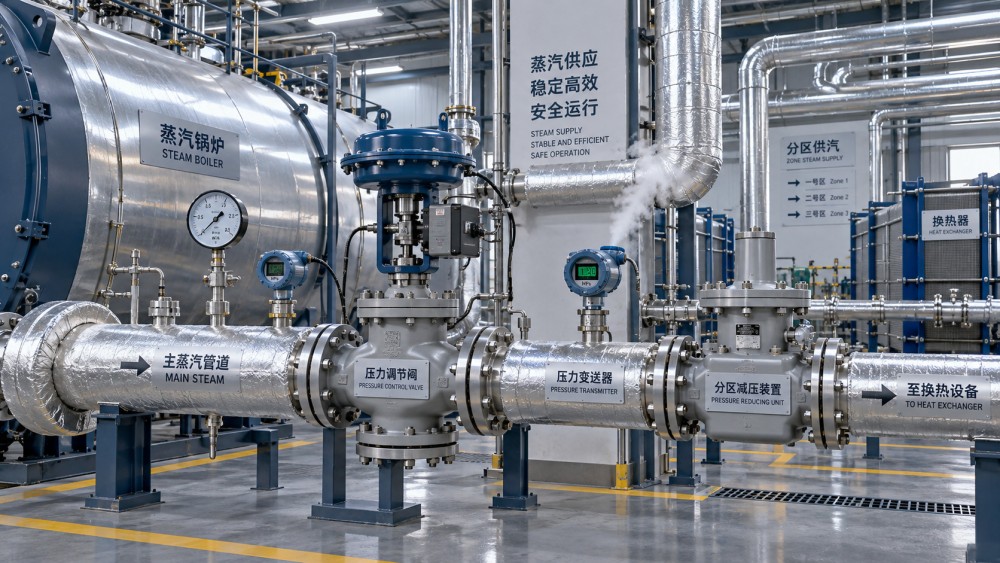
Steam pressure is a practical indicator of the balance between generated steam and steam consumed by process equipment. When demand changes faster than supply responds, pressure moves away from its target.
A pressure drop reduces steam temperature at saturation and can lower available heat transfer rates. Processes relying on controlled heating may then experience longer cycles, incomplete reactions, or variable product conditions.
Pressure rises create different risks. Excess pressure can force safety valves to lift, increase leakage through valves and fittings, and cause control valves to operate near unsuitable positions.
Many facilities diagnose pressure swings as a boiler capacity problem. In practice, instability often results from poor coordination among firing controls, steam headers, pressure-reducing stations, and condensate return equipment.
Large batch loads are especially challenging because demand can change abruptly. Sterilizers, reactors, autoclaves, dryers, and large heat exchangers may draw substantial steam within minutes or seconds.
Steam systems also contain stored energy in boilers, headers, and distribution piping. This storage can temporarily absorb disturbances, but it cannot compensate indefinitely for weak measurement or slow control response.
Technical evaluators should distinguish normal pressure movement from damaging instability. A brief, controlled deviation may be acceptable, while repeated oscillation can expose process equipment to inconsistent thermal conditions.
The goal is therefore not perfectly fixed pressure at every measurement point. The goal is controlled pressure behavior that remains within defined process, equipment, safety, and efficiency limits.
Start With the Steam Demand Profile, Not the Controller
Effective pressure control begins with an accurate picture of steam demand. Evaluators should identify base load, peak load, ramp rates, simultaneous consumers, and the duration of recurring demand events.
A boiler sized only for average consumption may meet annual energy requirements but still fail during short peak events. Pressure control cannot fully overcome a persistent generation capacity shortfall.
Demand profiles should include startup conditions. Cold piping, inactive heat exchangers, and empty process vessels can create high initial steam demand that differs significantly from steady production demand.
Production schedules matter because multiple departments may start equipment at similar times. Uncoordinated startup of large users can produce header depressurization even when installed boiler capacity appears adequate.
Metering data should be reviewed at intervals short enough to reveal disturbances. Monthly utility totals and hourly averages conceal the rapid changes that determine controller performance and header stability.
Where flow meters are unavailable, evaluators can estimate loads from equipment duty, cycle timing, steam pressure, condensate volume, and control valve behavior. These estimates should later be validated through testing.
Demand diversity deserves careful treatment. Adding each connected load at maximum nameplate capacity usually exaggerates requirements, but assuming excessive diversity can leave the system vulnerable to simultaneous peaks.
A useful specification identifies acceptable pressure bands for each critical user. This connects system-level control decisions to the actual process limits that determine operational and commercial risk.
Coordinate Boiler Firing With Header Pressure Response
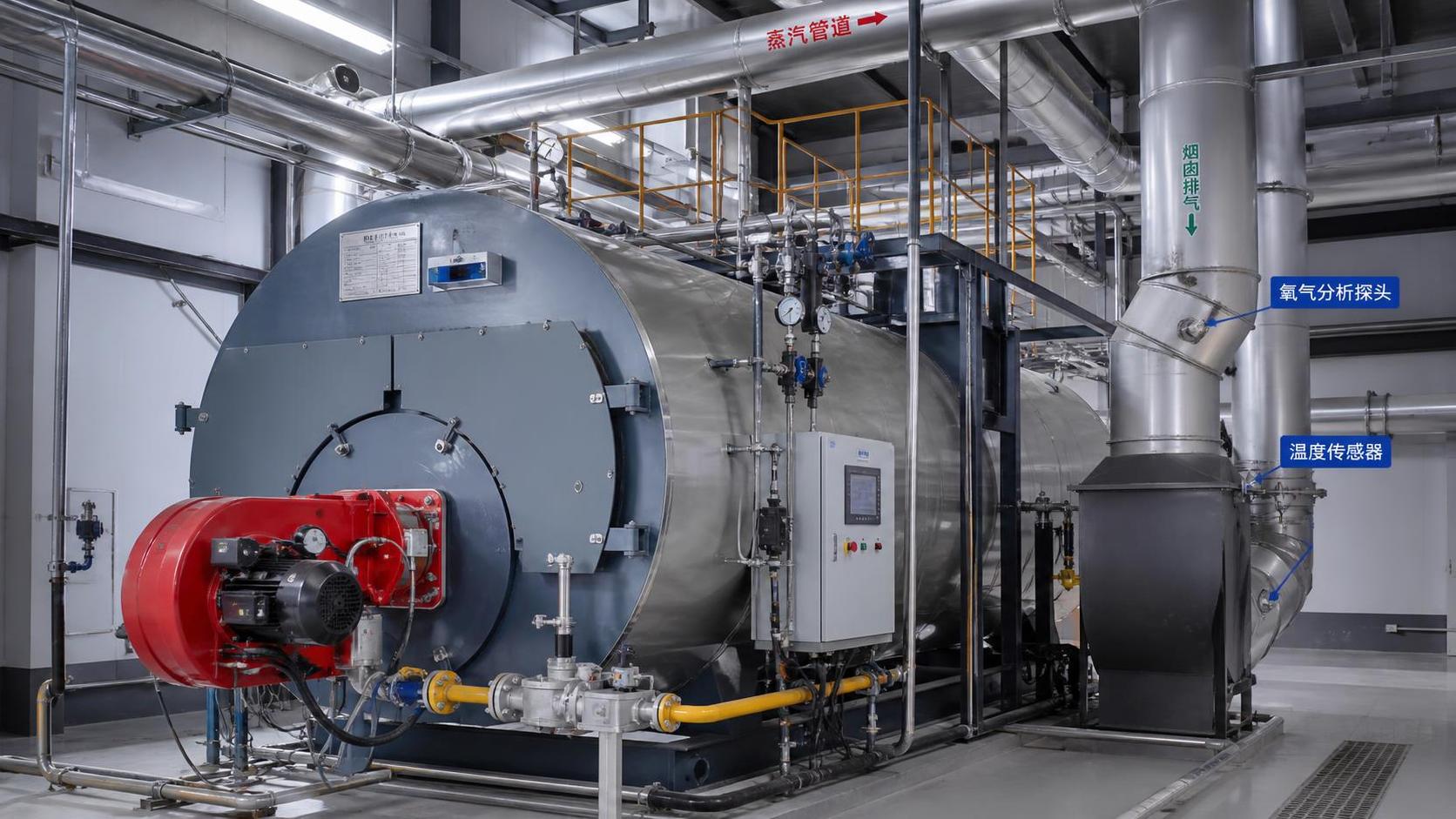
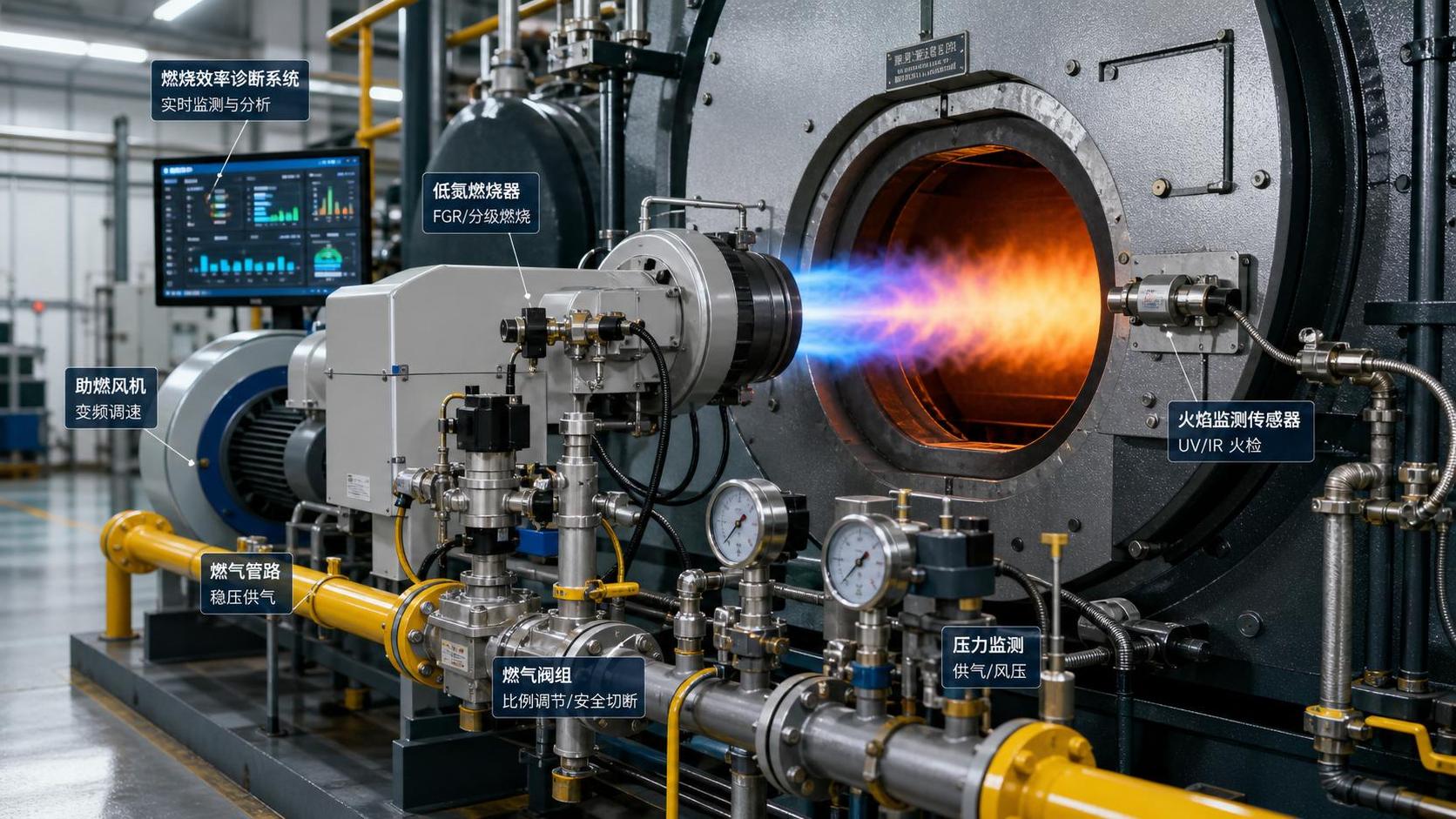
Boiler firing control is the first line of defense against falling steam pressure. Its purpose is to increase heat input before header storage is depleted and process conditions deteriorate.
A conventional pressure loop compares measured header pressure with a setpoint and adjusts burner firing rate. Its success depends on accurate sensing, appropriate tuning, and actuator response capability.
Pressure transmitters should be installed where they represent the controlled header, not immediately beside turbulence, pressure-reducing stations, or local high-demand branches that distort the measurement.
Slow transmitters, plugged impulse lines, or poorly located sensing points create delayed feedback. The burner may continue increasing output after demand has subsided, causing overshoot and repeating oscillations.
Feedforward control can improve response when major loads are measurable. A signal from steam flow, process scheduling, or a known batch event can prompt firing changes before header pressure falls.
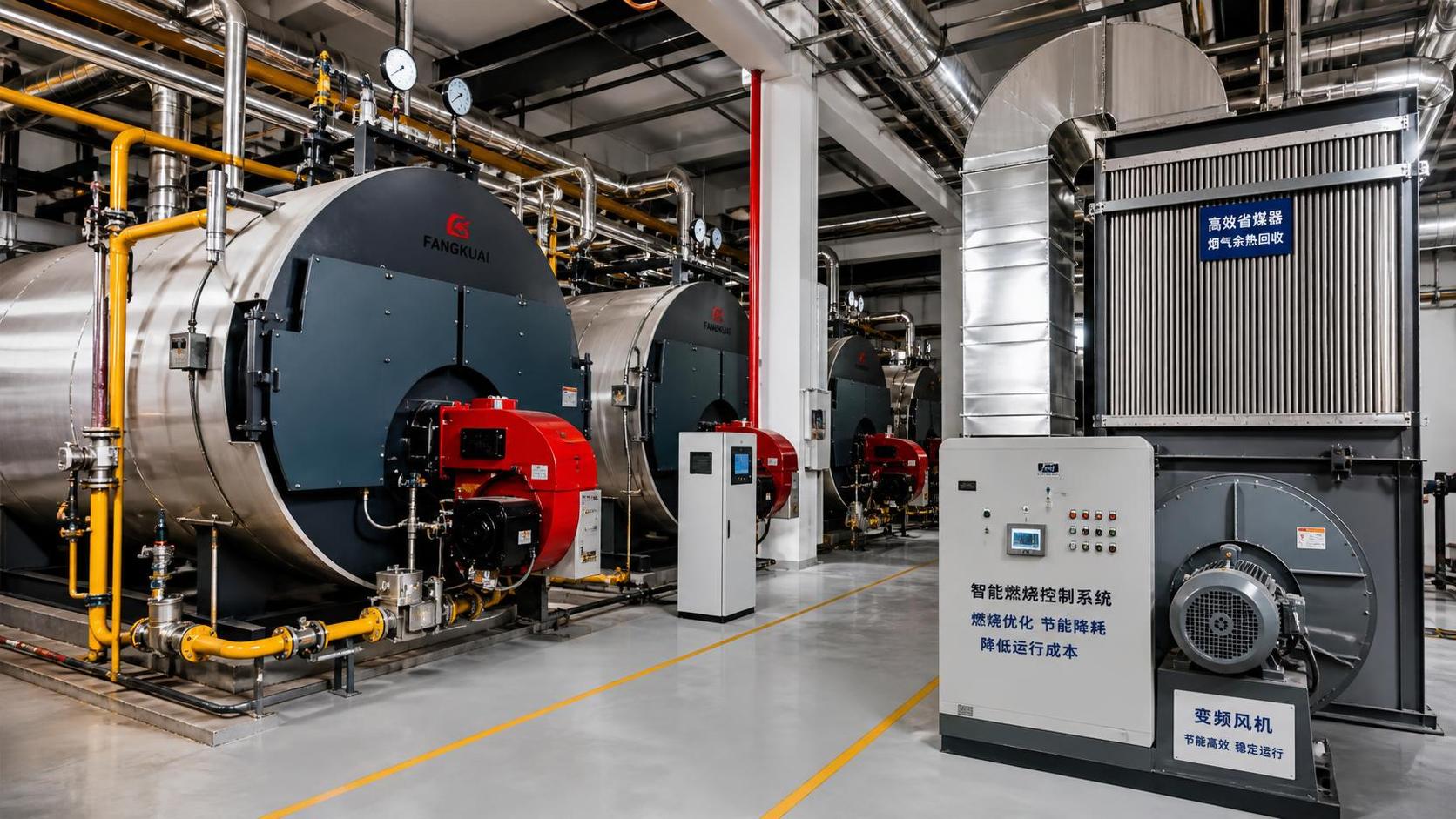
Lead-lag boiler sequencing is important in multi-boiler plants. The control system must decide when to raise a lead boiler, start another unit, or reduce firing without creating unnecessary cycling.
Sequencing logic should consider boiler efficiency curves, minimum stable firing rates, warm standby readiness, emissions limits, and maintenance priorities. The lowest-cost boiler is not always the best immediate responder.
For critical production sites, the evaluation should include response time testing. Observe header pressure during realistic load ramps rather than accepting control performance based solely on commissioning setpoint checks.
Use Pressure-Reducing Stations as Active Control Points
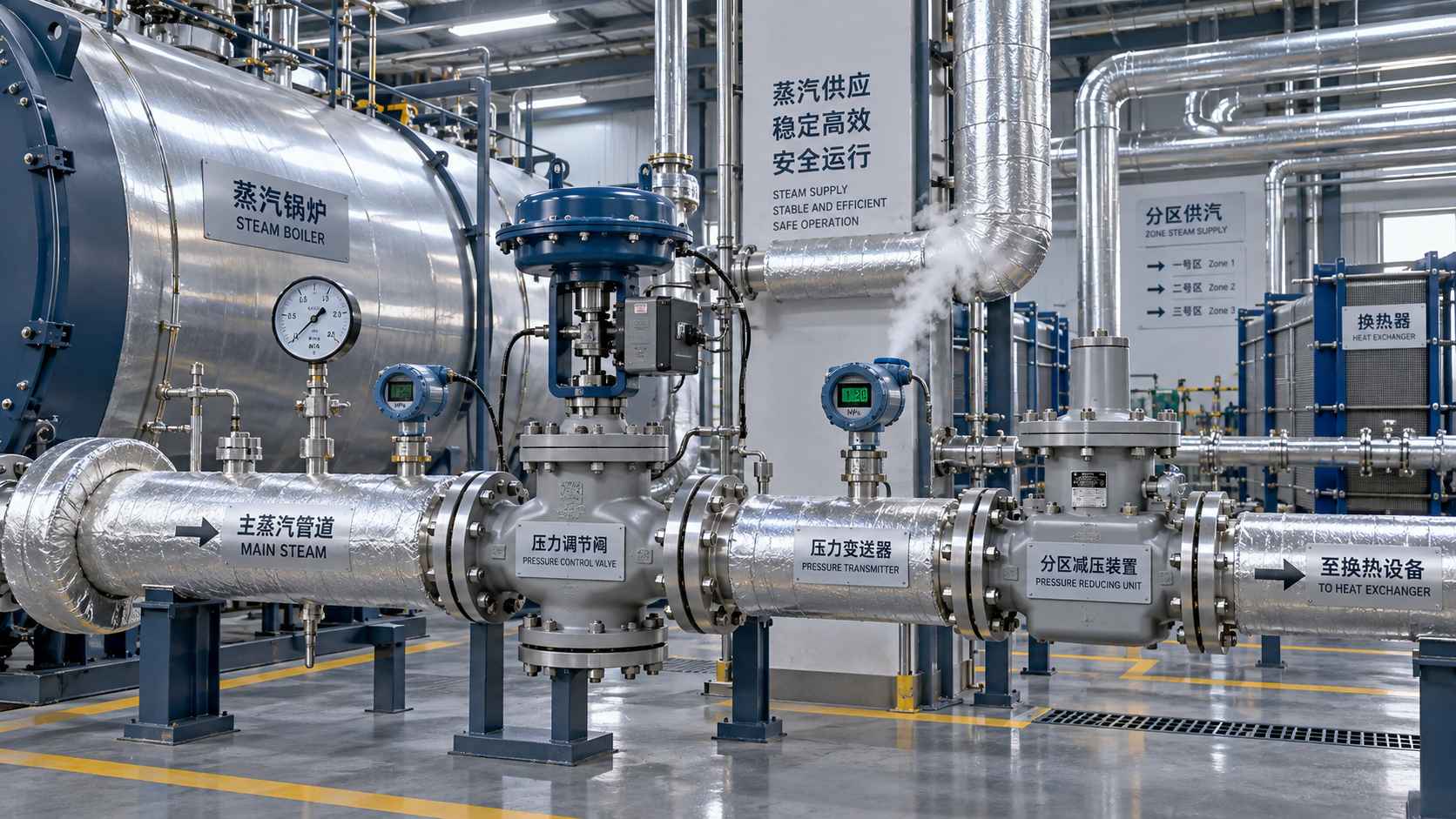
Pressure-reducing stations do more than lower steam pressure for downstream users. Properly designed stations isolate pressure zones and prevent local demand disturbances from destabilizing the main header.
A reducing valve must be sized for both normal and peak flow. Oversized valves can hunt at low loads, while undersized valves restrict flow and cause severe downstream pressure loss.
Valve authority is a key evaluation concept. The pressure drop across the valve must be sufficient for controllable operation, yet not so excessive that valuable steam energy is unnecessarily throttled.
Many installations require two valves in parallel, commonly a small valve for low loads and a larger valve for high loads. This arrangement improves turndown and reduces low-load instability.
Upstream separators, strainers, drip legs, and correctly installed steam traps protect reducing valves from wet steam and debris. Poor steam quality can damage trim and impair pressure regulation.
Downstream sensing lines should be protected from condensate accumulation and temperature-related problems. An inaccurate sensed pressure causes the station to regulate the wrong operating condition.
Critical stations may require bypass arrangements, pressure relief protection, and isolation valves for maintainability. However, bypasses must be controlled administratively because open manual bypasses defeat designed pressure control.
Evaluators should request operating curves showing capacity, turndown, noise limits, and stability range. A pressure-reducing station should be assessed as a control assembly, not merely a valve purchase.
Manage Condensate to Preserve Stable Pressure and Heat Transfer
Condensate management is often treated as a separate steam discipline, but it directly affects pressure stability. Water accumulation reduces effective pipe area and creates fluctuating resistance to steam flow.
Wet steam contains less usable latent heat per unit mass than dry steam. As a result, process equipment may demand more steam flow to achieve the same heating duty.
Inadequate drainage can produce water hammer, damaged valves, failed instruments, and unreliable heat transfer. These effects may appear as erratic pressure behavior even when boiler controls are correctly tuned.
Steam mains need appropriate slope, drip pockets, and trap stations at low points and strategic intervals. High-velocity steam can carry condensate far beyond the location where it first forms.
Heat exchangers require trap selection matched to pressure differential, load variation, air venting requirements, and condensate lift conditions. A trap that stalls can reduce process performance rapidly.
Condensate return pressure also matters. High backpressure can restrict trap discharge, particularly where flash steam recovery systems, elevated returns, or shared return mains are involved.
Flash steam should be treated as recoverable energy and as a pressure-management issue. Poorly designed flash systems can impose backpressure that compromises downstream drainage and temperature control.
When assessing industrial steam systems pressure control, include condensate surveys, trap condition data, return-line pressure readings, and evidence of water hammer or process-side temperature variation.
Specify Measurements That Reveal the Real Operating Condition
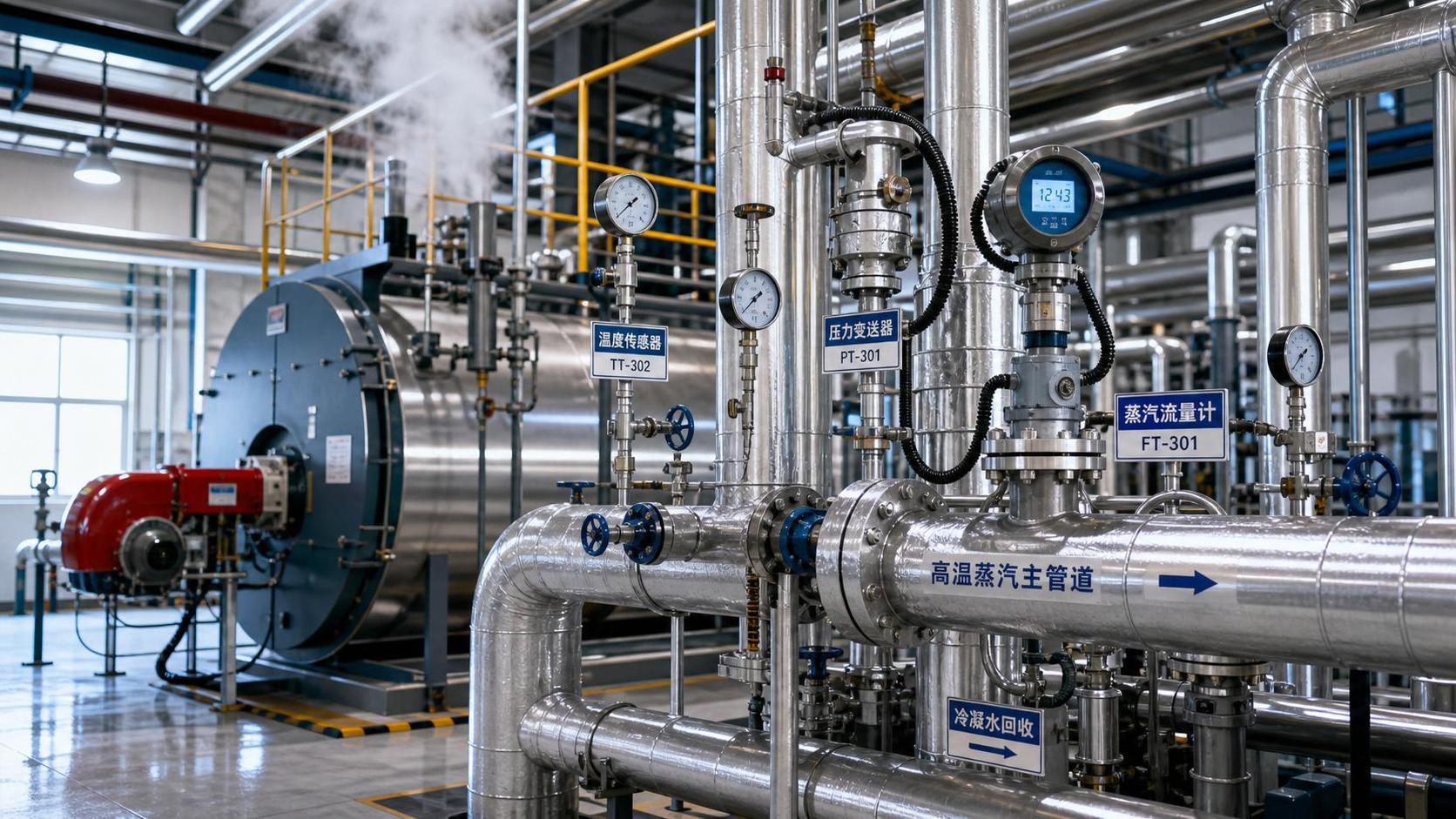
Reliable control depends on reliable measurement. At minimum, a critical steam network usually requires pressure measurement at boiler outlets, main headers, pressure zones, and sensitive process areas.
Steam flow measurement provides valuable context because pressure alone cannot show whether a deviation came from changing demand, reduced boiler output, valve restriction, or a distribution issue.
Temperature measurement can help identify superheat, saturation changes, insulation losses, or wet-steam concerns. It should be interpreted with pressure because steam temperature has different meanings at different pressures.
Data historians should capture enough resolution to observe fast excursions. Trend records with short sampling intervals allow engineers to compare firing rate, steam flow, header pressure, and valve position.
Control valve position is particularly informative. A valve repeatedly moving between extremes suggests poor sizing, poor tuning, unstable upstream supply, or an operating range beyond its controllable capacity.
Alarm design should focus on actionable conditions. Operators need clear distinction between an approaching pressure limit, a sustained process risk, a transmitter fault, and a safety-related high-pressure event.
Redundant pressure transmitters may be justified for critical headers or automated boiler sequencing. Redundancy should include signal validation logic so one failed sensor does not drive an incorrect response.
Cybersecurity and control-system reliability also deserve attention. Network interruptions, incorrect remote setpoints, or unavailable historian data can undermine otherwise sound pressure control architecture.
Evaluate Control Performance Through Disturbance Testing
Factory documentation and design calculations are necessary, but they do not prove stable operation. The most useful acceptance tests introduce controlled disturbances and measure the system response.
A practical test may step a known steam load on and off while recording header pressure, boiler firing rate, flow, reducing-valve position, and downstream process pressure.
Evaluation criteria should include maximum pressure deviation, recovery time, oscillation frequency, safety valve activity, and the ability of sensitive users to remain within operating limits.
Tests should be repeated under different conditions, including low production load, normal load, peak load, and transitions between operating shifts. Many problems emerge only at low turndown.
Boiler sequencing should be tested during lead boiler transfer and lag boiler startup. A plant may appear stable until a second boiler is required and its response arrives too late.
Pressure-reducing stations should be tested across their expected flow range. Observe whether downstream pressure remains stable when upstream pressure changes or when parallel downstream loads cycle.
Documenting test results creates a baseline for later troubleshooting. It also gives technical evaluators evidence that the selected system meets defined operating requirements rather than nominal design assumptions.
Where changes are needed, tune one control layer at a time. Simultaneously changing burner loops, reducing valves, and process controls makes the source of improvement or deterioration difficult to identify.
Compare Improvement Options by Risk, Response Time, and Lifecycle Value
Not every unstable steam system requires a major capital project. The right intervention depends on whether the root cause is capacity, control architecture, distribution resistance, drainage, or operating practice.
Low-cost improvements often include repairing traps, cleaning strainers, relocating sensors, correcting impulse lines, updating controller tuning, and removing uncontrolled bypass operation.
Moderate investments may include improved steam metering, new pressure transmitters, better boiler sequencing, correctly sized pressure-reducing valves, or condensate return modifications that reduce backpressure.
Higher-cost projects can include additional boiler capacity, steam accumulators, header resizing, distributed pressure zones, advanced control platforms, or redesigned process heating systems.
Steam accumulators can be valuable where demand spikes are short and predictable. They store steam energy and release it during peaks, reducing the burden on boiler firing response.
The business case should account for avoided production losses, lower fuel consumption, reduced maintenance, improved product consistency, safety risk reduction, and longer equipment life.
Technical evaluators should avoid selecting equipment based solely on nominal capacity. Turndown, controllability, maintenance access, response time, integration capability, and failure modes affect lifecycle performance.
A robust specification defines required operating envelopes and acceptance criteria. Suppliers can then propose solutions against measurable conditions rather than broad statements about pressure stability or efficiency.
Build a Practical Specification for Reliable Steam Pressure Control
A strong specification begins with the required pressure range at each critical consumer. State normal pressure, allowable transient deviation, maximum recovery time, and the consequences of noncompliance.
Include demand data describing steady loads, peak loads, expected load ramps, batch cycles, startup events, and future expansion. This information prevents control hardware from being selected in isolation.
Define the control hierarchy clearly. Identify which pressure measurement controls boiler firing, which stations regulate local zones, and how process equipment should respond during supply limitations.
Specify required instrumentation accuracy, installation practices, data logging resolution, alarm philosophy, and integration protocols. These details determine whether the plant can diagnose performance after handover.
Require suppliers to provide valve sizing calculations, boiler response information, sequencing narratives, control loop descriptions, and expected behavior at minimum and maximum operating conditions.
Commissioning requirements should include functional checks, disturbance testing, trend review, tuning records, operator training, and documented setpoints. Pressure control remains vulnerable when knowledge stays with the installer.
Maintenance requirements should cover sensor calibration, impulse-line inspection, valve inspection, trap testing, actuator checks, and review of pressure trends after significant production changes.
For expanding facilities, specify scalability. Additional boilers, users, pressure zones, and data points should be integrated without forcing a complete redesign of the industrial steam systems pressure control strategy.
Conclusion: Stable Steam Depends on Coordinated Control
Pressure control prevents unstable steam supply by continuously matching generation, storage, distribution, and consumption. No single controller can compensate for weaknesses across the entire steam and condensate network.
For technical evaluators, the most important task is to connect pressure requirements with actual demand dynamics, equipment limitations, measurement quality, and process consequences of deviation.
The strongest solutions combine responsive boiler control, properly sized pressure-reducing stations, effective condensate removal, high-quality instrumentation, and tested operating logic for abnormal conditions.
When industrial steam systems pressure control is specified against measurable disturbance performance, facilities gain a more resilient thermal system, lower operating risk, and clearer evidence for investment decisions.
Related News
- How pressure control prevents unstable steam supply in industrial systemsAuthor :Thermal Energy Strategist

- How excess air affects boiler efficiency in steam systemsAuthor :Thermal Energy Strategist

- When a Refinery Steam Turbine Should Prioritize Process Steam Over Maximum OutputAuthor :Thermal Energy Strategist

- Which boiler upgrades deliver the fastest efficiency cost reductionAuthor :Thermal Energy Strategist

- What to check before choosing a steam generation systems supplierAuthor :Thermal Energy Strategist

- When do industrial boiler systems cost less than electric heatAuthor :Thermal Energy Strategist

- How to Compare Boiler Systems in Latin America by Fuel Cost and ComplianceAuthor :Thermal Energy Strategist

- How to Size Low-Pressure Industrial Steam Systems for Stable Heat DemandAuthor :Thermal Energy Strategist

- Low Emissions Boilers: What to Compare Before You ChooseAuthor :Thermal Energy Strategist

- Low-NOx Boilers Cost Breakdown: Upfront Price, Fuel Savings, and PaybackAuthor :Thermal Energy Strategist

- Boiler Combustion Systems: Common Causes of Unstable Fuel PerformanceAuthor :Thermal Energy Strategist

- Hot Water Industrial Boilers: When Efficiency Gains Justify ReplacementAuthor :Thermal Energy Strategist

- What Boiler Efficiency Really Means in Daily Operation and Energy BillsAuthor :Thermal Energy Strategist

- Boiler Efficiency Testing Methods That Expose Heat Loss and Fuel WasteAuthor :Thermal Energy Strategist

- Industrial Burner Systems: Key Factors for Safe Heat OutputAuthor :Thermal Energy Strategist

- Gas-Fired Boiler Combustion Technology: Key Efficiency and Emissions Trade-OffsAuthor :Thermal Energy Strategist

- Unfired Heat Recovery Steam Generators: When Do They Pay Off?Author :Thermal Energy Strategist

- How to Evaluate Steam Generation Systems Electric for Process Heat ProjectsAuthor :Thermal Energy Strategist

- Thermal Power Systems for Industrial Heating: Common Sizing Mistakes to AvoidAuthor :Thermal Energy Strategist

- Low-NOx Condensing Boilers: How to Compare Efficiency and EmissionsAuthor :Thermal Energy Strategist
![]()
- Low Emissions Boilers for Food Processing: Key Compliance and Fuel Cost FactorsAuthor :Thermal Energy Strategist

- Steam System Efficiency Calculation: Key Inputs That Change the ResultAuthor :Thermal Energy Strategist

- How to Evaluate a Steam Boiler Components Exporter Before OrderingAuthor :Thermal Energy Strategist

- Burner Systems Troubleshooting: Common Efficiency Loss CausesAuthor :Thermal Energy Strategist

- EU PED Q2 Rules Require Digital Compliance TagsAuthor :Thermal Energy Strategist

- Thermal Power Systems: Key Efficiency Risks in Daily OperationAuthor :Thermal Energy Strategist

- Low-NOx Combustion Boilers: Key Efficiency and Compliance ChecksAuthor :Thermal Energy Strategist

- Low-NOx Combustion Boilers: Key Specs That Affect Emissions and Fuel UseAuthor :Thermal Energy Strategist

- Low-NOx Combustion Boilers: Key Compliance RisksAuthor :Thermal Energy Strategist

- Thermodynamics Analysis for Boiler Heat-Loss ReductionAuthor :Thermal Energy Strategist

- Industrial Thermal Systems: Common Operating RisksAuthor :Thermal Energy Strategist

- Low-NOx Combustion Boilers: Key Spec Checks Before PurchaseAuthor :Thermal Energy Strategist

- How Industrial Heat Recovery Cuts Boiler Fuel Costs in 2026Author :Thermal Energy Strategist

- Thermodynamics Analysis: 5 Heat Loss Clues in Steam BoilersAuthor :Thermal Energy Strategist

- Low-NOx Combustion Boilers: What Affects Real Emissions PerformanceAuthor :Thermal Energy Strategist

- Thermodynamics Analysis: Finding Heat Loss in Steam BoilersAuthor :Thermal Energy Strategist