


When is chilled water better than direct cooling for semiconductor equipment?




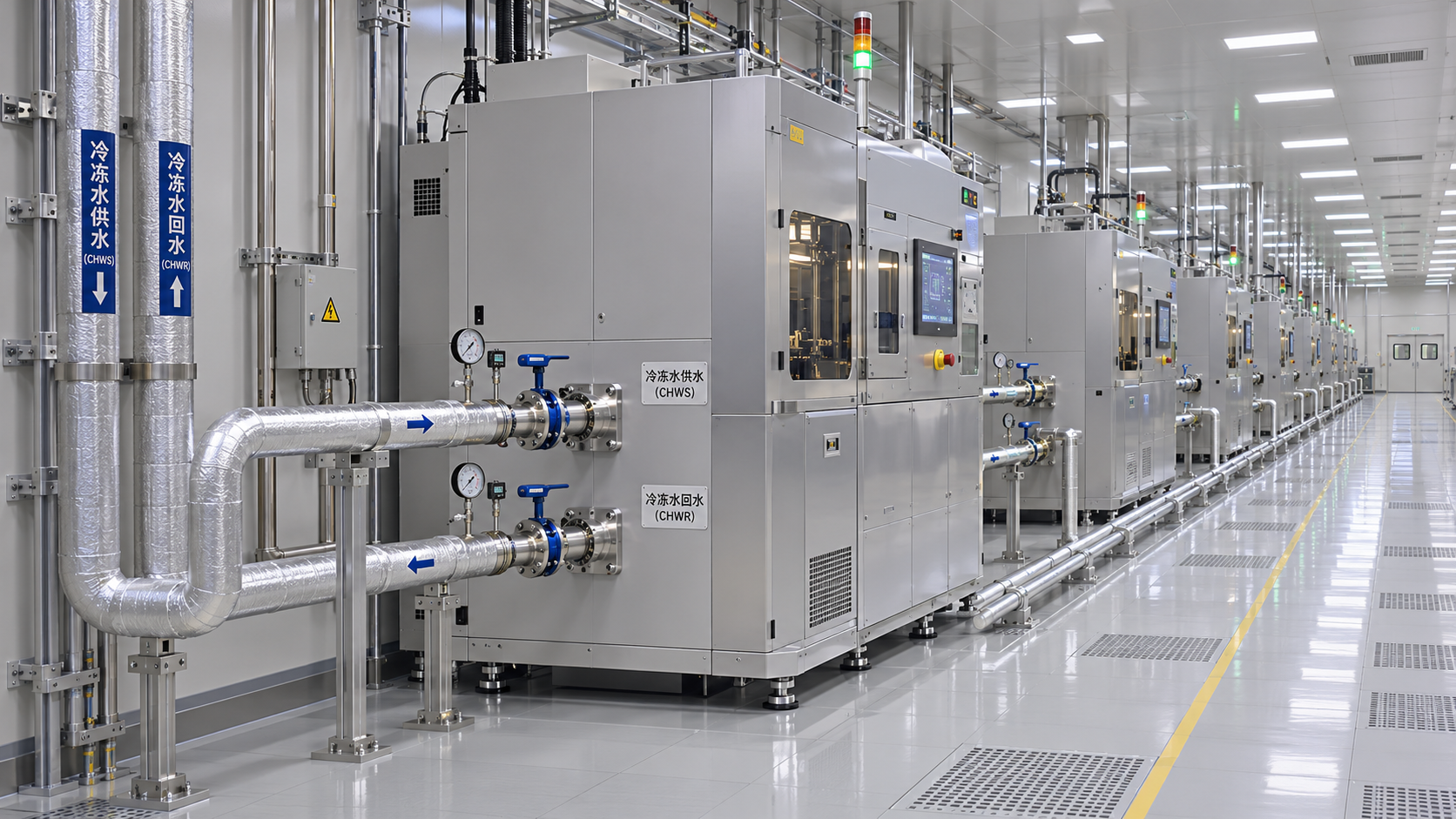
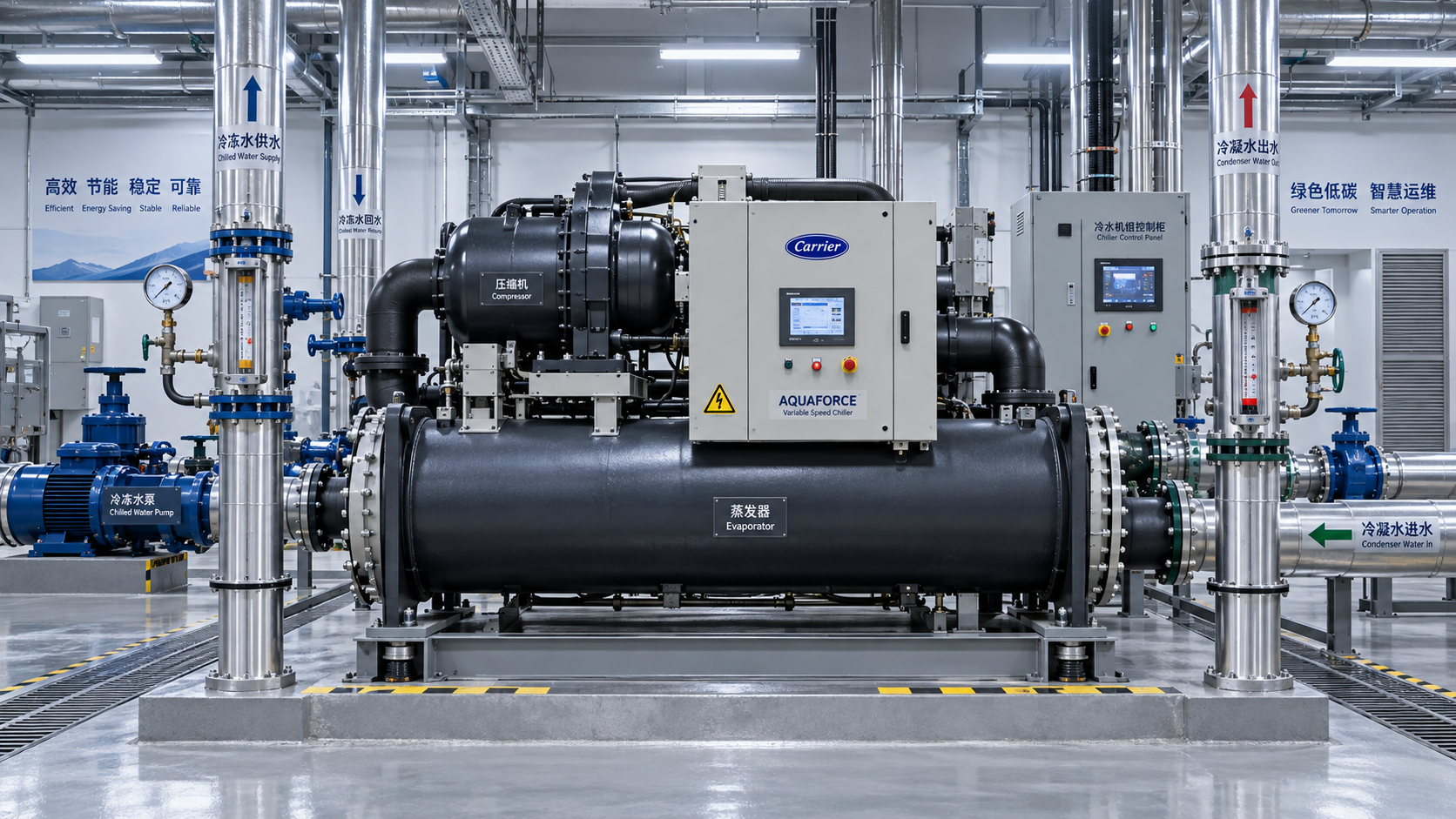
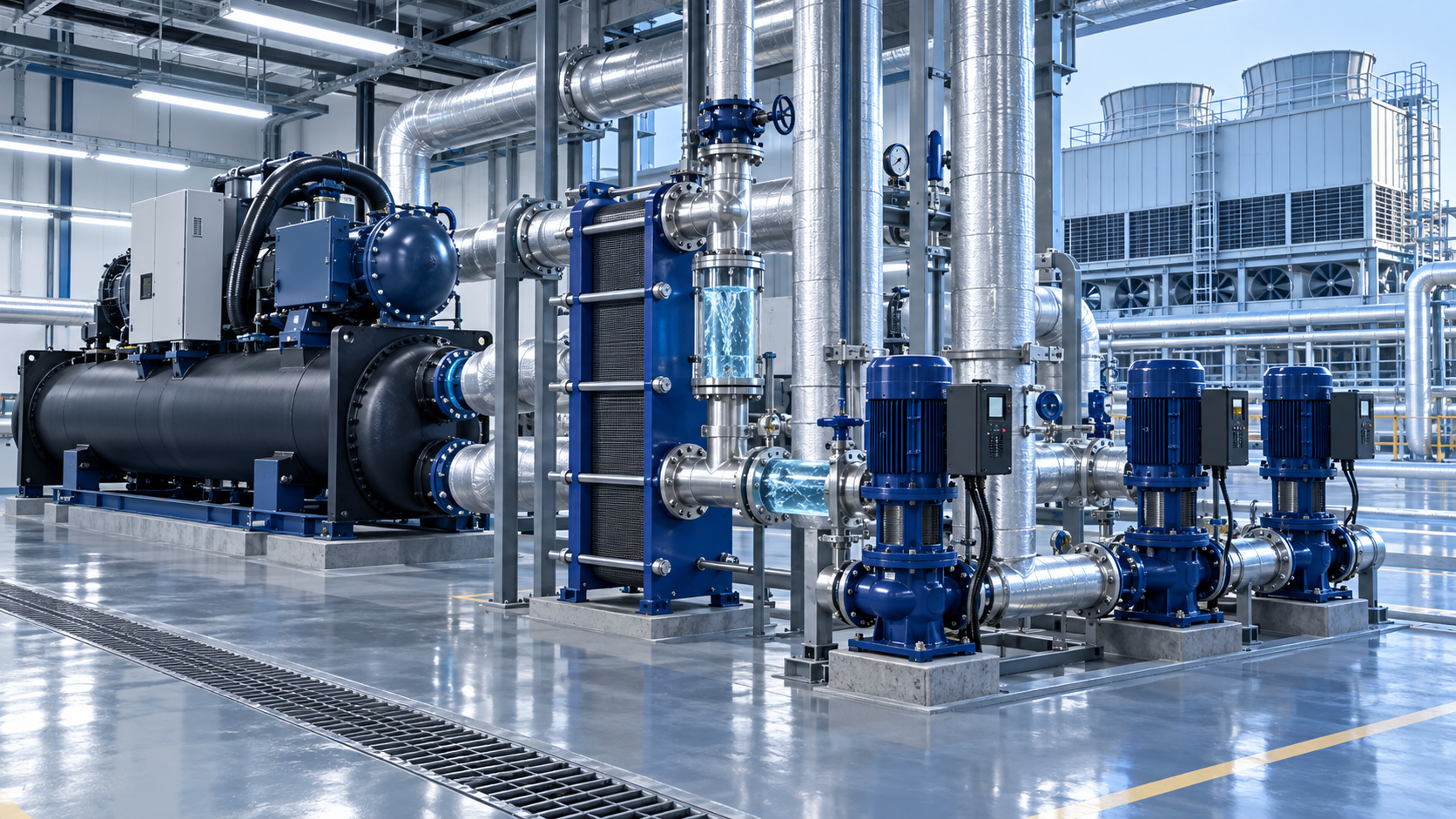
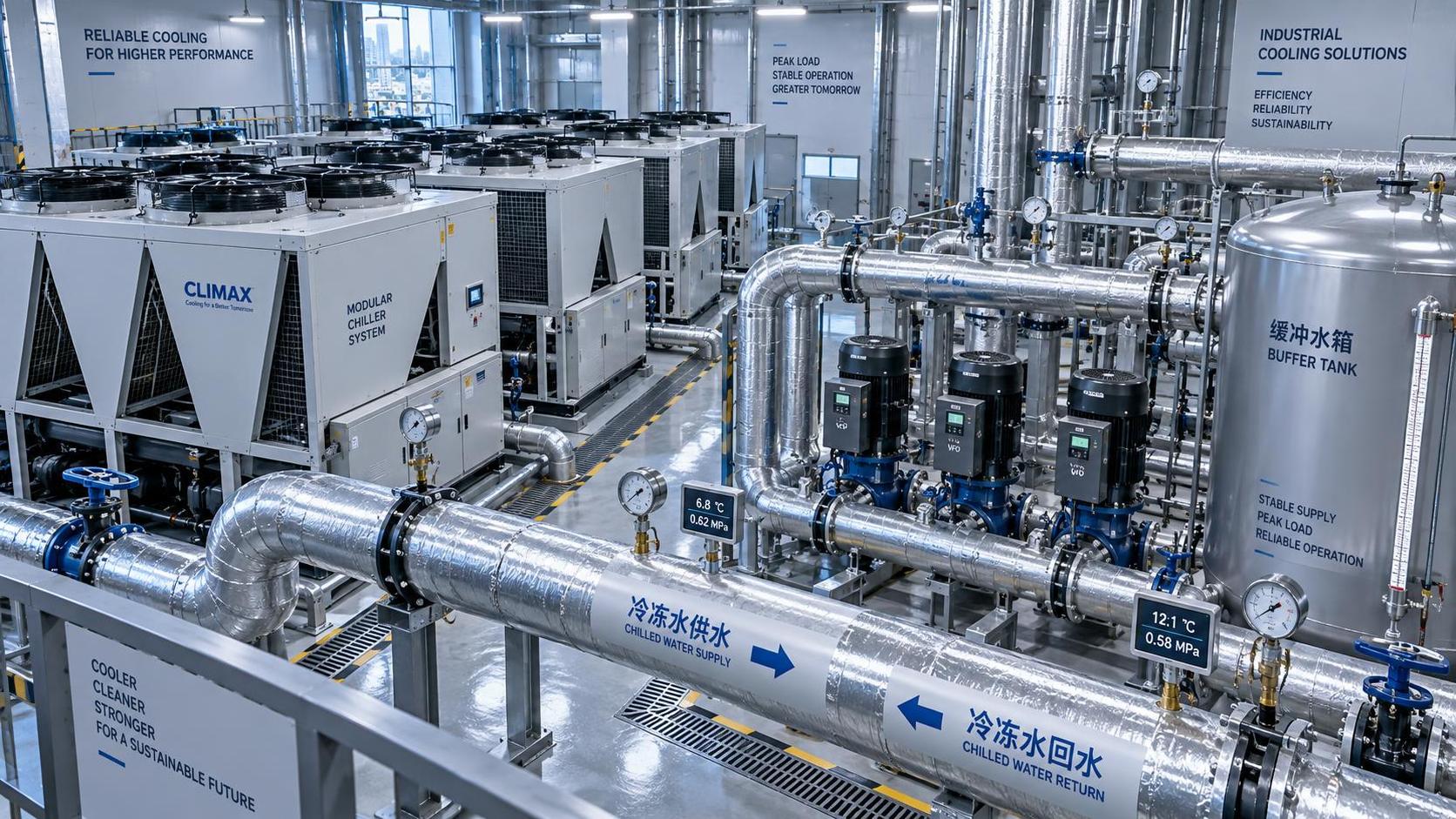
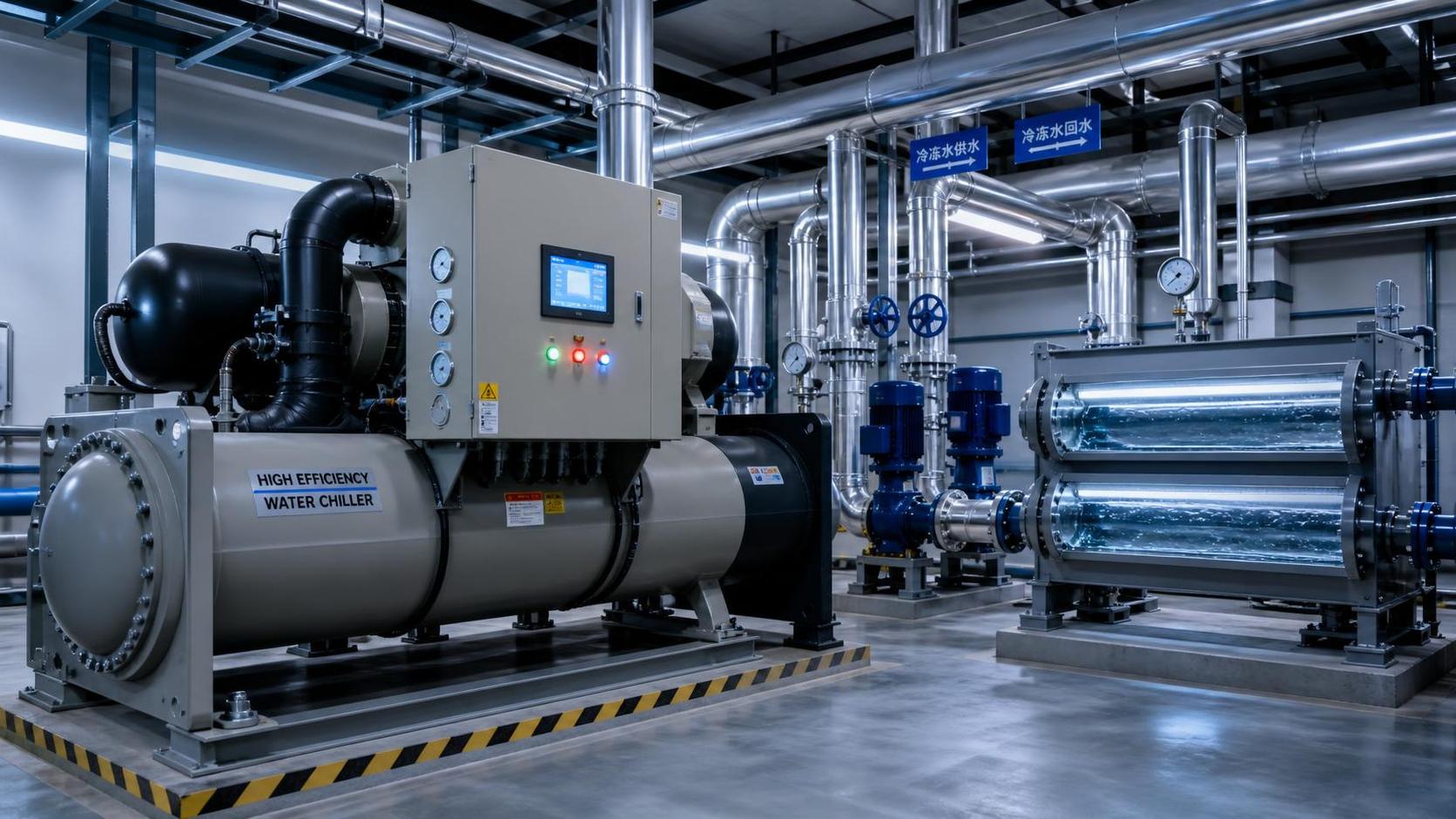
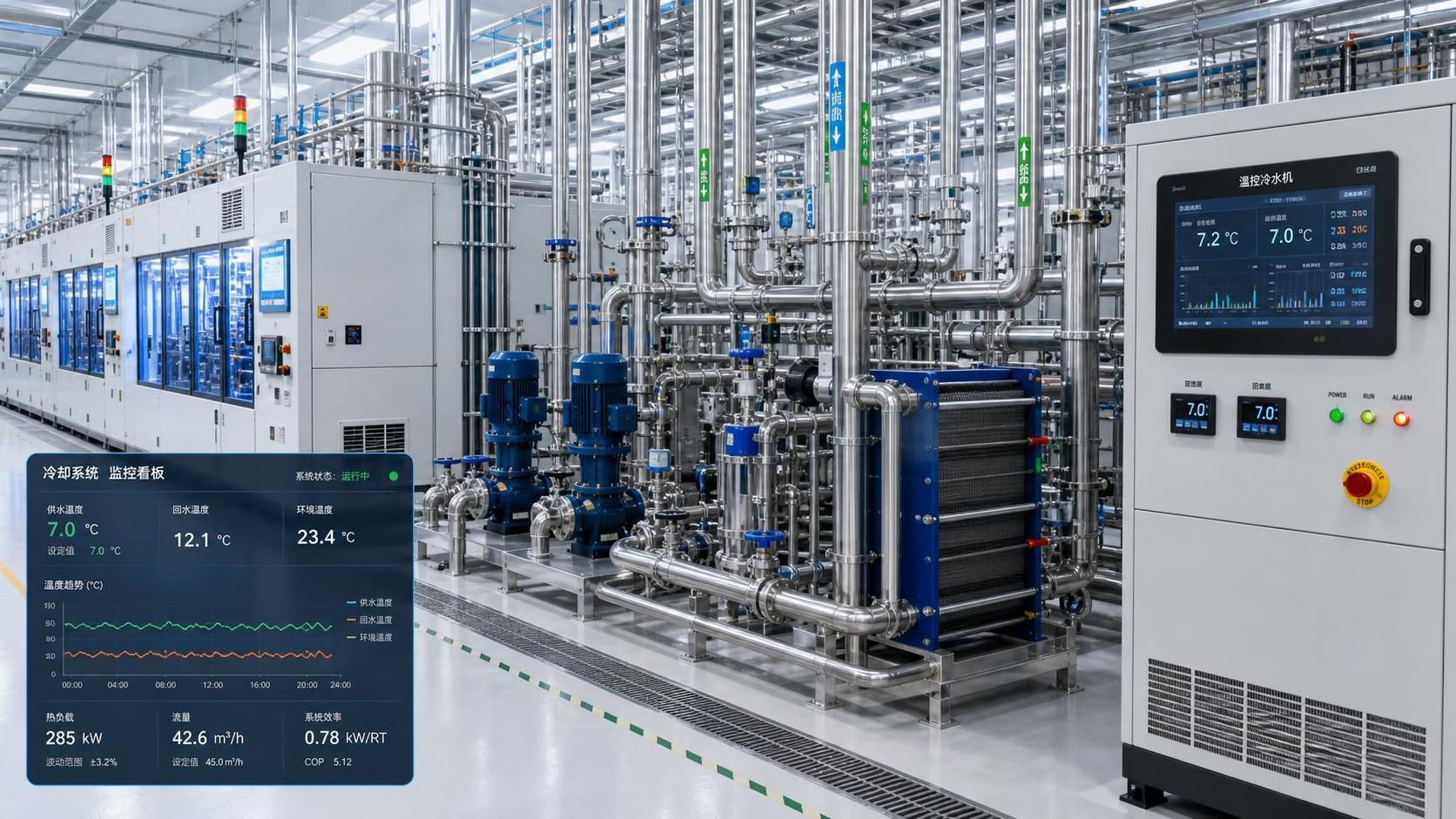
Is chilled water or direct cooling better for semiconductor equipment? Chilled water is often the stronger choice when several tools can share an efficient facility loop, heat loads vary across the production area, and each tool can maintain its required temperature through a suitable local control system. It is especially attractive when the facility already has dependable cooling capacity and the equipment does not need the coldest possible temperature directly at the process component.
Direct cooling can be preferable when a localized component needs a temperature that a practical water loop cannot deliver, or when integrating refrigeration with one tool gives better control over a critical load. The choice depends on what is being cooled, where temperature must be controlled, and how much variation the process can tolerate. A central chiller and a directly cooled component can also coexist in the same equipment architecture.
Start with the temperature requirement at the process
The first selection step is to identify the control point. A specification for facility water temperature does not necessarily describe the temperature of a wafer chuck, chamber wall, laser, power supply, or other component inside the tool. Heat exchangers, piping, pumps, and control valves all sit between the facility supply and the point where thermal performance matters.
For each load, distinguish the required operating temperature from the permitted variation around it. A water supply that is cold enough to remove the average heat load may still be unsuitable if its temperature drifts too far, if pressure changes disrupt flow, or if the tool cannot respond quickly enough to a process transition. Conversely, a facility loop with modest temperature stability may be adequate when the tool has a well-designed secondary loop and local temperature control.
Temperature range can make the decision straightforward. If the process needs a component temperature below what the facility water and intermediate heat exchangers can practically support, a local refrigeration system or another specialized cooling method may be needed. If the component can operate comfortably above the available water temperature, chilled water becomes a more credible option. Allow for a temperature difference across each heat exchanger; the cooled component cannot be assumed to reach the facility supply temperature under load.
Direct cooling deserves the same scrutiny. Removing heat close to a component can reduce the number of heat-transfer stages, but it does not automatically guarantee better stability. Refrigeration controls, sensor placement, changing heat loads, and the thermal mass of the component determine how closely the actual process temperature follows its setpoint.
Ask the tool supplier to state stability at the process control point and under representative operating conditions. A figure measured at a chiller outlet cannot be compared directly with one measured at the cooled surface.
Compare the architectures at the same system boundary
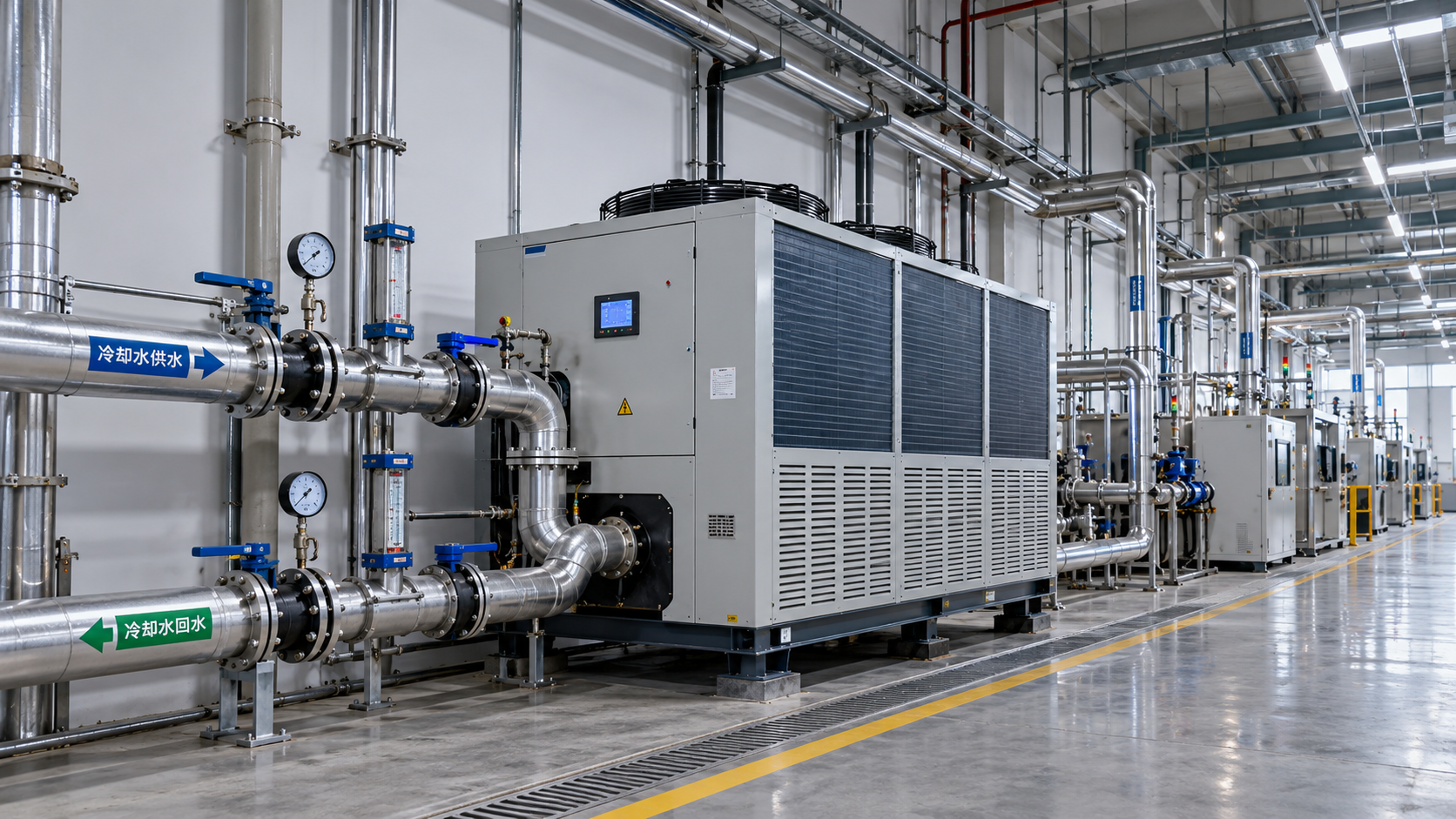
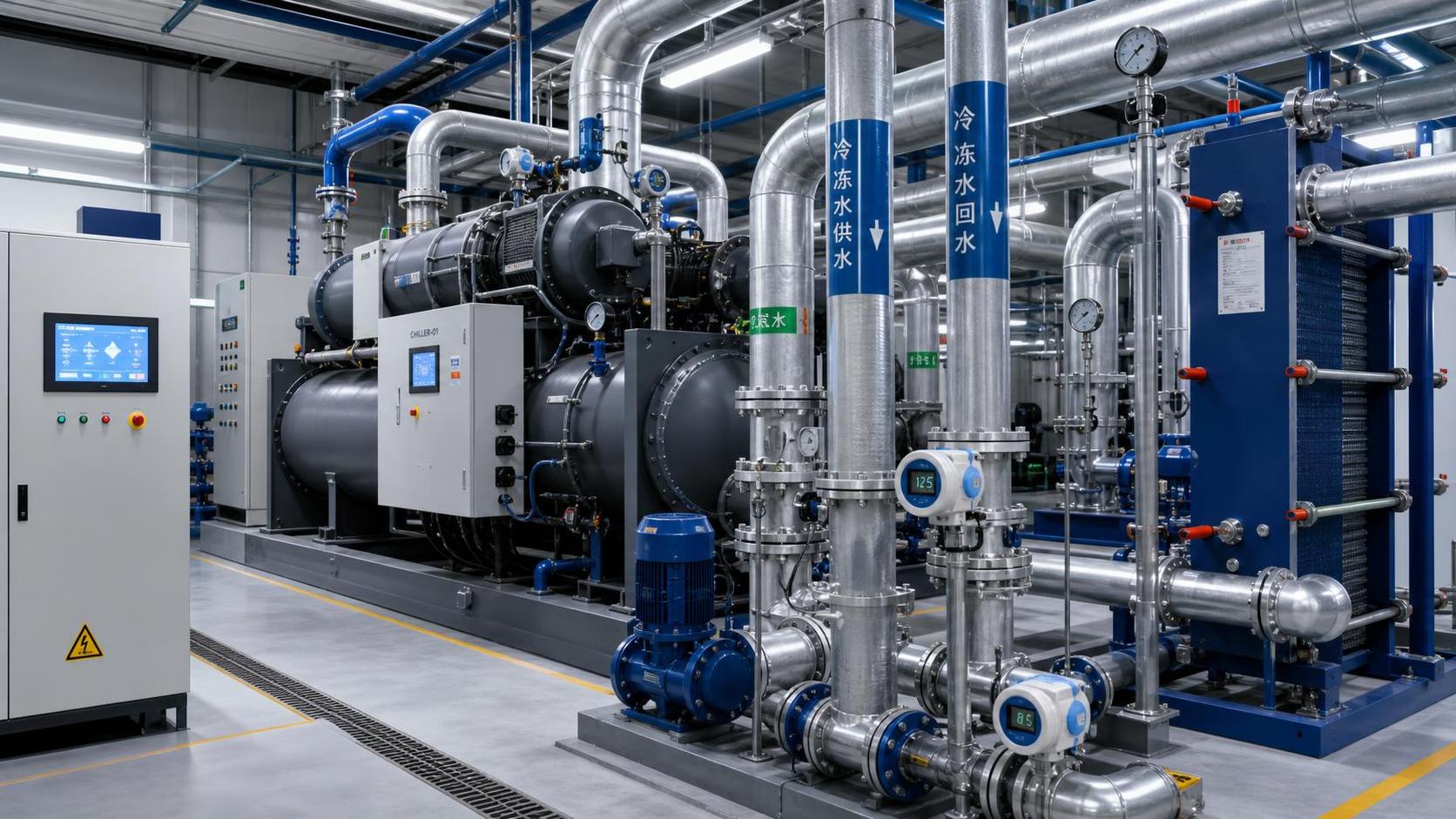
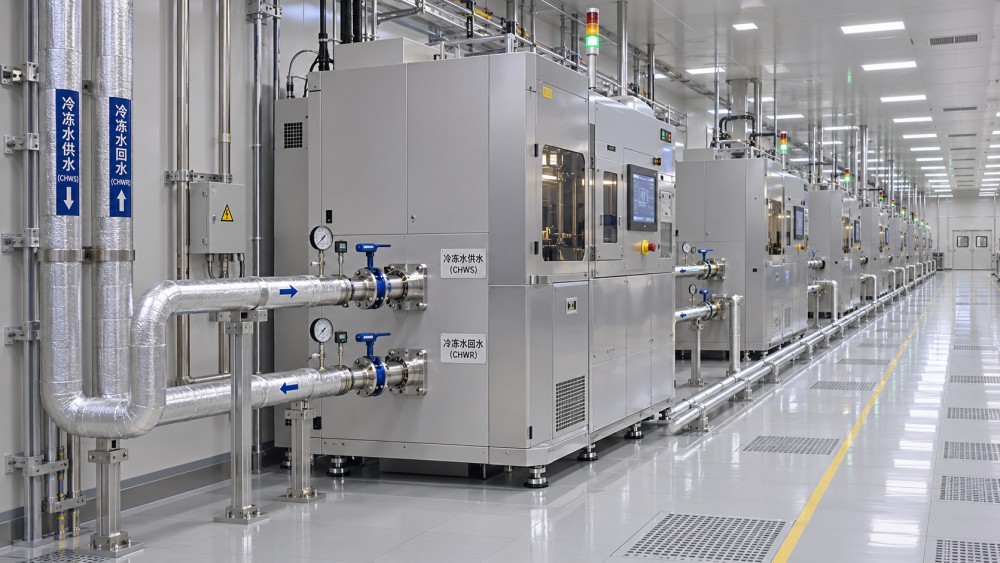
“Direct cooling” can describe different arrangements. Here, it means refrigerant or another cooling medium removes heat close to the tool or component, with local refrigeration providing the cooling effect. Chilled water refers to a facility or shared plant supplying water to the equipment, either directly to an approved circuit or through an intermediate heat exchanger.
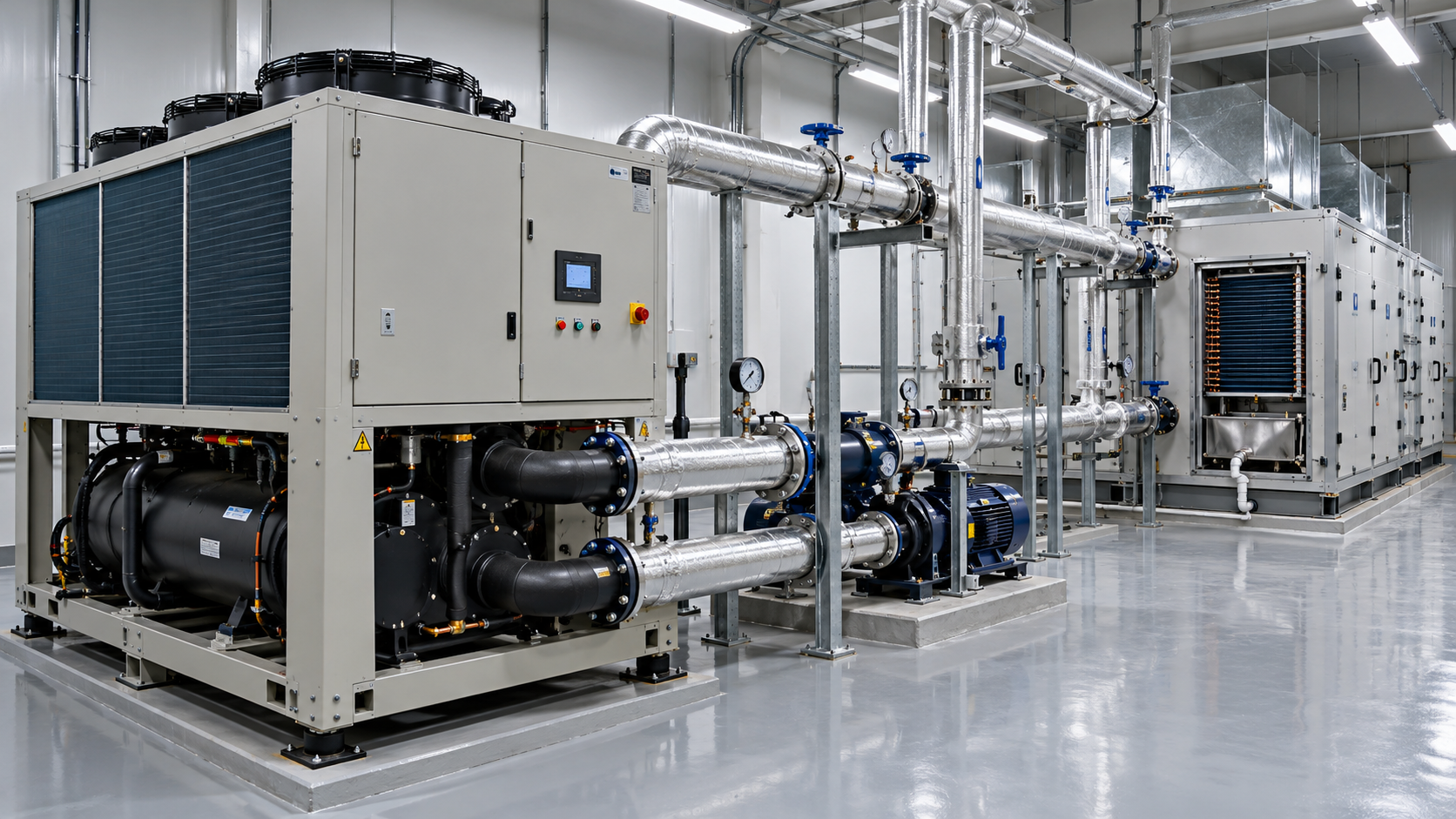
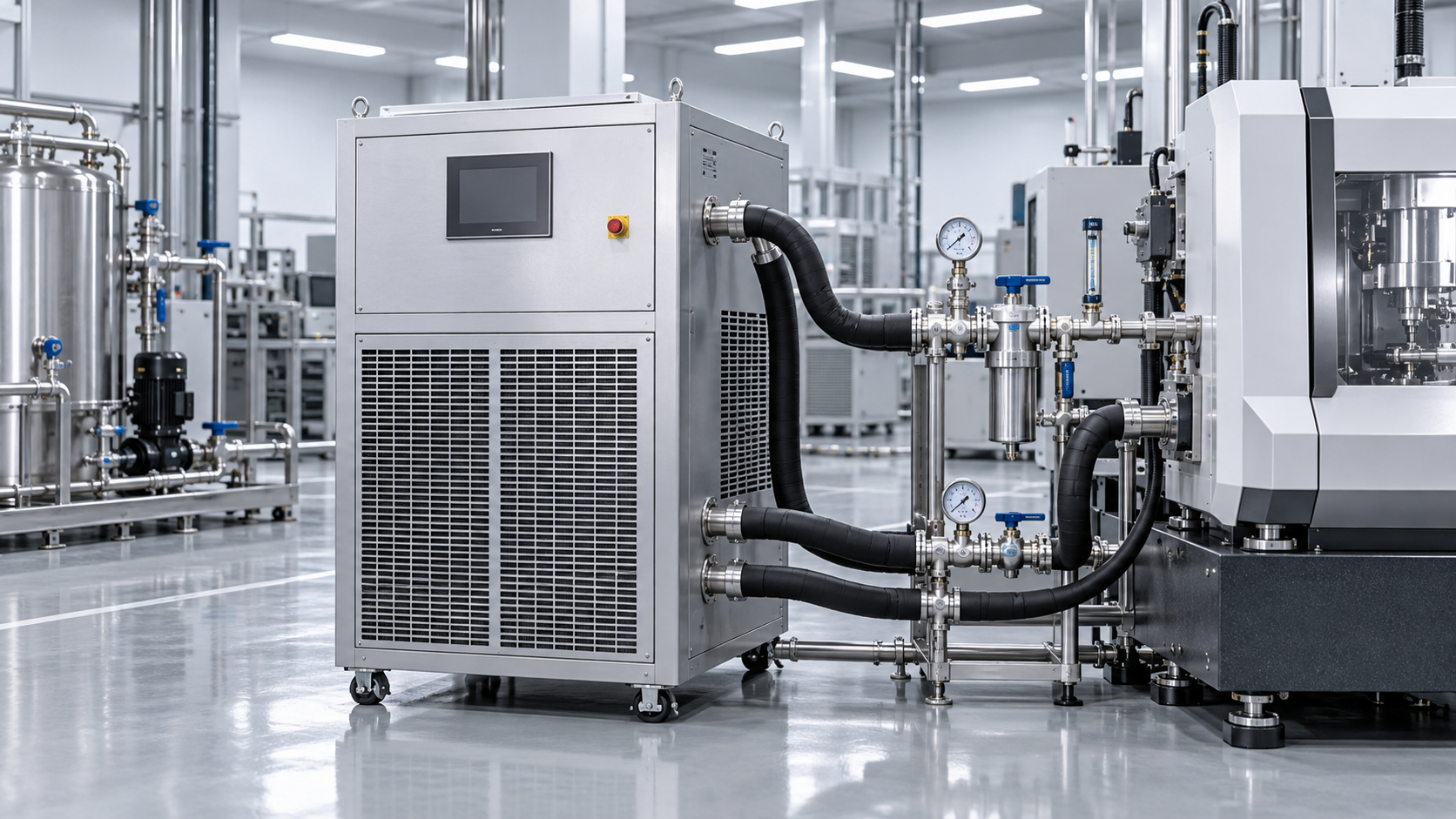
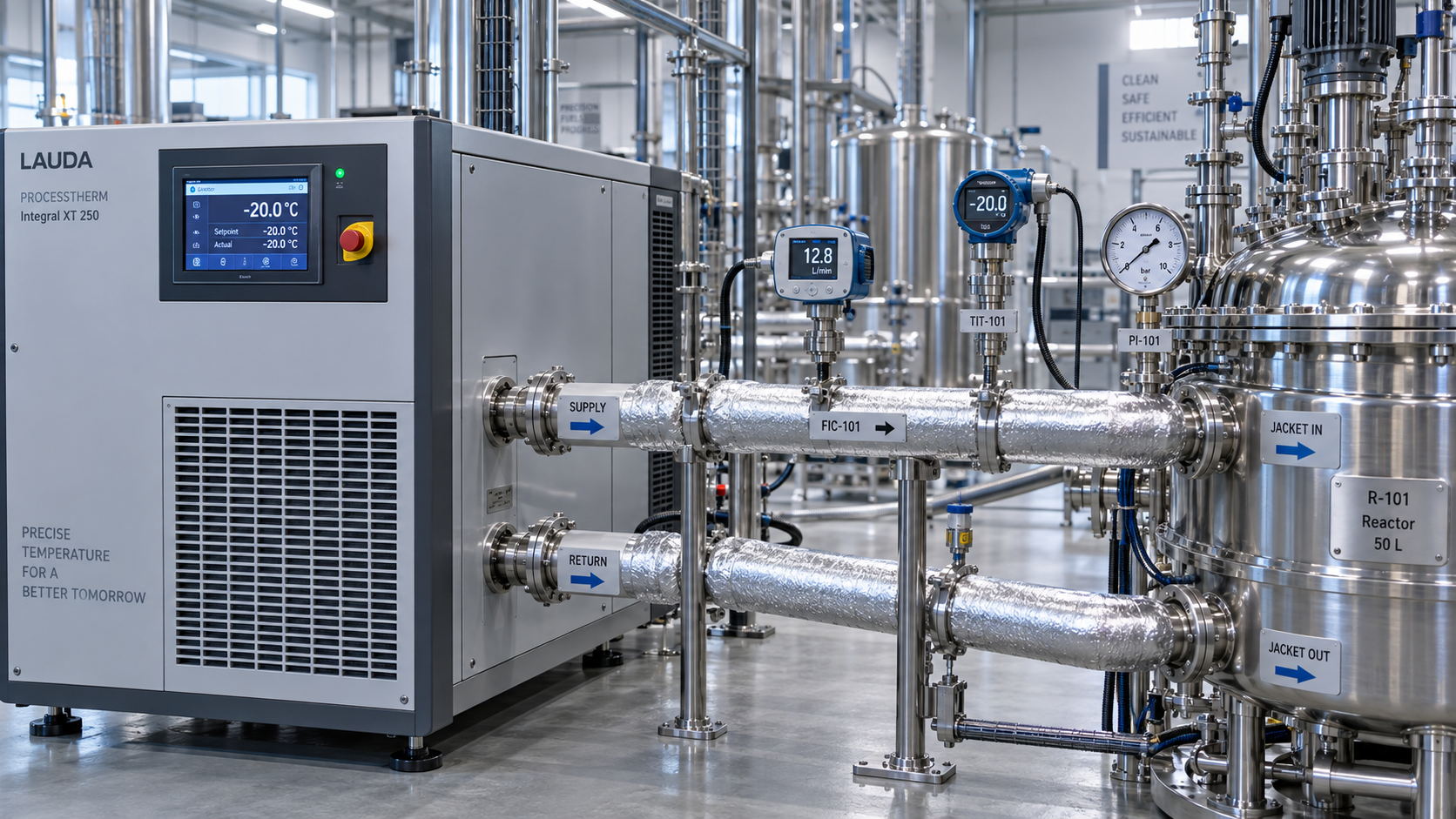
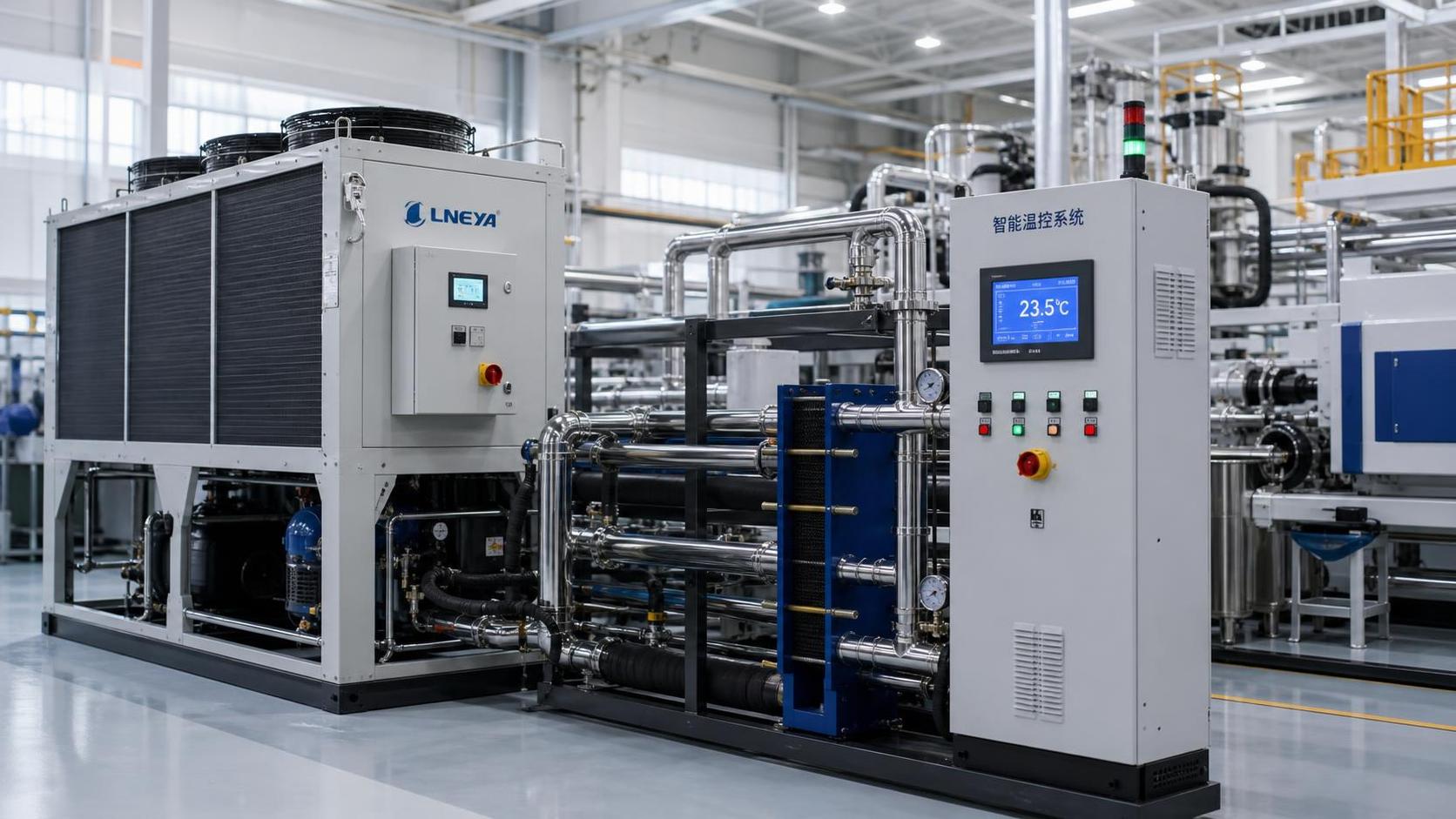
That distinction matters because many systems combine the two. A tool may use a local refrigerant chiller for a sensitive process loop while rejecting its heat to facility water. Others use facility water for electronics and a separate loop for temperature-critical components. The meaningful comparison is therefore between complete heat-removal paths, not simply between two labels.
A comparison that counts only the tool-mounted chiller’s electricity can favor one option unfairly. Central plant energy, pumps, local pumps, heat rejection, and any intermediate temperature-control equipment belong in the assessment. Similarly, a direct system that rejects heat to facility water still uses part of the central infrastructure.
Check whether the facility loop can support the tool
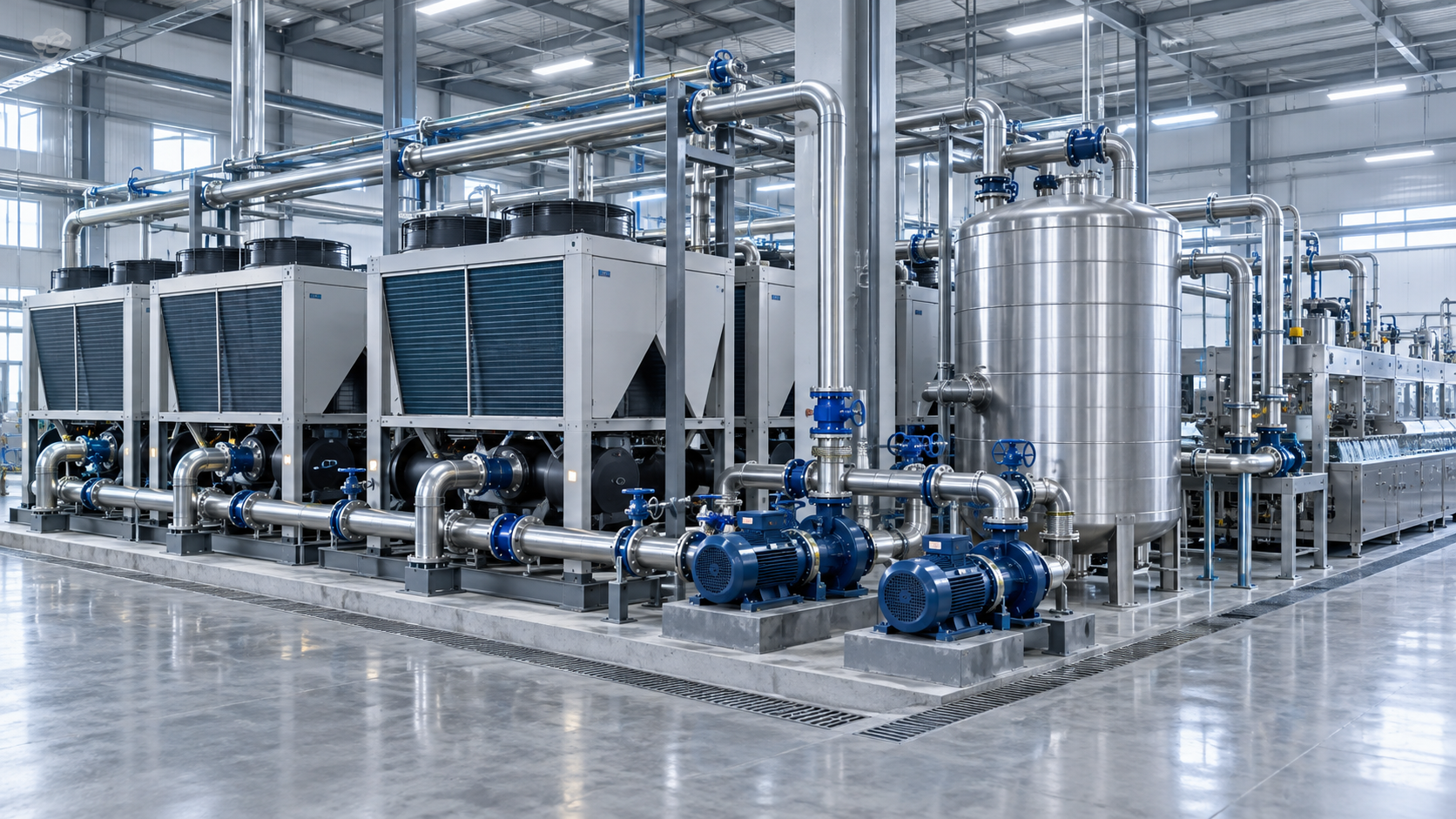
Existing chilled-water infrastructure is an advantage only if capacity is available where and when the tool needs it. A plant may have spare cooling capacity in aggregate while a branch line lacks sufficient flow, pressure, or control authority. Installation teams should examine the distribution path as well as the central plant.
Use the expected operating profile rather than a single nameplate value. Semiconductor equipment can move between idle, processing, cleaning, and other states with different thermal loads. The assessment should include peak heat rejection, minimum and maximum flow, inlet-temperature limits, return-temperature constraints, and the rate at which the load changes. Simultaneous operation of other tools matters when several systems share the same branch or plant.
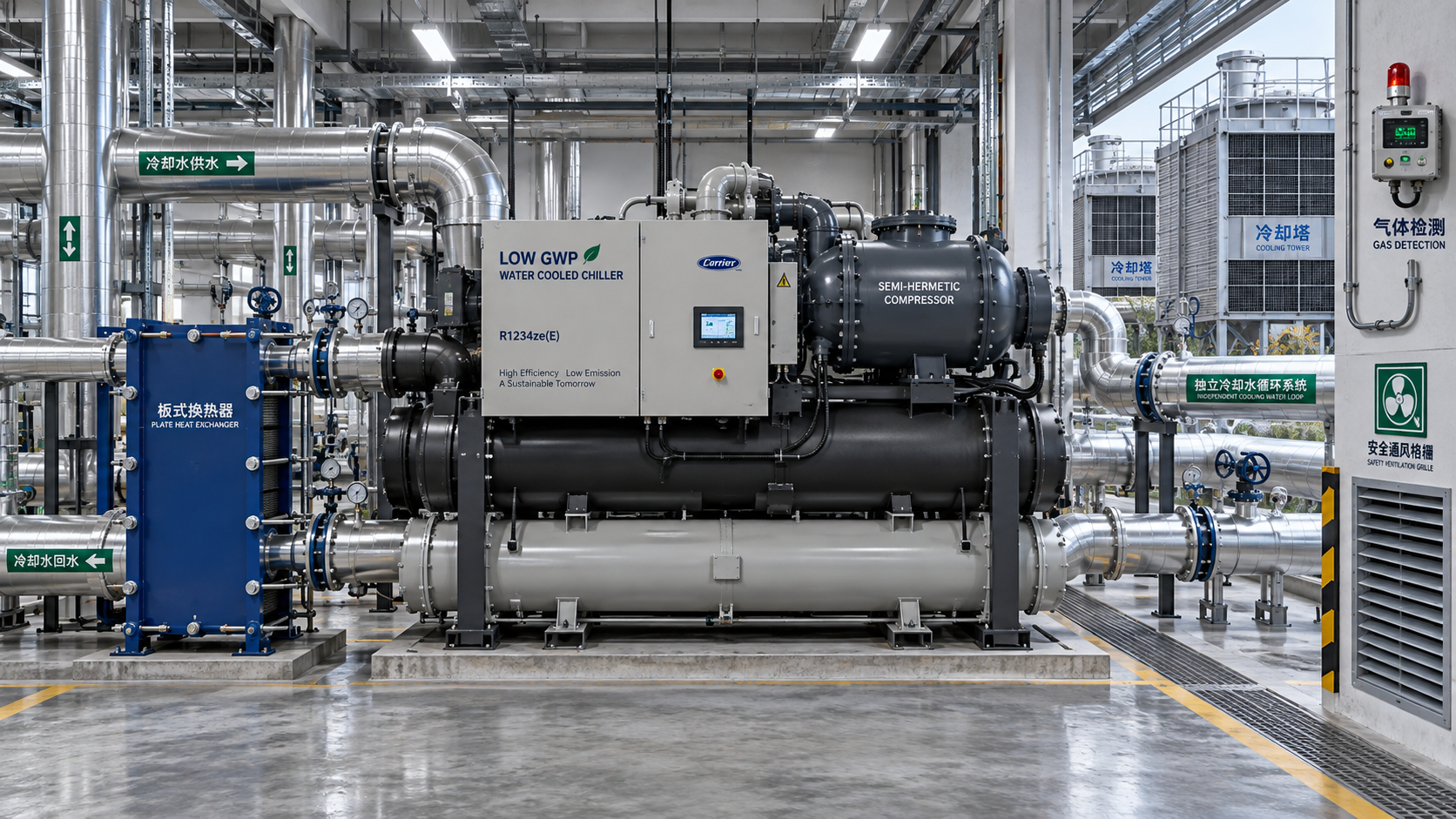
Water quality and material compatibility are equally consequential. Facility water may carry particles, corrosion products, or treatment chemicals that a tool’s internal circuit cannot tolerate. An intermediate heat exchanger can isolate the circuits, but it adds a temperature difference and pressure losses. That added separation must be included when checking whether the process can still reach its temperature target.
Pressure and flow also affect reliability. Insufficient flow reduces heat removal; excessive differential pressure may exceed component limits or make control valves difficult to regulate. The tool and facility specifications should define the acceptable operating envelope at the connection point, including what happens during startup and shutdown.
Where an existing loop cannot meet those conditions, the cost comparison changes. Upgrading pumps, pipework, treatment, or plant capacity may still be justified across many tools. For one isolated load, however, a local cooling system may be easier to integrate. Its own electrical supply, ventilation or condenser-water connection, and maintenance access must then be included in the scope.
Evaluate stability during transitions, not just steady operation
A cooling system may hold its setpoint under a stable load and still cause process problems during a rapid change. Consider how the architecture behaves when a chamber enters a high-power step, when a tool moves into standby, or when several tools change state together. Temperature overshoot, recovery time, or fluctuating flow can affect the repeatability of temperature-sensitive operations.
For chilled water, the local circuit often determines how much of the facility’s variation reaches the process. A secondary loop, mixing arrangement, thermal buffer, or dedicated controller may help, depending on the tool design. Each also adds equipment, space, pressure drop, and possible failure points. The evaluation should establish whether that extra layer is already included in the tool or must be supplied separately.
For direct refrigeration, check whether the system can regulate at both high and low loads. A unit selected only for peak capacity may have difficulty controlling a much smaller load, depending on its compressor and control arrangement. Cooling very close to a component can also create uneven temperatures if the heat-transfer surface or control scheme is poorly matched to the load.
Transient performance should be demonstrated at the relevant sensor location, using an agreed load profile. The result is more useful than a stability claim without a defined measurement point, load, and test duration.
Account for condensation, leaks, and interruption
Any surface below the surrounding air’s dew point can collect moisture. Chilled-water lines, local refrigerant lines, valves, and heat exchangers may therefore need insulation and moisture control. Lower operating temperatures can make this harder, particularly during maintenance or when enclosures are opened. The assessment should cover expected ambient humidity, insulation continuity, and how condensation would be detected or contained.
Leak consequences depend on the medium and location. Water near electronics or process equipment can damage components and interrupt production. Refrigerant systems introduce different considerations, including refrigerant management, leak detection where appropriate, service procedures, and applicable local requirements. An intermediate water circuit can isolate a sensitive tool from facility water, but it does not eliminate the need to manage leaks within either circuit.
Reliability also has to be evaluated at the architecture level. A shared plant concentrates maintenance and can support redundant equipment where justified, but a common disruption may affect multiple tools. Independent local systems can limit the reach of some failures, while increasing the number of devices that need inspection and repair. Neither arrangement is inherently more reliable without knowing its redundancy, maintenance plan, and failure modes.
Agree on the tool response to loss of cooling: alarm thresholds, controlled shutdown, restart conditions, and any required backup. For a temperature-sensitive process, the time needed to reach a safe state can matter as much as the likelihood of a cooling interruption.
Make the selection with a common operating profile
Once both options meet the process temperature and reliability requirements, compare them using the same production assumptions. Include installation, heat exchangers, pumps, electrical work, heat rejection, controls, maintenance, and expected energy use over the relevant operating pattern. For chilled water, allocate the effect on central plant and distribution. For local refrigeration, include the infrastructure needed to remove condenser heat.
Pay particular attention to spare capacity and future changes. A shared loop may become more attractive as compatible tools are added, but only while it can maintain the required flow and temperature at each connection. A local system may suit a specialized tool with unusual requirements, while a larger installation of similar tools may justify a shared solution.
The final decision should identify which temperatures and loads the facility guarantees, which the tool controls locally, and where responsibility changes hands. If chilled water meets the process requirements across the full operating profile with adequate capacity and protection, its shared infrastructure can be a strong fit. If it cannot reach the required temperature or respond within the process limits, direct or hybrid cooling deserves the closer evaluation.
Ready when you are. Send us a message to get started.
Related News
- When is chilled water better than direct cooling for semiconductor equipment?Author :Cryogenic Systems Expert

- How to size a high-efficiency industrial cooling chillerAuthor :Cryogenic Systems Expert

- How to size a chiller for pharmaceutical cleanroom temperature controlAuthor :Cryogenic Systems Expert

- When do smart thermal systems with sensors reduce chiller energy use?Author :Cryogenic Systems Expert

- Chiller Optimization Checklist for Rising Energy Use and Unstable Cooling OutputAuthor :Cryogenic Systems Expert

- How to Specify a High-Precision Temperature Chiller for Tight-Tolerance ProcessesAuthor :Cryogenic Systems Expert

- Designing Energy-Efficient Industrial Cooling for Variable Process LoadsAuthor :Cryogenic Systems Expert

- Low-GWP Cooling Solutions for Process Plants: Comparing Safety, Efficiency, and CostAuthor :Cryogenic Systems Expert

- How to size energy efficient industrial cooling for a process loadAuthor :Cryogenic Systems Expert

- How to specify high-precision temperature control in EuropeAuthor :Cryogenic Systems Expert

- How cooling system design affects cleanroom contamination controlAuthor :Cryogenic Systems Expert

- When does industrial cooling heat recovery pay back in energy savings?Author :Cryogenic Systems Expert

- How to size an industrial cooling system for peak process loadsAuthor :Cryogenic Systems Expert

- When are aluminum electronics cooling solutions suitable for high-density designs?Author :Cryogenic Systems Expert

- A thermal management guide for preventing chiller capacity lossAuthor :Cryogenic Systems Expert

- When does aluminum make sense for electronics cooling solutions?Author :Cryogenic Systems Expert

- EU Battery Carbon Footprint Labels Become Mandatory on Aug 18 for Battery-Integrated Cooling and Energy Storage ExportsAuthor :Cryogenic Systems Expert

- China-UAE Direct Sea Route Cuts Lead Times for Industrial Cooling and Compression ExportsAuthor :Cryogenic Systems Expert

- EPA Rule Takes Effect for R-410A Equipment ImportsAuthor :Cryogenic Systems Expert

- EN 378-1:2026 Tightens EU Export ChecksAuthor :Cryogenic Systems Expert

- How to Compare Semiconductor Cooling Solutions by Heat Load and Uptime RiskAuthor :Cryogenic Systems Expert

- EU Label Deadline Hits China Chiller ExportsAuthor :Cryogenic Systems Expert

- How Smart Thermal Systems Improve Industrial Cooling EfficiencyAuthor :Cryogenic Systems Expert

- How to Choose Process Cooling Equipment for Stable Temperature ControlAuthor :Cryogenic Systems Expert

- EU Finalizes 2026 HFC Quota Cut for R-134a ChillersAuthor :Cryogenic Systems Expert

- EU Tightens HFC-134a Quotas for Industrial ChillersAuthor :Cryogenic Systems Expert

- REACH SVHC Update Pressures HFC-134a Chiller Supply ChainsAuthor :Cryogenic Systems Expert

- EU PFAS Coolant Ban Reshapes Chiller ExportsAuthor :Cryogenic Systems Expert

- EU REACH Restricts PFAS Cooling Media ImportsAuthor :Cryogenic Systems Expert

- EU Ecodesign Rule Takes Effect for Industrial ChillersAuthor :Cryogenic Systems Expert

- EU REACH Rule Takes Effect for PFAS in Industrial Cooling ExportsAuthor :Cryogenic Systems Expert

- Industrial Cooling for Plastic Processing: How to Size for Stable Cycle TimesAuthor :Cryogenic Systems Expert

- EU F-Gas Update Bars R404A/R507 in Commercial CoolingAuthor :Cryogenic Systems Expert

- DOE Raises Chiller Efficiency Standard From October 2026Author :Cryogenic Systems Expert

- India Mandates BIS Energy Certification for Industrial ChillersAuthor :Cryogenic Systems Expert

- Energy-Efficient Heat Exchange for Process Cooling: Cost vs PaybackAuthor :Cryogenic Systems Expert