When are aluminum electronics cooling solutions suitable for high-density designs?




For project managers planning high-density electronics, selecting the right thermal strategy is critical to reliability, footprint, and lifecycle cost. Aluminum electronics cooling solutions are often suitable when designs require lightweight construction, efficient heat spreading, scalable manufacturability, and balanced thermal performance. Understanding their limits in power density, airflow, corrosion exposure, and interface design helps teams make informed choices before thermal risks affect schedules, budgets, or system uptime.
In a dense enclosure, heat does not disappear simply because the circuit board is compact. It moves through packages, printed circuit boards, thermal interfaces, chassis walls, heat sinks, air passages, and—ultimately—the surrounding environment. A small mistake in that chain can become a field failure: processors throttle, power components age faster, displays become unreliable, or service teams face repeated thermal alarms. The practical question is not whether aluminum is “good” at cooling. It is whether its thermal, mechanical, and manufacturing characteristics match the project’s actual heat-load pattern.
Why aluminum remains relevant in high-density electronics
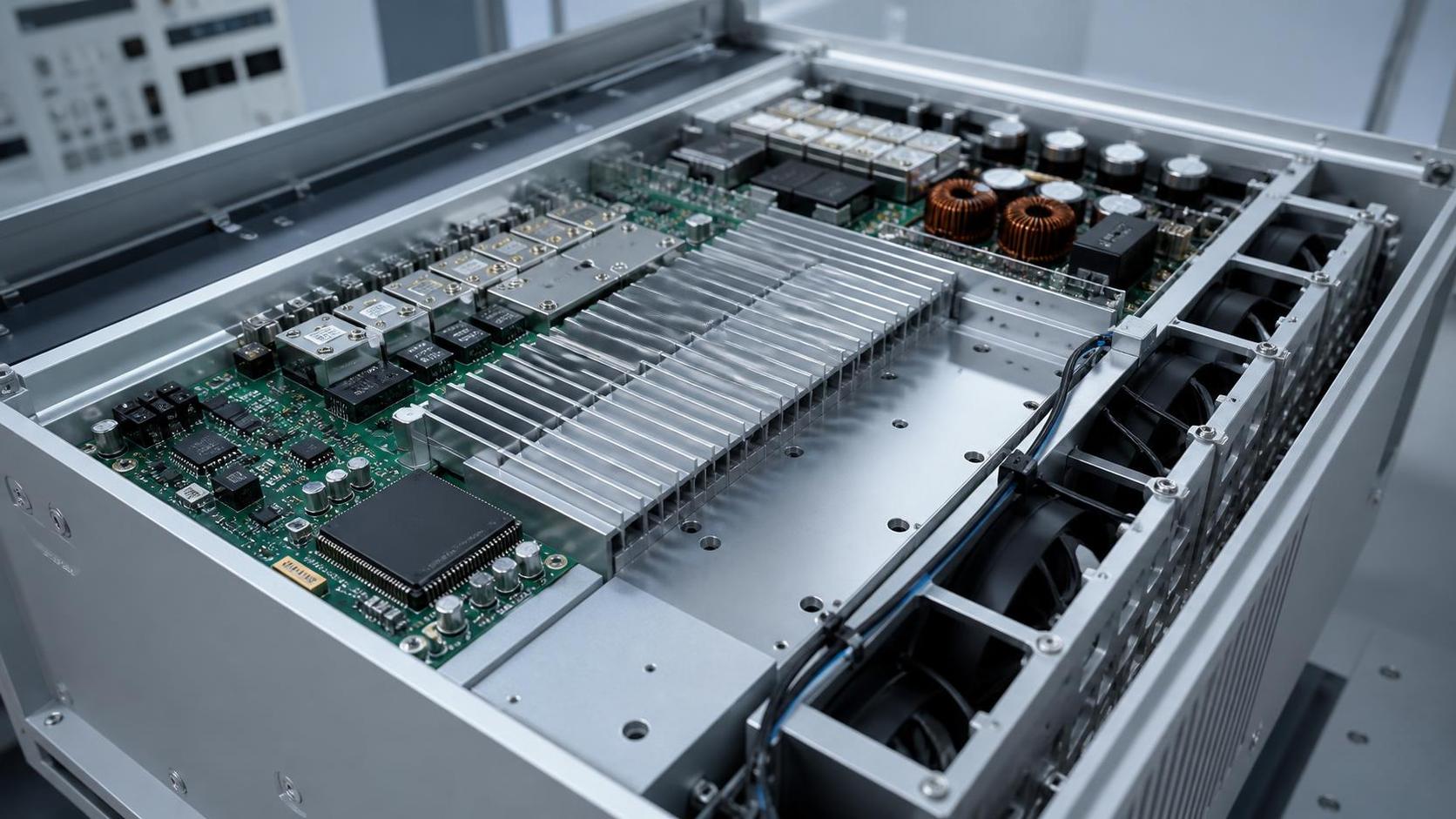
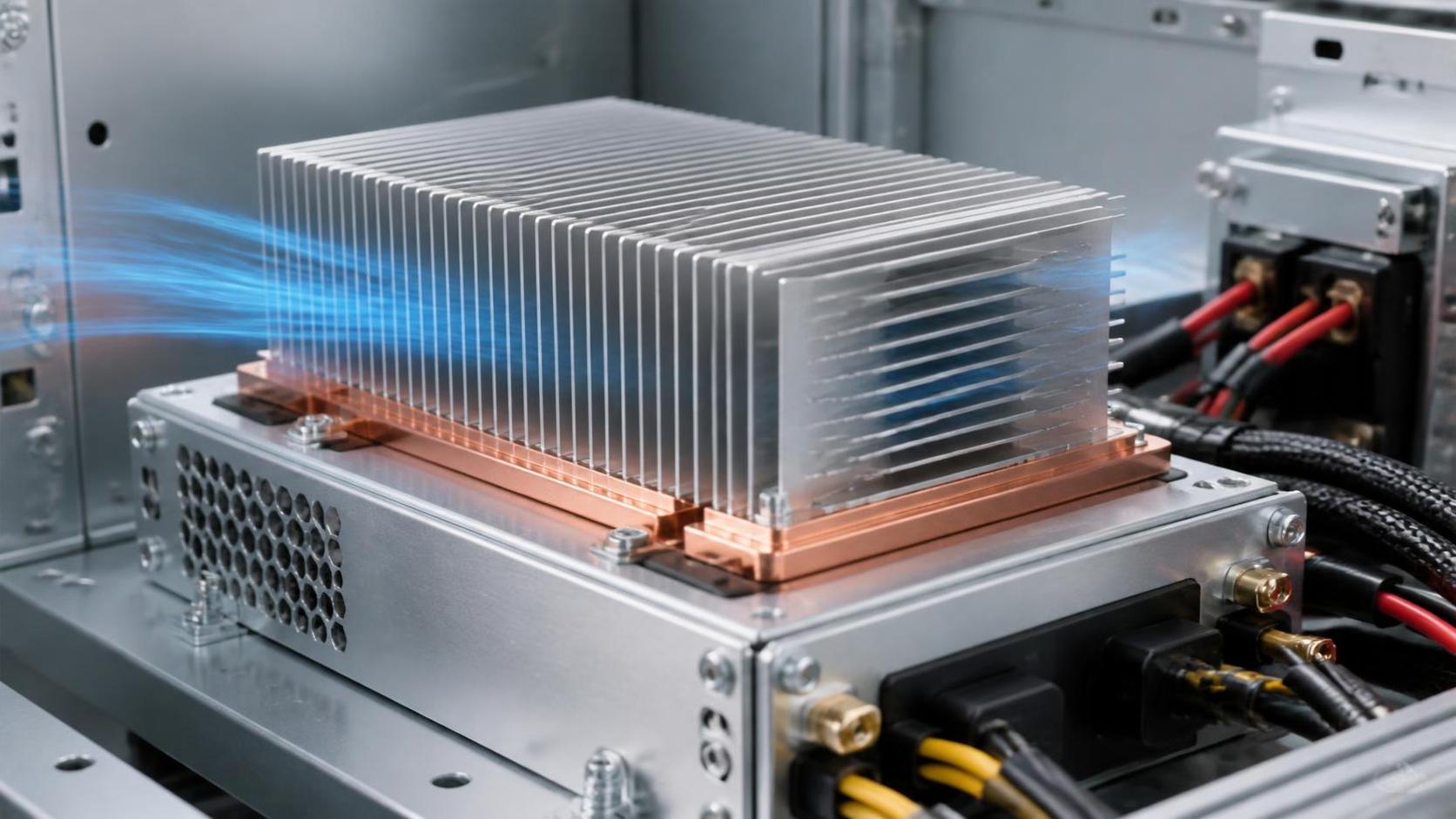
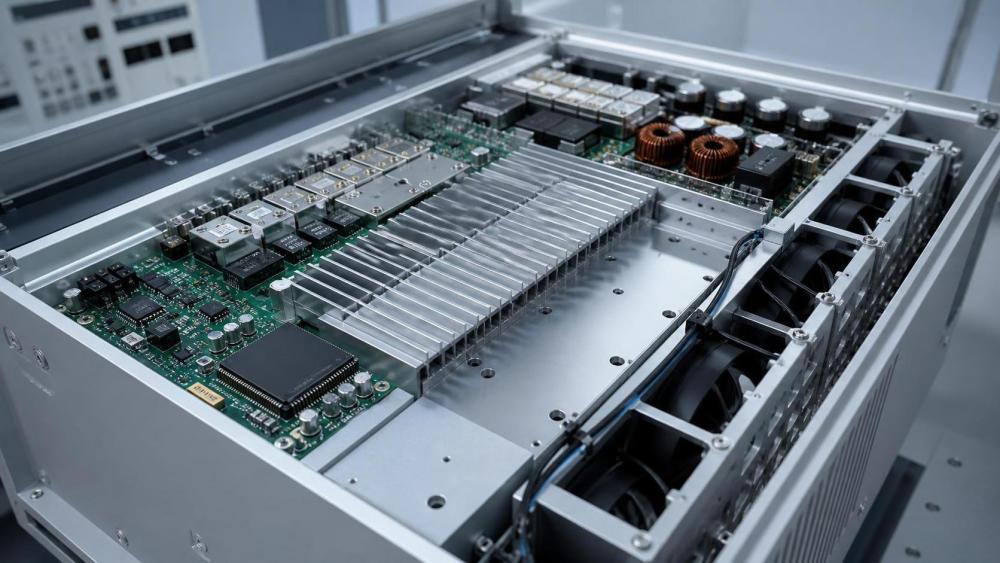
Aluminum offers a useful combination of properties that is difficult to ignore in compact equipment. It is much lighter than copper, readily available in common grades, compatible with extrusion and machining, and comparatively easy to form into integrated housings, heat sinks, cold plates, and structural panels. Its thermal conductivity is sufficient for many moderate- to high-power electronics applications, particularly when heat must be spread over a larger surface before being released through convection or forced airflow.
That balance matters to project teams. A copper-heavy design may provide greater thermal conductivity, but it can increase weight, material cost, machining complexity, and structural load. Aluminum often allows the cooling function to become part of the enclosure itself. An extruded housing, for example, may combine mounting rails, external fins, electromagnetic shielding features, and a thermal path in one component. Fewer separate parts can simplify assembly and reduce opportunities for interface resistance.
In practice, aluminum cooling structures are commonly considered for:
- Telecommunications and networking equipment with concentrated processor or power-amplifier heat.
- Industrial control cabinets, motor drives, and power-conversion modules.
- LED lighting, imaging equipment, and compact display systems.
- Automotive and transportation electronics where mass and vibration matter.
- Medical, laboratory, and instrumentation products requiring a controlled external surface temperature.
- Rugged edge-computing systems that need structural protection as well as heat dissipation.
The design conditions that make aluminum a sensible choice
1. The heat load is high, but not beyond the available thermal path
Aluminum is suitable when the total heat generation and local heat flux can be transferred through a well-designed path. The calculation should begin at the semiconductor junction and continue through the package, thermal interface material, spreader or heat sink, enclosure, and ambient environment. Looking only at the heat sink’s conductivity can create a false sense of security. A highly conductive fin array will not perform well if the interface is uneven, the base is too thin, or the surrounding airflow is blocked.
For many projects, aluminum performs particularly well when heat sources are distributed across a base or when a vapor chamber, heat pipe, copper insert, or localized spreader is used to manage hot spots. This hybrid approach retains aluminum’s low mass and manufacturing advantages while adding higher-conductivity material only where it produces a measurable benefit.
2. Weight, size, and manufacturability are important project constraints
When a device is mounted on a wall, vehicle, robotic arm, drone platform, or mobile service cart, cooling hardware cannot be evaluated separately from the structure. A heavy copper assembly may solve a thermal problem while creating a mechanical or installation problem. Aluminum extrusions and die-cast parts can reduce that burden and support repeatable production at scale.
For project managers, manufacturability also affects schedule risk. Aluminum parts can often be produced using established processes, with relatively straightforward modifications to fin geometry, mounting features, and enclosure dimensions. That flexibility is valuable when a prototype reveals that a connector must move, an air channel needs to widen, or a service panel requires additional clearance.
3. The design can use airflow intelligently
Aluminum heat sinks depend heavily on how air reaches their surfaces. Natural convection may be adequate for lower-power systems with generous fin area and vertical orientation. High-density designs more often require forced airflow, directed ducting, or a combination of conduction to the chassis and convection to the air.
A fan should not be treated as an automatic solution. Its performance depends on system impedance, filter loading, grille design, cable obstruction, fan aging, and acoustic limits. An aluminum heat sink with excellent nominal performance can underperform in the finished enclosure if air bypasses the fins. Thermal validation should therefore be performed in the assembled product, not only on an isolated component.
4. The operating environment is compatible with the material and finish
Aluminum naturally forms an oxide layer, but that does not mean every aluminum surface is automatically protected in every industrial environment. Humidity, salt, chemicals, dissimilar metals, condensation, and contamination can influence long-term behavior. In coastal, outdoor, process-control, or transportation applications, surface treatment and galvanic compatibility deserve early attention.
Anodizing, conversion coatings, powder coating, or other finishes may improve corrosion resistance and electrical isolation, but each treatment can also affect thermal contact, dimensional tolerances, grounding, and cosmetic requirements. A coated mounting surface may not transfer heat in the same way as a bare machined interface. The correct finish is therefore part of the thermal design—not merely a final styling decision.
Where aluminum cooling solutions begin to face limitations
The material becomes less attractive when the design contains extreme local hot spots, very high heat flux, or little room for spreading. Modern processors, wide-bandgap power devices, laser sources, and high-current converters may concentrate substantial heat in a small footprint. In such cases, aluminum alone may require an impractically large base, excessive fin volume, or aggressive airflow.
There are also limits imposed by ambient conditions. If the surrounding air is already hot, the temperature difference available for convection becomes smaller. A heat sink cannot cool a component below the temperature of the air passing over it without another active mechanism. Enclosures installed beside furnaces, in sealed outdoor cabinets, or in poorly ventilated machinery may need a cold plate, liquid loop, heat exchanger, thermoelectric stage, or remote heat-rejection system.
Another concern is interface performance. The thermal resistance between an electronic package and an aluminum surface can exceed the resistance of the aluminum itself. Flatness, surface roughness, clamping pressure, thermal pad thickness, grease migration, pump-out, and assembly variation all matter. If production tolerances are not defined, a design that works in the laboratory may become inconsistent across a production batch.
A practical screening method before committing to the architecture
Before selecting aluminum as the primary cooling material, project teams can use a staged review rather than waiting for a late prototype failure.
- Map the heat sources. Record the steady-state and transient power of processors, regulators, transformers, LEDs, motors, and other heat-generating parts. Identify whether the concern is total heat, a single hot spot, or both.
- Define the thermal limits. Establish junction, case, board, enclosure, connector, battery, and user-touch temperature limits. These limits should reflect the actual operating profile, not only a nominal room-temperature test.
- Draw the complete heat path. Include every interface, fastener, spreader, chassis section, air gap, fan, filter, and external surface. This exposes bottlenecks that a material comparison may overlook.
- Check the available volume and airflow. Measure the usable fin area, air velocity, pressure drop, fan curve, and service clearances. Confirm that the final system can maintain performance after filters become partially loaded.
- Review mechanical and environmental constraints. Consider vibration, shock, thermal cycling, corrosion, ingress protection, grounding, electromagnetic compatibility, and dissimilar-metal contact.
- Validate with representative testing. Test the populated enclosure under worst-case load, maximum ambient temperature, restricted airflow, and realistic installation orientation. Use thermal imaging carefully and supplement it with calibrated sensors at critical junctions and interfaces.
This workflow helps distinguish a material problem from an architecture problem. If the heat cannot reach the aluminum surface, changing the fin profile will have limited value. If heat reaches the surface but cannot leave the enclosure, the next solution may involve airflow management or a remote heat exchanger rather than a different base material.
Aluminum versus copper and active cooling
Aluminum should not be judged as a universal substitute for copper. Copper generally spreads heat more effectively and may be the better choice for very concentrated loads or compact cold plates. However, a full copper assembly can be unnecessarily heavy and expensive when only a small region needs enhanced spreading. A copper slug, embedded insert, vapor chamber, or heat pipe combined with an aluminum fin structure often provides a more balanced design.
Liquid cooling becomes more compelling when air cooling cannot maintain component limits within the permitted acoustic, size, or ambient envelope. It can support higher heat flux, but it also introduces pumps, tubing, seals, fluid compatibility, leak management, maintenance considerations, and additional controls. For a project manager, the question is not simply whether liquid cooling removes more heat. It is whether the extra system complexity is justified by the product’s power density and business requirements.
Details that often determine the real outcome
Several decisions that appear secondary can decide whether an aluminum solution remains stable over years of operation. Fin orientation should match the expected airflow, especially for natural convection. Mounting pressure must be controlled so that thermal pads are compressed enough to fill gaps without damaging packages or distorting boards. Fasteners should account for thermal expansion, vibration, and repeated service access.
Electrical requirements also deserve attention. Anodized aluminum may provide useful surface insulation, while grounding points often require controlled coating removal or dedicated conductive features. If aluminum contacts copper, steel, or another alloy in a humid environment, the design should address galvanic corrosion through material selection, isolation washers, coatings, or sealing.
Do not overlook maintenance. A dense fin array can collect dust, and a fan filter can gradually change the operating point. The project plan should define cleaning intervals, fan monitoring, thermal alarms, and replacement access where the application warrants them. Lifecycle cost is shaped not only by the initial heat sink price but also by downtime, field service, energy use, and the consequences of thermal derating.
How thermal intelligence supports a better project decision
For complex programs, thermal choices are connected to energy efficiency, component availability, manufacturing location, environmental policy, and the expected evolution of the product. Intelligence platforms such as the Global Thermal & Compression Matrix (GTC-Matrix) provide a broader context for reviewing developments in industrial cooling, heat exchange, microchannel systems, oil-free compression, and high-efficiency manufacturing.
That broader view can be useful when a project is being designed for more than one market or operating environment. Changes in energy costs, refrigerant policy, automation requirements, and demand for precise temperature control may influence whether a simple air-cooled aluminum architecture remains appropriate over the product’s full lifecycle. The value is not in replacing engineering calculations, but in connecting thermal decisions with commercial and operational realities.
The decision in one sentence
Aluminum electronics cooling solutions are suitable for high-density designs when the heat can be spread and rejected through a controlled, verifiable path, while weight, manufacturability, structural integration, and lifecycle practicality remain important. They become less suitable when heat is intensely localized, ambient conditions are severe, airflow is restricted, or the enclosure cannot release the accumulated energy.
For project managers, the safest choice is rarely the material with the highest conductivity on paper. It is the architecture that survives realistic load, environment, production variation, maintenance conditions, and future requirements without creating a new problem elsewhere. Early thermal mapping, interface control, airflow testing, and informed comparison with hybrid or active cooling options can turn aluminum from a convenient default into a deliberate engineering decision.
Ready when you are. Send us a message to get started.
Related News
- How to size a chiller for pharmaceutical cleanroom temperature controlAuthor :Cryogenic Systems Expert

- When do smart thermal systems with sensors reduce chiller energy use?Author :Cryogenic Systems Expert

- Chiller Optimization Checklist for Rising Energy Use and Unstable Cooling OutputAuthor :Cryogenic Systems Expert

- How to Specify a High-Precision Temperature Chiller for Tight-Tolerance ProcessesAuthor :Cryogenic Systems Expert

- Designing Energy-Efficient Industrial Cooling for Variable Process LoadsAuthor :Cryogenic Systems Expert

- Low-GWP Cooling Solutions for Process Plants: Comparing Safety, Efficiency, and CostAuthor :Cryogenic Systems Expert

- How to size energy efficient industrial cooling for a process loadAuthor :Cryogenic Systems Expert

- How to specify high-precision temperature control in EuropeAuthor :Cryogenic Systems Expert

- How cooling system design affects cleanroom contamination controlAuthor :Cryogenic Systems Expert

- When does industrial cooling heat recovery pay back in energy savings?Author :Cryogenic Systems Expert

- How to size an industrial cooling system for peak process loadsAuthor :Cryogenic Systems Expert

- When are aluminum electronics cooling solutions suitable for high-density designs?Author :Cryogenic Systems Expert

- A thermal management guide for preventing chiller capacity lossAuthor :Cryogenic Systems Expert

- When does aluminum make sense for electronics cooling solutions?Author :Cryogenic Systems Expert

- EU Battery Carbon Footprint Labels Become Mandatory on Aug 18 for Battery-Integrated Cooling and Energy Storage ExportsAuthor :Cryogenic Systems Expert

- China-UAE Direct Sea Route Cuts Lead Times for Industrial Cooling and Compression ExportsAuthor :Cryogenic Systems Expert

- EPA Rule Takes Effect for R-410A Equipment ImportsAuthor :Cryogenic Systems Expert

- EN 378-1:2026 Tightens EU Export ChecksAuthor :Cryogenic Systems Expert

- How to Compare Semiconductor Cooling Solutions by Heat Load and Uptime RiskAuthor :Cryogenic Systems Expert

- EU Label Deadline Hits China Chiller ExportsAuthor :Cryogenic Systems Expert

- How Smart Thermal Systems Improve Industrial Cooling EfficiencyAuthor :Cryogenic Systems Expert

- How to Choose Process Cooling Equipment for Stable Temperature ControlAuthor :Cryogenic Systems Expert

- EU Finalizes 2026 HFC Quota Cut for R-134a ChillersAuthor :Cryogenic Systems Expert

- EU Tightens HFC-134a Quotas for Industrial ChillersAuthor :Cryogenic Systems Expert

- REACH SVHC Update Pressures HFC-134a Chiller Supply ChainsAuthor :Cryogenic Systems Expert

- EU PFAS Coolant Ban Reshapes Chiller ExportsAuthor :Cryogenic Systems Expert

- EU REACH Restricts PFAS Cooling Media ImportsAuthor :Cryogenic Systems Expert

- EU Ecodesign Rule Takes Effect for Industrial ChillersAuthor :Cryogenic Systems Expert

- EU REACH Rule Takes Effect for PFAS in Industrial Cooling ExportsAuthor :Cryogenic Systems Expert

- Industrial Cooling for Plastic Processing: How to Size for Stable Cycle TimesAuthor :Cryogenic Systems Expert

- EU F-Gas Update Bars R404A/R507 in Commercial CoolingAuthor :Cryogenic Systems Expert

- DOE Raises Chiller Efficiency Standard From October 2026Author :Cryogenic Systems Expert

- India Mandates BIS Energy Certification for Industrial ChillersAuthor :Cryogenic Systems Expert

- Energy-Efficient Heat Exchange for Process Cooling: Cost vs PaybackAuthor :Cryogenic Systems Expert

- EPA R-134a Import Ban Takes Effect on July 13, 2026Author :Cryogenic Systems Expert

- India BIS Rule Takes Effect for Industrial ChillersAuthor :Cryogenic Systems Expert