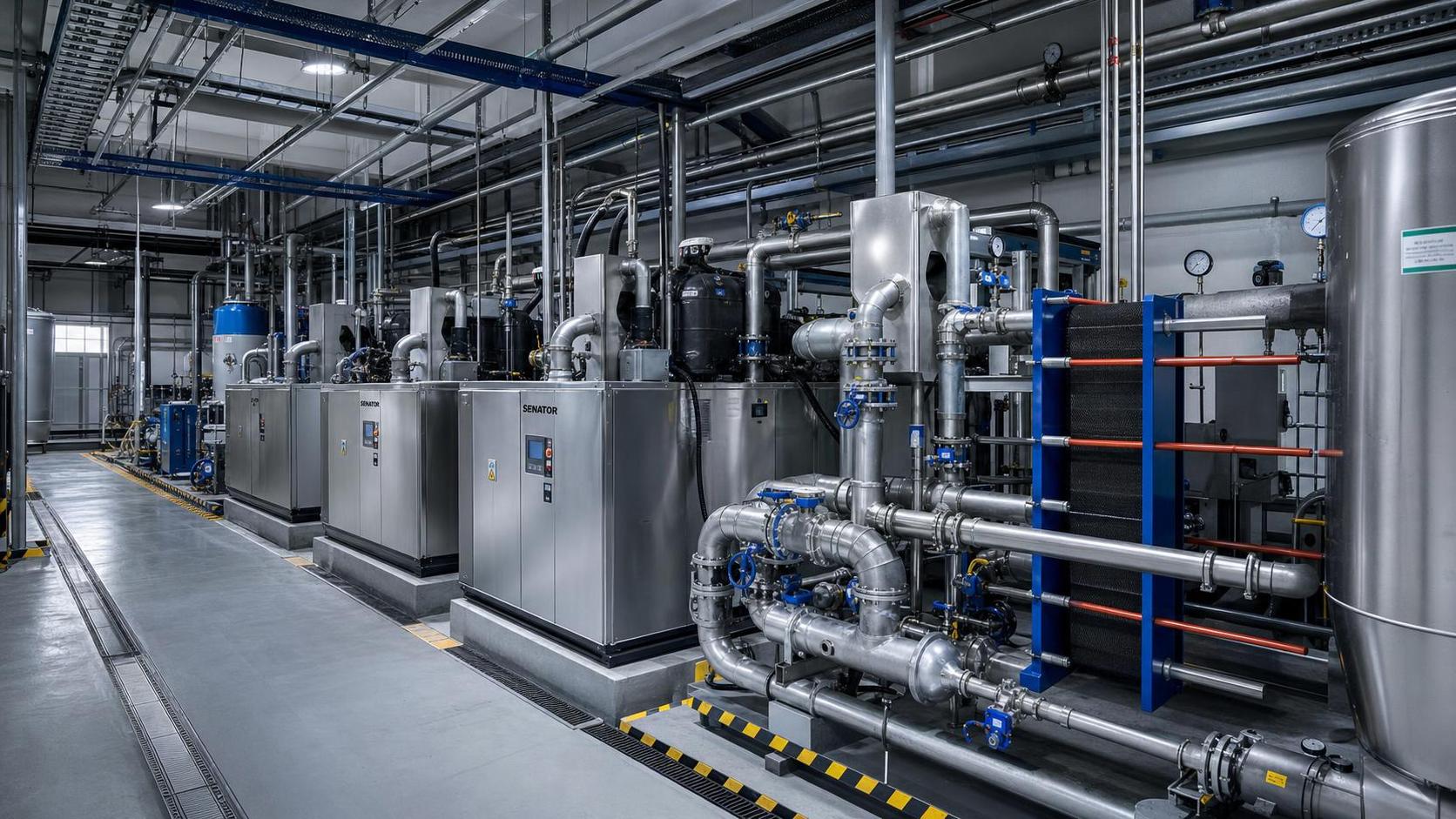
Pure Power Sources for Sensitive Equipment: Key Selection Risks




For precision operations, selecting pure power sources is not simply about stable electricity. It is a practical safeguard for uptime, output consistency, equipment life, and regulatory performance.
In sectors tied to industrial cooling, compressed air, vacuum systems, and heat exchange processes, power quality directly shapes thermal stability and process accuracy.
A small disturbance can ripple through drives, sensors, compressors, chillers, PLCs, cleanroom systems, and validation records. That is why pure power sources deserve structured evaluation.
The questions below explain what pure power sources mean, where selection risks appear, how options differ, and what to verify before final approval.
What are pure power sources, and why do sensitive systems depend on them?
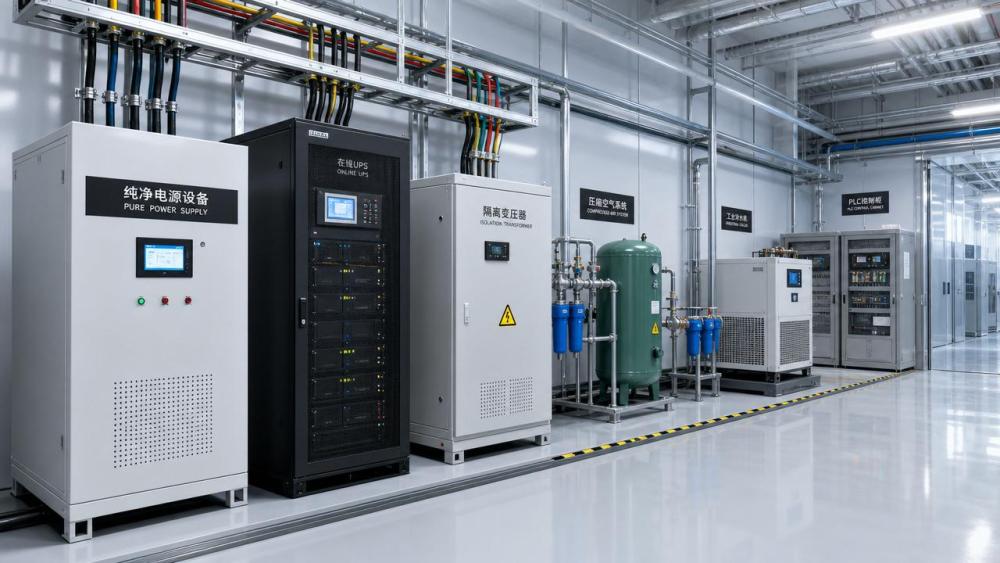
Pure power sources deliver electricity with minimal voltage fluctuation, low harmonic distortion, controlled frequency variation, and fast correction during disturbances.
They are often associated with UPS systems, power conditioners, isolation transformers, static frequency control, battery-backed systems, and well-designed inverter platforms.
For sensitive equipment, “pure” does not mean marketing language. It means the power profile matches the tolerance window required by electronics, motors, controls, and measurement devices.
In semiconductor tools, unstable power can shift process repeatability. In pharmaceutical production, it can disrupt environmental control and data integrity. In food processing, it can interrupt refrigeration continuity.
The same logic applies across broader industry. Compression systems, heat exchangers, and cooling loops rely on coordinated controls. If the electrical foundation is weak, thermal performance also becomes unstable.
This is why GTC-Matrix often frames power quality as part of energy conversion efficiency, not as an isolated electrical topic.
Which power quality parameters matter most?
- Voltage regulation under normal and peak load
- Frequency stability for control-sensitive systems
- Total harmonic distortion and waveform purity
- Transient response during sags, surges, and switching events
- Transfer time during utility failure or source change
- Grounding integrity and electrical noise isolation
Which selection risks are most commonly underestimated?
The first risk is buying by rated capacity alone. A system may meet kVA requirements but still fail under nonlinear loads, motor starts, or mixed electronic demand.
The second risk is ignoring load profile changes. Sensitive facilities rarely run under one fixed condition. Expansion, shift variation, and seasonal thermal demand can alter stress on pure power sources.
A third risk is overlooking compatibility with cooling and compression infrastructure. Some power platforms generate additional heat or require environmental conditions that affect installation reliability.
Another common mistake is assuming all “online” or “clean power” products perform similarly. Topology, filter design, battery chemistry, bypass behavior, and control logic can differ greatly.
There is also a compliance risk. In regulated environments, pure power sources must support documentation, alarms, redundancy logic, maintenance records, and validation expectations.
Finally, lifecycle blind spots create expensive surprises. Energy losses, battery replacement intervals, thermal management needs, and spare part access often determine true ownership cost.
Red flags during early comparison
- No harmonic data under real operating conditions
- No clarity on overload behavior or bypass switching
- Limited service network or unclear parts lead time
- Cooling requirements not matched to facility layout
- Marketing claims without testing standards
How do application scenarios change the choice of pure power sources?
Not every sensitive load needs the same protection depth. The right pure power sources depend on process criticality, downtime cost, response tolerance, and environmental conditions.
For semiconductor and electronics production, fast transient correction and very low waveform distortion are essential. Even brief anomalies may affect yield or metrology precision.
For pharmaceutical environments, stable power must support HVAC controls, clean utilities, data systems, and validated process equipment. Documentation and alarm integration become critical.
For food and beverage operations, continuity often centers on refrigeration, packaging controls, and sanitation systems. Here, pure power sources must balance cleanliness with rugged operating conditions.
In industrial cooling and compressed air stations, the focus may include VFD behavior, compressor sequencing, control cabinets, and instrumentation sensitivity.
Vacuum processes add another layer. Pump controls, leak detection, and process chambers may require uninterrupted stability during transitions or utility disturbances.
Application-driven decision factors
- Define the most sensitive load, not only the largest load.
- Measure the cost of a one-second event, not only a one-hour outage.
- Check interaction with chillers, compressors, and thermal controls.
- Review room temperature, dust, ventilation, and maintenance access.
How should pure power sources be compared beyond price?
Price matters, but a low purchase price can hide high operational risk. The comparison should combine electrical performance, thermal burden, maintainability, and supply continuity.
Efficiency under partial load is especially important. Many systems operate below full load most of the time, so real efficiency matters more than brochure peak values.
Scalability also deserves attention. Modular pure power sources can simplify expansion, but only if control coordination and redundancy logic are mature.
Maintenance architecture should be reviewed early. Hot-swappable modules, remote diagnostics, battery monitoring, and local technical support reduce service disruption.
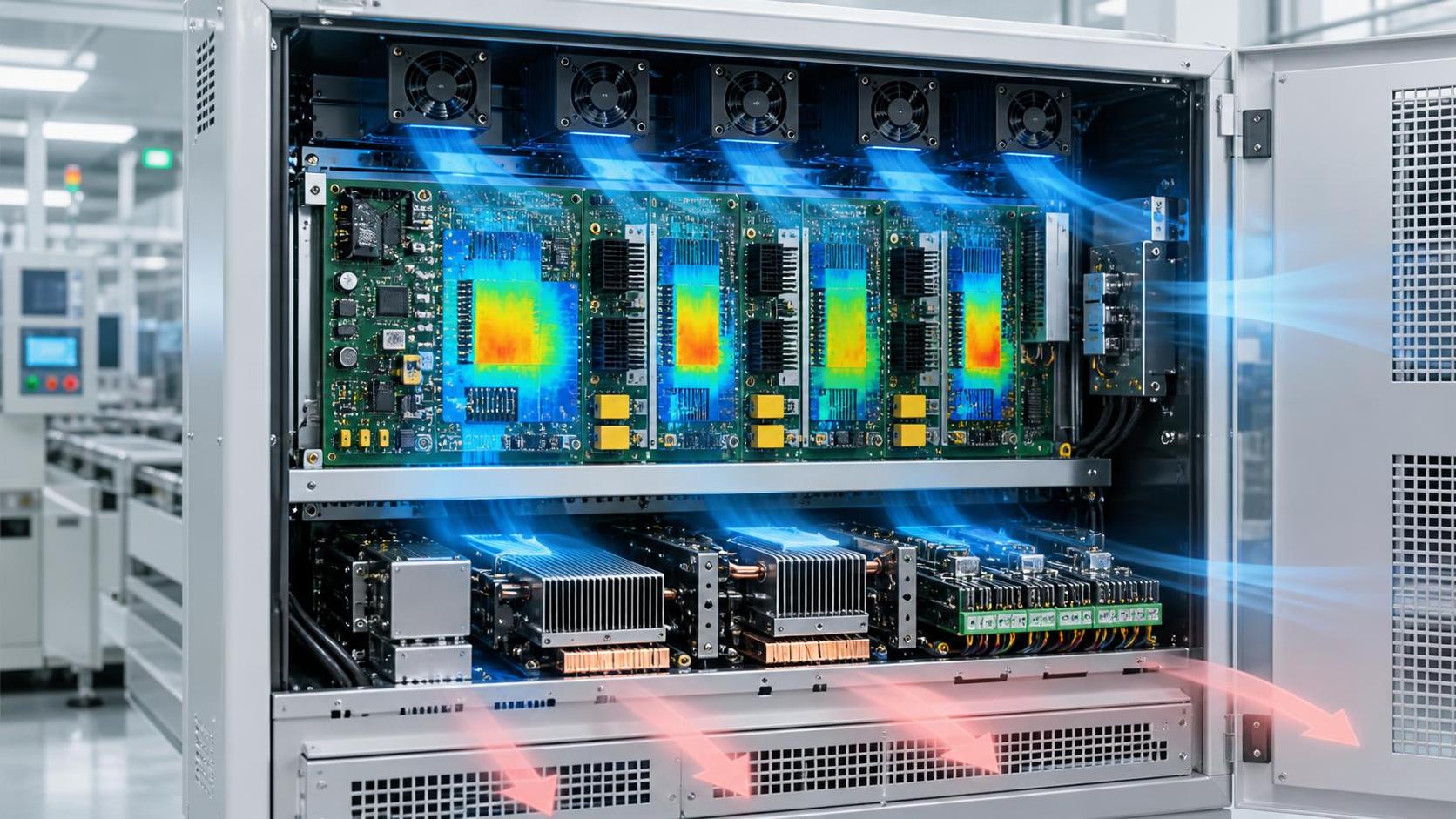
Noise, heat rejection, and airflow direction may seem secondary, yet they influence room design and cooling demand. This links power quality decisions to thermal system efficiency.
What implementation mistakes can reduce the value of pure power sources?
Even well-chosen pure power sources can underperform when installation planning is weak. Grounding errors, cable sizing issues, and poor distribution design often create hidden instability.
Location also matters. Excess heat, dust, vibration, and restricted maintenance space can shorten component life and weaken reliability during critical events.
Another mistake is failing to segment loads. Mixing highly sensitive controls with variable heavy loads on the same protected branch may compromise output quality.
Battery planning is often oversimplified. Runtime targets should reflect real shutdown logic, process hold time, backup generation sequence, and temperature effects on storage performance.
Commissioning tests should include actual disturbance scenarios. A document review alone cannot confirm whether pure power sources perform correctly under switching, overload, or restart conditions.
A practical verification checklist
- Map critical loads and their tolerance thresholds
- Confirm source quality at the point of use
- Review heat rejection and room cooling capacity
- Test alarms, logging, and remote monitoring
- Validate maintenance intervals and replacement plans
What are the most common questions before final selection?
Choosing pure power sources for sensitive equipment is best treated as a full reliability project. Electrical purity, thermal interaction, maintainability, and process criticality must be evaluated together.
When selection is based on tested performance instead of labels alone, facilities gain stronger uptime, steadier product quality, and clearer long-term cost control.
As industrial systems become more automated and energy efficiency targets grow stricter, pure power sources will remain central to stable cooling, compression, and precision production.
The next practical step is to build a site-specific checklist covering load sensitivity, disturbance history, thermal conditions, and support expectations before comparing final proposals.
Ready when you are. Send us a message to get started.
Related News
- How to select industrial equipment for automation with existing PLCsAuthor :

- How electricity prices shape industrial compressed air price trendsAuthor :

- Choosing air filtration systems for heavy dust in the Middle EastAuthor :

- How much does a fully installed compressed air monitoring system cost?Author :

- What documentation supports CE marking for industrial equipment?Author :

- How local support affects vacuum system costs in Southeast AsiaAuthor :

- How worldwide industry category guides help compare market opportunitiesAuthor :

- What drives sustainable thermal systems cost over their operating life?Author :

- Which industrial solution comparison criteria prevent project delays?Author :

- How Ambient Temperature and Load Profile Affect Industrial Compressor SizingAuthor :

- What to evaluate before choosing a thermal process engineering supplierAuthor :

- How industrial utility systems affect energy costs in process plantsAuthor :

- What Data Is Needed to Assess Heat Recovery Decarbonization?Author :

- Can Waste Heat Recovery Support Carbon Neutrality Targets?Author :

- Is Compressor Heat Recovery Worth the Installation Cost?Author :

- What to verify before choosing a process separation technology supplierAuthor :

- When does process utilities engineering reduce project rework?Author :

- Where thermal efficiency optimization delivers the fastest savings in EuropeAuthor :

- What should you verify before selecting a heat transfer supplier?Author :

- What drives compressed air systems price for industrial projects?Author :

- How an industrial product knowledge comparison guide reduces sourcing riskAuthor :

- When does a procurement specification planning process reduce bid risk?Author :

- When does thermal system optimization for electronics reduce failure risk?Author :

- When high temperature process heating systems justify the higher energy costAuthor :

- How to compare sludge dewatering equipment by cake drynessAuthor :

- What to Check Before Sourcing a Gas Turbine for Distributed Power ProjectsAuthor :

- What drives industrial thermal systems price in large facility projectsAuthor :

- How to build an industrial product comparison chart that speeds up vendor selectionAuthor :

- Vacuum Technology Application Guide for Selecting the Right SystemAuthor :

- What Drives Vacuum Drying Cost in Industrial Procurement?Author :

- What Drives Compressed Air Pricing in Industrial Systems?Author :

- How Procurement Specification Planning Shapes Total Project CostAuthor :

- Compression Technology Guide: How to Compare Efficiency, Pressure Range, and Maintenance NeedsAuthor :

- How to Compare Industrial Separators by Throughput, Purity, and Maintenance LoadAuthor :

- How to Size a Compressed Air Equipment Receiver Tank for Stable PressureAuthor :

- Industrial Equipment Selection Guide: How to Compare Capacity, Duty Cycle, and Operating CostAuthor :