Industrial Energy Efficiency Mistakes That Keep Utility Costs High




Industrial energy efficiency often suffers not from major equipment failures, but from overlooked operational mistakes that quietly drive utility costs higher. For business evaluators assessing cost structures, supplier capabilities, and long-term competitiveness, understanding these hidden inefficiencies is critical. This article explores the most common errors in industrial systems and how smarter thermal and compression strategies can unlock measurable savings and stronger decision-making.
Why a checklist approach works better for industrial energy efficiency reviews
When utility costs rise, many organizations first blame energy prices, aging assets, or production expansion. Those factors matter, but they rarely explain the full picture. In practice, industrial energy efficiency is often reduced by a chain of small decisions: controls left uncalibrated, compressed air leaks ignored, heat recovery opportunities missed, or equipment oversized for actual demand. Each issue may seem minor on its own, yet together they create a persistent cost burden.
For business evaluators, a checklist-based review is more useful than a broad technical essay because it supports faster screening across suppliers, plants, and investment cases. It also helps separate visible capital expenditure from hidden operating waste. If an industrial site cannot demonstrate disciplined monitoring of thermal systems, compressed air performance, and process loads, claims about industrial energy efficiency should be treated cautiously.
First-pass checklist: the mistakes that most often keep utility costs high
Before reviewing advanced upgrades, confirm whether these high-impact basics are under control. In many facilities, correcting these core mistakes delivers the fastest industrial energy efficiency gains.
- No load profile visibility: Teams often track total electricity or gas spend but do not break it down by line, shift, or utility-intensive process. Without demand visibility, waste remains invisible.
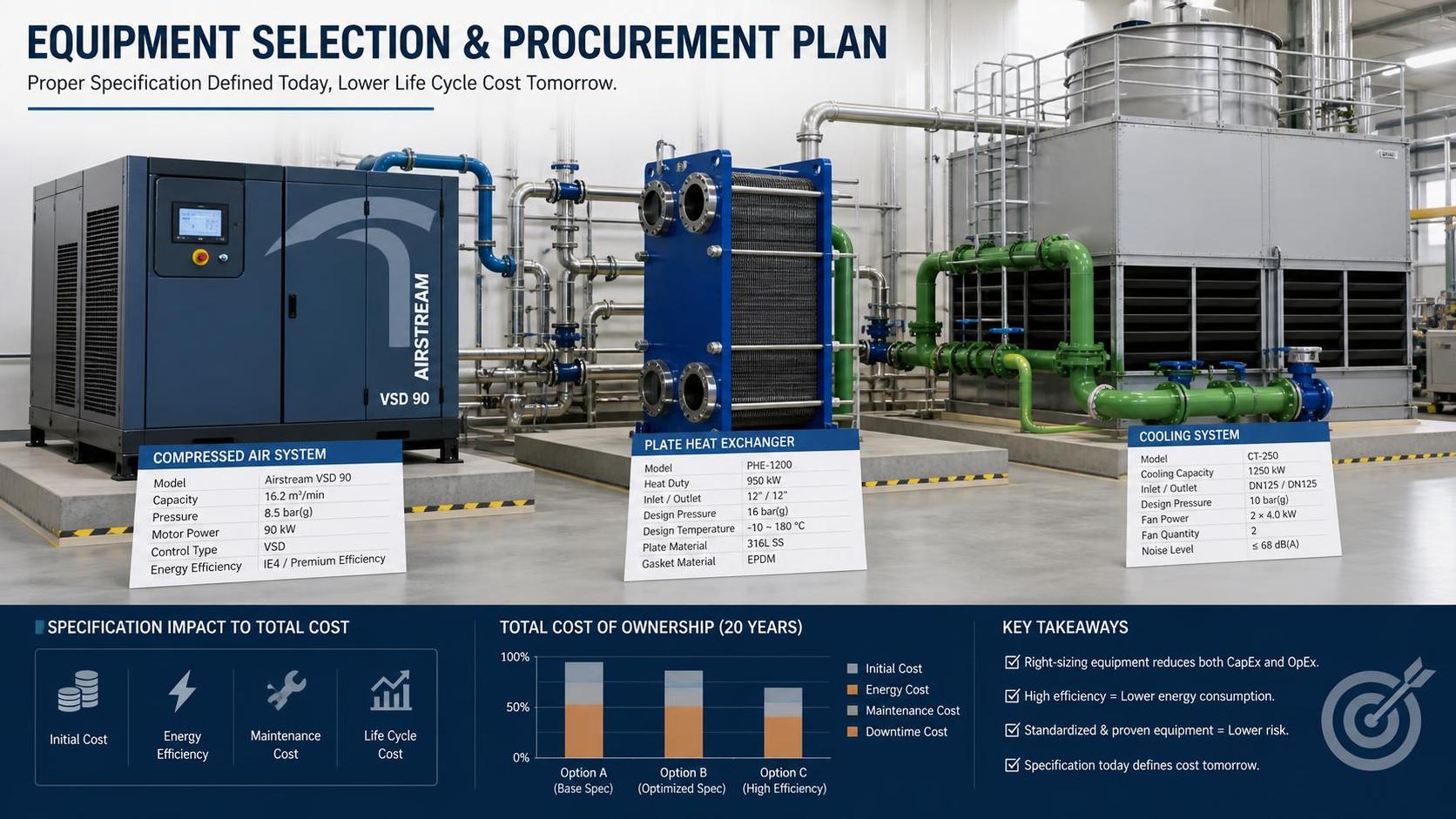
- Oversized equipment running at partial load: Compressors, chillers, pumps, fans, and boilers selected for peak conditions often spend most of the year far below design load, where efficiency falls sharply.
- Poor control strategy: Fixed setpoints, excessive pressure margins, unnecessary cooling temperatures, and manual overrides can erase the value of otherwise efficient equipment.
- Maintenance focused on failures, not performance: Dirty heat exchangers, worn valves, clogged filters, and drifting sensors increase utility consumption long before they cause breakdowns.
- Compressed air used as a convenience utility: Open blowing, leakage, and inappropriate end-use applications make compressed air one of the most expensive forms of plant energy.
- Heat rejected instead of recovered: Facilities frequently pay to generate heat and then pay again to remove it, while nearby processes still require hot water, space heating, or preheating.
- No lifecycle-based supplier evaluation: Purchase decisions often favor lower upfront price instead of total energy cost, serviceability, and control integration.
Check thermal systems first: where hidden losses usually start
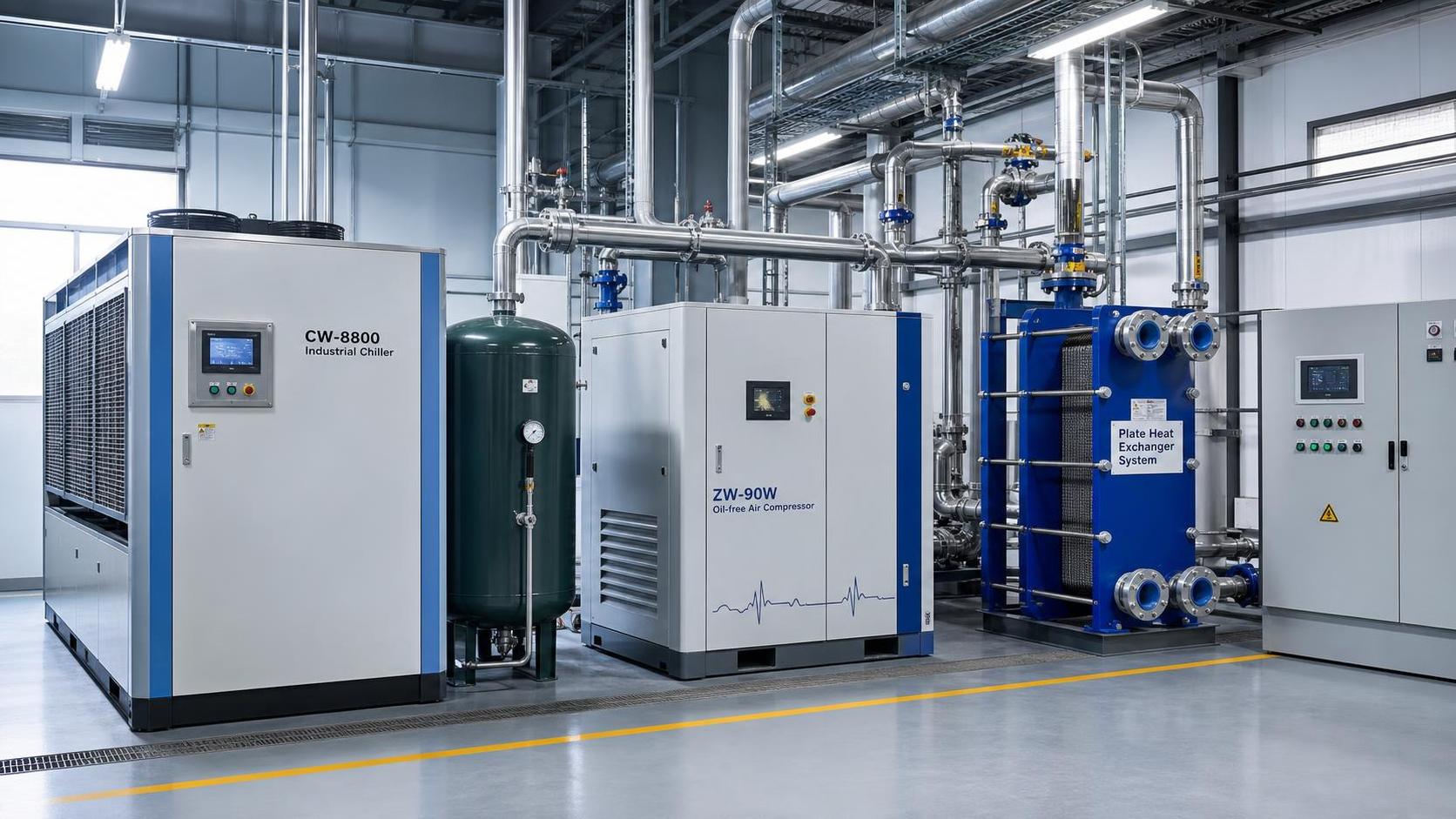
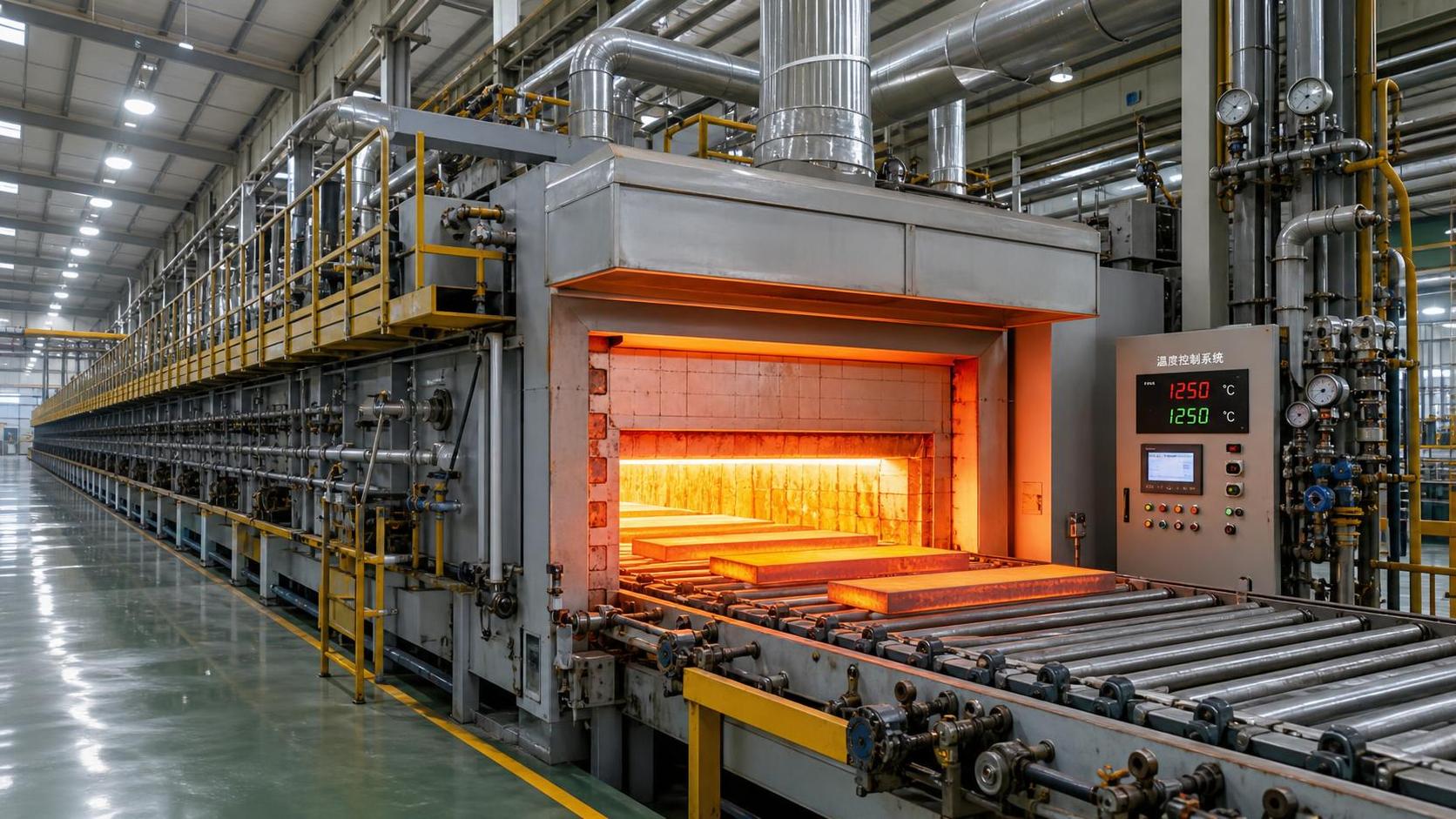
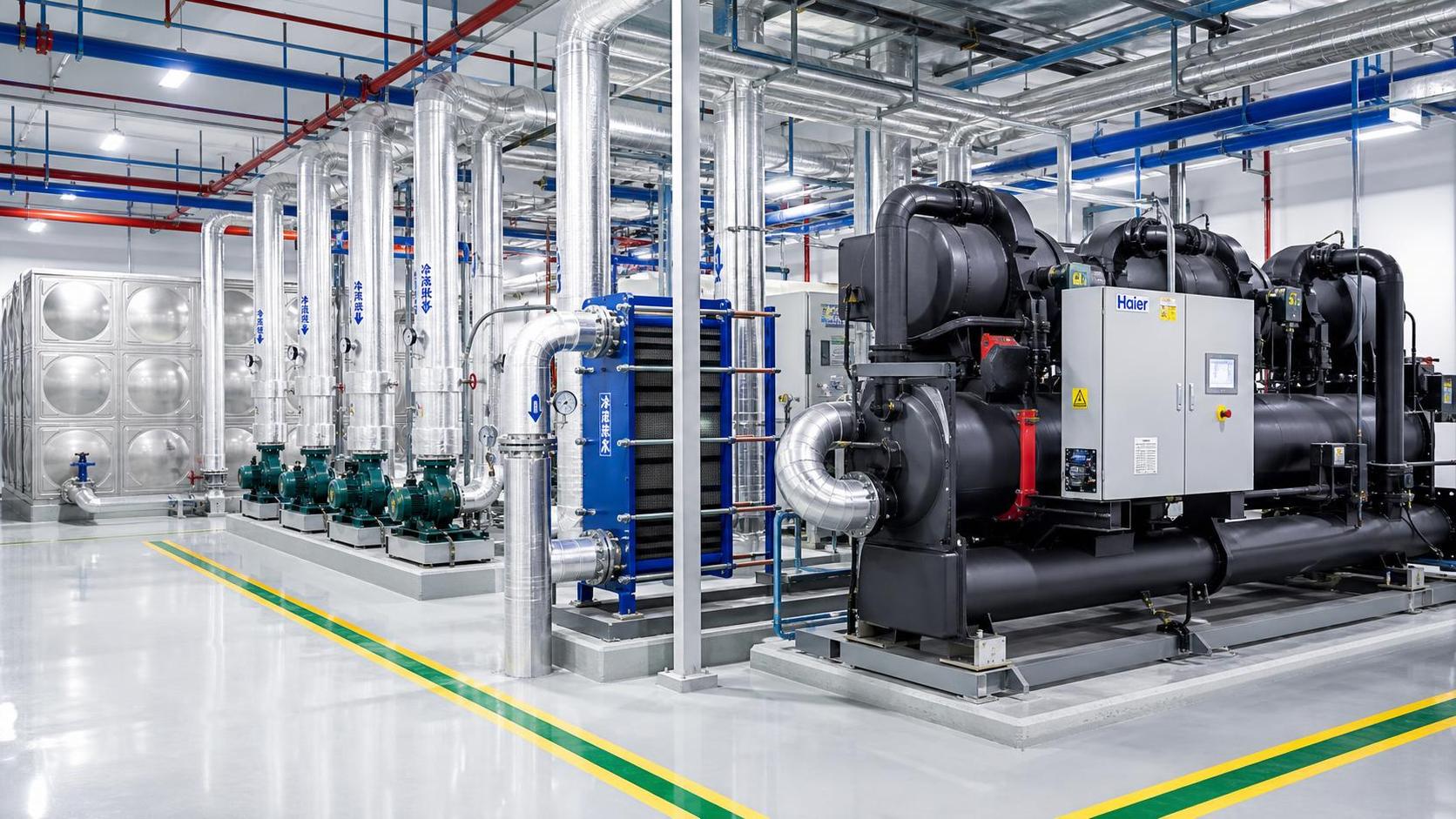
Thermal assets are frequently at the center of industrial energy efficiency losses because they operate continuously and interact with multiple processes. Boilers, chillers, condensers, cooling towers, process heat exchangers, and refrigeration loops should be evaluated not only by nameplate efficiency but by actual operating behavior.
Key thermal review points
- Temperature setpoints: Confirm whether chilled water, process cooling, steam pressure, or hot water temperatures are tighter than process requirements. Every unnecessary degree can raise utility demand.
- Approach temperatures and fouling: Rising temperature differences often indicate scaling, contamination, or poor flow distribution in heat exchangers.
- Simultaneous heating and cooling: This common control error appears in mixed-use facilities, packaging operations, clean environments, and process plants with fragmented automation.
- Insulation quality: Heat loss from uninsulated valves, pipework, tanks, and fittings is often underestimated because it is rarely measured directly.
- Waste heat utilization: Check whether compressor discharge heat, condenser heat, boiler flue losses, or process exhaust streams can be repurposed.
For evaluators comparing operators or vendors, a useful sign of strong industrial energy efficiency management is evidence of temperature optimization tied to actual production specifications, not just inherited operating habits.
Compressed air mistakes that quietly inflate operating expense
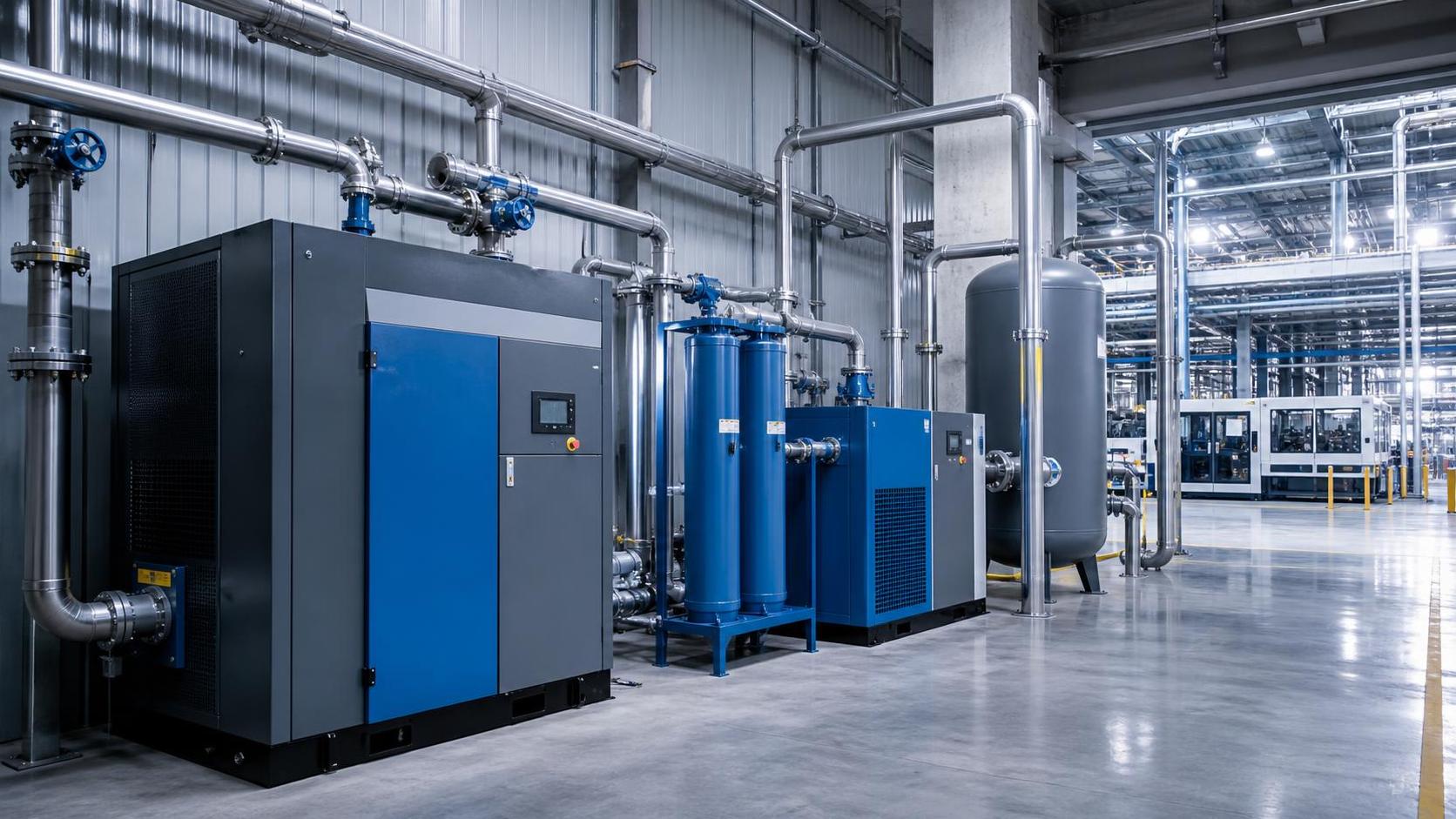
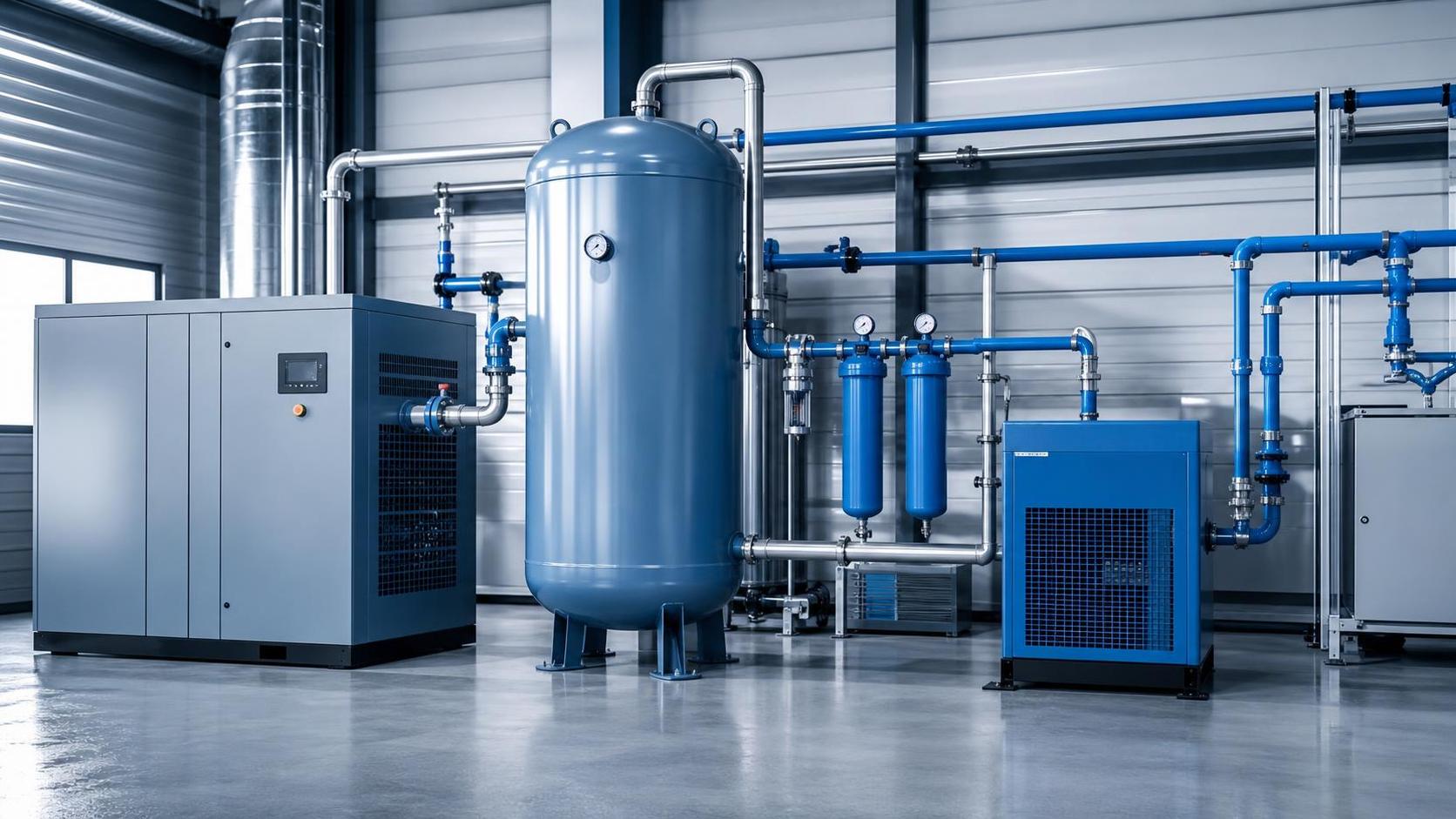
Compressed air is one of the most common sources of preventable waste in industrial energy efficiency programs. Because it is easy to distribute and seems operationally flexible, plants often tolerate inefficient practices for years.
Priority compressed air checks
- Leak rate measurement: Do not accept “some leakage is normal” without quantified loss data. A meaningful review should estimate leakage during non-production hours.
- System pressure discipline: Many plants run higher pressure than necessary to compensate for poor distribution design or neglected maintenance. This drives excess power use.
- Artificial demand: End uses consume more air at higher pressure even when production output does not increase. This is a direct industrial energy efficiency penalty.
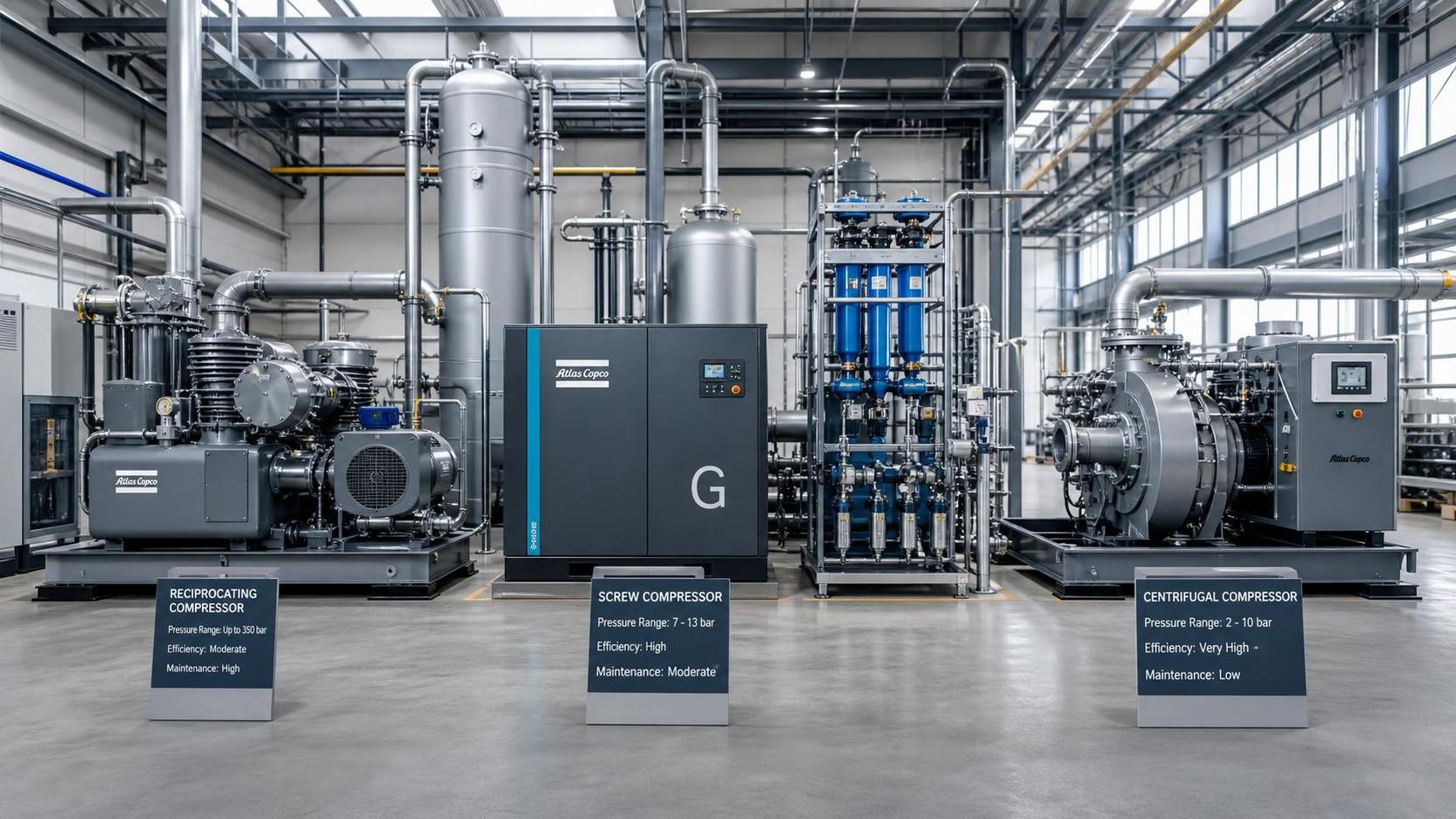
- Compressor sequencing: Multiple compressors operating without optimized staging often create unstable pressure bands and inefficient load-sharing.
- Inappropriate applications: If compressed air is used for cooling, sweeping, drying, or agitation where lower-cost alternatives exist, the system is structurally inefficient.
A strong supplier or facility team should be able to explain not only installed compressor capacity, but also specific power, pressure strategy, dew point requirements, storage logic, and heat recovery potential. Those details are far more relevant to utility cost control than machine size alone.
Decision table: what business evaluators should verify before accepting efficiency claims
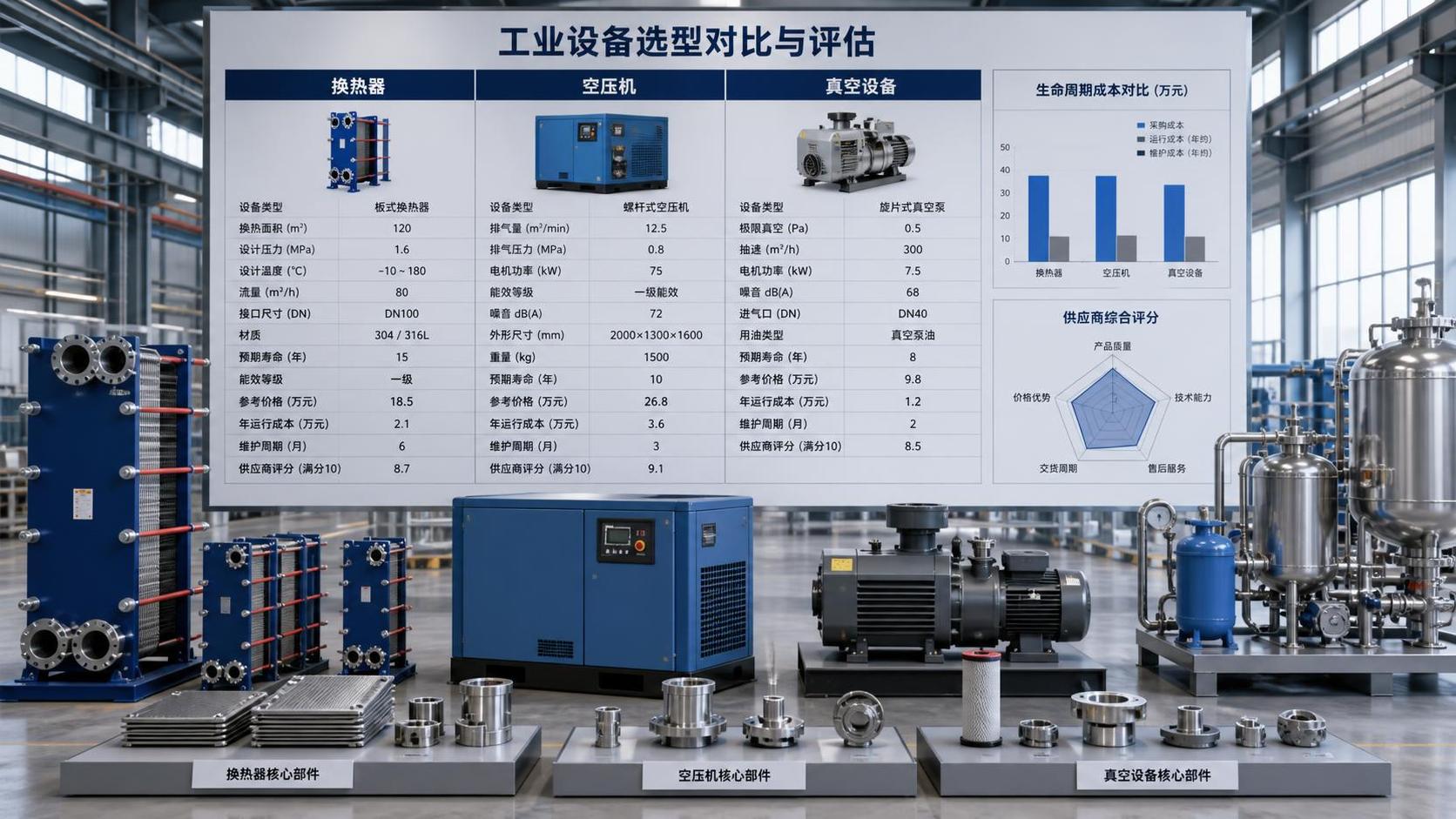
The table below helps translate industrial energy efficiency claims into practical review points during supplier assessment, plant due diligence, or investment screening.
Scenario-based review: what changes by industry context
Although industrial energy efficiency principles are universal, the most important review points change by operating profile. Business evaluators should adjust their checklist based on production sensitivity, utility intensity, and quality requirements.
Continuous process environments
In continuous operations, even small control errors can create year-round cost penalties. Focus on base-load equipment, heat integration, fouling rates, and opportunities to reduce standby losses. Equipment uptime matters, but stable high-efficiency operation matters just as much.
Batch and multi-shift facilities
Here, the most common problem is mismatch between equipment output and changing demand. Review startup practices, idle running hours, storage capacity, and whether utility systems ramp down between batches or shifts.
Precision manufacturing and clean production
Plants with tight environmental control requirements should verify whether purity, vacuum stability, temperature precision, and humidity limits are achieved efficiently or through excessive safety margins. Overengineering can weaken industrial energy efficiency if setpoints are never revalidated against actual product tolerances.
Commonly overlooked risks that distort the business case
Several issues repeatedly distort utility cost analysis and lead to poor decisions:
- Energy normalized poorly: Total energy spend without production normalization can make efficiency appear better or worse than it really is.
- Projects judged without interaction effects: A compressor upgrade may also create recoverable heat value; a cooling change may alter pump power and process yield.
- Ignoring refrigerant, emissions, or compliance trends: Future policy pressure can change the economics of current thermal assets.
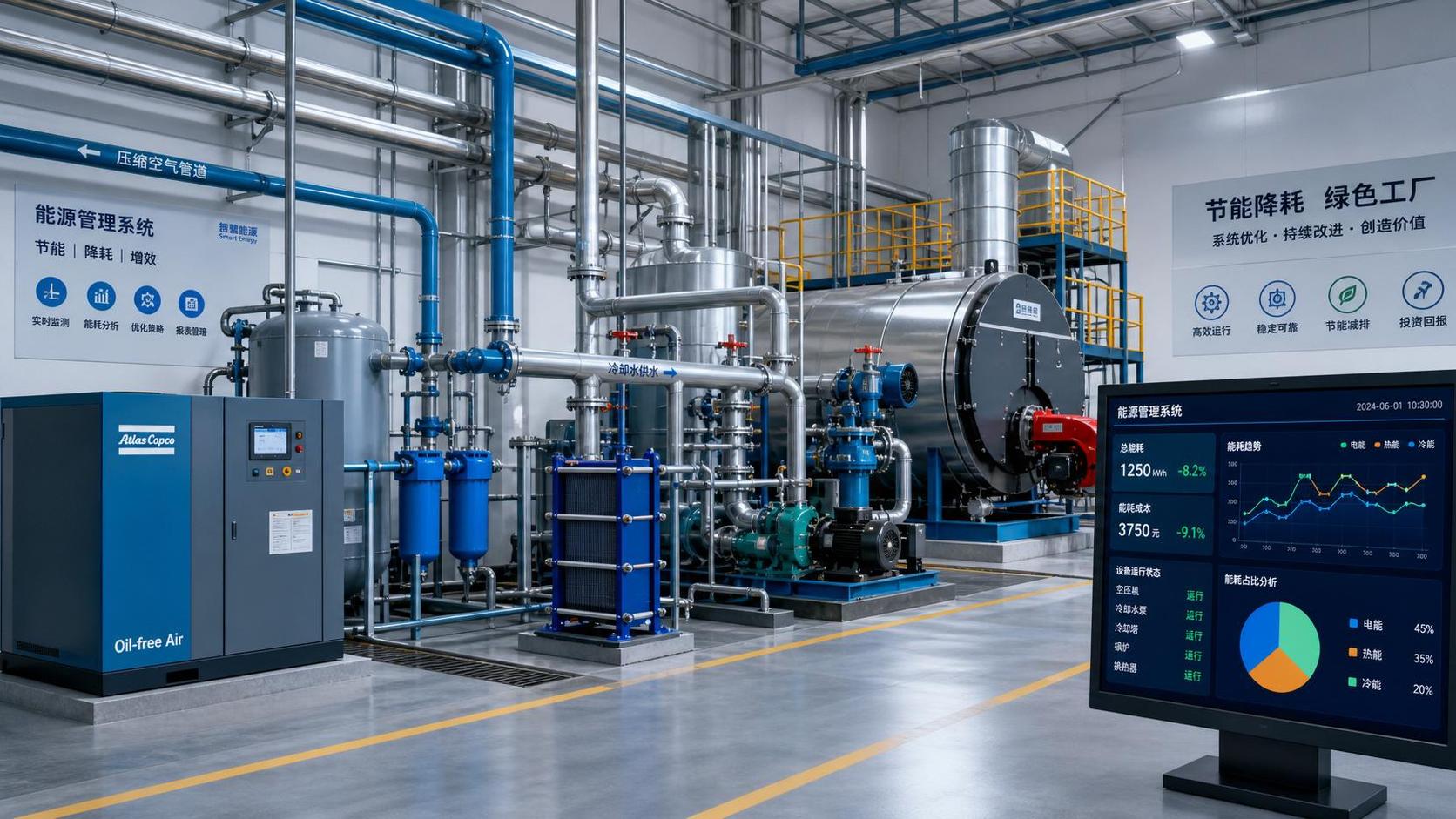
- Assuming digital monitoring equals optimization: Dashboards alone do not improve industrial energy efficiency unless thresholds, accountability, and response routines are defined.
Execution guide: how to improve industrial energy efficiency without losing evaluation discipline
A practical roadmap should begin with measurable, high-confidence opportunities before moving into complex redesign. The most effective sequence is usually straightforward.
- Build a utility map: Identify where electricity, gas, cooling, steam, compressed air, and vacuum are actually consumed.
- Rank systems by waste probability: Thermal loops, compressed air, and controls generally deserve first attention.
- Validate setpoints against process need: Remove legacy margins that no longer support quality or throughput.
- Quantify low-capex fixes: Leaks, insulation, cleaning, sensor calibration, and sequencing improvements often produce fast returns.
- Then evaluate capital projects: Only after operational waste is reduced should larger replacements be judged.
For organizations assessing partners, this sequence also reveals maturity. A credible team will present industrial energy efficiency not as a one-time equipment sale, but as an operating system built on measurement, thermodynamic understanding, and lifecycle economics.
FAQ for business evaluators reviewing industrial energy efficiency
What is the first sign that utility costs are high because of operational mistakes?
A common early sign is that energy spending rises faster than output, while no major equipment failure is reported. That usually suggests control drift, leakage, fouling, or poor load matching rather than a single catastrophic issue.
Which systems should be audited first?
Start with compressed air, process cooling, steam or hot water generation, and major heat exchange points. These systems often offer the clearest industrial energy efficiency opportunities with measurable utility impact.
How should supplier capability be judged?
Ask whether the supplier can explain system interactions, verify load data, support controls optimization, and model lifecycle cost. Strong capability goes beyond hardware specification and includes operating intelligence.
What to prepare before the next discussion or project review
If your team wants to reduce utility costs or compare solution providers more effectively, prepare a concise decision package: twelve months of utility data, production-normalized consumption figures, major equipment lists, operating schedules, current setpoints, maintenance history, and any existing leak, temperature, or pressure reports. Those inputs make industrial energy efficiency conversations more concrete and more commercially useful.
For deeper evaluation, it is also worth asking which parameters drive the largest losses, how thermal and compression systems interact, what low-capex actions can be implemented first, what payback assumptions are being used, and how future compliance or refrigerant changes may affect the business case. In many cases, the fastest route to lower utility costs is not buying more equipment, but making better decisions about the systems already in place.
Related News
- What to verify before choosing a process separation technology supplierAuthor :

- When does process utilities engineering reduce project rework?Author :

- Where thermal efficiency optimization delivers the fastest savings in EuropeAuthor :

- What should you verify before selecting a heat transfer supplier?Author :

- What drives compressed air systems price for industrial projects?Author :

- How an industrial product knowledge comparison guide reduces sourcing riskAuthor :

- When does a procurement specification planning process reduce bid risk?Author :

- When does thermal system optimization for electronics reduce failure risk?Author :

- When high temperature process heating systems justify the higher energy costAuthor :

- How to compare sludge dewatering equipment by cake drynessAuthor :

- What to Check Before Sourcing a Gas Turbine for Distributed Power ProjectsAuthor :

- What drives industrial thermal systems price in large facility projectsAuthor :

- How to build an industrial product comparison chart that speeds up vendor selectionAuthor :

- Vacuum Technology Application Guide for Selecting the Right SystemAuthor :

- What Drives Vacuum Drying Cost in Industrial Procurement?Author :

- What Drives Compressed Air Pricing in Industrial Systems?Author :

- How Procurement Specification Planning Shapes Total Project CostAuthor :

- Compression Technology Guide: How to Compare Efficiency, Pressure Range, and Maintenance NeedsAuthor :

- How to Compare Industrial Separators by Throughput, Purity, and Maintenance LoadAuthor :

- How to Size a Compressed Air Equipment Receiver Tank for Stable PressureAuthor :

- Industrial Equipment Selection Guide: How to Compare Capacity, Duty Cycle, and Operating CostAuthor :

- How to Evaluate an Intellectualization Supplier for Industrial UpgradesAuthor :

- High-Efficiency Manufacturing: Cost Savings vs. Upgrade RiskAuthor :

- Thermal System Optimization Cost: What Drives ROI?Author :

- How to Plan Process Utilities for a Cleanroom Without Costly ReworkAuthor :

- How to Compare Process Heating Suppliers in MexicoAuthor :

- Food Processing Utilities: Common Sizing Mistakes That Raise Energy and Water UseAuthor :

- How to Build Procurement Specification Planning for Industrial EquipmentAuthor :

- OEM Cooperation for Industrial Equipment: Risks, Terms, and Cost PrioritiesAuthor :

- Specification-Oriented Product Resources That Speed Technical ReviewAuthor :

- Industrial Equipment Selection Guide: A Practical Buyer ChecklistAuthor :

- How to Compare Industrial Energy Management Systems by ROIAuthor :

- How to Evaluate a Deaerators Supplier for Long-Term Plant ReliabilityAuthor :
![]()
- How to Evaluate a Vacuum Technology Manufacturer in 2026Author :

- Thermal Efficiency Optimization Software: When the ROI Justifies DeploymentAuthor :

- How to Evaluate Application-Specific Compression Solutions by Throughput and Energy UseAuthor :