



How Global Energy Costs Are Reshaping Chiller Investments




As global energy costs continue to rise and fluctuate, chiller investments are no longer judged by upfront price alone.
Across industry, cooling decisions now reflect operating risk, power pricing, carbon exposure, and long-term asset value.
This shift matters in pharmaceuticals, food processing, data facilities, plastics, chemicals, and commercial infrastructure.
For GTC-Matrix readers, the key issue is clear: how should chiller selection respond to changing global energy costs?
The answer lies in lifecycle thinking, efficiency benchmarking, and a realistic view of future operating conditions.
Why are global energy costs changing chiller investment logic?
In the past, many projects favored the lowest capital expense.
Today, global energy costs make that approach risky, especially for systems running year-round or under critical process loads.
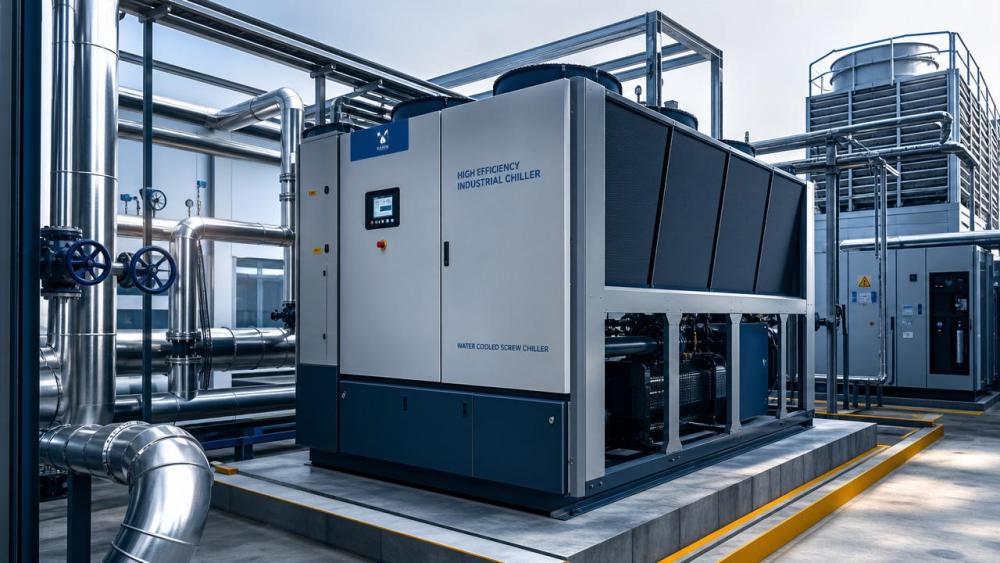
A chiller often consumes more value in electricity over its life than its original purchase price.
When energy tariffs rise, inefficient equipment becomes a silent cost amplifier.
Volatility also matters.
Even when average rates seem manageable, sudden spikes can damage project economics and reduce planning certainty.
That is why global energy costs now influence payback models, financing assumptions, and technical specification priorities.
Another factor is regulation.
Higher efficiency standards and carbon reporting requirements increasingly reward systems with lower specific energy consumption.
In this context, global energy costs are not just a utility issue.
They are reshaping asset strategy, resilience planning, and competitiveness across the wider industrial landscape.
How do global energy costs affect total cost of ownership?
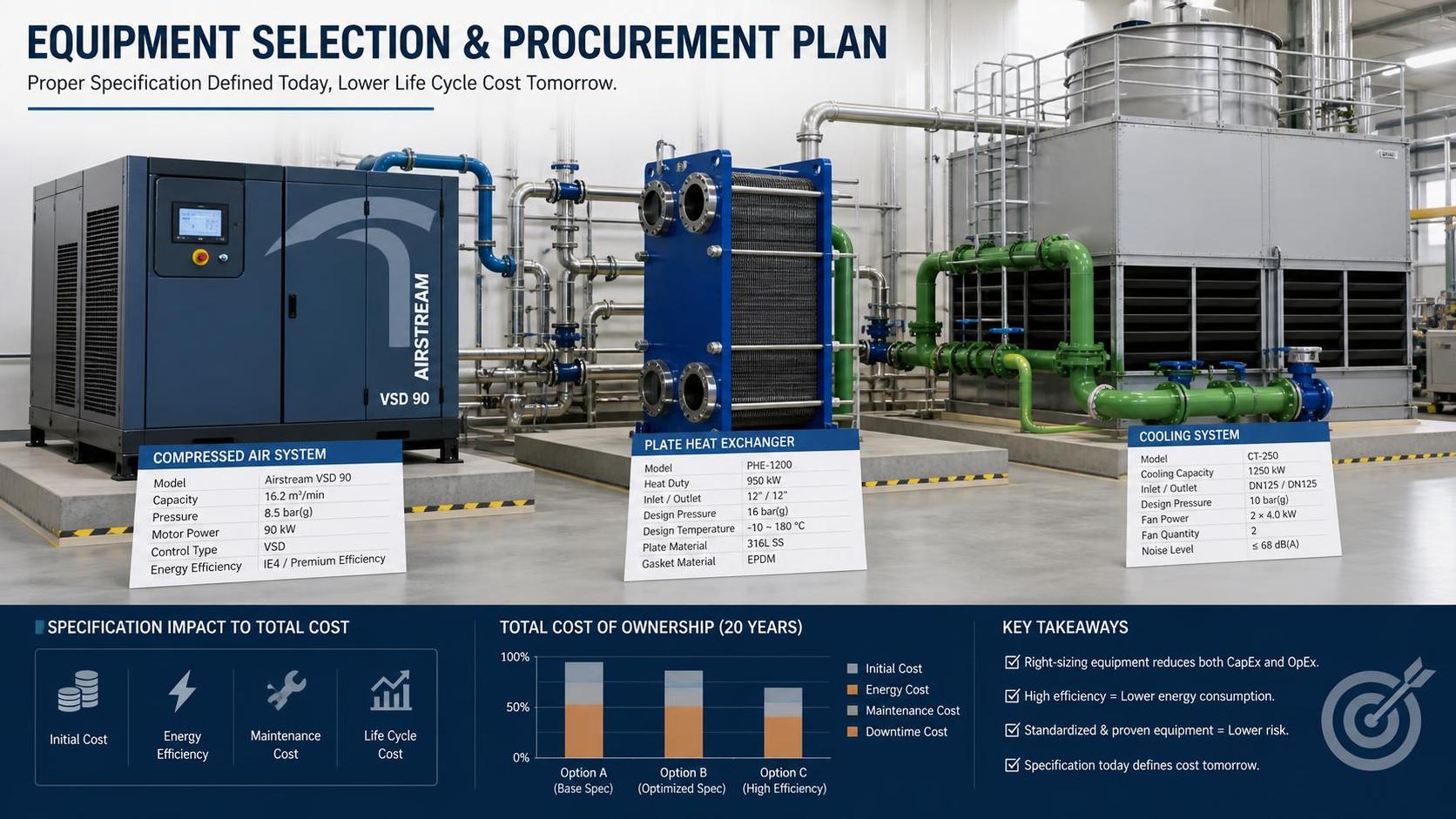
Total cost of ownership is the most practical lens for evaluating modern cooling assets.
It combines purchase price, energy use, maintenance, downtime risk, refrigerant compliance, and service life.
Under stable power markets, a lower-efficiency machine may still look acceptable.
Under rising global energy costs, the same machine can become the most expensive option.
Consider four major ownership drivers:
- Annual electricity consumption at full and part load
- Seasonal performance across real operating temperatures
- Maintenance burden from controls, compressors, and heat exchangers
- Financial exposure to future tariff increases
Part-load performance is especially important.
Many chillers rarely run at full design capacity for long periods.
A unit with strong IPLV or seasonal efficiency can outperform a cheaper unit in real conditions.
That gap widens as global energy costs rise.
Maintenance should also be viewed through energy economics.
Dirty tubes, fouled coils, poor controls, and refrigerant leakage all increase energy waste.
A lower-cost machine with weaker serviceability may therefore carry a hidden penalty.
Which applications feel the pressure from global energy costs most strongly?
Not every installation is affected in the same way.
The impact of global energy costs is strongest where cooling is continuous, critical, or highly load-sensitive.
Typical high-impact applications include:
- Pharmaceutical production requiring precise thermal stability
- Semiconductor and electronics environments with strict process control
- Food and beverage lines with hygiene and uptime requirements
- Plastic molding plants with variable cycle cooling loads
- Data and digital infrastructure needing high availability
- Chemical and district cooling systems with large thermal duties
In these environments, cooling interruption can trigger quality loss, missed output, or safety concerns.
That makes energy-efficient reliability more valuable than simple equipment affordability.
Facilities with aging chillers are also under pressure.
Older systems may still function, yet their energy intensity becomes harder to justify as global energy costs increase.
Retrofit analysis often reveals that improved controls or compressor upgrades can unlock meaningful savings.
What should be compared when choosing a chiller under energy volatility?
A useful comparison should go beyond nominal tonnage and price.
When global energy costs are unstable, decision quality depends on technical and economic detail.
Key comparison points
- Full-load and part-load efficiency metrics
- Compressor type and turndown capability
- Heat exchanger design and fouling resistance
- Control intelligence and remote monitoring
- Refrigerant pathway and compliance outlook
- Local service support and spare parts access
Variable-speed systems deserve special attention.
They often reduce waste during partial demand periods, which is critical under higher global energy costs.
Heat exchanger selection matters too.
Microchannel or optimized designs may improve transfer efficiency, though site conditions must be checked carefully.
Controls can create major savings.
Smart sequencing, predictive maintenance, and real-time analytics help match output to demand and avoid avoidable power draw.
This is where intelligence platforms such as GTC-Matrix add value.
By tracking technology shifts and market signals, they support more resilient cooling investment decisions.
What common mistakes lead to poor chiller investment outcomes?
The first mistake is sizing only for peak load.
Oversized chillers often cycle inefficiently and waste power during normal operation.
The second mistake is ignoring actual load profile data.
Without operating history, it is difficult to model how global energy costs will affect annual spending.
The third mistake is treating energy efficiency as a static figure.
Performance changes with weather, water quality, maintenance quality, and control strategy.
The fourth mistake is neglecting refrigerant transition risk.
A machine that seems attractive today may face future service complexity or compliance costs.
The fifth mistake is underestimating downtime economics.
If a cooling failure disrupts output, the cheapest unit can become the most expensive event.
These errors become more damaging when global energy costs remain elevated or unpredictable.
How can a more resilient chiller investment strategy be built?
A resilient strategy starts with data.
Measure real cooling demand, seasonal variation, temperature targets, and maintenance history before comparing equipment.
Next, stress-test the business case against different electricity scenarios.
Model moderate, high, and extreme global energy costs instead of relying on one fixed tariff assumption.
Then prioritize features that preserve flexibility:
- High part-load efficiency
- Advanced controls and visibility
- Service-friendly architecture
- Future-ready refrigerant positioning
- Integration with broader plant energy management
Where possible, compare replacement against retrofit.
In some cases, pumps, controls, drives, or heat exchanger cleaning can improve efficiency without full asset renewal.
Finally, use credible market intelligence.
Tracking global energy costs, thermal technology trends, and policy changes supports better timing and stronger negotiation positions.
Quick FAQ table: what should be checked before a final decision?
Chiller investment has entered a new era.
Global energy costs now shape not only operating expense, but also risk, compliance, and long-term asset performance.
The strongest decisions balance efficiency, reliability, refrigerant outlook, and service practicality within a lifecycle framework.
For organizations navigating industrial cooling choices, better intelligence creates better timing and better returns.
Use current operating data, test assumptions against future global energy costs, and compare options with measurable discipline.
That approach turns chiller selection from a cost decision into a durable energy strategy.
Related News
- What to evaluate before choosing a thermal process engineering supplierAuthor :

- How industrial utility systems affect energy costs in process plantsAuthor :

- What Data Is Needed to Assess Heat Recovery Decarbonization?Author :

- Can Waste Heat Recovery Support Carbon Neutrality Targets?Author :

- Is Compressor Heat Recovery Worth the Installation Cost?Author :

- What to verify before choosing a process separation technology supplierAuthor :

- When does process utilities engineering reduce project rework?Author :

- Where thermal efficiency optimization delivers the fastest savings in EuropeAuthor :

- What should you verify before selecting a heat transfer supplier?Author :

- What drives compressed air systems price for industrial projects?Author :

- How an industrial product knowledge comparison guide reduces sourcing riskAuthor :

- When does a procurement specification planning process reduce bid risk?Author :

- When does thermal system optimization for electronics reduce failure risk?Author :

- When high temperature process heating systems justify the higher energy costAuthor :

- How to compare sludge dewatering equipment by cake drynessAuthor :

- What to Check Before Sourcing a Gas Turbine for Distributed Power ProjectsAuthor :

- What drives industrial thermal systems price in large facility projectsAuthor :

- How to build an industrial product comparison chart that speeds up vendor selectionAuthor :

- Vacuum Technology Application Guide for Selecting the Right SystemAuthor :

- What Drives Vacuum Drying Cost in Industrial Procurement?Author :

- What Drives Compressed Air Pricing in Industrial Systems?Author :

- How Procurement Specification Planning Shapes Total Project CostAuthor :

- Compression Technology Guide: How to Compare Efficiency, Pressure Range, and Maintenance NeedsAuthor :

- How to Compare Industrial Separators by Throughput, Purity, and Maintenance LoadAuthor :

- How to Size a Compressed Air Equipment Receiver Tank for Stable PressureAuthor :

- Industrial Equipment Selection Guide: How to Compare Capacity, Duty Cycle, and Operating CostAuthor :

- How to Evaluate an Intellectualization Supplier for Industrial UpgradesAuthor :

- High-Efficiency Manufacturing: Cost Savings vs. Upgrade RiskAuthor :

- Thermal System Optimization Cost: What Drives ROI?Author :

- How to Plan Process Utilities for a Cleanroom Without Costly ReworkAuthor :

- How to Compare Process Heating Suppliers in MexicoAuthor :

- Food Processing Utilities: Common Sizing Mistakes That Raise Energy and Water UseAuthor :

- How to Build Procurement Specification Planning for Industrial EquipmentAuthor :

- OEM Cooperation for Industrial Equipment: Risks, Terms, and Cost PrioritiesAuthor :

- Specification-Oriented Product Resources That Speed Technical ReviewAuthor :

- Industrial Equipment Selection Guide: A Practical Buyer ChecklistAuthor :