Resource Circularity in Cooling Towers: What Works




Resource circularity in cooling towers is moving from a sustainability ideal to a measurable business strategy. For enterprise decision-makers, what works today is not theory, but practical approaches that reduce water loss, recover value from waste streams, and improve operating efficiency. This article explores the proven methods, investment logic, and industrial implications shaping smarter cooling tower management.
For most industrial operators, the core search intent behind resource circularity is simple: which cooling tower strategies deliver measurable savings, manageable risk, and realistic payback.
Enterprise readers are not looking for abstract sustainability language. They want to know what technologies and management practices work now, where value is created, and how to avoid costly implementation mistakes.
The most useful answers focus on water reuse, blowdown optimization, chemical control, heat recovery integration, monitoring systems, and the business case linking circularity to cost resilience and compliance.
Less useful are broad environmental claims without operational proof. Decision-makers need applicability by site condition, capital intensity, maintenance demands, water quality constraints, and governance implications.
What “resource circularity” really means in cooling tower operations
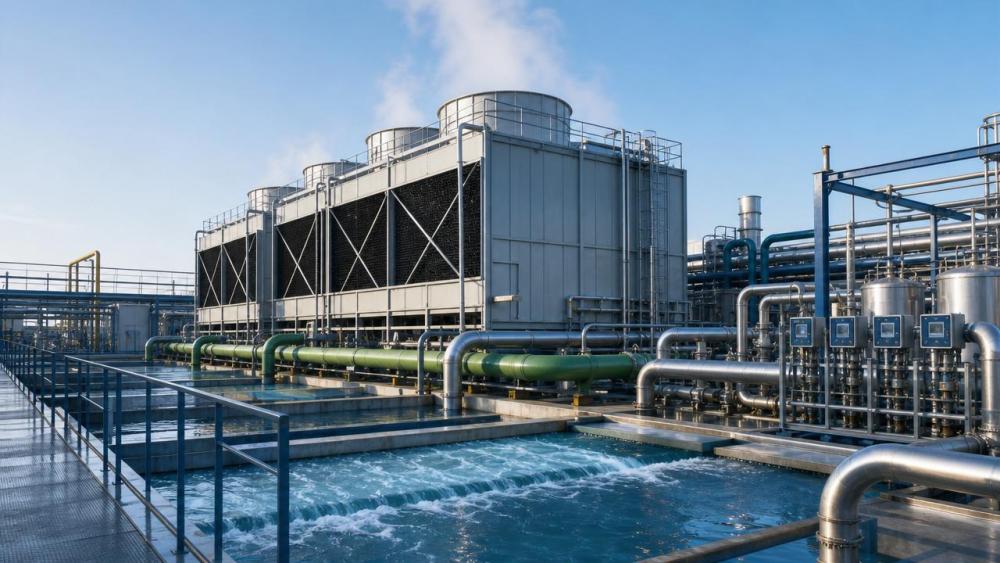
In cooling towers, resource circularity means extracting more value from water, energy, chemicals, and maintenance inputs while minimizing waste, discharge, and avoidable replacement cycles.
That definition matters because many companies still frame tower performance too narrowly, measuring only thermal duty, water consumption, or treatment cost in isolation.
A circularity perspective is broader. It asks whether the cooling system can reuse water streams, extend cycles of concentration, recover low-grade heat, reduce chemical losses, and support longer equipment life.
For enterprise decision-makers, the practical question is not whether circularity is desirable. It is whether these measures improve operational economics without compromising uptime, hygiene, or process reliability.
In most cases, the answer is yes, but only when interventions are matched to water chemistry, local discharge rules, production criticality, and the organization’s maintenance maturity.
Why business leaders are paying closer attention now
Cooling towers have become a strategic issue because water stress, energy volatility, and environmental scrutiny are converging in ways that directly affect plant economics.
In water-constrained regions, make-up water costs are rising, and access risk can become more important than tariff levels. In parallel, discharge compliance is becoming stricter and more expensive.
Energy is also part of the equation. Poorly controlled towers increase fan power, pumping demand, and downstream chiller or process cooling loads, creating a hidden operating cost.
Meanwhile, sustainability reporting has matured. Investors, customers, and regulators increasingly expect measurable progress in water efficiency, waste reduction, and asset stewardship rather than broad commitments.
This is why resource circularity is gaining traction in boardrooms. It is no longer only an environmental narrative. It is a resilience, cost, and license-to-operate issue.
What actually works: the most proven circularity strategies
The most reliable circularity gains usually come from a portfolio of practical actions rather than a single flagship technology. The best results combine water, chemistry, controls, and asset strategy.
First, optimizing cycles of concentration remains one of the most proven levers. If water chemistry allows, increasing cycles reduces blowdown and lowers make-up water demand.
However, this only works with disciplined monitoring of scaling, corrosion, and microbiological risk. Pushing cycles too far without control often destroys the savings through reliability problems.
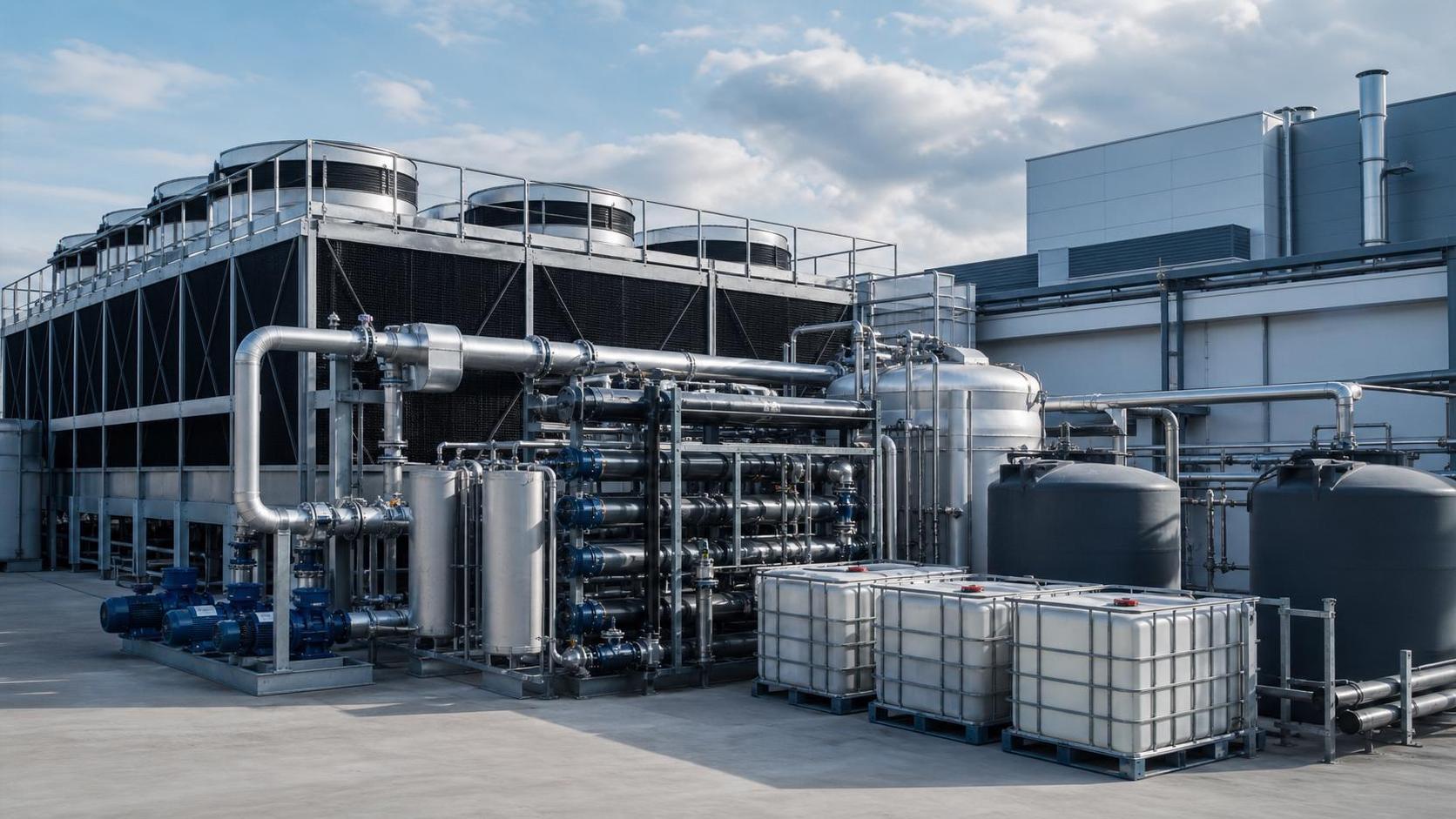
Second, blowdown recovery systems can create meaningful value. Technologies such as side-stream filtration, membrane treatment, and selective reuse loops can convert a waste stream into a resource.
Third, alternative water sourcing is increasingly viable. Many sites are supplementing or replacing potable make-up water with treated wastewater, rainwater, or reclaimed process water where regulations permit.
This approach often offers the strongest circularity narrative, but it requires strong pretreatment design. Variability in reclaimed water quality can create scaling, fouling, and biological instability if underestimated.
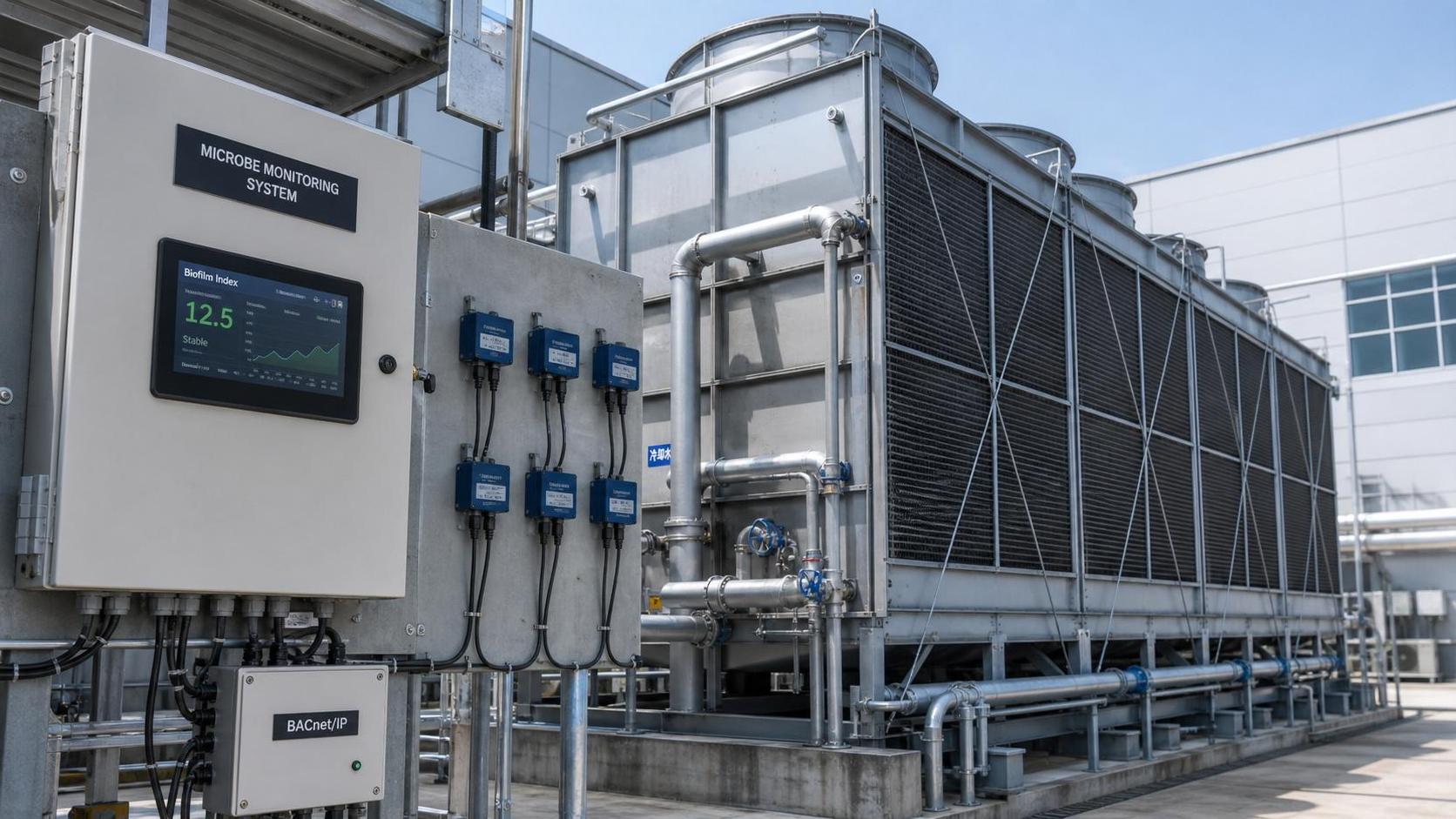
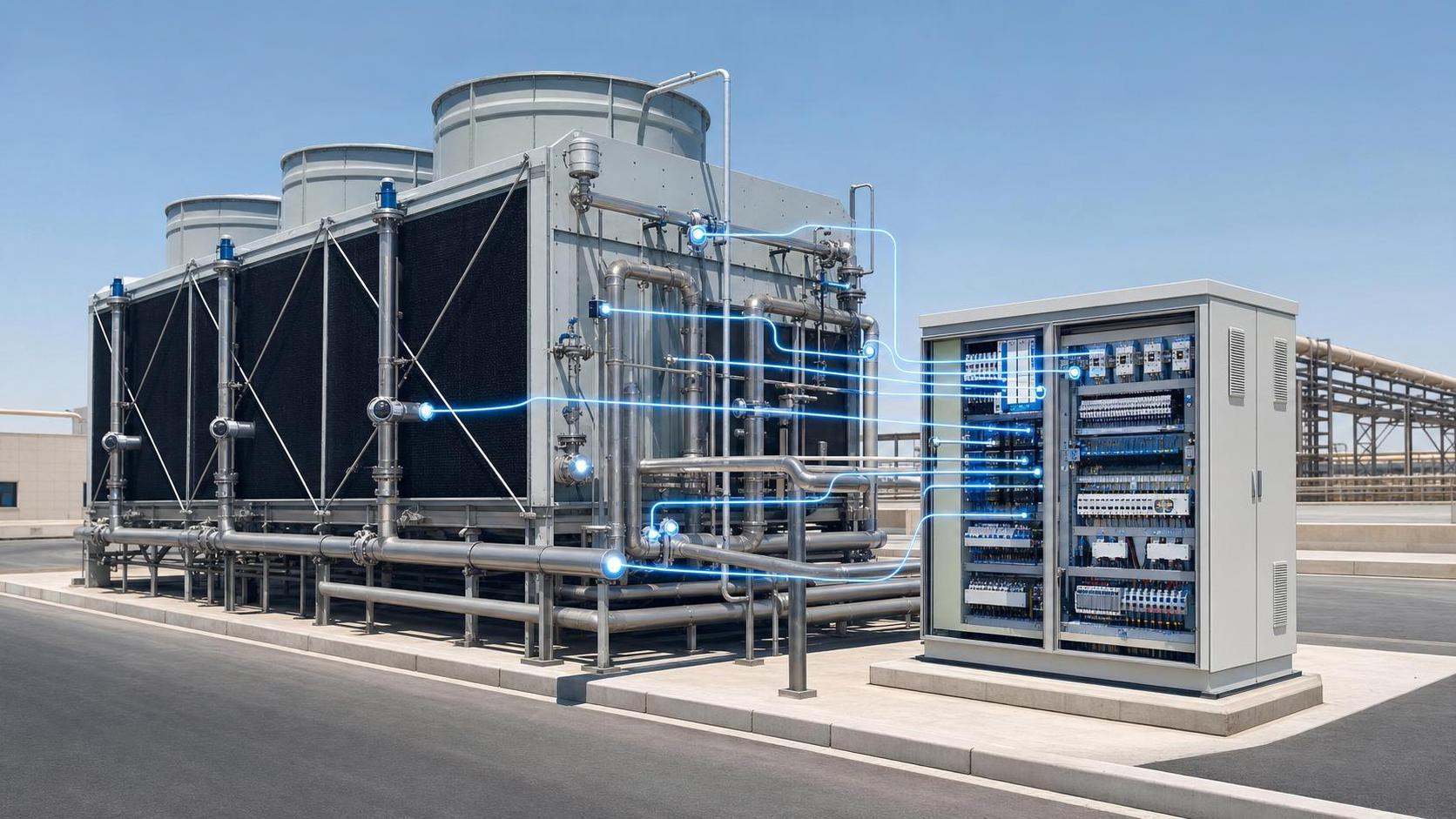
Fourth, digital monitoring delivers more value than many executives expect. Conductivity, pH, oxidation-reduction potential, flow, temperature, and microbiological indicators support tighter control and faster intervention.
Better data reduces manual drift. It also improves accountability between operations teams, water treatment vendors, and facility leadership when performance deviates from targets.
Fifth, chemical optimization matters. Resource circularity is not just about reducing water volume. It also means lowering unnecessary chemical consumption and minimizing treatment-related waste.
Modern inhibitor packages, biodispersants, and automated dosing can help, especially when paired with real-time monitoring. But chemistry programs should be evaluated by total system effect, not unit price alone.
Finally, targeted heat recovery can support circularity where process design allows. Although cooling towers reject heat by design, some sites can recover part of that thermal energy upstream or in adjacent systems.
This will not fit every facility, but in integrated industrial environments it can reduce fuel demand, improve overall energy efficiency, and strengthen the investment case for system redesign.
How to judge which option fits your site
Not every circularity measure belongs in every cooling tower. The right path depends on local water availability, process criticality, discharge restrictions, layout constraints, and internal operating capability.
Decision-makers should begin with a baseline that goes beyond annual water use. It should include make-up sources, blowdown rates, cycles of concentration, chemical cost, downtime risk, and compliance exposure.
Water chemistry mapping is essential. Without understanding hardness, silica, chlorides, organics, suspended solids, and biological load, it is impossible to judge safe reuse potential.
It is equally important to assess operational discipline. A technically sound reuse scheme can still fail if the plant lacks calibration routines, treatment oversight, or clear response protocols.
Facilities with stable loads and mature maintenance teams usually benefit faster from advanced optimization. Highly variable sites may need simpler measures first, such as better bleed control and filtration.
A staged roadmap often works best. Start with no-regret actions, validate performance, and then expand into more capital-intensive circularity investments once data supports the next step.
Where the economics are strongest
The business case for resource circularity is strongest when water costs, discharge costs, or production risk are materially significant. In these cases, savings extend well beyond utility reduction.
Direct returns usually come from lower make-up water purchases, reduced sewer or effluent charges, optimized chemical use, and lower energy consumption from more stable tower performance.
Indirect returns can be even more valuable. These include reduced unplanned shutdowns, lower corrosion-related repair expense, extended asset life, and better readiness for future regulation or customer audits.
For enterprise leaders, payback should not be calculated from water savings alone. A narrow model often undervalues reliability and compliance benefits that are central to industrial cooling economics.
Sites in pharmaceuticals, semiconductors, food processing, chemicals, and heavy manufacturing may each see different value drivers. The unifying principle is operational continuity under rising resource pressure.
Projects tied to water reuse or advanced treatment may require higher capital investment, but they also create stronger long-term resilience where access to water is uncertain or politically sensitive.
Common implementation risks and how to avoid them
Many cooling tower circularity projects underperform not because the concept is wrong, but because implementation assumptions are too optimistic or too fragmented across departments.
The first risk is treating circularity as an environmental project rather than an operations project. If plant reliability teams are not central to design and governance, adoption will be weak.
The second risk is poor water characterization. Reuse schemes often fail when seasonal variability, contamination spikes, or trace constituents are not captured during planning.
The third risk is vendor misalignment. Equipment suppliers, treatment specialists, and plant operators may optimize different outcomes unless performance targets are contractually and operationally aligned.
The fourth risk is underestimating hygiene and compliance. Cooling towers operate within strict health, safety, and environmental frameworks, especially where aerosol exposure and microbial control are critical.
The fifth risk is weak performance measurement. If the site cannot verify water intensity, blowdown reduction, treatment stability, and maintenance impact, success becomes anecdotal rather than scalable.
These risks are avoidable. Strong projects combine cross-functional ownership, pilot testing where needed, clear key performance indicators, and regular review against both operational and financial targets.
What decision-makers should ask before approving investment
Before approving a cooling tower circularity initiative, leaders should ask several practical questions that reveal whether the proposal is strategic, robust, and executable.
What specific resource loop is being improved: make-up water, blowdown, chemicals, waste heat, or asset life? Clarity here prevents vague business cases and helps set measurable goals.
What is the baseline, and how confident are we in the data? Projects built on rough assumptions often disappoint when actual operating variability emerges.
What are the failure modes? Decision-makers should understand scaling risk, microbiological control, membrane fouling, operator dependency, and fallback procedures before deployment.
Who owns performance after commissioning? Resource circularity only works when accountability continues through operation, not just procurement and installation.
How does the project support broader enterprise priorities? The strongest proposals align with water stewardship, decarbonization, energy productivity, site resilience, and brand credibility in sustainable manufacturing.
The strategic outlook for industrial cooling
Looking ahead, cooling towers will increasingly be evaluated as part of integrated thermal infrastructure rather than isolated utility assets. That shift will favor circularity-oriented operating models.
More companies will combine treatment intelligence, digital monitoring, and water reuse architecture into plant-wide resource strategies. This is especially likely in sectors with tight purity, temperature, or compliance demands.
Technology will help, but management quality will remain decisive. The companies that create durable advantage will be those that turn cooling data into disciplined operational decisions.
For industrial groups with multiple sites, circularity also creates a portfolio opportunity. Standardized measurement and governance can reveal where replication is feasible and where local adaptation is required.
As water risk and environmental expectations continue to rise, cooling tower resource circularity will become less of a specialist topic and more of a mainstream industrial performance metric.
Conclusion
What works in resource circularity for cooling towers is not a single technology, but a disciplined combination of water reuse, blowdown reduction, smarter chemistry, better monitoring, and risk-aware execution.
For enterprise decision-makers, the key insight is clear: the best circularity projects improve more than sustainability metrics. They strengthen cost control, resilience, compliance, and equipment performance at the same time.
The right question is no longer whether circularity belongs in cooling tower strategy. It is which measures fit your site, how value will be verified, and how quickly your organization can scale what works.
In that sense, resource circularity is becoming a practical management standard for industrial cooling, not an aspirational extra. Companies that move early will be better positioned for the next decade of resource pressure.
Ready when you are. Send us a message to get started.
Related News
- Kentucky Regulators Approve $191 Million Cooling Tower at Mitchell Coal PlantAuthor :Thermodynamics Analyst

- Cooling Tower Market Trends Reshaping Replacement Plans and Capital BudgetsAuthor :Thermodynamics Analyst

- Field-Erected Cooling Tower Market: Why Utility Projects Favor Custom DesignsAuthor :Thermodynamics Analyst

- Evaporative Cooling Tower Market Outlook: Demand Drivers, Risks, and Growth AreasAuthor :Thermodynamics Analyst

- When does an industrial cooling radiator outperform a cooling tower?Author :Thermodynamics Analyst

- EU Cooling Tower Standard EN 13771:2026 Takes EffectAuthor :Thermodynamics Analyst

- EU REACH SVHC Update Triggers Cooling Tower DisclosureAuthor :Thermodynamics Analyst

- SASO Adds Bio-Durability Test for Cooling Tower FillAuthor :Thermodynamics Analyst

- EU REACH Update Bars Phthalates in Cooling Tower PVC FillAuthor :Thermodynamics Analyst

- EU Tightens CE Rules for Cooling Tower Steel PartsAuthor :Thermodynamics Analyst

- Shanghai-Rotterdam Cooling Tower Space TightensAuthor :Thermodynamics Analyst

- Hamburg Port Strike Delays Cooling Tower Parts ClearanceAuthor :Thermodynamics Analyst

- ASHRAE 188-2026 Makes Cooling Tower Microbial Control MandatoryAuthor :Thermodynamics Analyst

- India Enforces BIS IS 17842:2026 for Cooling TowersAuthor :Thermodynamics Analyst

- EU REACH Restricts Zinc Inhibitors in Cooling TowersAuthor :Thermodynamics Analyst

- TUV Rheinland Switches Cooling Tower Labels to IEC 61800-9-2Author :Thermodynamics Analyst

- EU REACH Rule Takes Effect for Cooling Tower CoatingsAuthor :Thermodynamics Analyst

- Vietnam to Require IoT Modules in Imported Cooling TowersAuthor :Thermodynamics Analyst

- How to Compare Industrial Cooling Equipment Dry Coolers for Year-Round EfficiencyAuthor :Thermodynamics Analyst

- SASO Tightens Cooling Tower Import Rules for 2027Author :Thermodynamics Analyst

- REACH SVHC Update Limits Copper Corrosion InhibitorsAuthor :Thermodynamics Analyst

- SASO Starts Cooling Tower Data Rule for CoCAuthor :Thermodynamics Analyst

- Saudi SASO Portal Adds Corrosion Data RuleAuthor :Thermodynamics Analyst

- SASO Adds Corrosion Report Rule for Cooling TowersAuthor :Thermodynamics Analyst

- RDHx Prices Rise as AI Demand Lifts Premium ModelsAuthor :Thermodynamics Analyst

- EU EN 13859-2:2026 Mandates Extreme Humidity Heat-Loss TestsAuthor :Thermodynamics Analyst

- VDE Tightens Cooling Tower Test ScopeAuthor :Thermodynamics Analyst

- SASO Tightens Cooling Tower Test Proof for SaberAuthor :Thermodynamics Analyst

- Saudi SABER Cooling Tower Rule Takes Effect EarlyAuthor :Thermodynamics Analyst

- EU Carbon Labels to Cover Cooling Tower ExportsAuthor :Thermodynamics Analyst

- Saudi SABER Cooling Tower Rule Takes Effect EarlyAuthor :Thermodynamics Analyst

- EU Carbon Label Rule Hits Cooling Tower ExportsAuthor :Thermodynamics Analyst

- Saudi SABER Cooling Tower Rule Adds EN 13859-2 TestAuthor :Thermodynamics Analyst

- Saudi SABER Tightens Cooling Tower Energy Report RulesAuthor :Thermodynamics Analyst

- Saudi SASO Tightens Cooling Tower Efficiency FilingAuthor :Thermodynamics Analyst

- Saudi SABER Tightens Cooling Tower Energy Report ChecksAuthor :Thermodynamics Analyst