DOE Adopts ASHRAE 90.1-2025: Cooling Tower Efficiency Up 18%




On May 5, 2026, the U.S. Department of Energy (DOE) formally adopted the ASHRAE 90.1-2025 standard, raising minimum efficiency requirements for commercial cooling towers by 18%—a shift directly affecting U.S.-bound exports, federal procurement eligibility, and large-scale commercial HVAC projects.
Event Overview
The U.S. Department of Energy adopted ASHRAE Standard 90.1-2025 on May 5, 2026. Under this update, all open- and closed-circuit cooling towers imported into the United States must meet a new mandatory minimum Integrated Energy Efficiency Ratio (IEER) of ≥5.8—up 18% from the IEER threshold in the 2019 edition. The requirement takes effect on October 1, 2026. Compliance requires third-party certification to AHRI Standard 204, administered by an AHRI-accredited laboratory.
Industries Affected
Direct Exporters (U.S.-Bound Cooling Tower Manufacturers)
Manufacturers exporting cooling towers to the U.S. market—including those based in China—are directly subject to the new IEER mandate. Non-compliant units will be barred from entry at U.S. customs and excluded from federal government procurement and major commercial tenders.
Component & Subsystem Suppliers
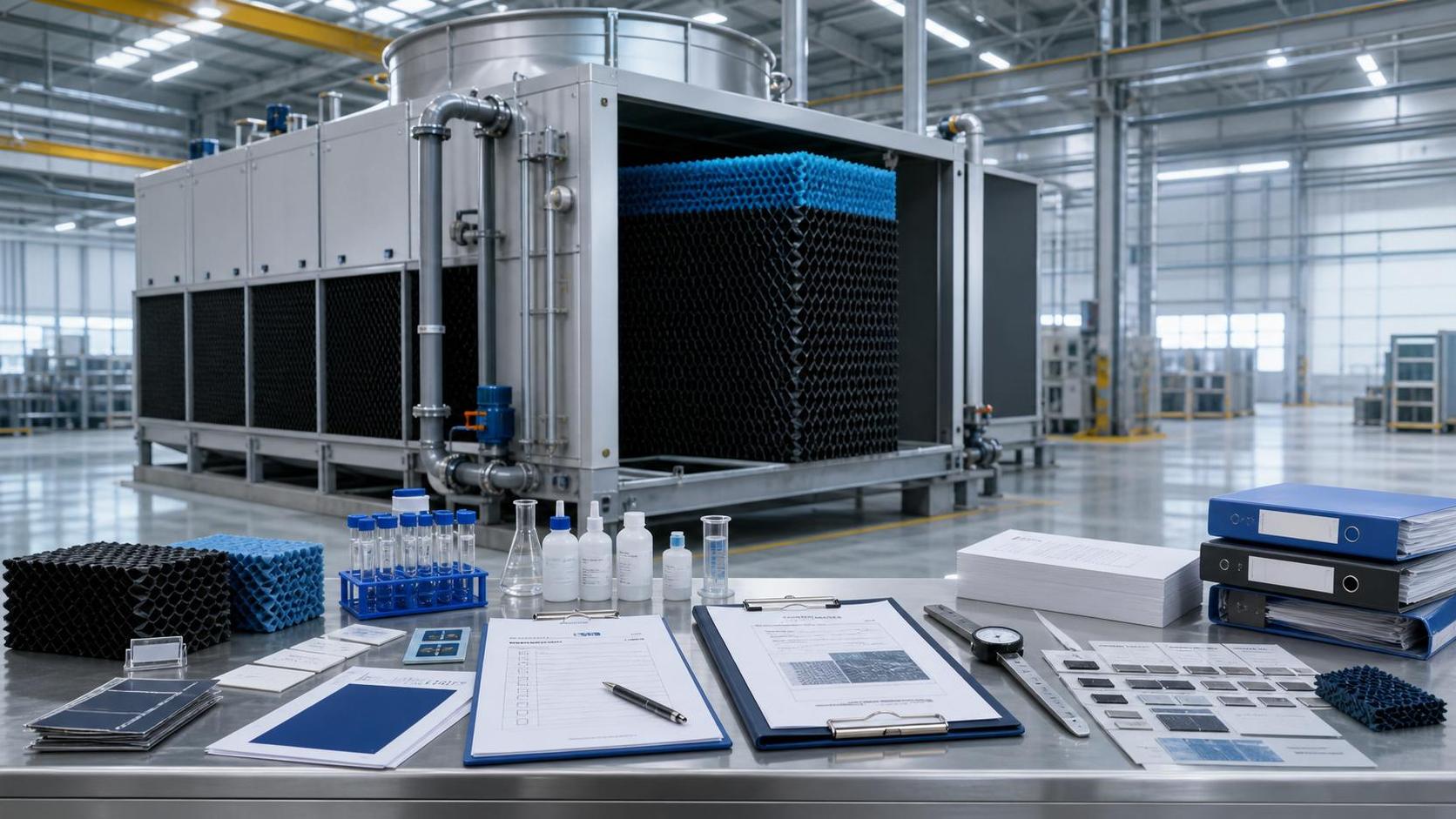
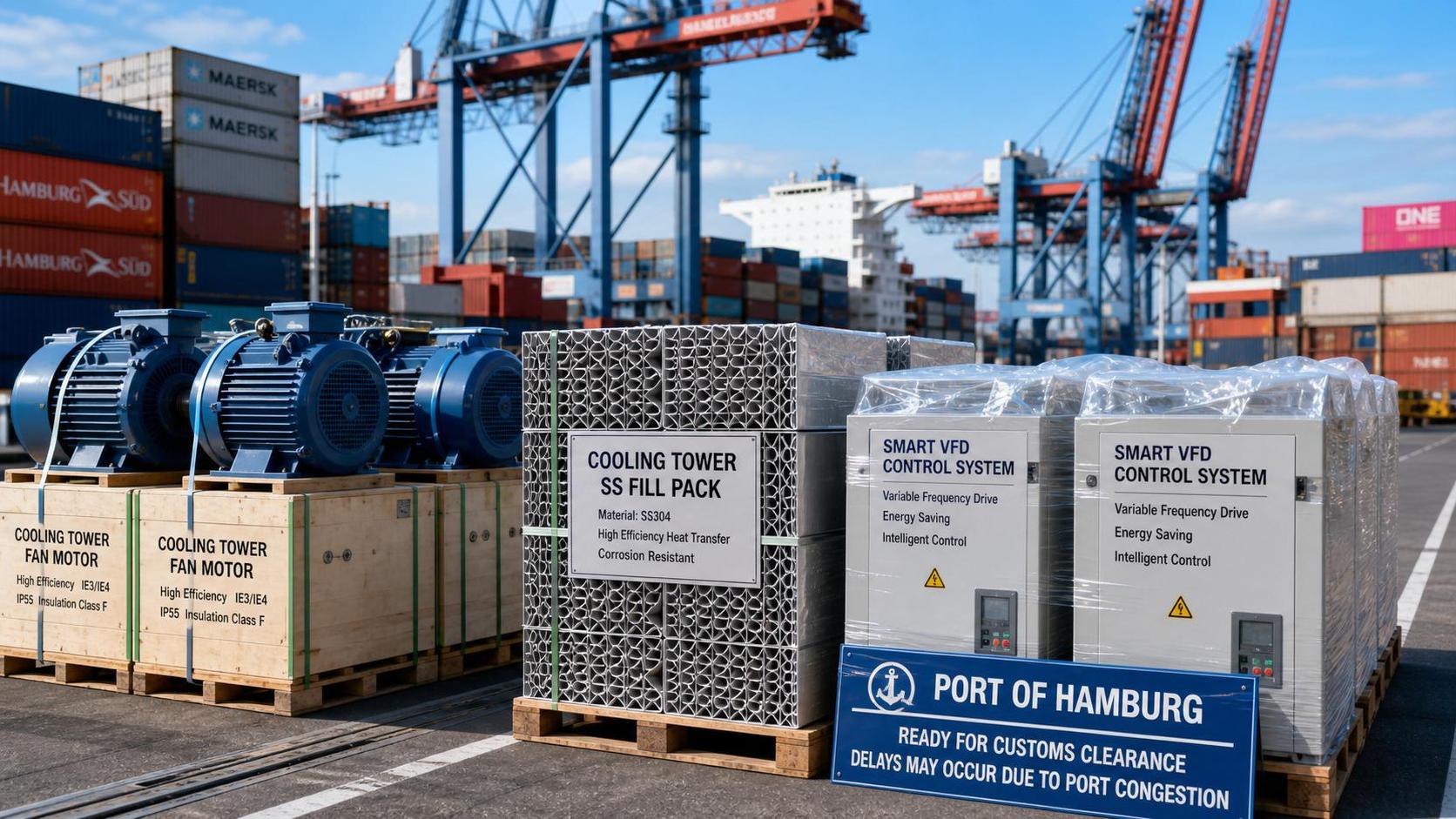
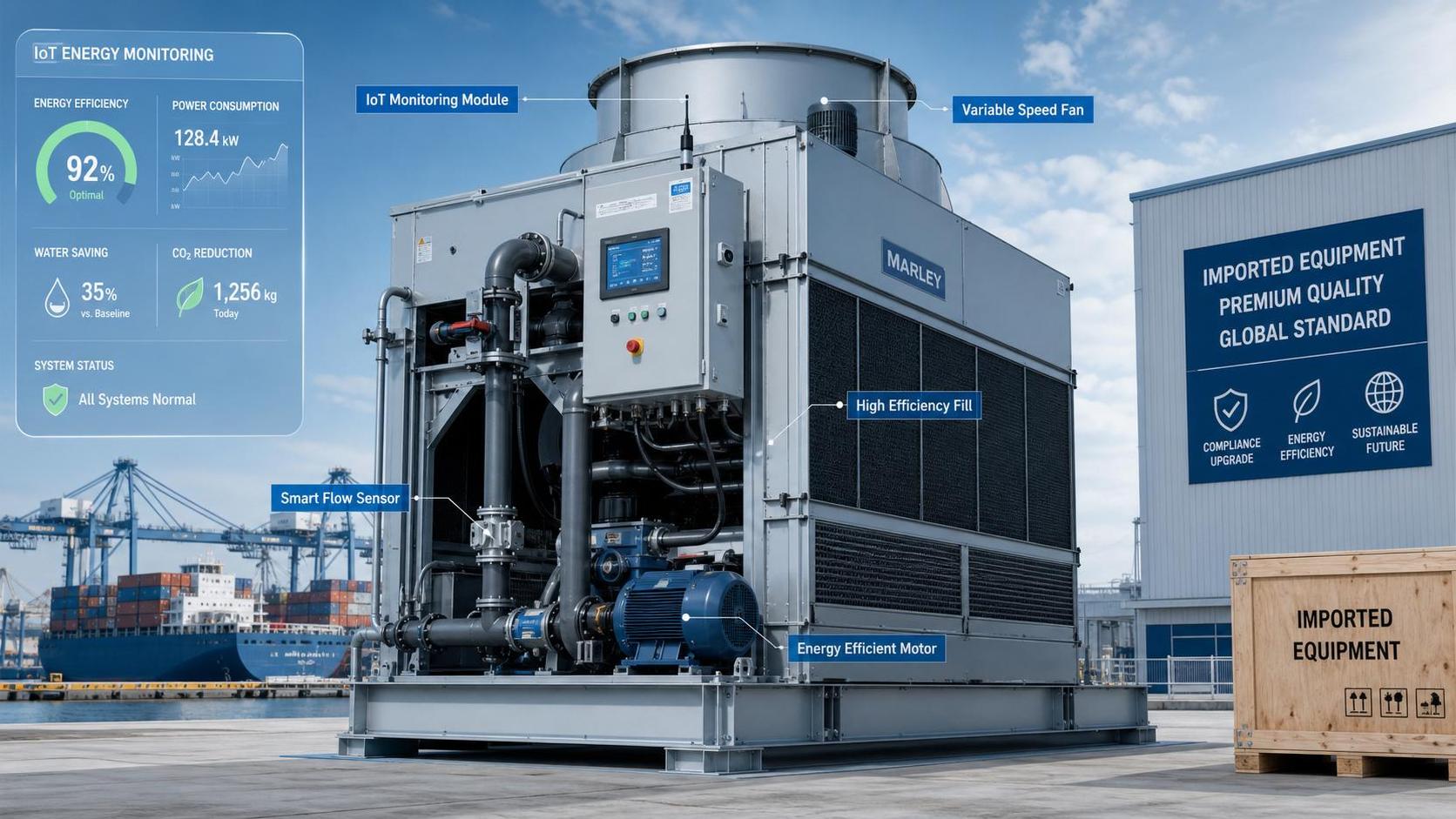
Suppliers of fan motors, variable frequency drives (VFDs), heat transfer fill materials, and control systems may face revised specification demands. Higher IEER compliance often requires upgrades to motor efficiency (e.g., IE4-class), precision airflow control, or enhanced thermal performance of fill media—potentially triggering design and sourcing adjustments.
Testing & Certification Service Providers
Third-party laboratories and certification bodies accredited under AHRI Standard 204 will see increased demand for IEER testing and verification. Firms without current AHRI accreditation—or lacking capacity for post-2025 test protocols—may lose access to U.S.-focused clients.
Distribution & Project Integration Channels
U.S. distributors, engineering contractors, and EPC firms specifying cooling towers for data centers, hospitals, or district energy systems must now verify AHRI 204 certification prior to bid submission or equipment ordering. Inventory planning, lead-time forecasting, and technical documentation review will require tighter alignment with DOE compliance timelines.
What Stakeholders Should Monitor and Do Now
Confirm AHRI 204 Certification Readiness
Exporters and manufacturers should verify whether their current product lines have undergone—and passed—AHRI Standard 204 testing for IEER ≥5.8. Units certified under earlier versions (e.g., AHRI 204–2015) do not satisfy the updated requirement. Re-testing is mandatory if certification predates the 2025 protocol revision.
Review Product Documentation and Labeling
From October 1, 2026, all cooling tower units shipped to the U.S. must bear AHRI-certified IEER values on nameplates and submittal documents. Mislabeling or omission risks rejection during federal contract review or state-level code enforcement inspections.
Assess Supply Chain Lead Times for Compliance-Critical Components
Upgrades to meet IEER ≥5.8 may require higher-efficiency motors, optimized fan blades, or recalibrated control logic. Procurement teams should map lead times for these components—especially if sourced from suppliers with limited AHRI-aligned validation experience—to avoid delays ahead of the October 2026 deadline.
Track State-Level Adoption Timing
While DOE’s adoption triggers federal procurement rules, individual U.S. states adopt ASHRAE 90.1 into local building codes at varying paces. Some states may delay implementation beyond October 2026; others may enforce it earlier. Monitoring state-specific code adoption schedules helps prioritize regional sales and compliance efforts.
Editorial Perspective / Industry Observation
Observably, this update functions less as an isolated regulatory change and more as a calibrated signal of tightening federal energy policy toward HVAC infrastructure—particularly for high-energy-use systems in commercial buildings. Analysis shows that the 18% IEER increase aligns with broader DOE goals under the Building Energy Codes Program, aiming for cumulative national energy savings of ~3.5 quads by 2040. From an industry perspective, the timeline (May 2026 adoption, October 2026 enforcement) leaves narrow margin for retrofitting legacy designs—making pre-certification and early lab engagement critical. It is better understood not as a one-time compliance hurdle, but as the first step in a multi-cycle tightening trajectory, where future ASHRAE updates are likely to further raise IEER floors or introduce additional metrics (e.g., part-load performance weighting).
Conclusion: The DOE’s adoption of ASHRAE 90.1-2025 marks a definitive escalation in minimum efficiency expectations for commercial cooling towers entering the U.S. market. Its significance lies not only in the 18% IEER uplift itself, but in its binding effect on procurement eligibility and supply chain readiness. At present, it is most accurately interpreted as an enforceable operational requirement—not merely a policy signal—with tangible consequences for export strategy, product development cycles, and technical certification workflows.
Source: U.S. Department of Energy (DOE) Federal Register Notice, Docket No. EERE-2023-BT-STD-0072; ASHRAE Standard 90.1-2025 official publication; AHRI Standard 204–2025 edition. Note: State-level adoption timelines remain subject to ongoing review and vary by jurisdiction.
Related News
- When does an industrial cooling radiator outperform a cooling tower?Author :Thermodynamics Analyst

- EU Cooling Tower Standard EN 13771:2026 Takes EffectAuthor :Thermodynamics Analyst

- EU REACH SVHC Update Triggers Cooling Tower DisclosureAuthor :Thermodynamics Analyst

- SASO Adds Bio-Durability Test for Cooling Tower FillAuthor :Thermodynamics Analyst

- EU REACH Update Bars Phthalates in Cooling Tower PVC FillAuthor :Thermodynamics Analyst

- EU Tightens CE Rules for Cooling Tower Steel PartsAuthor :Thermodynamics Analyst

- Shanghai-Rotterdam Cooling Tower Space TightensAuthor :Thermodynamics Analyst

- Hamburg Port Strike Delays Cooling Tower Parts ClearanceAuthor :Thermodynamics Analyst

- ASHRAE 188-2026 Makes Cooling Tower Microbial Control MandatoryAuthor :Thermodynamics Analyst

- India Enforces BIS IS 17842:2026 for Cooling TowersAuthor :Thermodynamics Analyst

- EU REACH Restricts Zinc Inhibitors in Cooling TowersAuthor :Thermodynamics Analyst

- TUV Rheinland Switches Cooling Tower Labels to IEC 61800-9-2Author :Thermodynamics Analyst

- EU REACH Rule Takes Effect for Cooling Tower CoatingsAuthor :Thermodynamics Analyst

- Vietnam to Require IoT Modules in Imported Cooling TowersAuthor :Thermodynamics Analyst

- How to Compare Industrial Cooling Equipment Dry Coolers for Year-Round EfficiencyAuthor :Thermodynamics Analyst

- SASO Tightens Cooling Tower Import Rules for 2027Author :Thermodynamics Analyst

- REACH SVHC Update Limits Copper Corrosion InhibitorsAuthor :Thermodynamics Analyst

- SASO Starts Cooling Tower Data Rule for CoCAuthor :Thermodynamics Analyst

- Saudi SASO Portal Adds Corrosion Data RuleAuthor :Thermodynamics Analyst

- SASO Adds Corrosion Report Rule for Cooling TowersAuthor :Thermodynamics Analyst

- RDHx Prices Rise as AI Demand Lifts Premium ModelsAuthor :Thermodynamics Analyst

- EU EN 13859-2:2026 Mandates Extreme Humidity Heat-Loss TestsAuthor :Thermodynamics Analyst

- VDE Tightens Cooling Tower Test ScopeAuthor :Thermodynamics Analyst

- SASO Tightens Cooling Tower Test Proof for SaberAuthor :Thermodynamics Analyst

- Saudi SABER Cooling Tower Rule Takes Effect EarlyAuthor :Thermodynamics Analyst

- EU Carbon Labels to Cover Cooling Tower ExportsAuthor :Thermodynamics Analyst

- Saudi SABER Cooling Tower Rule Takes Effect EarlyAuthor :Thermodynamics Analyst

- EU Carbon Label Rule Hits Cooling Tower ExportsAuthor :Thermodynamics Analyst

- Saudi SABER Cooling Tower Rule Adds EN 13859-2 TestAuthor :Thermodynamics Analyst

- Saudi SABER Tightens Cooling Tower Energy Report RulesAuthor :Thermodynamics Analyst

- Saudi SASO Tightens Cooling Tower Efficiency FilingAuthor :Thermodynamics Analyst

- Saudi SABER Tightens Cooling Tower Energy Report ChecksAuthor :Thermodynamics Analyst

- Thermal Management Problems That Cause Equipment DowntimeAuthor :Thermodynamics Analyst

- Saudi Rule Requires Local Certification for Imported Cooling TowersAuthor :Thermodynamics Analyst

- EU Law Tightens Cooling Imports for Data CentersAuthor :Thermodynamics Analyst

- India Extends FRP Duty Relief for Cooling TowersAuthor :Thermodynamics Analyst