Industrial Cooling Solutions: Cooling Tower Options for Lower Water and Power Use




For project managers and engineering leads, choosing the right industrial cooling solutions is no longer only about heat rejection—it is about cutting water consumption, lowering power demand, and improving system reliability. This guide explores practical cooling tower options that support smarter capital planning, stronger sustainability performance, and long-term operating efficiency in demanding industrial environments.
Most readers searching this topic want a practical answer to one question: which cooling tower approach delivers the best balance of water savings, energy efficiency, risk control, and project payback for a specific facility.
That search intent is highly decision-oriented. Project leaders are usually comparing open-circuit, closed-circuit, hybrid, adiabatic, and optimized retrofit options before budget approval, design freeze, or plant expansion.
What matters most to this audience is not generic theory. They need to understand life-cycle cost, water and power tradeoffs, maintenance implications, plume control, space constraints, and reliability under real operating conditions.
The most useful content therefore focuses on selection criteria, performance tradeoffs, technology fit by application, and the hidden risks that affect operating expenditure and project outcomes over the next ten to twenty years.
Broad background on how cooling towers work is less important here. The article should prioritize decision support, practical comparison, and implementation guidance over textbook-style explanations or overly general sustainability claims.
Why cooling tower choice now has a direct impact on project performance
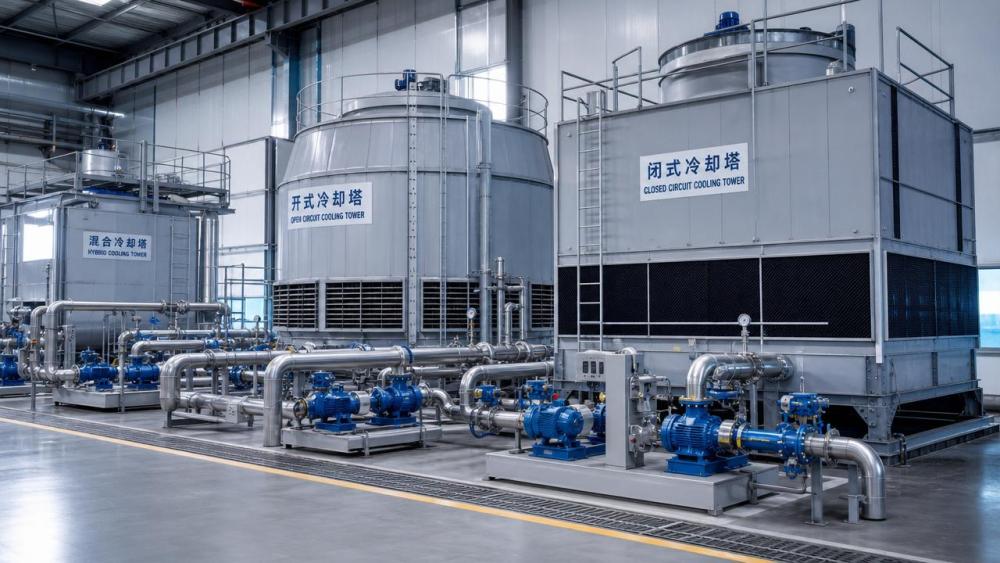
In many industrial facilities, the cooling system is one of the biggest silent drivers of utility cost, process stability, and environmental compliance. A poor specification locks in years of avoidable water and energy waste.
For project managers, this changes the discussion from equipment procurement to asset strategy. The right industrial cooling solutions can improve uptime, reduce treatment chemicals, and help a site meet ESG or carbon reduction targets.
Cooling tower decisions also affect adjacent systems. Pumping energy, chiller lift, compressor room temperatures, condenser approach, and process heat exchanger performance all depend on how effectively heat is rejected.
That means a lower-cost tower on day one may become the more expensive option over the system life. The right question is not “Which tower is cheapest?” but “Which option minimizes total operational burden?”
In regions facing rising water tariffs, drought restrictions, or power price volatility, the answer becomes even more important. Water use and kilowatt consumption increasingly carry strategic, not just operational, consequences.
What project managers should evaluate before comparing cooling tower options
Before selecting equipment, teams should define the operating profile clearly. Design wet-bulb temperature, annual load variation, process criticality, water quality, available footprint, and discharge limits all change the right answer.
A tower that performs well in a moderate climate may struggle in hot, dry, or highly variable conditions. Likewise, a system that reduces water use may raise fan energy if the controls strategy is weak.
It is also essential to clarify whether the facility values peak efficiency, annualized efficiency, lowest water withdrawal, lowest maintenance intervention, or highest process protection. These priorities often conflict and must be ranked.
Another early question is whether the project is a greenfield build or a retrofit. Retrofits often face structural loading limits, piping constraints, legacy controls, and shutdown windows that narrow the feasible options quickly.
Finally, teams should build decisions around total cost of ownership. Capital expenditure matters, but so do evaporation, blowdown, water treatment, drift losses, fan and pump power, cleaning labor, and production risk.
Open-circuit cooling towers: efficient and proven, but water management is critical
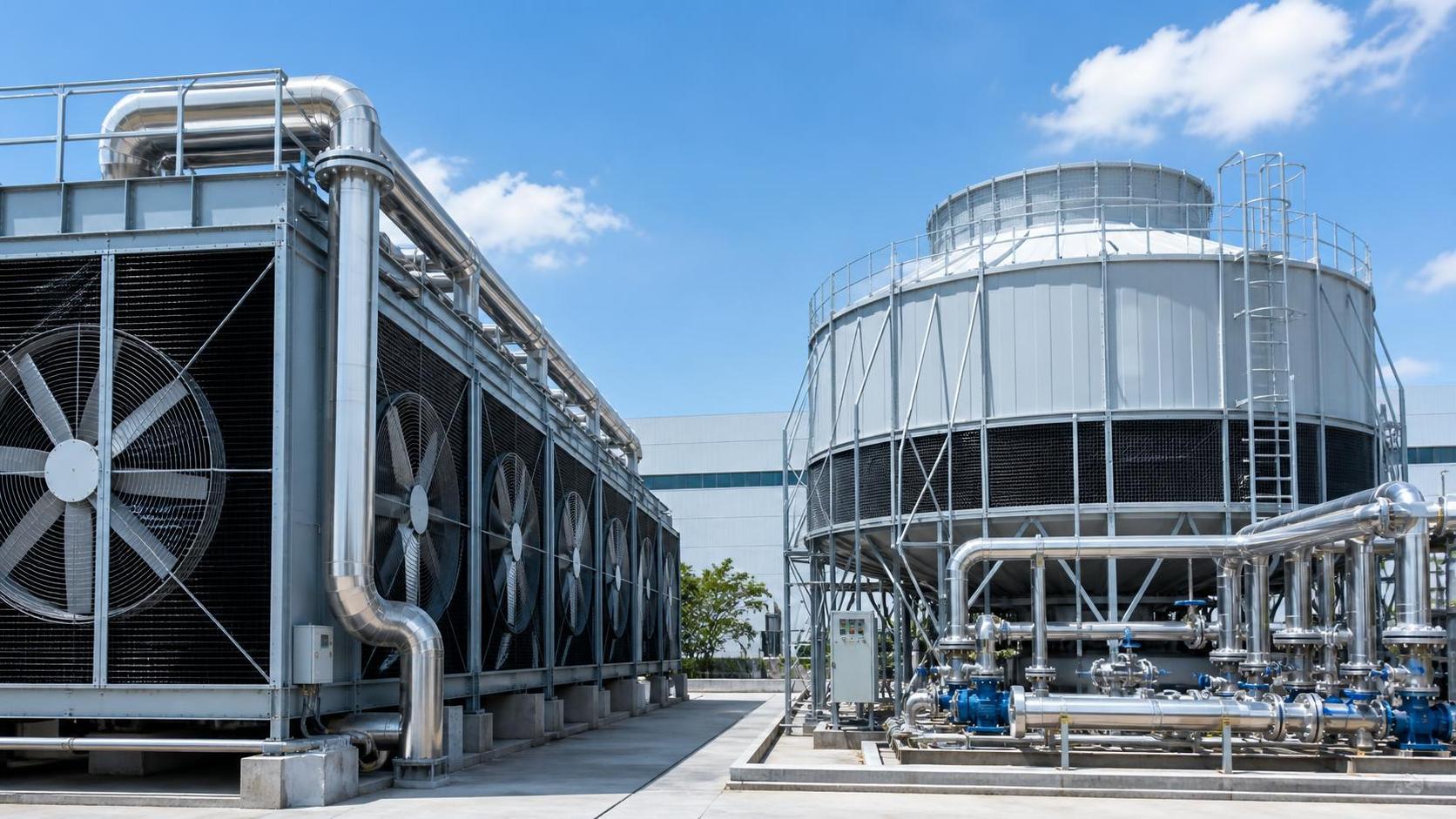
Open-circuit towers remain common because they are cost-effective and thermally efficient for many industrial duties. Warm process water contacts air directly, enabling strong heat rejection with relatively modest first cost.
For facilities focused on initial budget and dependable performance, open towers are often the baseline option. They are especially common in manufacturing plants, HVAC condenser loops, and general industrial utility systems.
However, the direct air-water contact that supports efficiency also drives evaporation, blowdown, fouling, and biological control requirements. Water savings therefore depend heavily on treatment quality and cycle-of-concentration management.
In practice, open towers can still support lower water use if the project includes advanced conductivity control, side-stream filtration, high-efficiency drift eliminators, and chemistry programs tailored to local makeup water quality.
Energy performance can also improve with variable frequency drives on fans, optimized cell staging, and control setpoints matched to process demand rather than fixed conservative assumptions.
The main limitation is exposure. Open systems are more vulnerable to scaling, airborne contamination, and process fluid contamination when the cooling loop is directly connected to sensitive equipment.
For project leaders, the takeaway is simple: open towers are often a strong option when water treatment can be managed well and when the process can tolerate the operating realities of an open loop.
Closed-circuit cooling towers: better process protection with different cost dynamics
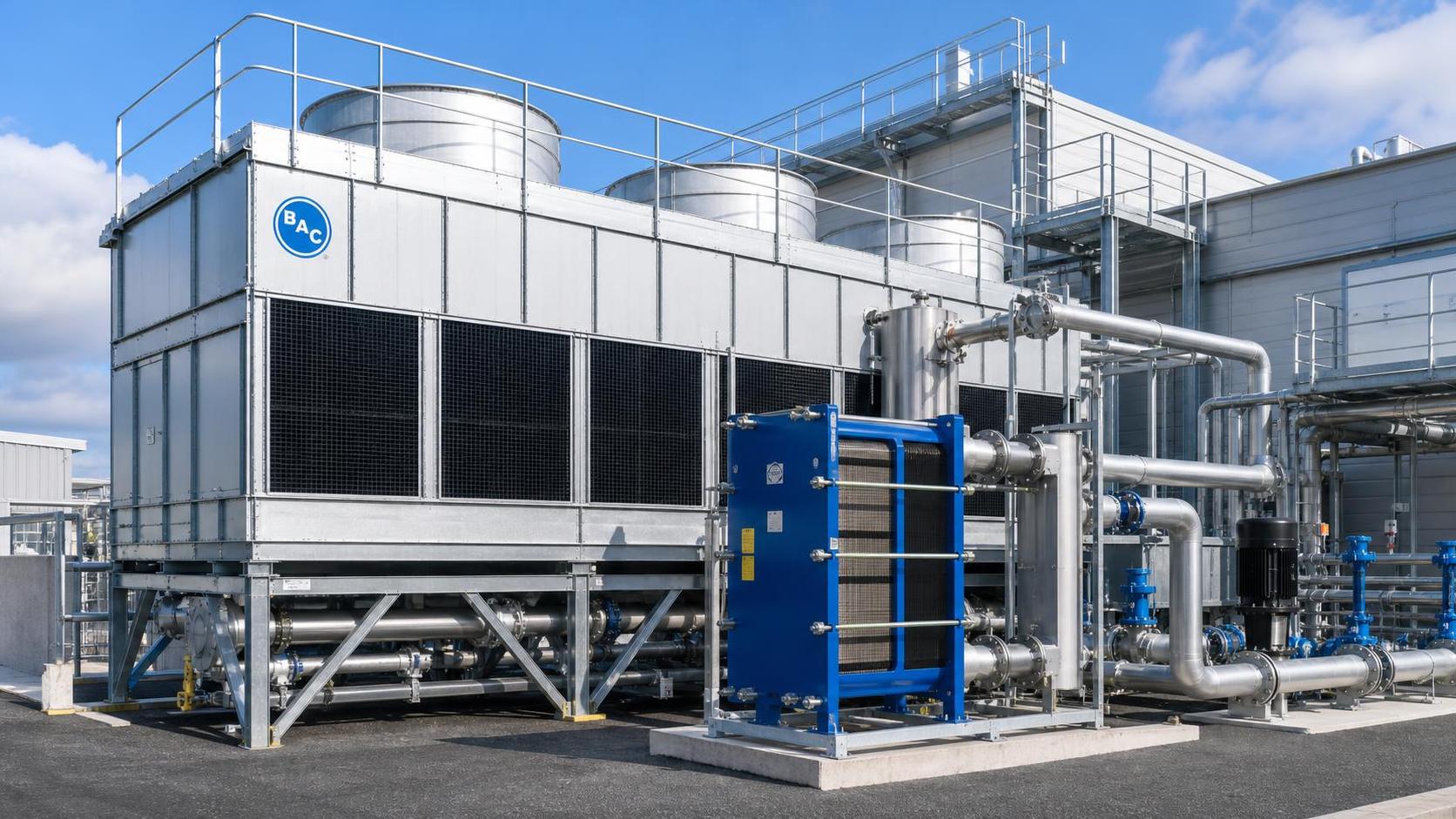
Closed-circuit towers isolate the process fluid inside a coil while spray water and air remove heat externally. This arrangement protects the process loop from direct contamination and reduces fouling in critical equipment.
That makes closed-circuit systems attractive for facilities with sensitive heat exchangers, tighter cleanliness requirements, or fluids that should not be exposed to airborne solids and biological growth.
For engineering leads, one of the biggest advantages is reliability of heat transfer on the process side. Cleaner internal circuits often translate into more stable operating performance and lower maintenance on downstream assets.
Water consumption may still be meaningful because the external spray loop behaves similarly to an evaporative system. But process-side water quality control is easier, and maintenance can be more predictable.
The tradeoff is capital cost. Closed-circuit towers typically cost more upfront and may require careful evaluation of approach temperature, coil selection, freeze protection strategy, and fan energy under seasonal variation.
They are often justified where downtime is expensive, contamination risk is unacceptable, or process fluids are costly. In those cases, the value comes less from raw utility savings and more from reduced production risk.
Hybrid and adiabatic cooling towers: reducing water use without fully abandoning evaporative efficiency
When water scarcity is the primary concern, hybrid and adiabatic designs deserve close attention. These industrial cooling solutions combine dry and evaporative operating modes to cut annual water consumption significantly.
In cooler or lower-load conditions, the system can reject heat in dry mode, avoiding evaporation. During hotter periods or peak process demand, evaporative assistance activates to maintain thermal performance.
This operating flexibility helps project teams manage the classic tradeoff between water and power. Pure dry cooling minimizes water use but often increases fan energy and may require larger heat transfer surfaces.
Hybrid systems soften that compromise. They usually use more power than a conventional evaporative tower in some operating windows, but they can cut water use sharply compared with open evaporative designs.
These systems are especially relevant for sites facing water withdrawal permits, community scrutiny, or long-term uncertainty around water cost. They can also help reduce visible plume under selected conditions.
Still, hybrid systems are not automatically the best answer. Their value depends on climate profile, annual operating hours, allowable leaving-water temperature, maintenance capabilities, and local utility economics.
For project managers, the decision should be modeled on annualized basis rather than design-day intuition. A system that looks expensive at purchase may produce strong value where water risk is strategically important.
Dry cooling options: best for water conservation, but thermal penalties must be understood
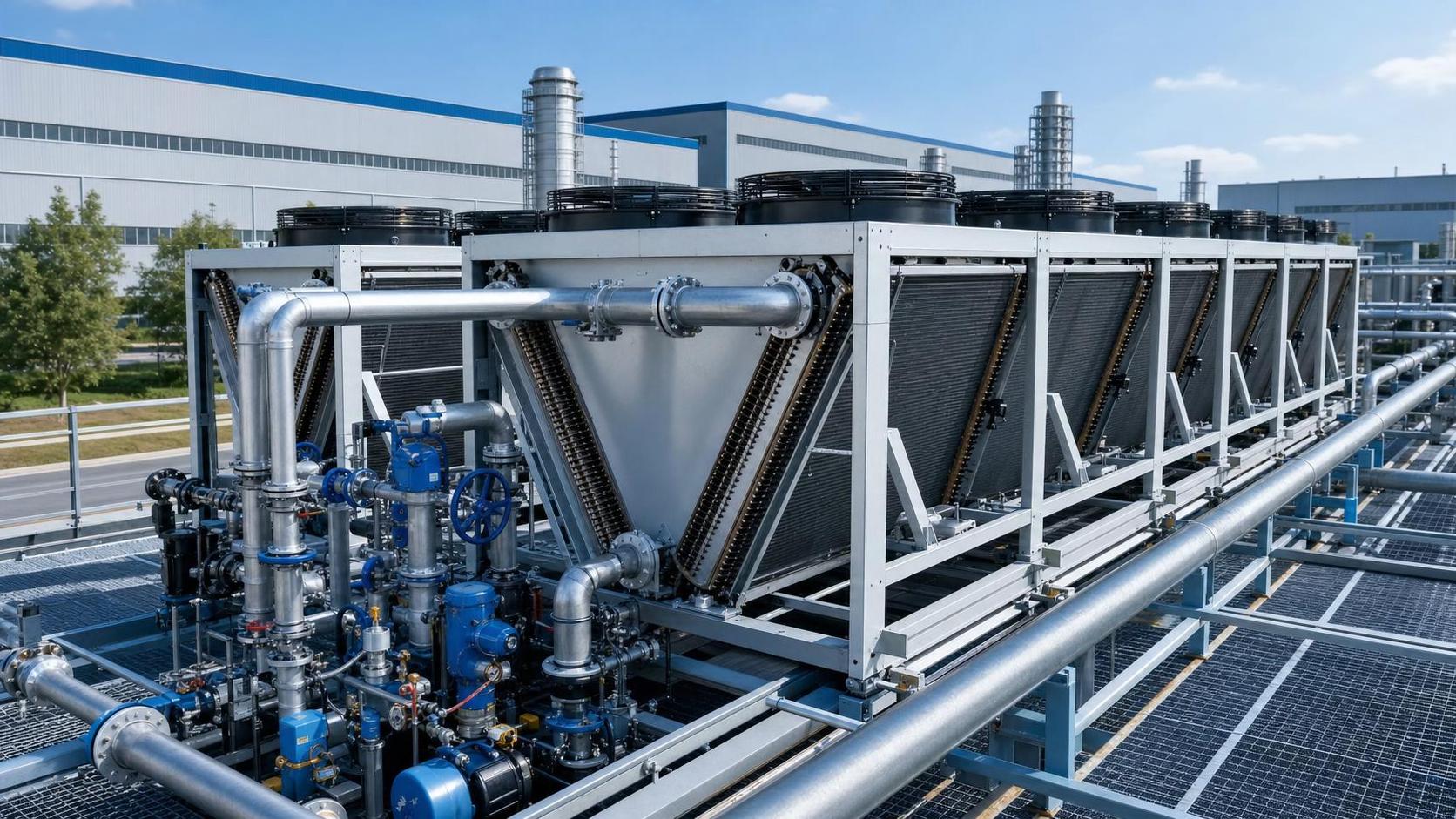
Dry cooling uses air alone to reject heat, largely eliminating evaporative water consumption. For facilities in arid regions or under strict water limitations, this can be the most direct path to dramatic water savings.
However, dry systems usually operate at higher approach temperatures than evaporative equipment, especially during hot weather. That can increase chiller condensing temperatures, reduce equipment efficiency, or constrain process output.
As a result, power use may rise at the system level even if the cooler itself appears operationally simple. Fans can consume more energy, and upstream equipment may work harder to achieve the same cooling target.
Dry cooling also tends to require more surface area and space. Structural support, noise, and airflow recirculation should all be checked early in project planning to avoid late-stage design conflicts.
For project teams, dry cooling is best viewed as a strategic water-saving option that requires careful whole-system modeling. It should not be selected solely because it appears to eliminate tower-related water issues.
Retrofit strategies that often lower water and power use faster than full replacement
Not every facility needs a completely new tower. In many brownfield projects, targeted upgrades can deliver meaningful savings with lower capital commitment and less disruption to plant operations.
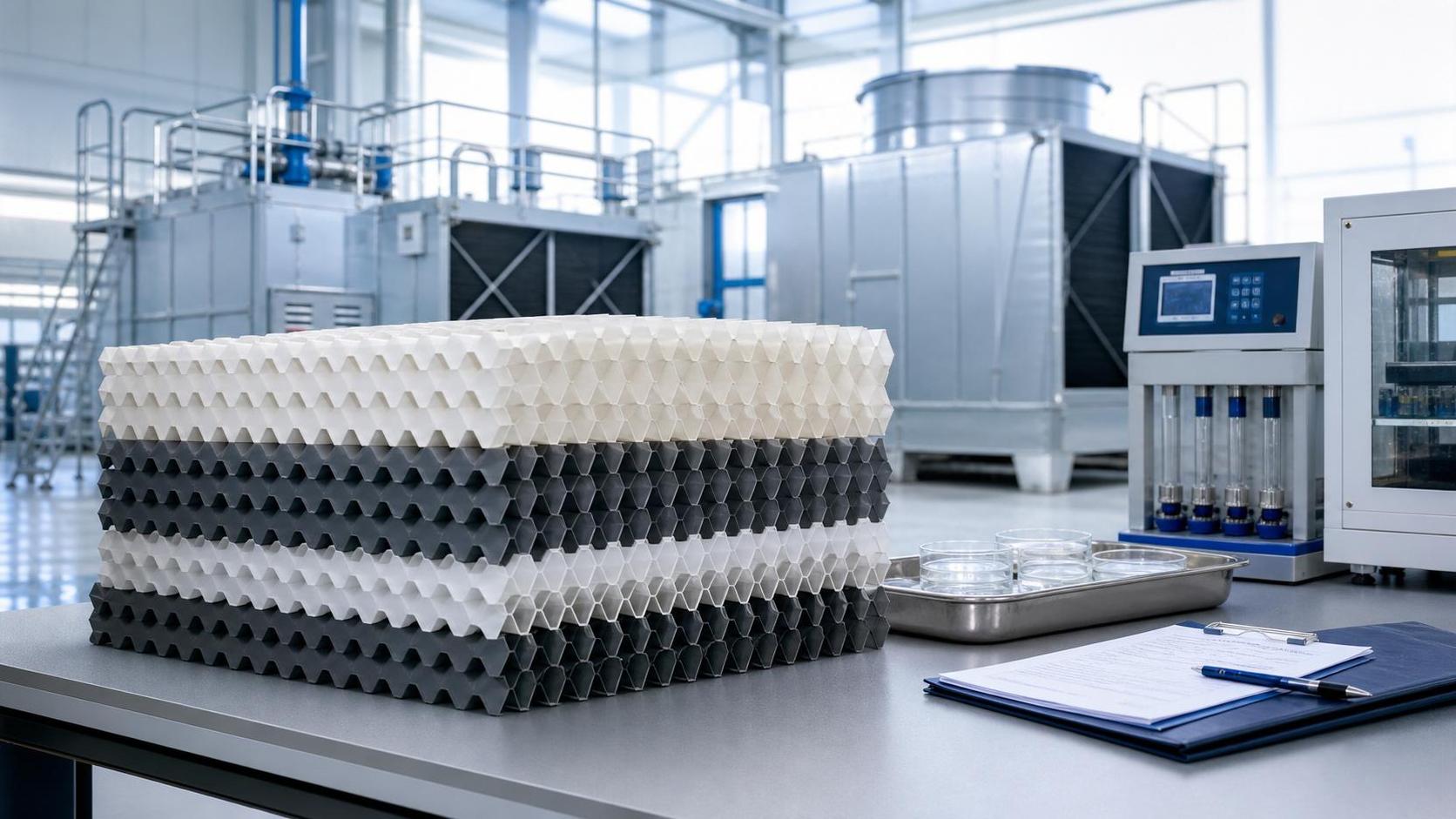
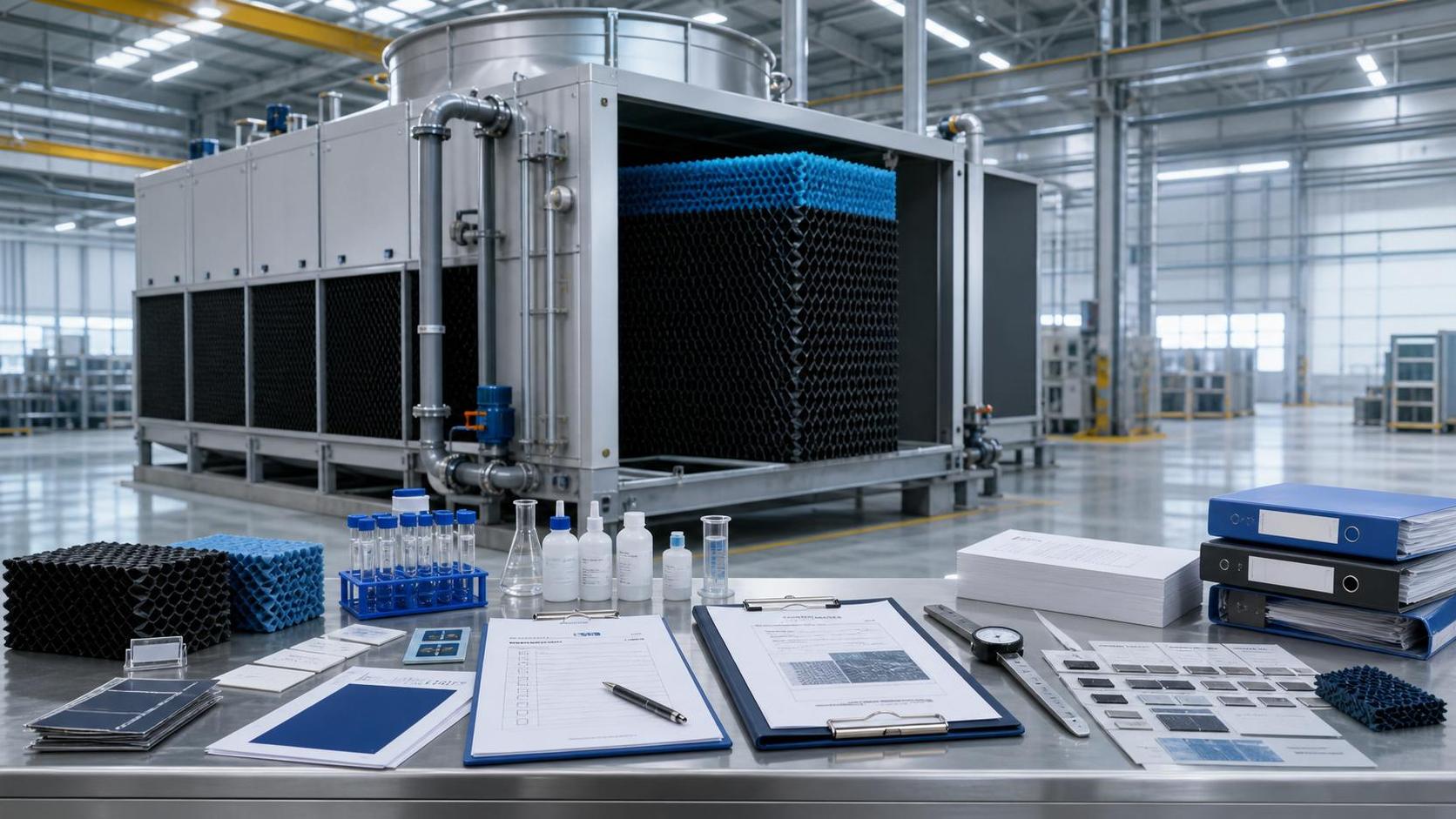
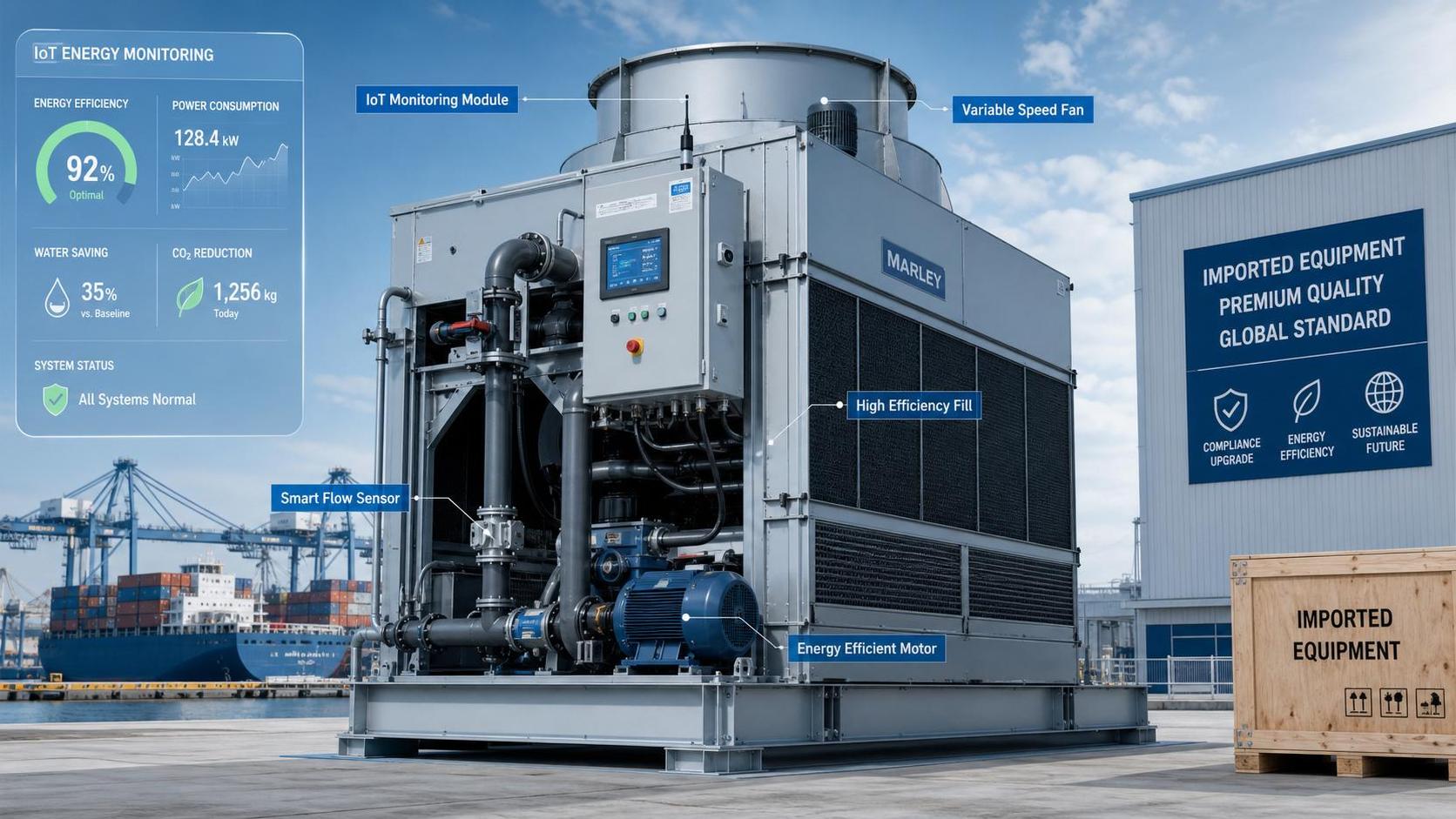
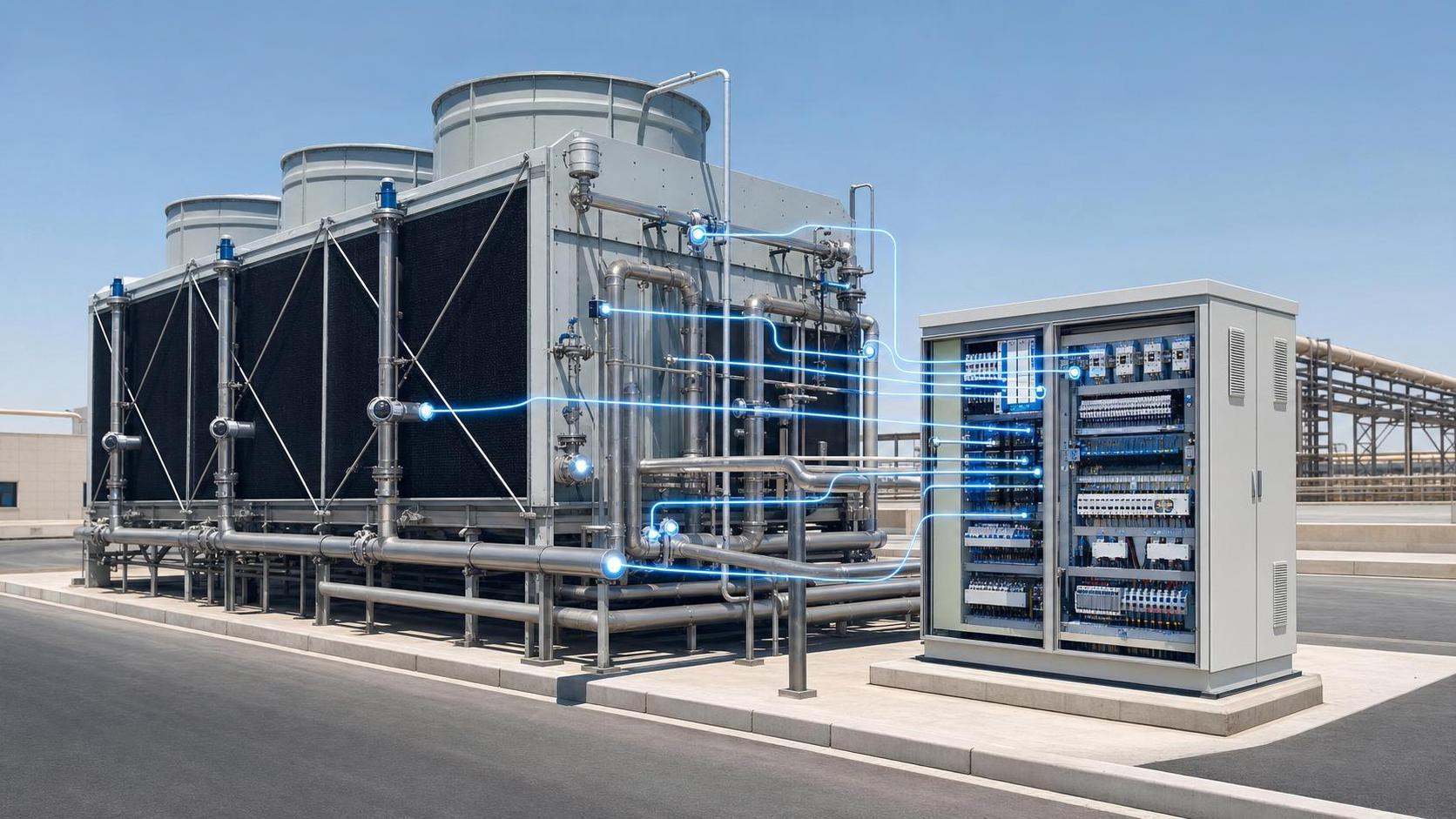
Common retrofit measures include high-efficiency fill replacement, modern drift eliminators, variable speed fan drives, smarter tower controls, basin sweeping, side-stream filtration, and upgraded water treatment automation.
Nozzle redesign and better water distribution can also improve thermal performance, helping the tower achieve target leaving-water temperature with less fan runtime or reduced pump penalties.
In some cases, the highest-value improvement is not inside the tower itself. Cleaning fouled heat exchangers, rebalancing condenser water flow, or improving sensor accuracy can unlock hidden system efficiency.
Retrofits are particularly attractive when structural steel remains sound and when shutdown windows are limited. They also help project managers stage investment over time instead of carrying a single large capital event.
The key is diagnosis. Without baseline performance testing and water-energy analysis, teams may replace major equipment when controls, maintenance, or hydraulics are the real source of inefficiency.
How to compare options using total cost of ownership instead of first cost alone
For decision makers, total cost of ownership is the most reliable framework. A cooling tower should be evaluated over its full life, not only by purchase price and installation cost.
At minimum, the model should include fan and pump energy, makeup water, sewer or discharge cost, water treatment chemicals, maintenance labor, spare parts, downtime exposure, and expected component life.
It should also account for climate data and part-load operation. Annual performance matters more than nameplate claims because industrial facilities rarely operate at one fixed design point.
Where appropriate, project teams should assign value to risk reduction. If a closed-circuit or hybrid solution reduces contamination events or improves production stability, that benefit belongs in the economic model.
Carbon cost and sustainability reporting may also influence value. Lower power consumption reduces emissions, while lower water withdrawal can support corporate environmental goals and permit resilience.
In boardroom terms, the best industrial cooling solutions are the ones that lower long-term operating friction while protecting throughput. That combination often beats the lowest-capex option by a wide margin.
Key questions to ask suppliers before final selection
Supplier proposals often look similar at a high level, so structured questioning is essential. Project leaders should ask for guaranteed thermal performance under actual site design conditions, not generic catalog assumptions.
They should also request annualized water and power estimates, control logic descriptions, maintenance access details, drift performance, plume expectations, and water treatment compatibility guidance.
For retrofit projects, ask what site data the supplier needs to validate fit. Structural load, piping interface, electrical capacity, and shutdown duration can all change practical feasibility.
It is also wise to ask about coil cleanability, fill replacement intervals, corrosion protection, fan redundancy, winter operation strategy, and local service availability. Reliability is built into details, not marketing language.
Finally, request references from comparable applications. A tower that performs well in comfort cooling may not translate directly to process cooling in chemicals, food, pharmaceuticals, or metals manufacturing.
Making the right decision for your site
The right cooling tower option depends on what your site is trying to optimize. If lowest first cost and proven evaporative performance matter most, open-circuit systems may remain the logical base case.
If process protection and cleaner internal loops matter more, closed-circuit towers often justify their higher price. If water scarcity is the dominant issue, hybrid, adiabatic, or dry approaches deserve serious modeling.
For many facilities, the smartest decision is not a simple equipment swap but a combination of retrofit upgrades, better controls, and water management improvements that reduce both utility use and operating risk.
Project managers and engineering leads should therefore avoid one-size-fits-all answers. The best industrial cooling solutions come from aligning tower design with climate, process sensitivity, utility economics, and maintenance reality.
When evaluated through life-cycle cost and reliability rather than first cost alone, cooling tower strategy becomes a powerful lever for lower water use, lower power demand, and stronger long-term industrial performance.
Ready when you are. Send us a message to get started.
Related News
- Kentucky Regulators Approve $191 Million Cooling Tower at Mitchell Coal PlantAuthor :Thermodynamics Analyst

- Cooling Tower Market Trends Reshaping Replacement Plans and Capital BudgetsAuthor :Thermodynamics Analyst

- Field-Erected Cooling Tower Market: Why Utility Projects Favor Custom DesignsAuthor :Thermodynamics Analyst

- Evaporative Cooling Tower Market Outlook: Demand Drivers, Risks, and Growth AreasAuthor :Thermodynamics Analyst

- When does an industrial cooling radiator outperform a cooling tower?Author :Thermodynamics Analyst

- EU Cooling Tower Standard EN 13771:2026 Takes EffectAuthor :Thermodynamics Analyst

- EU REACH SVHC Update Triggers Cooling Tower DisclosureAuthor :Thermodynamics Analyst

- SASO Adds Bio-Durability Test for Cooling Tower FillAuthor :Thermodynamics Analyst

- EU REACH Update Bars Phthalates in Cooling Tower PVC FillAuthor :Thermodynamics Analyst

- EU Tightens CE Rules for Cooling Tower Steel PartsAuthor :Thermodynamics Analyst

- Shanghai-Rotterdam Cooling Tower Space TightensAuthor :Thermodynamics Analyst

- Hamburg Port Strike Delays Cooling Tower Parts ClearanceAuthor :Thermodynamics Analyst

- ASHRAE 188-2026 Makes Cooling Tower Microbial Control MandatoryAuthor :Thermodynamics Analyst

- India Enforces BIS IS 17842:2026 for Cooling TowersAuthor :Thermodynamics Analyst

- EU REACH Restricts Zinc Inhibitors in Cooling TowersAuthor :Thermodynamics Analyst

- TUV Rheinland Switches Cooling Tower Labels to IEC 61800-9-2Author :Thermodynamics Analyst

- EU REACH Rule Takes Effect for Cooling Tower CoatingsAuthor :Thermodynamics Analyst

- Vietnam to Require IoT Modules in Imported Cooling TowersAuthor :Thermodynamics Analyst

- How to Compare Industrial Cooling Equipment Dry Coolers for Year-Round EfficiencyAuthor :Thermodynamics Analyst

- SASO Tightens Cooling Tower Import Rules for 2027Author :Thermodynamics Analyst

- REACH SVHC Update Limits Copper Corrosion InhibitorsAuthor :Thermodynamics Analyst

- SASO Starts Cooling Tower Data Rule for CoCAuthor :Thermodynamics Analyst

- Saudi SASO Portal Adds Corrosion Data RuleAuthor :Thermodynamics Analyst

- SASO Adds Corrosion Report Rule for Cooling TowersAuthor :Thermodynamics Analyst

- RDHx Prices Rise as AI Demand Lifts Premium ModelsAuthor :Thermodynamics Analyst

- EU EN 13859-2:2026 Mandates Extreme Humidity Heat-Loss TestsAuthor :Thermodynamics Analyst

- VDE Tightens Cooling Tower Test ScopeAuthor :Thermodynamics Analyst

- SASO Tightens Cooling Tower Test Proof for SaberAuthor :Thermodynamics Analyst

- Saudi SABER Cooling Tower Rule Takes Effect EarlyAuthor :Thermodynamics Analyst

- EU Carbon Labels to Cover Cooling Tower ExportsAuthor :Thermodynamics Analyst

- Saudi SABER Cooling Tower Rule Takes Effect EarlyAuthor :Thermodynamics Analyst

- EU Carbon Label Rule Hits Cooling Tower ExportsAuthor :Thermodynamics Analyst

- Saudi SABER Cooling Tower Rule Adds EN 13859-2 TestAuthor :Thermodynamics Analyst

- Saudi SABER Tightens Cooling Tower Energy Report RulesAuthor :Thermodynamics Analyst

- Saudi SASO Tightens Cooling Tower Efficiency FilingAuthor :Thermodynamics Analyst

- Saudi SABER Tightens Cooling Tower Energy Report ChecksAuthor :Thermodynamics Analyst