PSA Opens Dedicated Vacuum Equipment Lane at Jurong Island




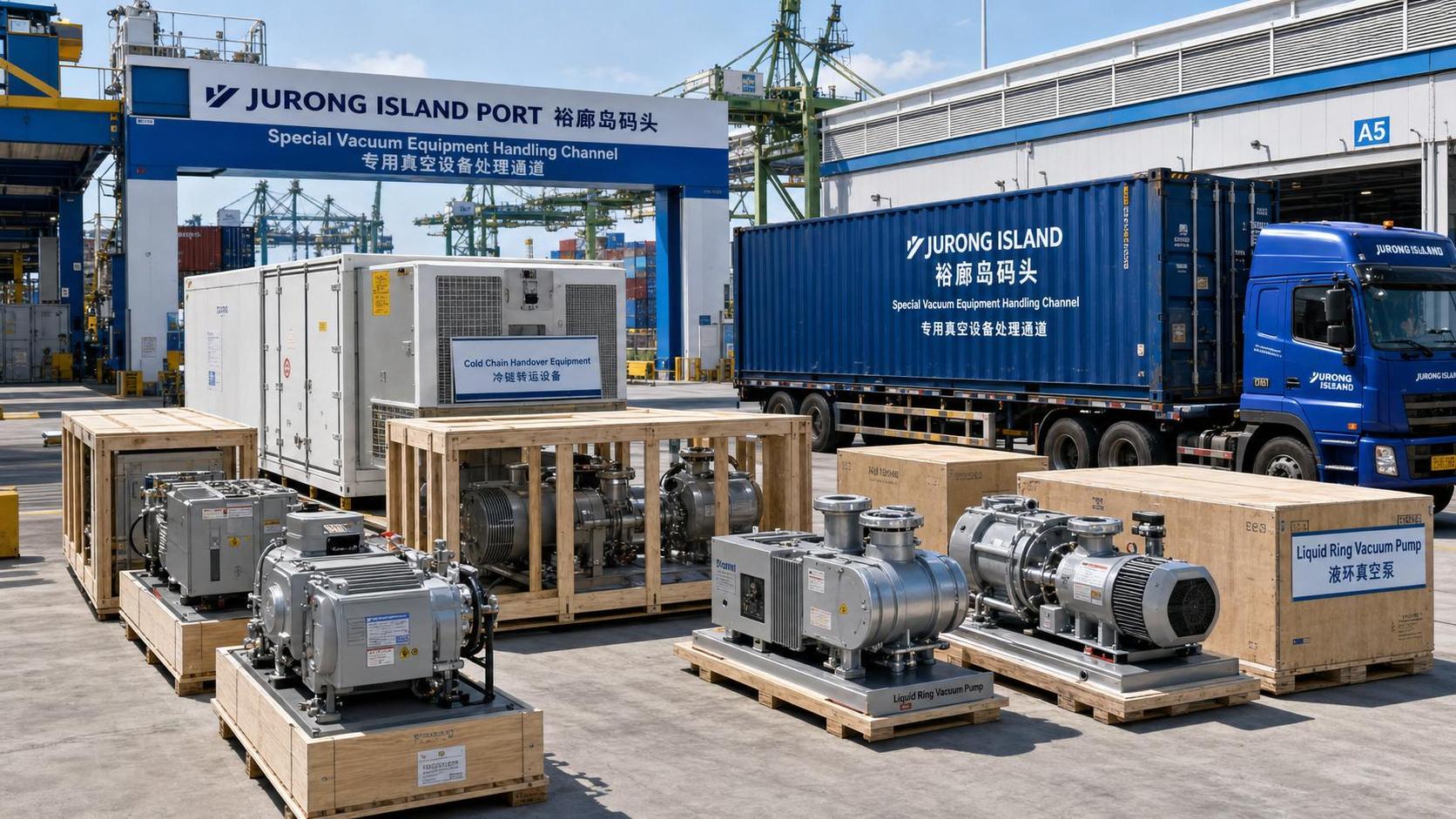
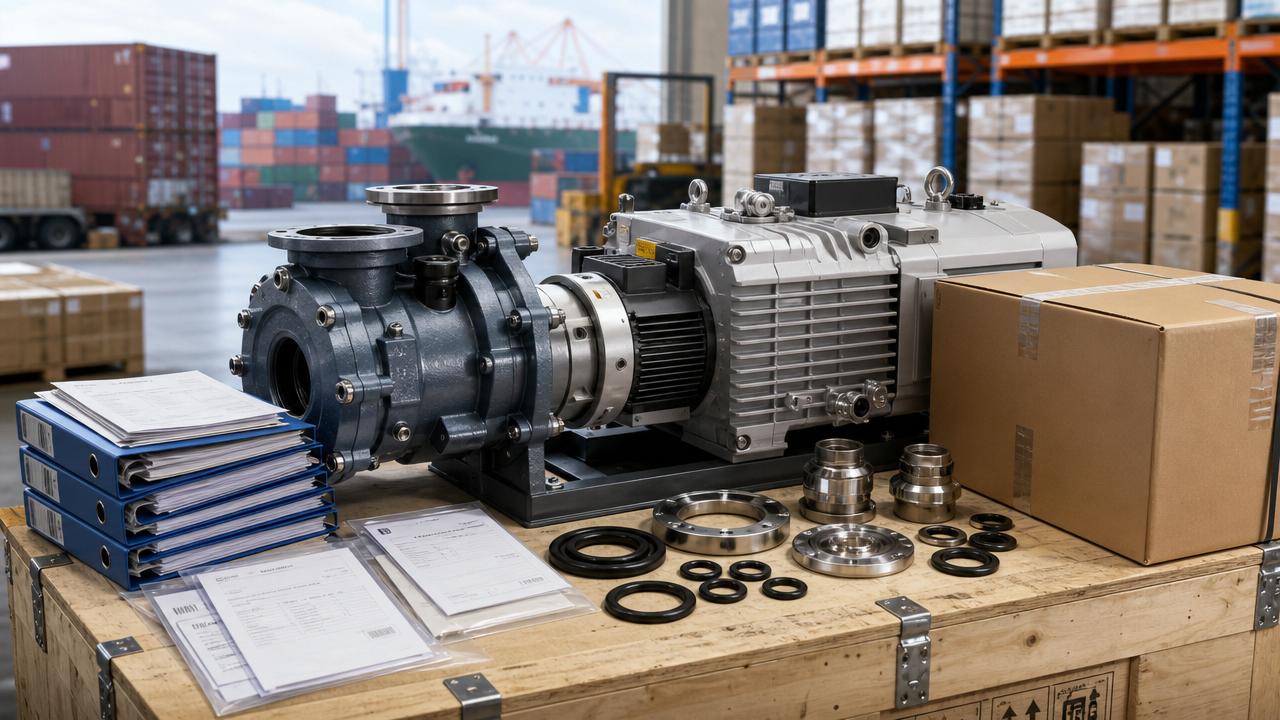
On July 12, 2026, PSA launched a dedicated handling lane at the Jurong Island industrial terminal for temperature-sensitive vacuum equipment, introducing a more defined execution framework for loading, unloading, and clearance of selected export categories. For exporters, buyers, supply-chain coordinators, and after-sales teams involved in Rotary Vane, Liquid Ring, and High Vacuum products, the development matters less as a general port update and more as an operational signal: delivery planning, documentation flow, and shipment coordination may now need to align with a specialized logistics channel rather than standard terminal handling.
What Has Been Confirmed at Jurong Island
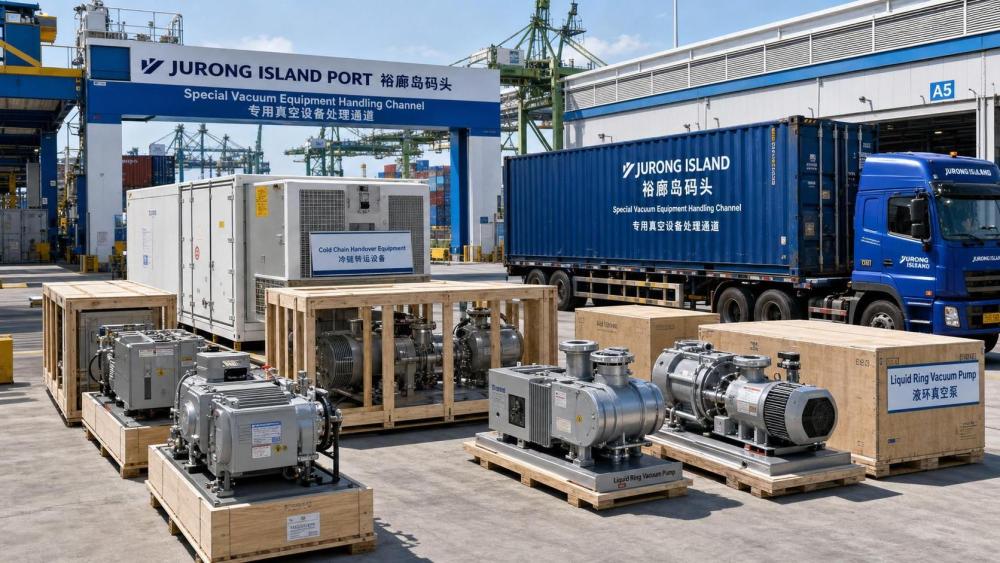
According to the provided information, PSA officially opened the “High Vacuum & Liquid Ring Dedicated Lane” at the Jurong Island industrial terminal on July 12, 2026. The lane is intended for temperature-controlled handling and faster customs clearance of temperature-sensitive equipment, including high-vacuum and liquid ring vacuum pumps.
The same information states that the lane has been connected with the ERP systems of major Chinese vacuum equipment exporters. It also indicates that average delivery cycles for Rotary Vane, Liquid Ring, and High Vacuum products are expected to be shortened by 12 days.
Where the Operational Impact May Appear First
Export shipment planning may become more structured
From an industry perspective, exporters are likely to be the first group affected because the new lane is tied directly to cargo handling and clearance execution. The practical impact may appear in booking schedules, shipment preparation, cargo classification, and coordination between factory dispatch and terminal acceptance. What deserves closer attention is whether internal shipment data, product descriptions, and handling instructions are consistent enough to match the requirements of a dedicated lane connected to ERP workflows.
Procurement teams may need to revisit lead-time assumptions
For buyers and procurement teams, the reported 12-day reduction in average delivery time may influence order timing, spare-parts planning, and project scheduling. Analysis shows that this does not automatically mean all shipments will move faster in every case; rather, it suggests that procurement teams should reassess current lead-time buffers, especially for product categories named in the update. Purchase orders, delivery terms, and technical schedules may need closer alignment with the new logistics path.
Supply-chain service providers may face tighter execution requirements
Freight coordinators, warehouse operators, and other supply-chain service providers may be affected because a dedicated temperature-controlled lane usually shifts the focus from general cargo movement to more precise handoff timing and document readiness. Observably, the key issue is not only speed but execution discipline: cargo labeling, shipment sequencing, and data synchronization with exporter systems may become more important than under standard port handling arrangements.
After-sales and quality traceability functions should pay attention
For after-sales teams and quality-traceability personnel, shorter transit cycles may affect installation planning, service staffing, and warranty response timing. It is more appropriate to understand this as a possible adjustment to delivery execution rather than a completed change across the whole service chain. Teams handling commissioning, replacement parts, or quality follow-up should watch whether delivery records and shipment documentation remain complete as logistics timing changes.
What Companies Should Track Now
Check whether product and shipping data are aligned
Companies shipping Rotary Vane, Liquid Ring, or High Vacuum products should review whether ERP entries, commercial shipping descriptions, and internal logistics instructions are consistent. Since the dedicated lane is described as ERP-connected, mismatches in product naming or handling requirements may create avoidable friction even if the lane itself is designed to speed execution.
Review delivery commitments in contracts and tenders
Analysis shows that firms should not immediately treat the expected 12-day reduction as a universal contractual standard. A more practical step is to review tender schedules, customer quotations, and promised dispatch windows to determine where lead-time language may need updating, and where current commitments should remain conservative until execution patterns are clearer.
Watch for changes in document and clearance practice
The provided information confirms faster clearance as part of the lane's purpose, but it does not provide detailed procedural requirements. For that reason, exporters and logistics teams should keep attention on any later clarification affecting shipment files, cargo handling instructions, technical documents, or related customs-facing materials. At this stage, the operational detail still requires observation rather than assumption.
Reassess coordination between factory release and terminal handling
Where vacuum equipment is sensitive to handling conditions, the timing between production release, packaging completion, inland transfer, and terminal handoff may become more important. Observably, companies should focus on whether internal departments can support a tighter dispatch rhythm without weakening quality checks, traceability, or shipment accuracy.
Why This Looks More Like an Execution Signal Than a Broad Policy Rewrite
Analysis shows that the most meaningful aspect of this update is not the announcement alone, but the operational form it takes: a dedicated lane, defined product scope, temperature-controlled handling, faster clearance, and ERP connectivity. That combination points to a rule-in-practice change for how specific vacuum equipment categories may be moved through a key industrial terminal.
At the same time, it is more appropriate to understand this as an execution signal with immediate logistical relevance, not as a fully explained regulatory regime. The current information does not provide full procedural detail, a wider enforcement framework, or a broader trade rule revision beyond the stated lane arrangement. Industry participants therefore have reason to pay attention, but also reason to avoid overstating the change.
How the Market Is Likely to Read This Update
The update can be read as a concrete operational change with potential implications for export delivery management, procurement timing, and supply-chain coordination in vacuum equipment trade. Its significance lies in the fact that terminal handling and clearance arrangements are becoming more specialized for named product groups, which may reshape execution expectations across several business roles.
From a neutral industry standpoint, the development is best understood as a landed operational change with broader commercial implications still subject to verification in day-to-day use. The immediate takeaway is not that all trade conditions have changed, but that affected companies now have a credible reason to revisit delivery assumptions and internal coordination processes.
Basis of This Article and What Still Needs Verification
This article is based on the user-provided news title, event date, and event summary. For developments of this kind, relevant source types would typically include official port announcements, regulator releases, customs or trade authority updates, industry association notices, standards-related documents, and reporting by established trade media.
No specific official source link was provided in the input, so the underlying official publication and any subsequent implementation detail still require ongoing verification. What remains worth monitoring includes later procedural clarification, the practical interpretation of the dedicated lane in shipment execution, changes in tender or delivery wording, market feedback from affected companies, and how consistently the stated time reduction is reflected in actual operations.
Ready when you are. Send us a message to get started.
Related News
- Saudi Vacuum Pump Imports Face SASO 2870:2026 RuleAuthor :Vacuum Process Fellow

- PSA Opens Dedicated Vacuum Equipment Lane at Jurong IslandAuthor :Vacuum Process Fellow

- IMO Rule Adds GWP Labeling for Liquid Ring Vacuum Pump ShipmentsAuthor :Vacuum Process Fellow

- EPA Extends SNAP 89 Filing Rule to Liquid Ring PumpsAuthor :Vacuum Process Fellow

- China Tightens Export Controls on Some FKM Pump SealsAuthor :Vacuum Process Fellow

- Vacuum Technology Selection Mistakes to AvoidAuthor :Vacuum Process Fellow

- India to Mandate BIS Certification for Liquid Ring Vacuum Pumps from Aug 2026Author :Vacuum Process Fellow
![]()
- ZTE’s 2025 Sustainability Report Sets New Liquid Ring Pump Efficiency BenchmarkAuthor :Vacuum Process Fellow

- APEC Pushes E-BL Framework, Boosting Vacuum Pump Export LogisticsAuthor :Vacuum Process Fellow
![]()
- MIIT Launches 2026 Industrial Energy Conservation InspectionAuthor :Vacuum Process Fellow

- China's Joint Crackdown on Used EV Battery Recycling Impacts Vacuum Pump Lubricant Supply ChainAuthor :Vacuum Process Fellow

- IVA Releases Liquid Ring Pump Carbon Footprint ProtocolAuthor :Vacuum Process Fellow

- IVA Releases Liquid Ring Pump Carbon Footprint GuidelinesAuthor :Vacuum Process Fellow