APEC Pushes E-BL Framework, Boosting Vacuum Pump Export Logistics




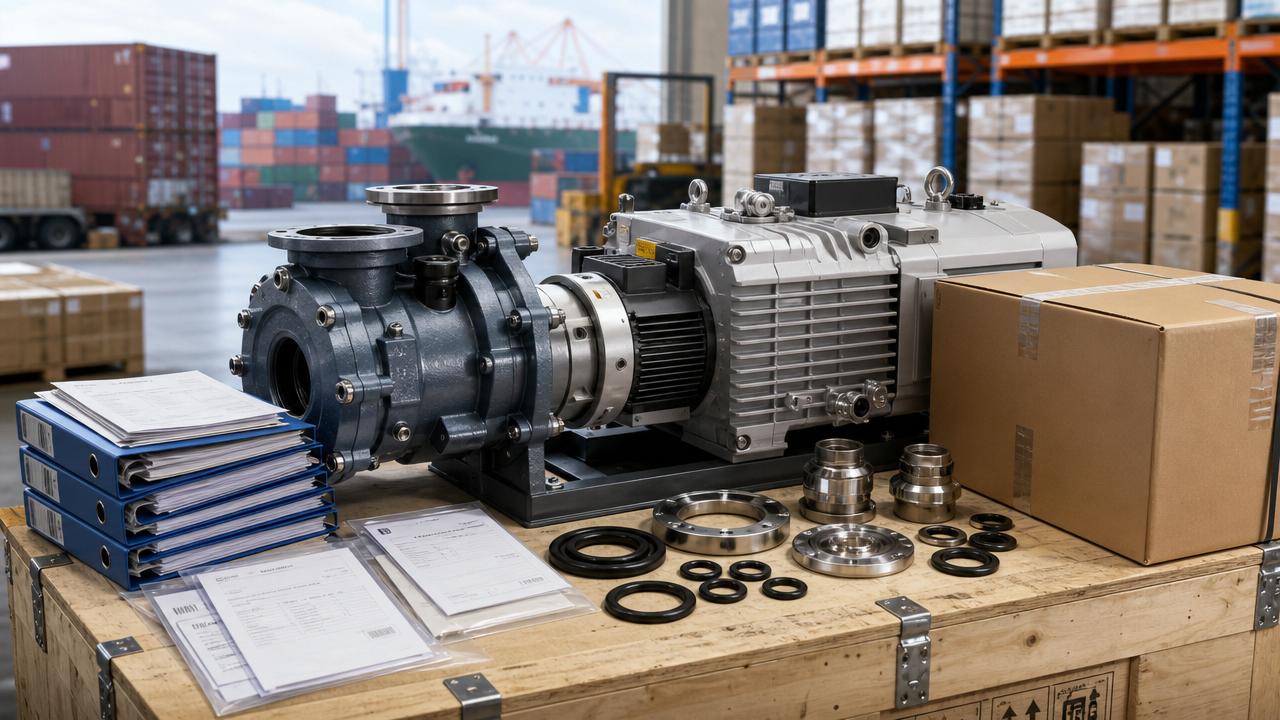
APEC Trade Ministers announced the launch of the ‘Asia-Pacific Interoperable Electronic Bill of Lading Framework’ pilot on May 22, 2026 — a coordinated regulatory step expected to reshape cross-border logistics for high-value industrial equipment exporters, particularly those shipping liquid ring vacuum pumps and similar long-lead-time capital goods.
Event Overview
The APEC Trade Ministers’ Meeting held on May 22, 2026 formally initiated the pilot phase of the Asia-Pacific Interoperable Electronic Bill of Lading (e-BL) Framework. The pilot covers five economies: China, Japan, South Korea, Vietnam, and Mexico. Under the framework, electronic bills of lading will be recognized across participating customs administrations, enabling paperless documentation exchange and front-loaded customs pre-clearance.
Industries Affected
Direct Exporters (Trade Enterprises)
Companies exporting liquid ring vacuum pumps — typically mid-to-large industrial equipment firms with global distribution networks — face extended lead times and high demurrage/insurance exposure due to manual document handling and port-side verification delays. With e-BL interoperability and pre-arrival customs assessment, these exporters gain faster release at destination ports, reduced documentation turnaround, and improved shipment traceability. Impact is most pronounced for shipments where title transfer timing and financing terms hinge on BL issuance speed.
Raw Material Procurement Firms
Procurement entities sourcing components for vacuum pump assembly (e.g., specialty stainless steel castings, precision-machined rotors, or vacuum-grade elastomers) often operate under just-in-time delivery contracts tied to export schedules. Delays in downstream export clearance cascade upstream, triggering penalty clauses or expedited air freight substitution. The 3.2-day average reduction in port dwell time lowers the risk of procurement schedule slippage — though this benefit is conditional on full integration of supplier documentation into the e-BL ecosystem.
Manufacturing Enterprises
Original Equipment Manufacturers (OEMs) producing liquid ring vacuum pumps — especially those with dual-sourcing or regionalized production (e.g., China-based plants serving Mexican or Vietnamese markets) — stand to improve order-to-cash cycle predictability. Faster BL processing supports synchronized production planning and inventory financing, as banks increasingly accept interoperable e-BLs as collateral instruments. However, current framework coverage remains limited to five economies; manufacturers serving non-pilot markets see no near-term benefit.
Supply Chain Service Providers
Freight forwarders, customs brokers, and digital trade platform operators must adapt technical interfaces to connect with national e-BL registries (e.g., China’s Blockchain-based International Trade Platform, Japan’s e-BL Consortium). Those already certified under ISO/IEC 20022 or integrated with DCSA-compliant standards are better positioned. Conversely, providers reliant on legacy EDI systems or paper-based workflows face implementation pressure — particularly regarding audit trails, digital signature validation, and liability assignment across jurisdictions.
Key Considerations & Recommended Actions
Validate e-BL Compatibility with Target Pilot Economies
Exporters should confirm whether their current e-BL provider (e.g., Bolero, essDOCS, or domestic platforms like China’s iTrade) is officially listed in each pilot economy’s interoperability registry. Unilateral e-BL adoption does not guarantee acceptance — mutual recognition is required.
Update Incoterms® Clauses and Financing Agreements
Contracts referencing paper BLs (e.g., Incoterms® 2020 CPT or CIF) may require revision to explicitly recognize interoperable e-BLs as valid title documents. Banks issuing letters of credit must also update UCP 600 addenda to accept e-BLs issued under the APEC framework.
Conduct Cross-Border e-BL Dry Runs Before Live Shipment
Given varying national implementations — such as differing data field requirements or digital signature standards — companies are advised to execute at least two end-to-end test transactions per corridor (e.g., Shanghai–Tokyo, Dongguan–Mexico City) before committing commercial cargo.
Editorial Perspective / Industry Observation
Observably, this pilot is less about immediate cost savings and more about foundational alignment: it signals a shift from bilateral e-BL agreements toward multilateral, standards-based infrastructure. Analysis shows that the inclusion of Mexico — a non-Asian APEC member with deep USMCA ties — suggests strategic intent to create a trans-Pacific e-documentation bridge. From an industry perspective, the real bottleneck remains legal enforceability: while technical interoperability is advancing, enforceability of e-BLs under national carriage laws (e.g., U.S. COGSA, China’s Maritime Code) still varies significantly. That gap, not technology, currently constrains scalability.
Conclusion
This initiative marks a meaningful step toward harmonizing documentary logistics across key manufacturing corridors — but its impact remains constrained by scope (five economies), maturity (pilot phase only), and legal fragmentation. For liquid ring vacuum pump exporters, it is better understood as an operational enabler than a transformative disruption. A rational expectation is gradual adoption over 18–24 months, contingent on national rollout timelines and private-sector integration pace.
Source Attribution
Official announcement: APEC Secretariat Press Release #AP2026-0522-TM; supporting detail from the APEC Policy Support Unit (PSU) Technical Working Paper ‘Interoperable e-BL Implementation Roadmap’, Version 2.1 (May 2026). Note: National implementation guidelines (e.g., China Customs’ e-BL Acceptance Protocol v3.0) remain pending publication and are subject to revision. Continuous monitoring recommended.
Ready when you are. Send us a message to get started.
Related News
- Saudi Vacuum Pump Imports Face SASO 2870:2026 RuleAuthor :Vacuum Process Fellow

- PSA Opens Dedicated Vacuum Equipment Lane at Jurong IslandAuthor :Vacuum Process Fellow

- IMO Rule Adds GWP Labeling for Liquid Ring Vacuum Pump ShipmentsAuthor :Vacuum Process Fellow

- EPA Extends SNAP 89 Filing Rule to Liquid Ring PumpsAuthor :Vacuum Process Fellow

- China Tightens Export Controls on Some FKM Pump SealsAuthor :Vacuum Process Fellow

- Vacuum Technology Selection Mistakes to AvoidAuthor :Vacuum Process Fellow

- India to Mandate BIS Certification for Liquid Ring Vacuum Pumps from Aug 2026Author :Vacuum Process Fellow
![]()
- ZTE’s 2025 Sustainability Report Sets New Liquid Ring Pump Efficiency BenchmarkAuthor :Vacuum Process Fellow

- APEC Pushes E-BL Framework, Boosting Vacuum Pump Export LogisticsAuthor :Vacuum Process Fellow
![]()
- MIIT Launches 2026 Industrial Energy Conservation InspectionAuthor :Vacuum Process Fellow

- China's Joint Crackdown on Used EV Battery Recycling Impacts Vacuum Pump Lubricant Supply ChainAuthor :Vacuum Process Fellow

- IVA Releases Liquid Ring Pump Carbon Footprint ProtocolAuthor :Vacuum Process Fellow

- IVA Releases Liquid Ring Pump Carbon Footprint GuidelinesAuthor :Vacuum Process Fellow