ISO 8573-7:2026 Adds Nanoparticle Limits for Oil Screw Compressors




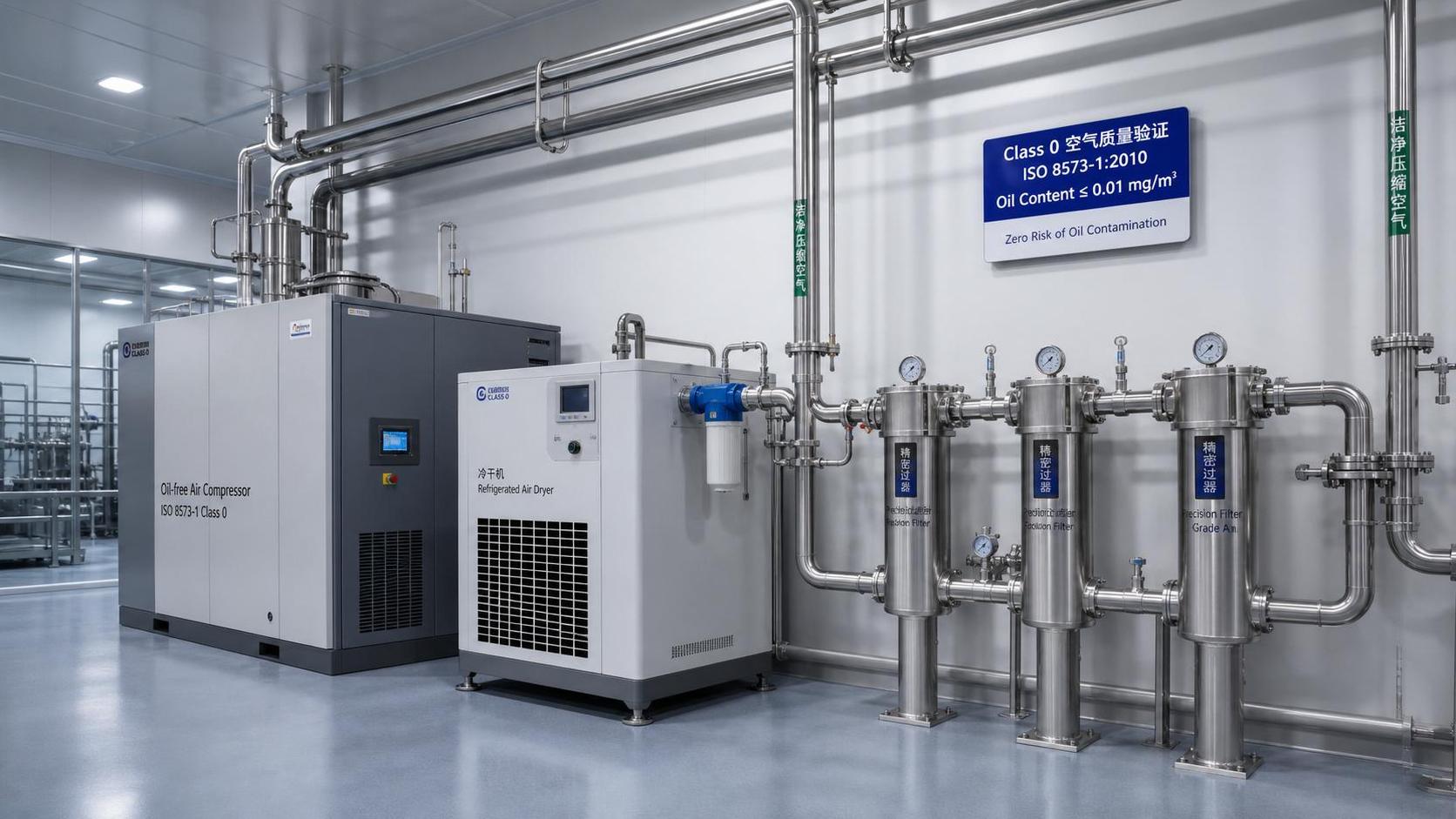
On 2 May 2026, the International Organization for Standardization (ISO) published ISO 8573-7:2026 — Compressed Air Quality — Part 7: Determination of Nanoparticles. This revision introduces mandatory ≤100 nm particle measurement for Class 0 compressed air, directly affecting manufacturers and exporters of oil-injected screw compressors and oil-free systems in key regulated markets.
Event Overview
ISO officially released ISO 8573-7:2026 on 2 May 2026. The standard specifies test methods for nanoparticles (≤100 nm) in compressed air and establishes this parameter as a compulsory requirement under Class 0 air quality certification. It will enter into mandatory application in the European Union, South Korea, and Singapore from November 2026. The standard requires upgraded instrumentation — specifically online laser particle size spectrometers — for compliance verification.
Industries Affected by This Revision
Export-oriented compressor manufacturers
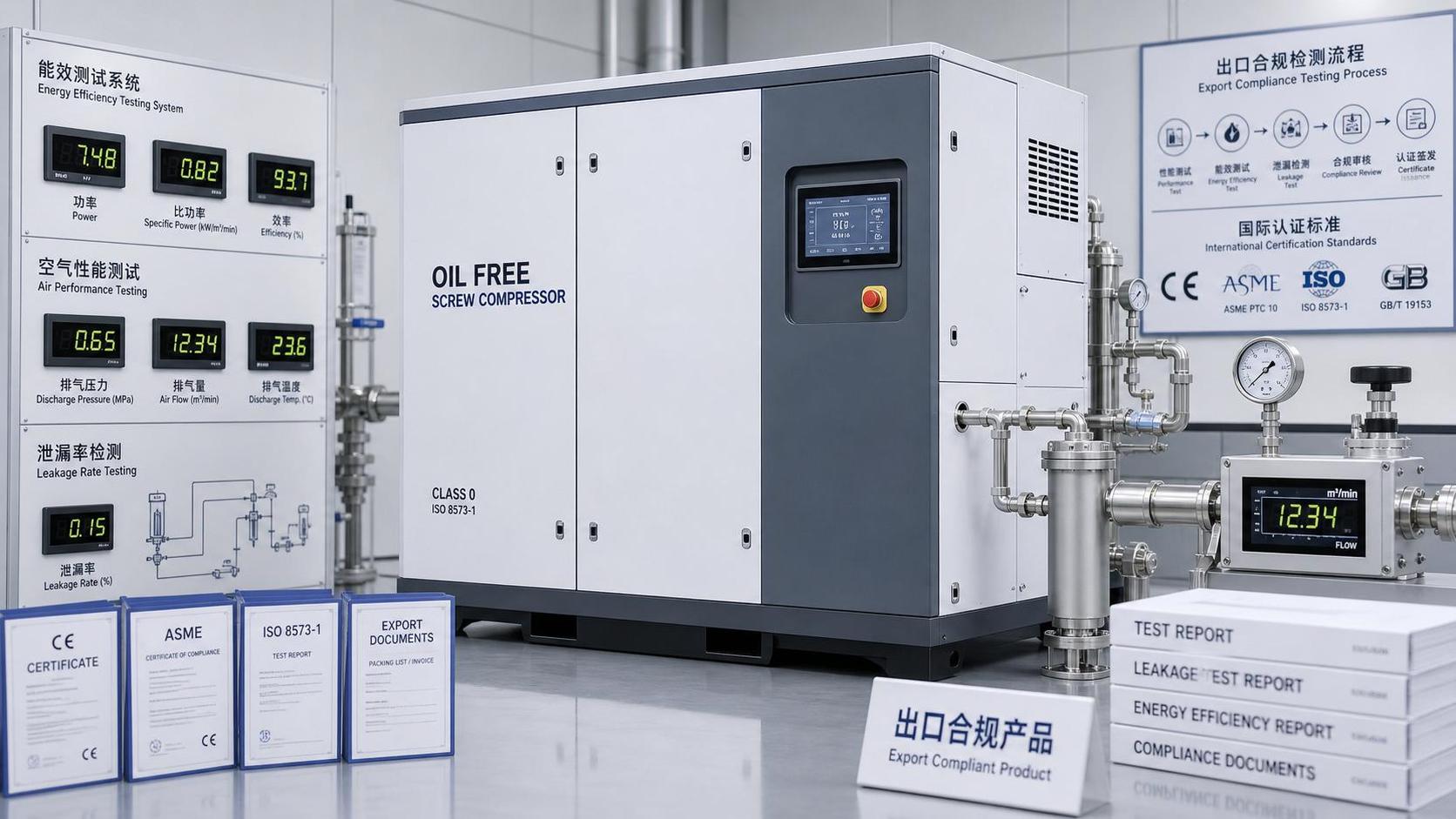
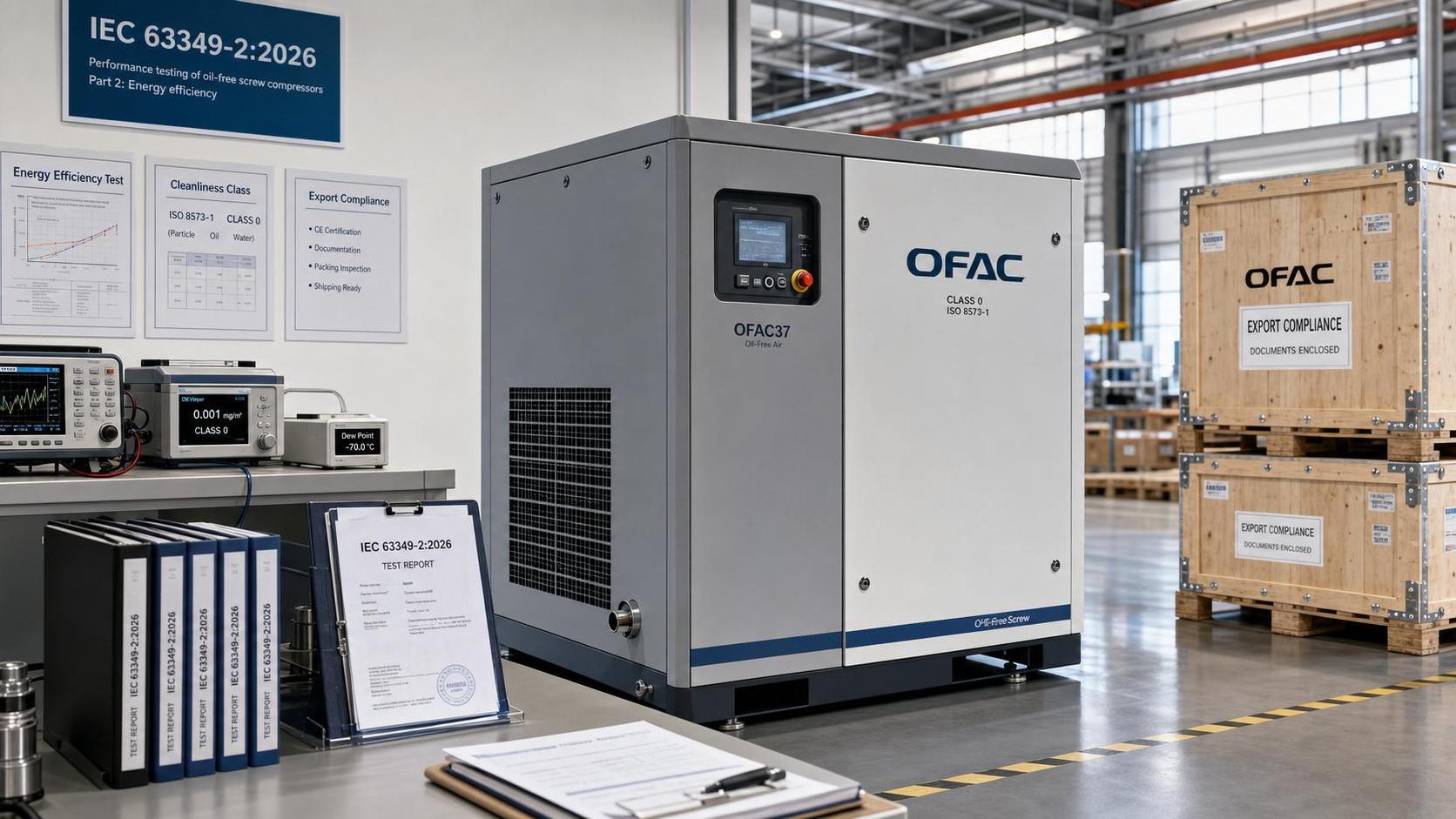
Manufacturers exporting oil-injected screw compressors or oil-free systems to the EU, South Korea, or Singapore must now meet Class 0 nanoparticle limits. Compliance is no longer optional for high-purity applications (e.g., pharmaceutical, semiconductor, medical device manufacturing), and certification bodies will require validated nanoparticle data during type testing and CE/KE/Singapore Mark assessments.
Compressor component and subsystem suppliers
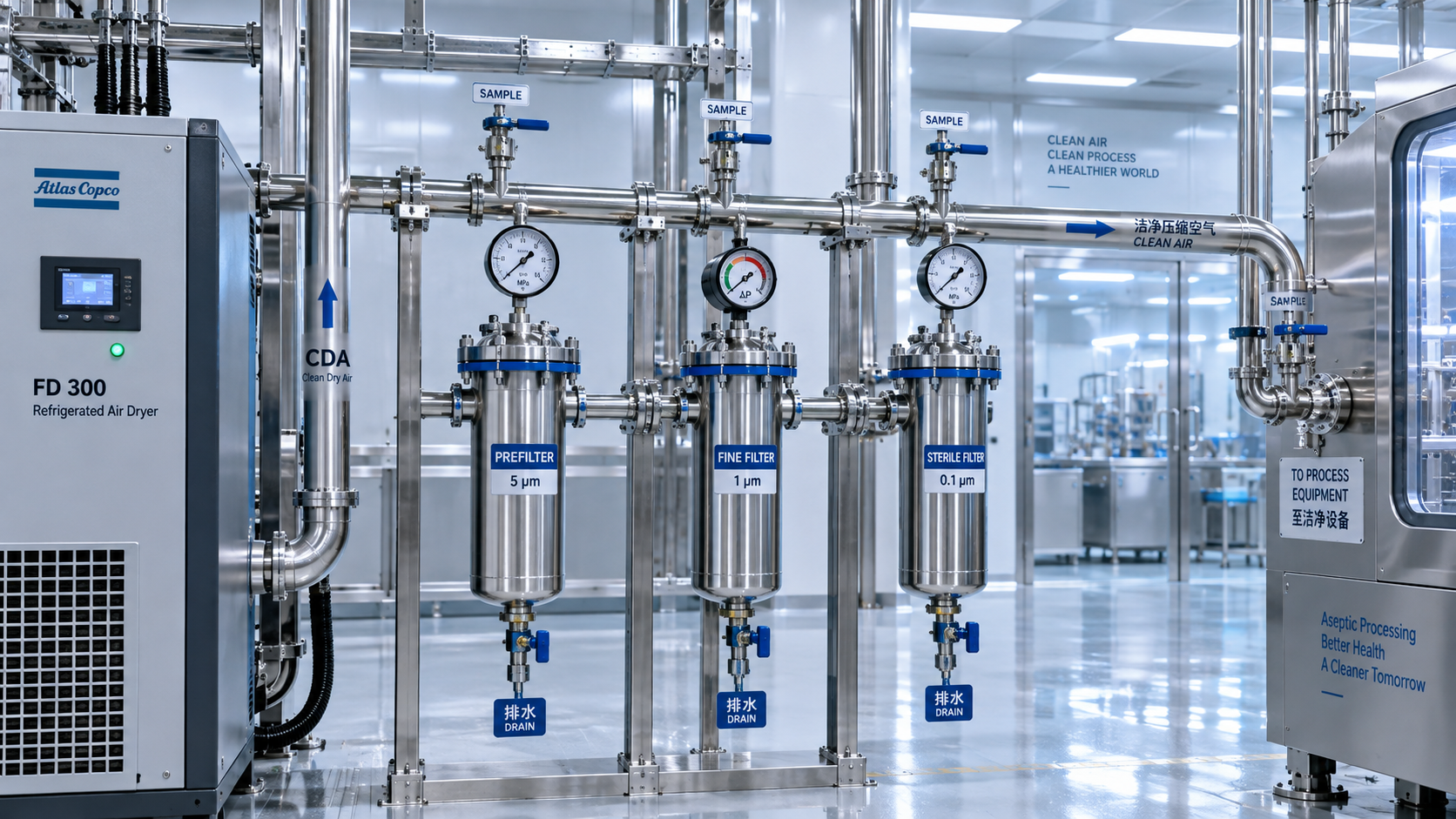
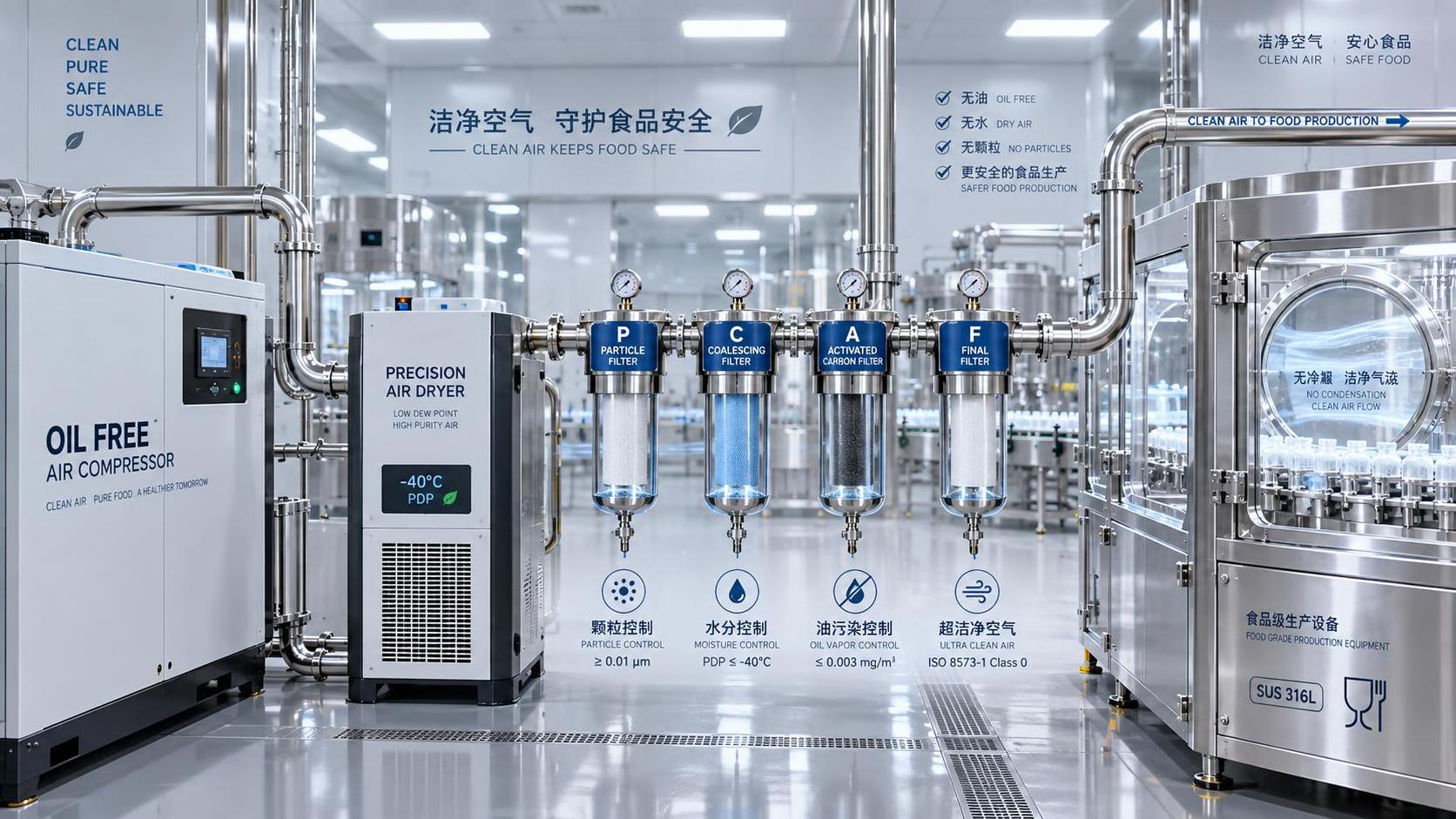
Suppliers of filtration, aftercooling, and drying systems used upstream or downstream of screw compressors face revised performance expectations. Filters previously rated for ≥0.01 µm (10 nm) may not demonstrate sufficient efficiency at ≤100 nm without revalidation. Suppliers must align technical documentation and test reports with the new detection method requirements in ISO 8573-7:2026.
Third-party testing and certification service providers
Laboratories offering ISO 8573-compliant air quality testing must now validate and calibrate their nanoparticle measurement capabilities — particularly online laser spectrometry — against the procedures defined in Clause 6 of ISO 8573-7:2026. Accreditation bodies (e.g., UKAS, KOLAS, SAC) are expected to update scope assessment criteria accordingly ahead of the November 2026 enforcement date.
What Enterprises and Practitioners Should Focus On Now
Monitor official implementation timelines and national adoption notices
While ISO 8573-7:2026 is published, national standards bodies (e.g., CEN in Europe, KATS in Korea, SPRING Singapore) may issue transposition schedules or transitional provisions. Enterprises should track these updates — especially any grace periods, grandfathering clauses, or phased enforcement for legacy equipment.
Verify instrument readiness for ≤100 nm particle detection
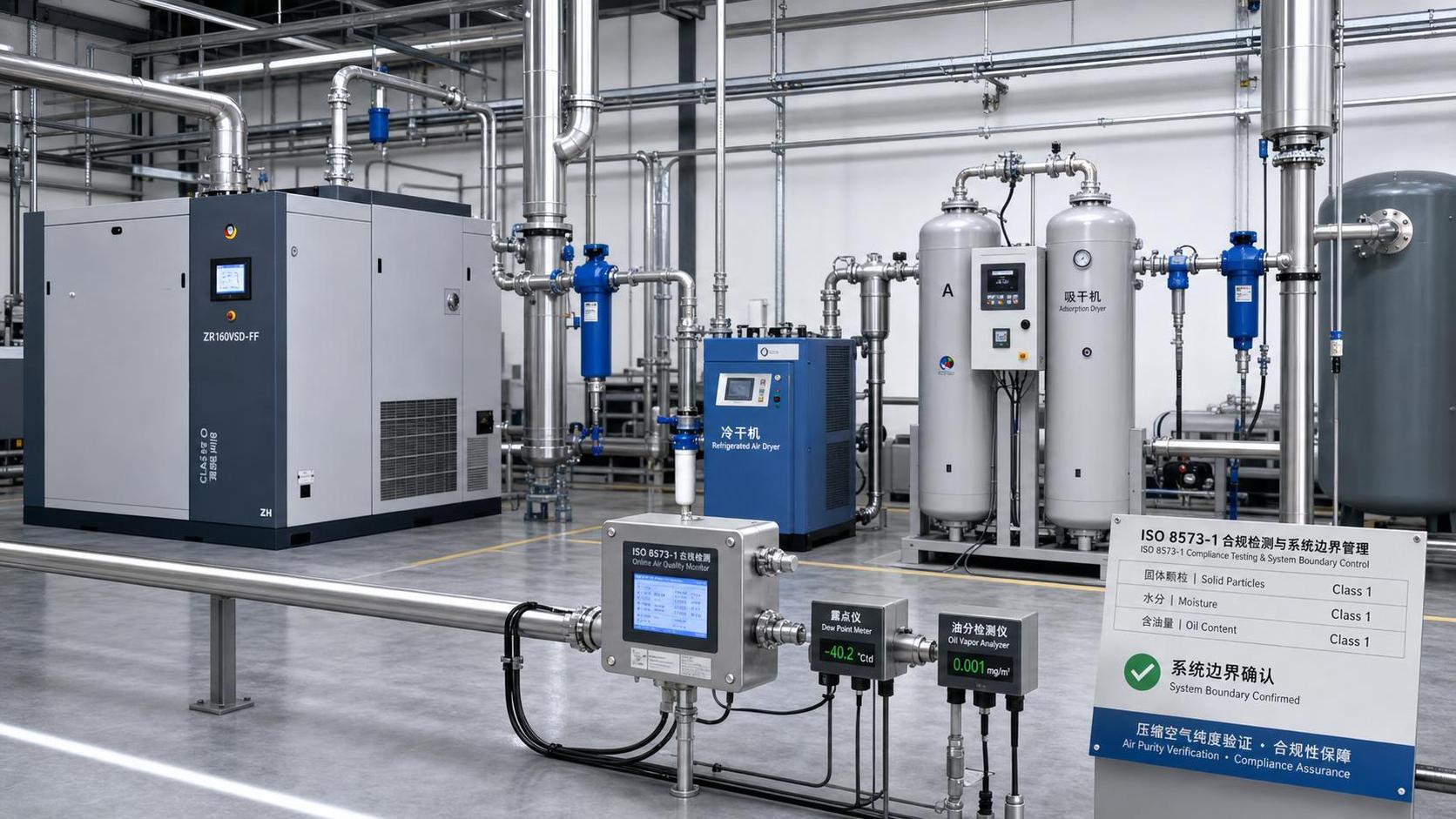
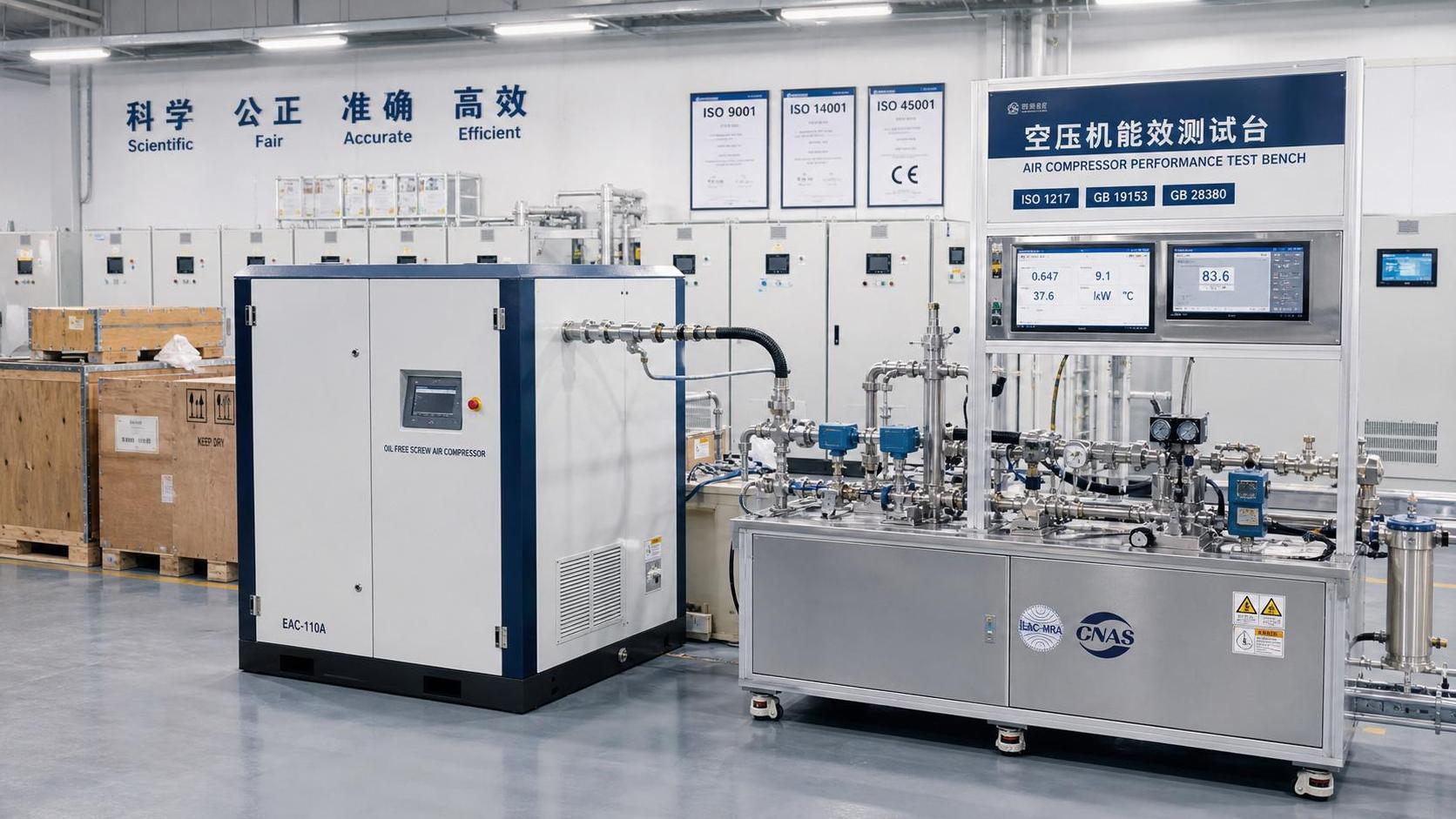
Analysis shows that many existing offline particle counters lack the sensitivity and real-time capability required by ISO 8573-7:2026. Manufacturers and labs should audit current measurement systems and prioritize procurement or calibration of online laser particle spectrometers meeting the standard’s stated resolution, flow rate, and counting efficiency specifications.
Distinguish between Class 0 certification scope and general product labeling
Observably, the new nanoparticle requirement applies only where Class 0 air purity is contractually or regulatorily mandated — not to all screw compressor sales. Companies should avoid overgeneralizing compliance claims; marketing materials and technical datasheets must clearly specify whether nanoparticle testing was performed per ISO 8573-7:2026 and under which class designation.
Update internal quality control protocols ahead of enforcement
From an industry perspective, production lines supplying export-bound compressors should integrate nanoparticle sampling points and data logging into final QA checklists by Q3 2026. This includes staff training on new sampling procedures, traceability of calibration certificates for spectrometers, and retention of raw spectral data per Clause 8 of the standard.
Editorial Perspective / Industry Observation
This revision is better understood as a regulatory signal than an immediate operational shift — it confirms tightening alignment between air purity standards and nanoscale contamination risks in critical process environments. Analysis shows the inclusion of ≤100 nm particles reflects growing empirical evidence linking ultrafine aerosols to filter breakthrough, surface deposition, and process yield loss in microelectronics and biopharma. However, the actual impact remains contingent on how strictly national authorities enforce Class 0 classification and whether downstream users begin specifying nanoparticle limits in procurement tenders. Continued observation is warranted on early enforcement cases and inter-laboratory comparison studies.
Conclusion
ISO 8573-7:2026 marks a formal step toward nanoscale accountability in compressed air quality assurance. Its significance lies less in immediate disruption and more in signaling long-term directionality: tighter measurement rigor, greater instrumentation dependency, and heightened scrutiny of oil-injected systems in Class 0 contexts. Currently, it is more appropriately interpreted as a preparedness milestone — one requiring targeted technical upgrades and documentation discipline, rather than wholesale product redesign.
Information Sources
Main source: International Organization for Standardization (ISO) — Official publication notice for ISO 8573-7:2026, dated 2 May 2026.
Areas requiring ongoing observation: National transposition status by CEN, KATS, and SPRING Singapore; upcoming accreditation guidance from ILAC signatory bodies.
Related News
- How to verify compressed air cleanroom standards before installationAuthor :Pneumatic Power Engineer

- When oil free vacuum pumps make sense for European cleanroom projectsAuthor :Pneumatic Power Engineer

- When do pure air compression systems need ISO 8573-1 Class 0?Author :Pneumatic Power Engineer

- How do compressed air systems for electronics prevent contamination?Author :Pneumatic Power Engineer

- When does an oil-free process vacuum pump justify its higher cost?Author :Pneumatic Power Engineer

- Does ISO 9001 certification apply to compressed air quality?Author :Pneumatic Power Engineer

- How to Specify Clean Compressed Air Systems in Southeast Asia for Food and Pharma PlantsAuthor :Pneumatic Power Engineer

- How to Compare Oil Free Vacuum Pumps for Clean Process RequirementsAuthor :Pneumatic Power Engineer

- How to Evaluate a Clean Compressed Air Systems Supplier for ISO 8573-1 ComplianceAuthor :Pneumatic Power Engineer

- How to Choose the Right Oil-Free Vacuum PumpAuthor :Pneumatic Power Engineer

- VDI 2083 Update Makes Class 0 Proof MandatoryAuthor :Pneumatic Power Engineer

- When to Use Oil Free Vacuum Pumps for High Purity LinesAuthor :Pneumatic Power Engineer

- Compressed Air Solutions: When Oil-Free Systems Lower Total Operating CostAuthor :Pneumatic Power Engineer

- ATMOsphere Europe 2026 Adds Oil-free Systems ZoneAuthor :Pneumatic Power Engineer

- Oil-Free Compressors: Key Selection Criteria for Clean Air SystemsAuthor :Pneumatic Power Engineer

- How to Compare Oil Free Centrifugal Compressors for Stable Plant Air SupplyAuthor :Pneumatic Power Engineer

- Compressed Air Class 0 vs Oil-Free: What Really MattersAuthor :Pneumatic Power Engineer

- Oil-Free Compression Class 0: What the Standard Really Means in ProductionAuthor :Pneumatic Power Engineer

- Air Compression Cost Comparison: Oil-Free vs Screw Systems in Daily OperationAuthor :Pneumatic Power Engineer

- Saudi SASO Tightens IEC 63349-2 for Oil-Free CompressorsAuthor :Pneumatic Power Engineer

- Saudi SASO Tightens Oil-Free Compressor Efficiency RulesAuthor :Pneumatic Power Engineer

- Pure Air Compression Systems for Clean Production LinesAuthor :Pneumatic Power Engineer

- IEC 63349-2:2026 makes energy certification mandatoryAuthor :Pneumatic Power Engineer

- IEC 63349-2:2026 Sets New Entry Rules for Oil-Free Screw CompressorsAuthor :Pneumatic Power Engineer

- IEC 63349-2:2026 Takes Effect for Oil-Free Screw CompressorsAuthor :Pneumatic Power Engineer

- IEC 63349-2:2026 Sets New Efficiency Gate for Oil-Free Screw CompressorsAuthor :Pneumatic Power Engineer

- IEC 63349-2:2026 Takes Effect for Oil-Free Screw CompressorsAuthor :Pneumatic Power Engineer

- SABIC Methanol Force Majeure Extended, Tightening R134a/R407C FeedstocksAuthor :Pneumatic Power Engineer

- How to Evaluate Pneumatic Power Systems for Stable OutputAuthor :Pneumatic Power Engineer

- Oil-Free Compression vs Lubricated Systems: Key Trade-OffsAuthor :Pneumatic Power Engineer
![]()
- Oil-Free Compression: 2026 Cost and Compliance Trade-OffsAuthor :Pneumatic Power Engineer

- Oil-Free Compression: Cost and Contamination RisksAuthor :Pneumatic Power Engineer
![]()
- Euro PMI Drop Delays Oil-Free Systems OrdersAuthor :Pneumatic Power Engineer

- Germany/France May PMI Decline; Oil-free Systems EU Projects DelayedAuthor :Pneumatic Power Engineer
![]()
- Compression Technology Options for Cleaner Oil-Free Air SupplyAuthor :Pneumatic Power Engineer

- TUV Rheinland Enforces Full-Chain Class 0 Certification for Oil-Free SystemsAuthor :Pneumatic Power Engineer