Are Pure Power Sources Worth the Upgrade for Oil-free Systems?




For procurement teams evaluating oil-free systems, the question is no longer just about compliance—it is about long-term value. Are pure power sources worth the upgrade when product quality, energy efficiency, and operational reliability are all on the line? This article explores how pure power sources can influence lifecycle costs, contamination control, and supply decisions across demanding industrial applications.
Why scenario differences matter more than headline claims
In procurement, the same specification can create very different business outcomes depending on where and how a system is used. That is especially true for oil-free systems. A buyer in pharmaceuticals may define value through contamination risk reduction, while a buyer in general manufacturing may focus on uptime, energy draw, and maintenance predictability. This is why the discussion around pure power sources should not be reduced to a simple premium-versus-budget debate.
For many industrial users, pure power sources support cleaner compressed air, more stable process performance, and lower exposure to product loss events. However, the upgrade is not equally urgent in every facility. Procurement teams need to compare application sensitivity, regulatory exposure, operating hours, utility costs, and the cost of failure. A technically superior solution is only a smart purchase when it matches the real process risk.
From the perspective of industrial intelligence platforms such as GTC-Matrix, the most effective sourcing decisions are made when buyers connect thermodynamic efficiency, process cleanliness, and business continuity into one framework. In other words, pure power sources are worth more in scenarios where minor contamination, pressure instability, or unplanned shutdowns create major financial consequences.
Where pure power sources typically create the strongest return
The strongest case for pure power sources appears in applications where compressed media directly or indirectly affect product integrity, precision equipment, or regulatory outcomes. In these environments, the cost of contamination is rarely limited to filter replacement. It can include rejected batches, cleaning downtime, audit findings, warranty claims, or customer trust damage.
Typical high-value scenarios include:
- Pharmaceutical production lines with strict purity and validation requirements
- Food and beverage plants where contact risk and hygiene standards are central
- Semiconductor and electronics facilities with highly sensitive process tolerances
- Medical device manufacturing where trace contamination can affect compliance or function
- Precision packaging and instrument assembly where stable, clean air improves consistency
By contrast, in lower-risk utility applications where compressed air never approaches sensitive products and downstream treatment is already robust, the upgrade decision may depend more on energy economics and maintenance planning than on purity alone. This is why procurement teams should ask not only “Is this system cleaner?” but also “What business event does this cleanliness prevent?”
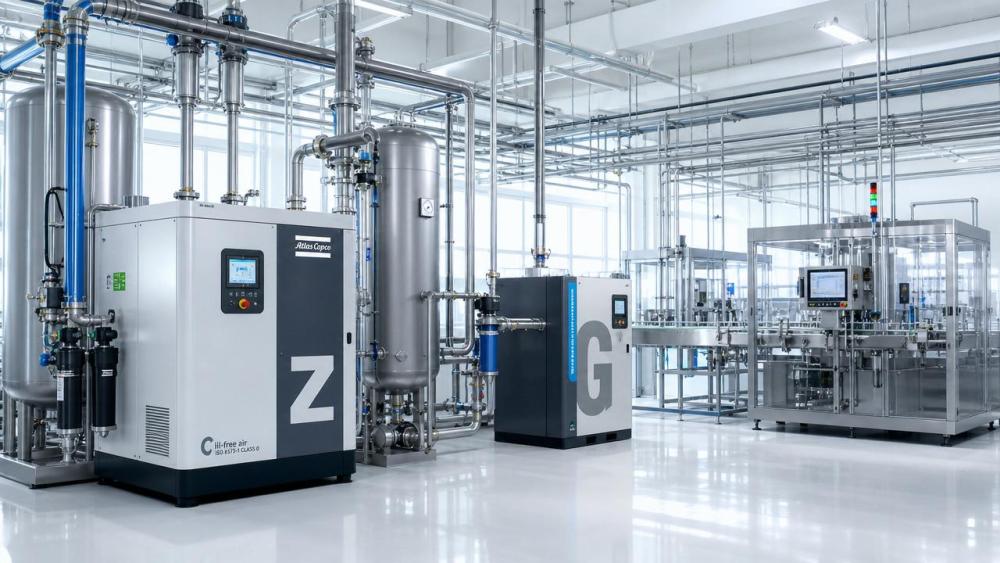
A scenario comparison table for procurement teams
The table below helps buyers compare where pure power sources tend to justify a premium and where a more cautious evaluation is appropriate.
How procurement criteria change by application
Pharmaceutical and life science environments
In these settings, pure power sources are often evaluated less as an equipment upgrade and more as a risk-control tool. Procurement teams typically need clear documentation, performance consistency, and confidence that the oil-free system aligns with clean production objectives. Even a low-probability contamination event may carry high financial impact because the value of one batch can be substantial. Here, the upgrade is often justified by avoided loss rather than by direct energy savings alone.
Food and beverage production
This scenario places strong emphasis on hygiene, product reputation, and line reliability. Pure power sources can help reduce the burden on downstream purification and support quality assurance programs, especially in filling, conveying, packaging, and mixing applications. Buyers in this sector should compare the premium against the cost of recalls, spoilage, production interruptions, and brand damage. In many cases, the business argument becomes stronger when facilities run continuously or serve export markets with strict quality expectations.
Semiconductor, electronics, and precision manufacturing
These environments are highly sensitive to particulate and process variation. Pure power sources are attractive not only because they support cleaner output, but also because they help stabilize performance in applications where small deviations can reduce yield. For procurement teams, the key question is whether the upgrade improves process repeatability enough to offset the higher upfront cost. In advanced manufacturing, the answer is often yes because scrap, rework, and tool sensitivity can quickly outweigh capital expense.
General industrial plants
In broader manufacturing, the answer is more nuanced. Pure power sources may still offer value through lower contamination risk, simplified maintenance strategy, or stronger alignment with corporate sustainability goals. But if the process is not purity-critical, buyers should look closely at load profile, annual operating hours, local energy prices, service network capability, and existing air treatment quality. In this scenario, lifecycle cost modeling becomes more important than technical prestige.
The hidden cost categories that often change the decision
Many procurement reviews focus too heavily on purchase price and not enough on cost exposure across the system life. Pure power sources can look expensive in the first comparison round, yet become economically favorable once broader cost categories are included. Buyers should build a total-cost view that covers the following:
- Energy consumption under real operating loads
- Filter burden and downstream treatment requirements
- Product loss risk from contamination incidents
- Maintenance intervals, parts availability, and labor time
- Unplanned downtime and production recovery costs
- Audit readiness, customer compliance, and qualification support
This broader view is essential for procurement teams serving multi-site or multinational operations. A single sourcing decision may affect energy efficiency targets, environmental reporting, supplier qualification, and process reliability across several plants. In that context, pure power sources can support standardization and reduce operational complexity, which has value even when it does not appear on the initial quotation sheet.
When buyers should be cautious about upgrading
Not every oil-free system upgrade is automatically worthwhile. Over-specification is a real risk, especially in facilities where compressed air is used for non-critical utility tasks and where existing treatment already meets process needs. Procurement teams should be cautious when suppliers emphasize purity benefits without demonstrating measurable impact on product quality, operating cost, or uptime.
Warning signs include vague claims about “premium performance,” limited field data, poor service coverage, or weak energy modeling. Another common mistake is evaluating pure power sources without examining the entire compressed air chain. If leaks, poor controls, undersized storage, or inefficient dryers are the actual source of cost and instability, then a premium source upgrade alone may not solve the problem.
A practical scenario-based checklist before issuing an RFQ
Before requesting final quotations, procurement teams should align technical and commercial stakeholders around a short list of scenario-specific questions. This improves supplier comparison and reduces the risk of buying either too little or too much system capability.
- Does compressed air come into direct or indirect contact with product, packaging, or sensitive surfaces?
- What is the financial impact of one contamination event, one hour of downtime, or one failed batch?
- Are pure power sources needed for all lines, or only for high-criticality zones?
- What is the site load profile: base load, peak demand, and annual operating hours?
- How strong is the vendor’s local service response, spare parts support, and performance guarantee?
- Can the supplier provide lifecycle cost data rather than only capital cost comparisons?
A disciplined RFQ built around these questions makes it easier to compare vendors on real business outcomes. It also helps technical teams explain the recommendation to finance, operations, and quality leaders.
Common scenario misjudgments that lead to poor sourcing decisions
Several procurement errors appear repeatedly across industries. One is treating all oil-free applications as equally sensitive. Another is assuming that pure power sources only matter in regulated sectors. In reality, many unregulated precision processes still gain strong value from cleaner and more stable supply. A third mistake is focusing on unit efficiency while ignoring contamination-related process losses that never show up in the utility bill.
There is also a timing issue. Some organizations delay upgrading until a quality incident occurs, which turns a planned investment into a reactive purchase. In high-value manufacturing, that often means the business pays the premium twice: once through production loss and again through urgent replacement. A proactive scenario review is typically more cost-effective than waiting for failure to prove the point.
FAQ for buyers evaluating pure power sources
Are pure power sources only worth it in heavily regulated industries?
No. Regulation strengthens the case, but precision manufacturing, electronics, and high-value packaging can also benefit when contamination or instability affects yield, product consistency, or downtime.
Should procurement prioritize energy savings or purity?
That depends on the scenario. In sensitive production, purity and reliability usually dominate. In general industrial settings, energy efficiency and service economics may carry more weight. The right answer comes from total lifecycle impact, not from one metric.
Can downstream filtration make the upgrade unnecessary?
Sometimes, but not always. Filtration is important, yet it does not eliminate all risk, maintenance effort, or process variability. Buyers should evaluate the entire system architecture rather than assuming one component can fully replace the value of pure power sources.
How to move from interest to decision
For procurement teams, the best decision path is scenario-led. Start by identifying where purity failure, unstable supply, or energy waste creates the highest business cost. Then compare pure power sources against existing system performance, downstream treatment burden, service support, and lifecycle economics. In highly sensitive applications, the upgrade often pays for itself through avoided quality and continuity risks. In less critical settings, the business case may depend on energy prices, operating hours, and maintenance strategy.
If your organization is reviewing oil-free system options across multiple plants or product lines, use a structured application map rather than a one-size-fits-all specification. That approach gives buyers a more defensible sourcing strategy and improves alignment between operations, engineering, and finance. When pure power sources are matched to the right scenario, they are not just an upgrade—they become a practical investment in cleaner production, stronger resilience, and better long-term value.
Related News
- When oil free vacuum pumps make sense for European cleanroom projectsAuthor :Pneumatic Power Engineer

- When do pure air compression systems need ISO 8573-1 Class 0?Author :Pneumatic Power Engineer

- How do compressed air systems for electronics prevent contamination?Author :Pneumatic Power Engineer

- When does an oil-free process vacuum pump justify its higher cost?Author :Pneumatic Power Engineer

- Does ISO 9001 certification apply to compressed air quality?Author :Pneumatic Power Engineer

- How to Specify Clean Compressed Air Systems in Southeast Asia for Food and Pharma PlantsAuthor :Pneumatic Power Engineer

- How to Compare Oil Free Vacuum Pumps for Clean Process RequirementsAuthor :Pneumatic Power Engineer

- How to Evaluate a Clean Compressed Air Systems Supplier for ISO 8573-1 ComplianceAuthor :Pneumatic Power Engineer

- How to Choose the Right Oil-Free Vacuum PumpAuthor :Pneumatic Power Engineer

- VDI 2083 Update Makes Class 0 Proof MandatoryAuthor :Pneumatic Power Engineer

- When to Use Oil Free Vacuum Pumps for High Purity LinesAuthor :Pneumatic Power Engineer

- Compressed Air Solutions: When Oil-Free Systems Lower Total Operating CostAuthor :Pneumatic Power Engineer

- ATMOsphere Europe 2026 Adds Oil-free Systems ZoneAuthor :Pneumatic Power Engineer

- Oil-Free Compressors: Key Selection Criteria for Clean Air SystemsAuthor :Pneumatic Power Engineer

- How to Compare Oil Free Centrifugal Compressors for Stable Plant Air SupplyAuthor :Pneumatic Power Engineer

- Compressed Air Class 0 vs Oil-Free: What Really MattersAuthor :Pneumatic Power Engineer

- Oil-Free Compression Class 0: What the Standard Really Means in ProductionAuthor :Pneumatic Power Engineer

- Air Compression Cost Comparison: Oil-Free vs Screw Systems in Daily OperationAuthor :Pneumatic Power Engineer

- Saudi SASO Tightens IEC 63349-2 for Oil-Free CompressorsAuthor :Pneumatic Power Engineer

- Saudi SASO Tightens Oil-Free Compressor Efficiency RulesAuthor :Pneumatic Power Engineer

- Pure Air Compression Systems for Clean Production LinesAuthor :Pneumatic Power Engineer

- IEC 63349-2:2026 makes energy certification mandatoryAuthor :Pneumatic Power Engineer

- IEC 63349-2:2026 Sets New Entry Rules for Oil-Free Screw CompressorsAuthor :Pneumatic Power Engineer

- IEC 63349-2:2026 Takes Effect for Oil-Free Screw CompressorsAuthor :Pneumatic Power Engineer

- IEC 63349-2:2026 Sets New Efficiency Gate for Oil-Free Screw CompressorsAuthor :Pneumatic Power Engineer

- IEC 63349-2:2026 Takes Effect for Oil-Free Screw CompressorsAuthor :Pneumatic Power Engineer

- SABIC Methanol Force Majeure Extended, Tightening R134a/R407C FeedstocksAuthor :Pneumatic Power Engineer

- How to Evaluate Pneumatic Power Systems for Stable OutputAuthor :Pneumatic Power Engineer

- Oil-Free Compression vs Lubricated Systems: Key Trade-OffsAuthor :Pneumatic Power Engineer
![]()
- Oil-Free Compression: 2026 Cost and Compliance Trade-OffsAuthor :Pneumatic Power Engineer

- Oil-Free Compression: Cost and Contamination RisksAuthor :Pneumatic Power Engineer
![]()
- Euro PMI Drop Delays Oil-Free Systems OrdersAuthor :Pneumatic Power Engineer

- Germany/France May PMI Decline; Oil-free Systems EU Projects DelayedAuthor :Pneumatic Power Engineer
![]()
- Compression Technology Options for Cleaner Oil-Free Air SupplyAuthor :Pneumatic Power Engineer

- TUV Rheinland Enforces Full-Chain Class 0 Certification for Oil-Free SystemsAuthor :Pneumatic Power Engineer

- Sustainable Manufacturing and Oil-Free Systems: Where Reliability Improves MostAuthor :Pneumatic Power Engineer