Where R-134a Restrictions Apply and How They Affect Refrigeration Equipment




The r134a ban is not a single worldwide prohibition with one start date and one compliance path. It is a patchwork of refrigerant phase-down rules, product-specific placing-on-the-market bans, vehicle standards, servicing controls, and regional safety codes. For a technical evaluator, that distinction matters. A facility may be allowed to operate an existing R-134a system for years while being unable to buy equivalent new equipment, expand a system, or source refrigerant at a predictable cost.
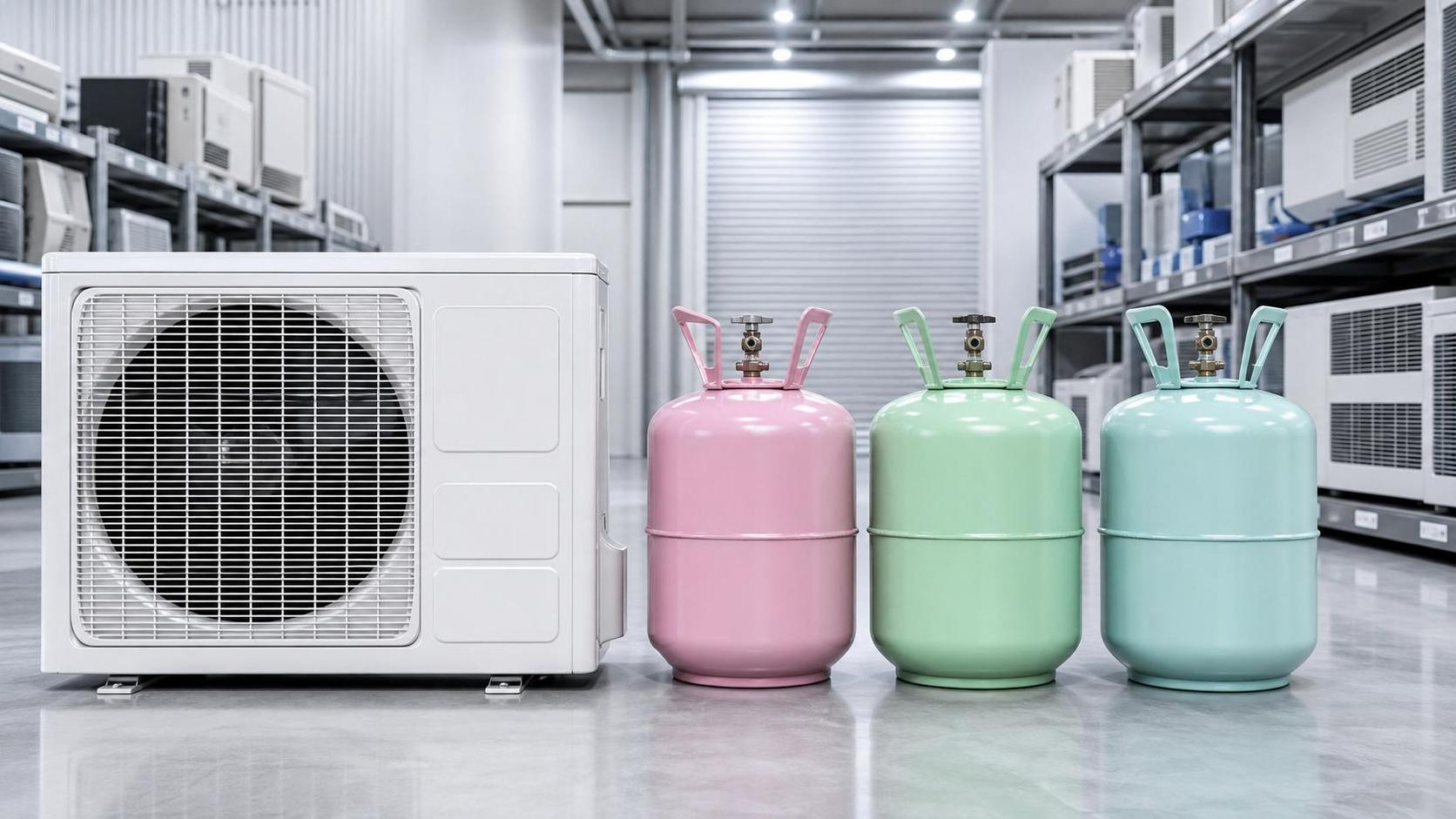
R-134a (HFC-134a) remains familiar because it is non-flammable under typical classifications, widely understood by service teams, and historically common in automotive air conditioning, medium-temperature refrigeration, water chillers, laboratory equipment, and self-contained commercial cabinets. Its challenge is climate impact: with a global warming potential (GWP) of roughly 1,430, it is increasingly out of step with rules designed to reduce hydrofluorocarbon emissions.
The practical question is therefore not simply, “Is R-134a banned?” It is: where is the equipment being sold, what is the application, is it new or existing, and which activity is being regulated—manufacture, import, installation, service, or refrigerant supply?
Why R-134a faces restrictions even where it is not formally “banned”
Most major policies are built around the Kigali Amendment to the Montreal Protocol, which drives a gradual reduction in HFC production and consumption. That framework does not automatically outlaw every use of R-134a. Instead, national and regional authorities translate the phase-down into quotas, product rules, leak-management duties, recovery requirements, and restrictions on high-GWP refrigerants in new equipment.
This creates a pressure sequence that technical teams can recognize:
- New equipment using high-GWP refrigerants becomes restricted in selected categories.
- Supply quotas tighten, affecting price volatility and availability.
- Equipment makers redesign platforms around lower-GWP fluids.
- Legacy R-134a assets remain operational but become harder to support economically.
- Recovery, reclamation, documentation, and technician competency become more important.
In other words, an R-134a system can become a commercial liability before a legal prohibition requires it to be removed. This is especially relevant for multi-site retail operators, cold-chain investors, fleet owners, and manufacturers with long equipment replacement cycles.
Where R-134a restrictions are most consequential
European Union: the strongest product-by-product signal
The European Union has long been among the most influential markets for high-GWP refrigerant policy. Its F-gas framework combines HFC quota reductions with equipment-specific GWP limits, meaning the effect of the r134a ban is often felt first when a company purchases new equipment rather than when it services an installed unit.
For stationary refrigeration, many newly placed products face GWP thresholds far below R-134a’s GWP. Self-contained refrigeration equipment has already moved toward very low-GWP refrigerants, while later milestones progressively affect other stationary refrigeration applications. Certain technical exceptions can apply, particularly for ultra-low-temperature duties or where safety and feasibility constraints are documented, but exceptions should never be assumed from a product brochure alone.
Vehicle air conditioning is another defining European example. The Mobile Air Conditioning Directive established a GWP limit of 150 for new passenger-car air-conditioning systems. R-134a therefore ceased to be an acceptable refrigerant for new vehicles within the scope of that directive, accelerating the adoption of HFO-1234yf and, in some platforms, CO2-based concepts.
The EU’s newer F-gas rules also raise the strategic value of lifecycle planning. A replacement unit that is technically legal today may not be an attractive choice if its refrigerant has a GWP close to a future threshold or relies on a shrinking HFC allocation.
United States: federal transitions plus state-level considerations
In the United States, the American Innovation and Manufacturing (AIM) Act provides the federal foundation for HFC phase-down and sector-based technology transitions. EPA rules increasingly set maximum GWP levels for new equipment in designated refrigeration and air-conditioning applications. R-134a is particularly exposed because its GWP is far above common transition limits such as 150 or 300.
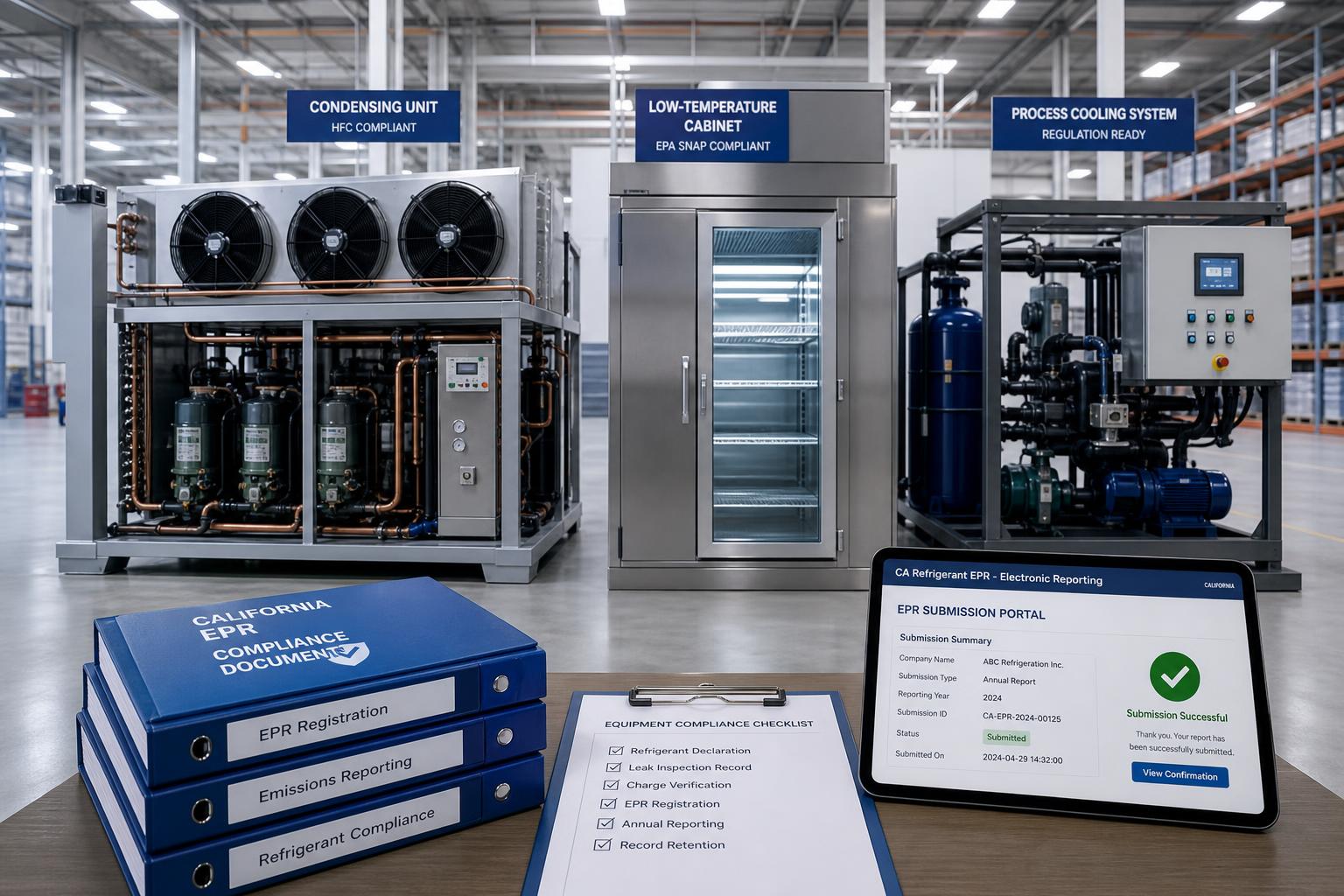
Impacts are visible in stand-alone commercial refrigeration, retail food refrigeration, cold-storage and food-processing equipment, and other categories covered by compliance dates. The exact deadline varies by equipment type and whether the unit is newly manufactured, imported, installed, or part of a larger system. A condensing unit, a factory-built display case, and a central rack should not be assessed as though they fall under the same rule.
California adds another layer. Its refrigerant management and greenhouse-gas policies have influenced equipment selection well beyond the state, particularly in vehicle air conditioning and commercial refrigeration. National manufacturers often prefer common product platforms, so rules originating in California can shape availability in markets that do not impose identical requirements.
Canada, the United Kingdom, and other HFC phase-down markets
Canada and the United Kingdom operate HFC controls that broadly align with the international direction of travel: reduced availability of high-GWP HFCs and tighter limits in selected new equipment categories. Details differ by jurisdiction, so an EU compliance declaration should not be treated as a substitute for a Canadian or UK assessment.
Japan, Australia, New Zealand, and many other economies are also implementing Kigali-related phase-down measures. In export projects, the risk is not limited to the destination country’s refrigerant rule. Electrical standards, pressure-equipment requirements, hazardous-area classifications, and flammable-refrigerant rules may determine whether the lower-GWP alternative can be deployed at all.
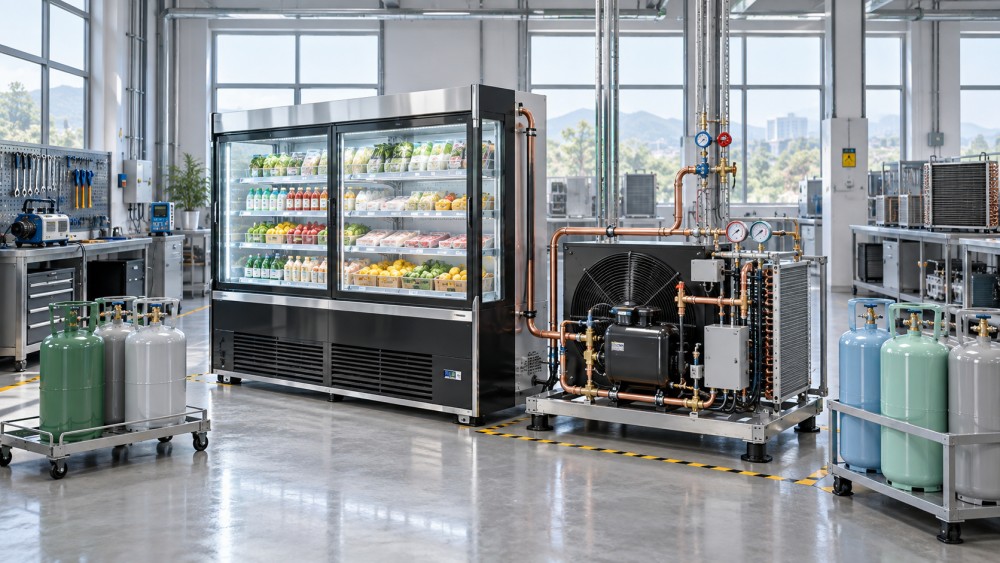
Application matters: R-134a is not restricted in the same way everywhere
Transport refrigeration deserves separate attention. Rules may distinguish between refrigerated vehicles, trailers, containers, rail applications, and stationary cold rooms. A refrigerant accepted in a containerized refrigeration unit may not be the preferred or permitted choice for a fixed supermarket installation. The operating environment, charge size, and applicable safety standard can change the answer.
New equipment restrictions are different from servicing an installed system
A common and expensive misunderstanding is to read a “ban” on R-134a as an immediate requirement to decommission every existing unit. In many jurisdictions, existing equipment may continue operating, provided leak prevention, recovery, and servicing obligations are met. Restrictions often focus first on new equipment placed on the market.
That does not mean service is risk-free. Tightening HFC quotas can make virgin R-134a less predictable in price and supply. Some regions also limit the use of virgin high-GWP refrigerant in certain servicing situations while allowing reclaimed or recycled refrigerant under defined conditions. Records of refrigerant charge, leakage, recovery, reclamation source, and technician certification may be required.
For asset managers, the useful planning horizon is not “Can we recharge it today?” but “Can we support this machine through its expected remaining life without unacceptable operating, compliance, or downtime risk?”
Choosing an alternative: the refrigerant is only one part of the decision
There is no universal drop-in replacement for R-134a. Candidate refrigerants can reduce GWP, but their pressure-temperature behavior, capacity, glide, lubricant compatibility, flammability classification, and control requirements differ. A technically credible evaluation starts with the full refrigeration circuit—not the refrigerant name alone.
HFO-1234yf is widely used in mobile air conditioning because it meets low-GWP requirements, but it is classified as mildly flammable. R-513A has been used in some R-134a-oriented applications as a lower-GWP transitional option, though its GWP may still be too high for long-horizon new-equipment strategies in stricter markets. R-450A and similar blends may suit selected conversions, subject to OEM guidance and performance review. R-290 (propane) offers very low GWP and strong thermodynamic potential, but its A3 flammability classification sharply affects allowable charge, equipment construction, ventilation, ignition-source control, and service practice. CO2 can offer a durable low-GWP direction in certain applications, particularly where system architecture and ambient conditions are properly considered.
Retrofit claims deserve disciplined scrutiny. A fluid described as “compatible” may still require changes to expansion devices, compressor settings, oil, seals, labeling, pressure-relief arrangements, and control logic. Capacity and energy consumption may shift at the actual evaporating and condensing conditions. In regulated environments such as pharmaceuticals, food processing, or semiconductor production, even a small change in thermal stability can have consequences beyond the machine room.
A practical compliance screen for technical evaluators
Before approving a refrigeration asset, build a short jurisdiction-and-application file. Start with the country of sale and installation, then identify the equipment category used in the relevant regulation. Confirm whether the rule applies to manufacture, import, placing on the market, installation, or service. Finally, distinguish between a packaged unit, a split system, and a field-assembled system; their compliance treatment can differ.
Then document the refrigerant’s GWP using the value and assessment basis specified by the applicable regulation. Do not rely solely on generic marketing language such as “eco-friendly” or “future-ready.” Ask the supplier for the declared refrigerant, charge size, safety classification, equipment conformity documents, approved operating envelope, and a statement of which regulatory category the product is intended to meet.
For existing R-134a fleets, prioritize an asset register that includes location, charge, age, leak history, criticality, expected service life, and refrigerant sourcing strategy. High-leak, high-charge, or production-critical units generally deserve attention before younger, tightly contained assets. Recovery and reclamation planning should be treated as part of asset continuity, not merely as an end-of-life task.
What a resilient equipment specification looks like
The best response to R-134a restrictions is rarely a rushed refrigerant swap. It is a specification process that combines regulatory timing with thermodynamic performance, safety engineering, service capability, and lifecycle cost. A low-GWP option that cannot be safely serviced at the site—or that forces unacceptable energy use at peak ambient conditions—is not a complete solution.
GTC-Matrix tracks these decisions at the point where regulation, refrigerant technology, compression design, and heat-exchanger performance meet. For technical teams, the central discipline is clear: assess each R-134a exposure by market, application, equipment lifecycle, and operating duty. That approach turns a vague “r134a ban” concern into a defensible plan for compliant, maintainable, and energy-conscious refrigeration equipment.
Related News
- Where R-134a Restrictions Apply and How They Affect Refrigeration EquipmentAuthor :Cryogenic Systems Expert

- R-22 Phase-Out: Repair, Retrofit, or Replace Aging Commercial Cooling Systems?Author :Cryogenic Systems Expert

- R-410A Phase-Down Rules: Planning HVAC Replacements Before Supply TightensAuthor :Cryogenic Systems Expert

- Freon Policy Updates: What Facility Managers Must Review Before Equipment ServiceAuthor :Cryogenic Systems Expert

- How to verify refrigerant regulations and safety standards for a facilityAuthor :Cryogenic Systems Expert

- When refrigerant management software makes sense for multi-site complianceAuthor :Cryogenic Systems Expert

- EU Ends Duty-Free Small Parcels From July 1Author :Cryogenic Systems Expert

- China R410A Export Quotes Rise to RMB 60,000/TonAuthor :Cryogenic Systems Expert

- EU PFAS Curbs Raise Compliance Review for Cooling ExportsAuthor :Cryogenic Systems Expert

- EU PFAS Proposal Puts Refrigerant and Vacuum Exports Under ReviewAuthor :Cryogenic Systems Expert

- EU REACH PFAS Draft Raises New Export ChecksAuthor :Cryogenic Systems Expert

- EU Cuts High-GWP Refrigerant Import Quotas by 35%Author :Cryogenic Systems Expert

- EU Cuts Q4 2026 Quotas for High-GWP RefrigerantsAuthor :Cryogenic Systems Expert

- EU F-Gas Revision Cuts R410A Quotas 40%Author :Cryogenic Systems Expert

- EPA Freezes R-410A Quotas, Fast-Tracks R-32Author :Cryogenic Systems Expert

- Low GWP Refrigerants HFO Blends: Key Stability and Safety FactorsAuthor :Cryogenic Systems Expert

- R-32 Price Spike Reshapes Chiller ProcurementAuthor :Cryogenic Systems Expert

- How to Compare Environmentally Friendly Refrigerants by GWP, Safety, and CostAuthor :Cryogenic Systems Expert

- R-454B Export Quota Cut 18% as Lead Times DoubleAuthor :Cryogenic Systems Expert

- Japan Cuts R32 and R290 Import Quotas From July 10Author :Cryogenic Systems Expert

- EPA Cuts R-134a Import Quotas 42% From July 2026Author :Cryogenic Systems Expert
![]()
- Low GWP Refrigerants HFO Blends: Performance and Compliance in 2026Author :Cryogenic Systems Expert

- R-513A Jumps 23% as China Tightens Export QuotasAuthor :Cryogenic Systems Expert

- Environmentally Friendly Refrigerants in 2026: Compliance Risks and Upgrade PrioritiesAuthor :Cryogenic Systems Expert

- Pharmaceutical Temperature Control Systems: Common Compliance RisksAuthor :Cryogenic Systems Expert

- China Tightens Q3 R32 Export QuotasAuthor :Cryogenic Systems Expert

- California EPR Deadline Nears for Refrigeration MakersAuthor :Cryogenic Systems Expert

- Resource Circularity Trends Reshaping Refrigerants and Cooling SystemsAuthor :Cryogenic Systems Expert

- HFCs Filing Rules Enter Full EnforcementAuthor :Cryogenic Systems Expert

- How Environmentally Friendly Refrigerants Affect Chiller ComplianceAuthor :Cryogenic Systems Expert

- EU REACH Tightens Refrigerant Impurity Limits for R134a ExportsAuthor :Cryogenic Systems Expert

- China Seeks Feedback on 2027 Refrigerant QuotasAuthor :Cryogenic Systems Expert

- EU to Ban High-GWP ACs in 2029 as R410A Exits HomesAuthor :Cryogenic Systems Expert

- US, UK Delay HFC Phaseout, Extending R32/R134a Export WindowAuthor :Cryogenic Systems Expert

- EU HFC Cut Tightens by 2029 as Gen-3 Output Falls 10%Author :Cryogenic Systems Expert

- Kuwait Bans HCFC AC Imports as Shift to R32/R290 Speeds UpAuthor :Cryogenic Systems Expert