R-22 Phase-Out: Repair, Retrofit, or Replace Aging Commercial Cooling Systems?




The R-22 phase out is no longer a distant regulatory concern for commercial facility owners. For many procurement teams, it has become a practical question raised by a service call: a rooftop unit has lost charge, a chiller needs a major component, or a multi-tenant building cannot risk another cooling-season disruption.
R-22 equipment can still operate, and recovered or reclaimed refrigerant may still be available through legitimate channels. Yet the end of new R-22 production and import has changed the economics of every major repair. Supply is narrower, price volatility is real, and an aging system may carry risks that extend well beyond the refrigerant itself. The right response is not automatically “replace everything.” It is a disciplined choice between repair, retrofit, and replacement—made with uptime, lifecycle cost, compliance, and site operations in view.
For buyers responsible for portfolios, plants, warehouses, food operations, or commercial buildings, the most useful question is not “Can this unit be fixed?” It is: What is the most defensible investment path for the next five to ten years?
What the R-22 Phase-Out Actually Changes for Commercial Buyers
R-22, also known as HCFC-22, has been phased out of new production and import in the United States under ozone-depleting-substance regulations. Existing equipment is not automatically illegal to operate, and servicing remains possible with recovered, recycled, or reclaimed R-22. Local rules and international requirements can differ, so multinational buyers should verify the jurisdiction governing each site.
The commercial consequence is straightforward: refrigerant is no longer a routine commodity input. A leak that once led to a standard recharge may now trigger sourcing delays, higher repair authorization thresholds, and difficult conversations about whether it is sensible to reinvest in a system near the end of its useful life.
There is also a broader transition occurring around refrigerants. Newer equipment designs increasingly address energy performance and lower global-warming-potential refrigerant requirements. Buying decisions therefore need to consider not only the R-22 phase out, but also whether a proposed solution is positioned for the next regulatory and service environment.
Start with the Asset, Not the Refrigerant
It is tempting to make a decision based on the cost of the current leak repair. That narrow view often produces the wrong procurement outcome. Refrigerant availability matters, but the condition of the full cooling system matters more.
Before issuing a purchase order, build a short fact base for each affected asset. Include unit age, tonnage or cooling capacity, maintenance history, compressor condition, coil condition, control reliability, leak history, annual operating hours, peak-load importance, and the consequence of unexpected downtime. A lightly used system serving a noncritical office area deserves a different strategy than a unit protecting temperature-sensitive inventory, server rooms, production lines, or food storage.
Ask the service provider to separate findings into three categories: defects that are immediately repairable, components likely to fail within the planning horizon, and conditions that indicate systemic deterioration. A compressor failure, repeated coil leaks, electrical degradation, and obsolete controls should not be treated as isolated events simply because each can technically be repaired.
When Repair Still Makes Business Sense
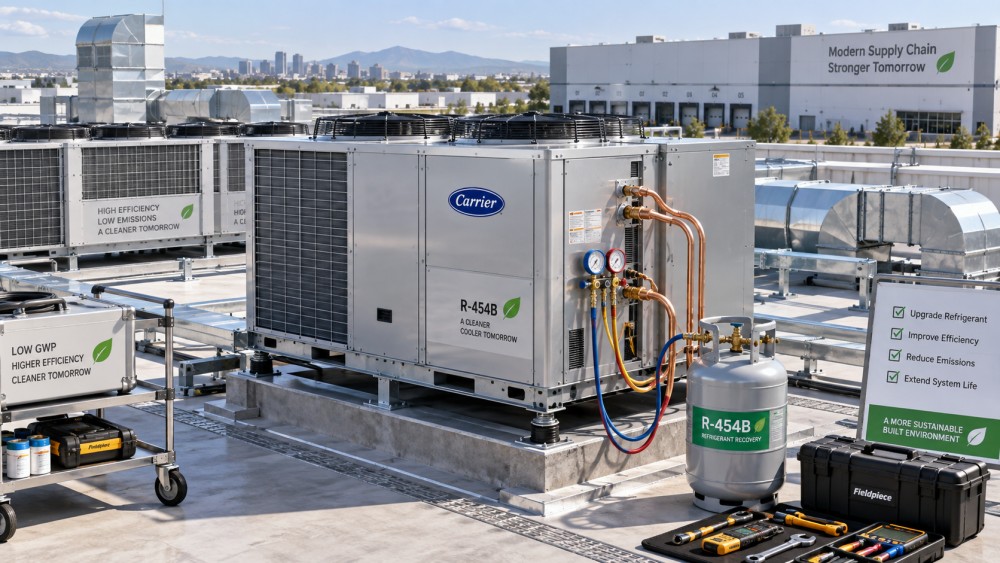
Repair can be a rational option during the R-22 phase out when the equipment is relatively stable and the intervention is genuinely limited. A single electrical component, fan motor, contactor, sensor, or localized mechanical issue may not justify a capital replacement project. The same may be true when a building is scheduled for redevelopment, a lease is nearing expiration, or a larger HVAC redesign is already planned within a short timeframe.
However, “repair” should mean more than adding refrigerant and restoring cooling. If the system has lost charge, leak detection and repair should be part of the scope. Repeatedly topping up an R-22 system without addressing the leak transfers cost into the future while increasing operational and environmental exposure.
A repair-first approach is strongest when all of the following are broadly true:
- The unit has reliable capacity and acceptable energy performance for its role.
- The refrigerant circuit is sound after repair, rather than showing a pattern of recurring leaks.
- Major components, especially the compressor and heat exchangers, are in serviceable condition.
- The site can tolerate a future replacement event without unacceptable business disruption.
- The repair buys time for a defined capital plan, rather than postponing a decision indefinitely.
Procurement teams should document that last point. A modest repair with a stated replacement date is a strategy. A series of emergency repairs without an end-of-life plan is usually just deferred capital spending with higher risk attached.
Retrofit: Useful Middle Ground, but Never a Drop-In Assumption
A refrigerant retrofit can extend the usable life of certain R-22 systems by transitioning them to an approved alternative refrigerant. This route may appeal when the equipment structure remains sound but future R-22 dependence is becoming too expensive or unpredictable. It can also help a business spread capital expenditure across multiple budget cycles.
Still, retrofit should not be described as a simple gas swap. Alternative refrigerants have different pressure-temperature relationships, capacity characteristics, lubricant compatibility requirements, charging procedures, and safety classifications. Depending on the selected refrigerant and equipment design, the work may require oil changes, seals or elastomer replacement, filter-drier changes, expansion-device adjustments, control calibration, labeling, and extensive commissioning.
Performance after retrofit deserves special scrutiny. A system may deliver less cooling capacity under high ambient conditions, consume more energy, or behave differently at part load. That does not automatically rule out a retrofit, but it means the contractor’s proposal should state the expected operating envelope and any known limitations. For a warehouse with spare cooling capacity, a modest performance trade-off may be manageable. For a process-cooling application operating near its limit on the hottest days, it may be unacceptable.
Questions to Put in a Retrofit Tender
Do not compare retrofit proposals only by installed price. Require bidders to identify the proposed refrigerant, oil compatibility, component modifications, anticipated capacity impact, expected efficiency change, safety considerations, warranty terms, and commissioning method. They should also explain how they will recover and manage the existing R-22 and what records will be provided after the work.
It is wise to request a baseline of current system performance before conversion. Without baseline suction and discharge conditions, electrical draw, supply-air or process temperatures, and observed load behavior, it is difficult to judge whether the retrofitted system is actually performing as intended.
Retrofit is usually most attractive where the equipment is mechanically healthy, replacement would require disruptive structural work, and the site has enough capacity margin to accommodate a carefully assessed performance change. It is less attractive when the unit already has multiple age-related weaknesses or when a major compressor repair is needed at the same time.
Replacement Is More Than a Compliance Decision
Replacement becomes compelling when the R-22 issue coincides with declining reliability, high energy use, insufficient capacity, repeated refrigerant losses, or costly component failures. In that situation, buying more years from legacy equipment can appear economical only because the future costs are not visible in the repair quote.
A modern replacement can address several problems at once: refrigerant transition, control modernization, improved part-load operation, more predictable maintenance, and capacity alignment with the building’s actual load. Yet replacement also brings practical questions that procurement should resolve early. Are roof curbs compatible? Will electrical service need modification? Can the work be completed outside critical operating periods? Does the new equipment require changes to ductwork, piping, drainage, controls, or building-management integration?
The best replacement decision is often portfolio-based rather than unit-by-unit. A company with ten aging R-22 rooftop units may achieve better pricing, consistent controls, coordinated installation windows, and lower disruption by grouping replacements. Conversely, replacing every legacy unit at once may strain capital budgets when several assets still have stable, low-risk service life remaining.
A Decision Matrix for Repair, Retrofit, or Replace
Look Beyond Purchase Price: Calculate the Cost of Waiting
Procurement decisions around the R-22 phase out should use a lifecycle view, even when exact forecasting is impossible. The relevant comparison includes repair cost, refrigerant sourcing risk, anticipated maintenance, energy consumption, downtime exposure, installation disruption, and remaining asset life.
For a critical facility, downtime may dwarf the cost of a compressor or rooftop unit. A failed cooling system can interrupt production, compromise product quality, create uncomfortable tenant conditions, or force emergency rentals and overtime labor. Those costs are rarely shown in the maintenance budget, but they belong in the decision.
Energy should also be examined in context. An older unit may still cool adequately, yet run longer and harder than a newer system with better controls and part-load performance. Rather than relying on generic efficiency claims, ask for site-specific assumptions: operating hours, local climate, load profile, electricity cost, and expected maintenance requirements. If those assumptions are uncertain, show a range rather than a single optimistic savings figure.
Common Procurement Mistakes During the R-22 Transition
One common mistake is approving a recharge without asking why the charge was lost. Another is accepting “drop-in replacement” language without reviewing the actual scope of conversion and post-retrofit performance. Buyers also sometimes compare replacement quotes without clarifying what is excluded—crane access, electrical upgrades, controls integration, curb adapters, startup, disposal, and temporary cooling can materially alter the final project cost.
Equally important, do not let an emergency dictate every long-term decision. An emergency repair may be necessary to keep a site operational, but it should trigger a structured asset review once the immediate pressure has passed. The next failure should not arrive as a surprise simply because the first one was handled quickly.
Build a Transition Plan That Operations Can Live With
A practical R-22 phase-out plan begins with an asset register. Rank equipment by criticality, condition, leak history, refrigerant charge size, age, and replacement complexity. Then assign each unit to one of three paths: maintain and monitor, evaluate for retrofit, or schedule for replacement. Review the plan before the cooling season, not in the middle of it.
For critical locations, include contingency measures. This may mean temporary cooling connections, spare equipment arrangements, prioritized service agreements, or phased installation schedules that preserve redundancy. The goal is not to eliminate every risk; it is to ensure that the business understands which risks it is accepting and why.
GTC-Matrix follows this transition as part of the wider evolution of industrial thermal systems, where refrigerant policy, compressor technology, heat-exchange design, and energy economics increasingly intersect. For commercial buyers, the most resilient choice is rarely based on refrigerant alone. It is the option that matches the asset’s real condition with the organization’s demand for reliability, energy discipline, and operational continuity.
In short, repair a stable system when it buys purposeful time. Retrofit a sound asset when the technical case is proven. Replace equipment when repeated spending is protecting yesterday’s machinery rather than tomorrow’s operation. That is the clearest way to turn the R-22 phase out from an urgent maintenance problem into a controlled capital decision.
Related News
- R-22 Phase-Out: Repair, Retrofit, or Replace Aging Commercial Cooling Systems?Author :Cryogenic Systems Expert

- R-410A Phase-Down Rules: Planning HVAC Replacements Before Supply TightensAuthor :Cryogenic Systems Expert

- Freon Policy Updates: What Facility Managers Must Review Before Equipment ServiceAuthor :Cryogenic Systems Expert

- How to verify refrigerant regulations and safety standards for a facilityAuthor :Cryogenic Systems Expert

- When refrigerant management software makes sense for multi-site complianceAuthor :Cryogenic Systems Expert

- EU Ends Duty-Free Small Parcels From July 1Author :Cryogenic Systems Expert

- China R410A Export Quotes Rise to RMB 60,000/TonAuthor :Cryogenic Systems Expert

- EU PFAS Curbs Raise Compliance Review for Cooling ExportsAuthor :Cryogenic Systems Expert

- EU PFAS Proposal Puts Refrigerant and Vacuum Exports Under ReviewAuthor :Cryogenic Systems Expert

- EU REACH PFAS Draft Raises New Export ChecksAuthor :Cryogenic Systems Expert

- EU Cuts High-GWP Refrigerant Import Quotas by 35%Author :Cryogenic Systems Expert

- EU Cuts Q4 2026 Quotas for High-GWP RefrigerantsAuthor :Cryogenic Systems Expert

- EU F-Gas Revision Cuts R410A Quotas 40%Author :Cryogenic Systems Expert

- EPA Freezes R-410A Quotas, Fast-Tracks R-32Author :Cryogenic Systems Expert

- Low GWP Refrigerants HFO Blends: Key Stability and Safety FactorsAuthor :Cryogenic Systems Expert

- R-32 Price Spike Reshapes Chiller ProcurementAuthor :Cryogenic Systems Expert

- How to Compare Environmentally Friendly Refrigerants by GWP, Safety, and CostAuthor :Cryogenic Systems Expert

- R-454B Export Quota Cut 18% as Lead Times DoubleAuthor :Cryogenic Systems Expert

- Japan Cuts R32 and R290 Import Quotas From July 10Author :Cryogenic Systems Expert

- EPA Cuts R-134a Import Quotas 42% From July 2026Author :Cryogenic Systems Expert
![]()
- Low GWP Refrigerants HFO Blends: Performance and Compliance in 2026Author :Cryogenic Systems Expert

- R-513A Jumps 23% as China Tightens Export QuotasAuthor :Cryogenic Systems Expert

- Environmentally Friendly Refrigerants in 2026: Compliance Risks and Upgrade PrioritiesAuthor :Cryogenic Systems Expert

- Pharmaceutical Temperature Control Systems: Common Compliance RisksAuthor :Cryogenic Systems Expert

- China Tightens Q3 R32 Export QuotasAuthor :Cryogenic Systems Expert

- California EPR Deadline Nears for Refrigeration MakersAuthor :Cryogenic Systems Expert

- Resource Circularity Trends Reshaping Refrigerants and Cooling SystemsAuthor :Cryogenic Systems Expert

- HFCs Filing Rules Enter Full EnforcementAuthor :Cryogenic Systems Expert

- How Environmentally Friendly Refrigerants Affect Chiller ComplianceAuthor :Cryogenic Systems Expert

- EU REACH Tightens Refrigerant Impurity Limits for R134a ExportsAuthor :Cryogenic Systems Expert

- China Seeks Feedback on 2027 Refrigerant QuotasAuthor :Cryogenic Systems Expert

- EU to Ban High-GWP ACs in 2029 as R410A Exits HomesAuthor :Cryogenic Systems Expert

- US, UK Delay HFC Phaseout, Extending R32/R134a Export WindowAuthor :Cryogenic Systems Expert

- EU HFC Cut Tightens by 2029 as Gen-3 Output Falls 10%Author :Cryogenic Systems Expert

- Kuwait Bans HCFC AC Imports as Shift to R32/R290 Speeds UpAuthor :Cryogenic Systems Expert

- Saudi SASO Rules Tighten AC Imports in DecemberAuthor :Cryogenic Systems Expert