Refrigerant management software starts to make commercial sense when multi-site compliance stops being a recordkeeping task and becomes an operational exposure. That point usually arrives before a formal violation. It appears when one facility logs cylinder movement in a maintenance notebook, another stores leak history in spreadsheets, a third relies on contractor emails, and no one can quickly confirm which asset had a repeat repair, which refrigerant batch was added, recovered, or sent off-site, and which service event still lacks supporting documentation. In that environment, the cost problem is often smaller than the visibility problem. Once records are fragmented, even a technically sound service program can look weak under internal review or external scrutiny.
The decision is rarely about replacing paper for its own sake. It is about whether the organization has crossed the threshold where asset count, site count, contractor count, and reporting obligations create too many handoffs for manual control. A single cold storage plant or one production campus may still manage with disciplined logs and a strong maintenance lead. Ten facilities with different equipment ages, refrigerant types, service vendors, and local operating routines usually cannot maintain the same standard consistently without a common system of record.
Where manual control begins to break down
The first warning sign is inconsistent equipment identity. Refrigeration and air-conditioning assets are often labeled differently across sites: a rooftop unit might be tagged by building code in one plant, by line number in another, and by a contractor's service abbreviation in invoices. Once asset naming is inconsistent, leak history cannot be trusted. A repeat top-off may be hidden because the same circuit appears under two names. Multi-site compliance becomes harder not because the technical work is impossible, but because the administrative chain no longer matches the physical equipment.
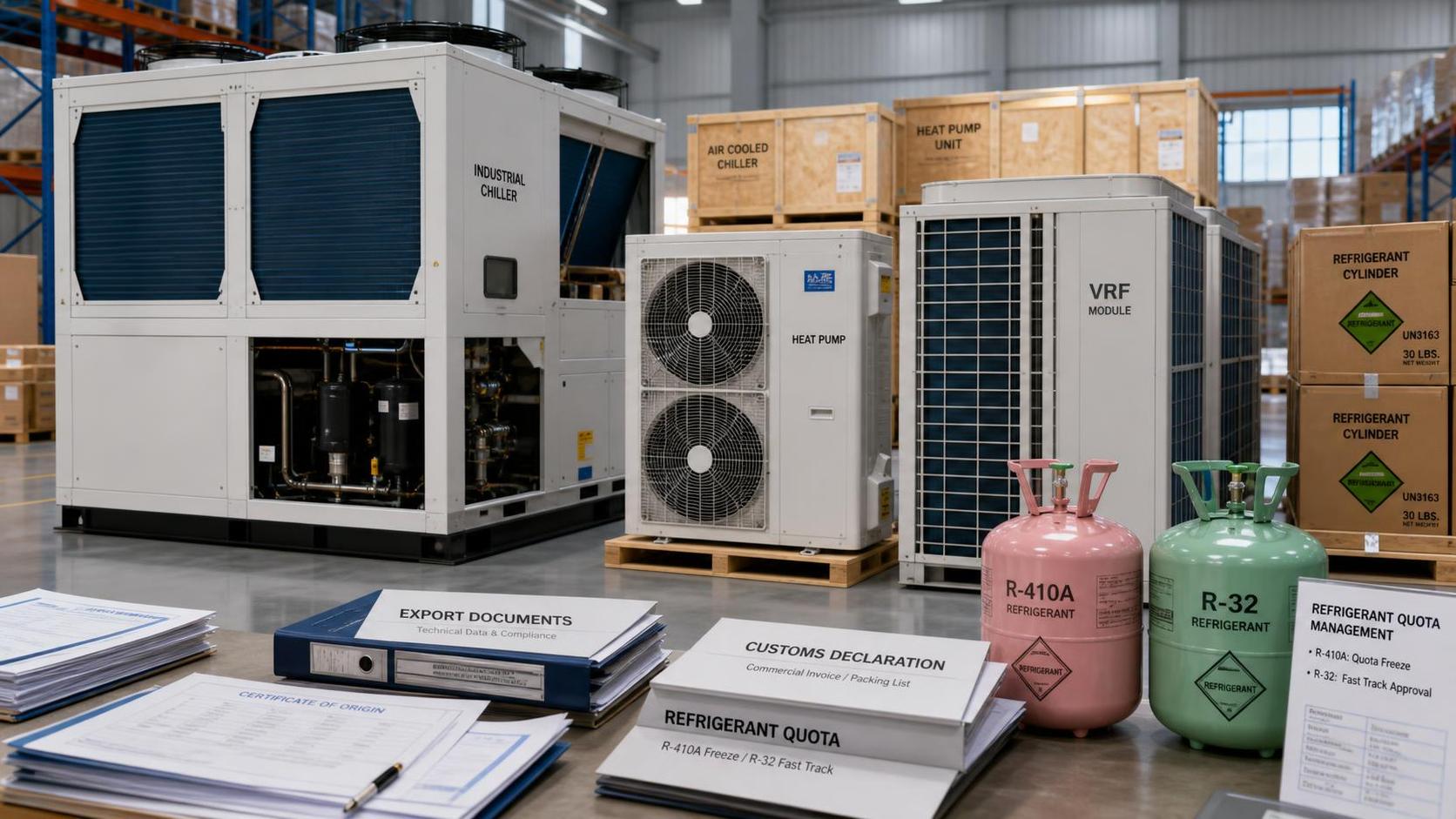
A second trigger is refrigerant diversity. Older systems may contain one refrigerant, new process chillers another, and temporary rental units something else again. Storage conditions, cylinder return procedures, recovery documentation, and purchasing controls become more sensitive when the inventory mix widens. Manual logs often capture quantity added but miss the context that matters later: whether the charge was tied to a verified leak repair, whether the material came from virgin or reclaimed stock, whether recovered material was weighed before transport, or whether a partial cylinder was transferred between locations without a clear custody trail.
Contractor dependence also changes the equation. If several service providers touch the same portfolio, each may use a different work order format, leak description style, and unit of measure. Some document in kilograms, some in pounds, some by cylinder fraction, some by invoice line item. Transcription into an internal spreadsheet introduces delay and interpretation errors. A centralized system becomes reasonable when the organization spends more time normalizing records than reviewing the actual condition of the fleet.
The real purchasing question
The most useful way to assess need is to ask whether compliance data supports operational decisions, not just historical filing. If the maintenance team cannot easily identify recurring leak assets, compare service frequency by equipment family, or trace refrigerant usage back to a repair event, then the record system is passive. Software is justified when the organization needs the data to be active: flagging thresholds, highlighting missing service fields, standardizing asset structure, and preserving evidence in a form that survives staff turnover, contractor changes, and site expansion.
That does not require a grand digital transformation project. It requires clarity about which decisions are currently blocked by poor records. Typical examples include whether to replace an aging condensing unit, whether to reallocate spare cylinders between facilities, whether recurring losses are concentrated in one region, and whether service invoices align with internal stock movement. If those questions take days to answer or produce conflicting versions, the compliance process has already outgrown manual tools.
Signals that the timing is right
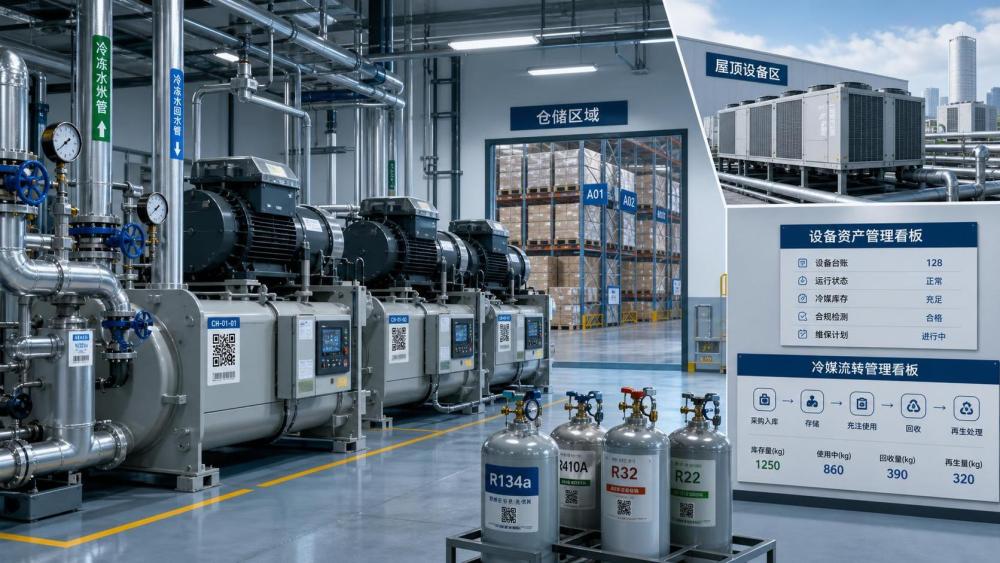
One useful marker is the audit trail around leak response. In a mature setup, a service event should connect the asset identifier, date, technician or vendor, refrigerant type, quantity added or recovered, leak location if known, repair status, follow-up requirement, and supporting documents such as work tickets or disposal notes. When those elements live in separate folders, email threads, and local drives, compliance quality depends too heavily on memory.
Another signal is the handoff between procurement, maintenance, and environmental reporting. Refrigerant purchasing may be centralized, but consumption occurs locally. Cylinders are ordered by one team, received by another, used by a contractor, and returned or stored by a third party. Without a shared workflow, stock discrepancies are common. A site may appear overconsumptive simply because transfers were not recorded properly. Conversely, understated usage can hide chronic leakage. Software begins to earn its keep when material flow must be reconciled across receiving, storage, issue, recovery, and final disposition.
Expansion and acquisition also matter. When additional facilities come into the portfolio, inherited records are often uneven. Some sites may have accurate equipment schedules but weak leak logs. Others may have strong service history but no reliable baseline charge data. Bringing those sites onto one structure early can prevent years of parallel record habits. Waiting usually hardens local workarounds and increases cleanup effort later.
What should be standardized before selection
Buying too early, without preparing core data rules, creates a different kind of mess inside a cleaner interface. Before selecting a system, the organization should settle a few basic definitions internally. An asset hierarchy is the first one: site, building, process area, equipment, and circuit should have a consistent logic. If a chiller and its secondary loop are tracked differently across sites, reports will remain noisy regardless of software quality.
Charge data also needs discipline. Nameplate charge, estimated operating charge, and actual quantity added during service are not interchangeable. Many compliance errors begin when those values are merged into one field or copied forward without source notes. The same applies to leak events. A suspected leak, a confirmed leak, a repaired leak, and an unresolved repeat issue should not be treated as the same status. If the software cannot reflect those distinctions, it may store records without improving control.
Document standards deserve equal attention. Recovery logs, waste transfer paperwork, pressure test notes, and contractor service sheets should map to defined record types. Otherwise, attachments become digital clutter. The aim is not to collect every file available; it is to retain the specific evidence that explains why refrigerant moved, where it went, and what maintenance action was tied to it.
Functional requirements that matter more than glossy features
For multi-site compliance, asset-level traceability is usually more valuable than broad dashboards. A strong system should let a reviewer start at the portfolio level, filter by refrigerant, facility, equipment class, or service status, and then drill down to one circuit's full event history without rebuilding the story from separate screens. Search speed matters because the pressure point in audits is rarely reporting aesthetics. It is the ability to answer a specific challenge quickly and consistently.
Role control is another practical requirement. Site maintenance staff may need to enter service details, environmental personnel may review completeness, and finance may only need invoice-linked visibility. If permissions are too loose, records get overwritten. If too rigid, people revert to side spreadsheets. The best fit is usually a model that protects final records while allowing local entry with required fields and date-stamped edits.
Offline tolerance can be important in industrial settings. Mechanical rooms, remote warehouses, and production areas do not always offer reliable connectivity. If technicians or service partners must wait for a strong signal to capture data, notes will drift back to paper and later re-entry. The same logic applies to mobile photo capture for labels, cylinder tags, and repair documentation.
Integration should be judged narrowly and realistically. Direct linkage with work order systems, purchasing records, or contractor portals can be valuable, but only when field names align and ownership of master data is clear. A partial integration that imports invoice numbers but not asset IDs often creates more reconciliation work than a manual process with stricter controls. In many portfolios, a well-structured export and import routine is preferable to a rushed API project.
Common misjudgments during evaluation
One common mistake is treating all refrigerant records as environmental records. In practice, they sit at the intersection of maintenance, inventory, transport, and accounting. A tool selected only by the reporting team may miss how technicians actually document repairs or how central stores handle cylinders. That gap shows up later as incomplete fields, skipped workflows, and repeated exceptions.
Another mistake is overvaluing generic compliance templates. Multi-site industrial portfolios contain different operating conditions: process cooling loops, comfort cooling equipment, refrigerated storage, packaged units, split systems, and specialty systems tied to cleanrooms or temperature-sensitive production. The software needs enough flexibility to reflect asset differences without creating a separate rulebook for every location. Too much rigidity forces workarounds. Too much configurability turns administration into its own burden.
There is also a tendency to focus on the software's reporting library while overlooking data intake. If service contractors still submit free-form PDFs and local teams manually key in quantities afterward, the system may centralize records without improving data quality. Selection should test how service data enters the system, how validation works at entry, and how missing fields are chased before month-end or quarter-end reporting closes.
Operational details that affect long-term value
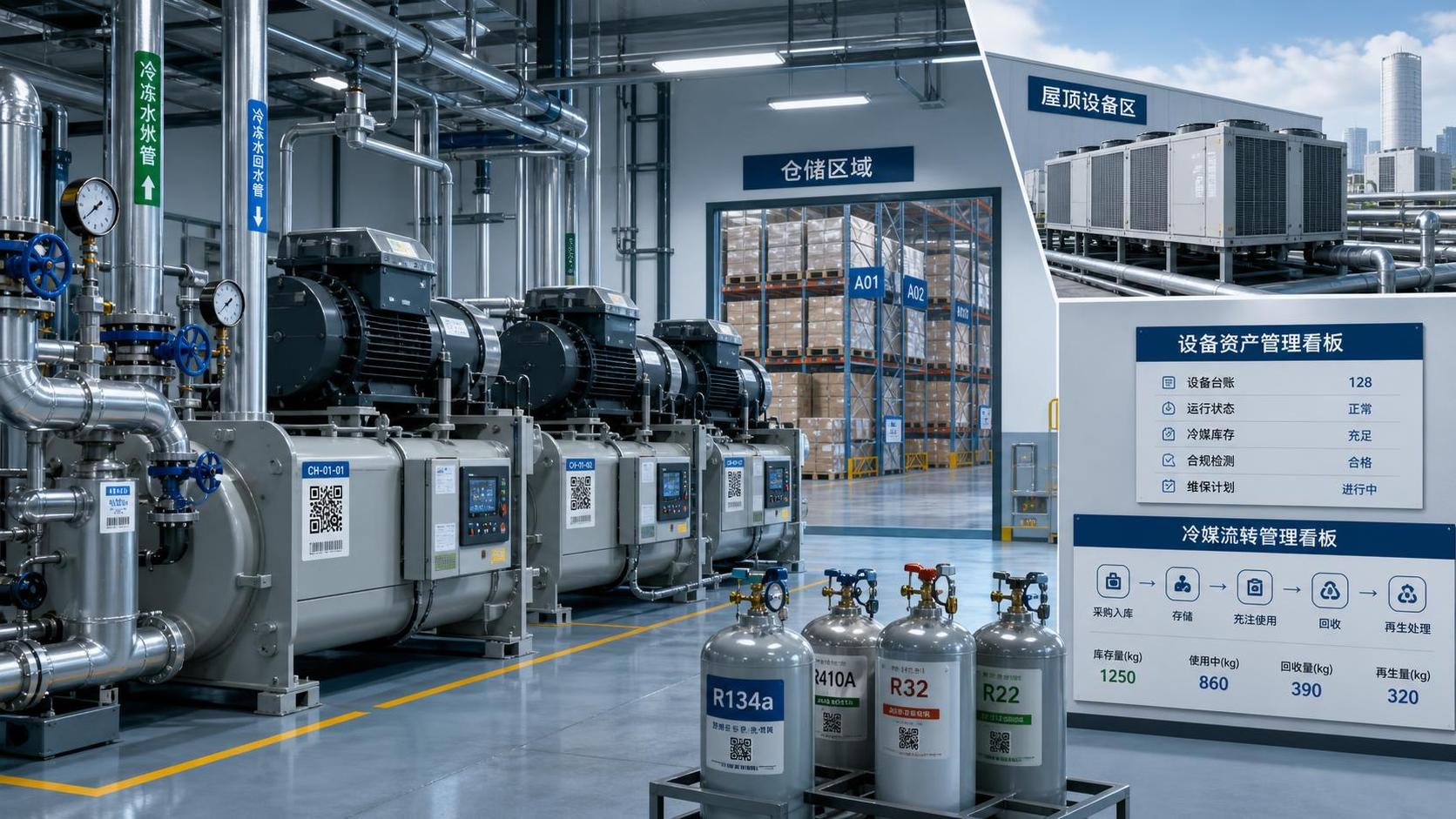
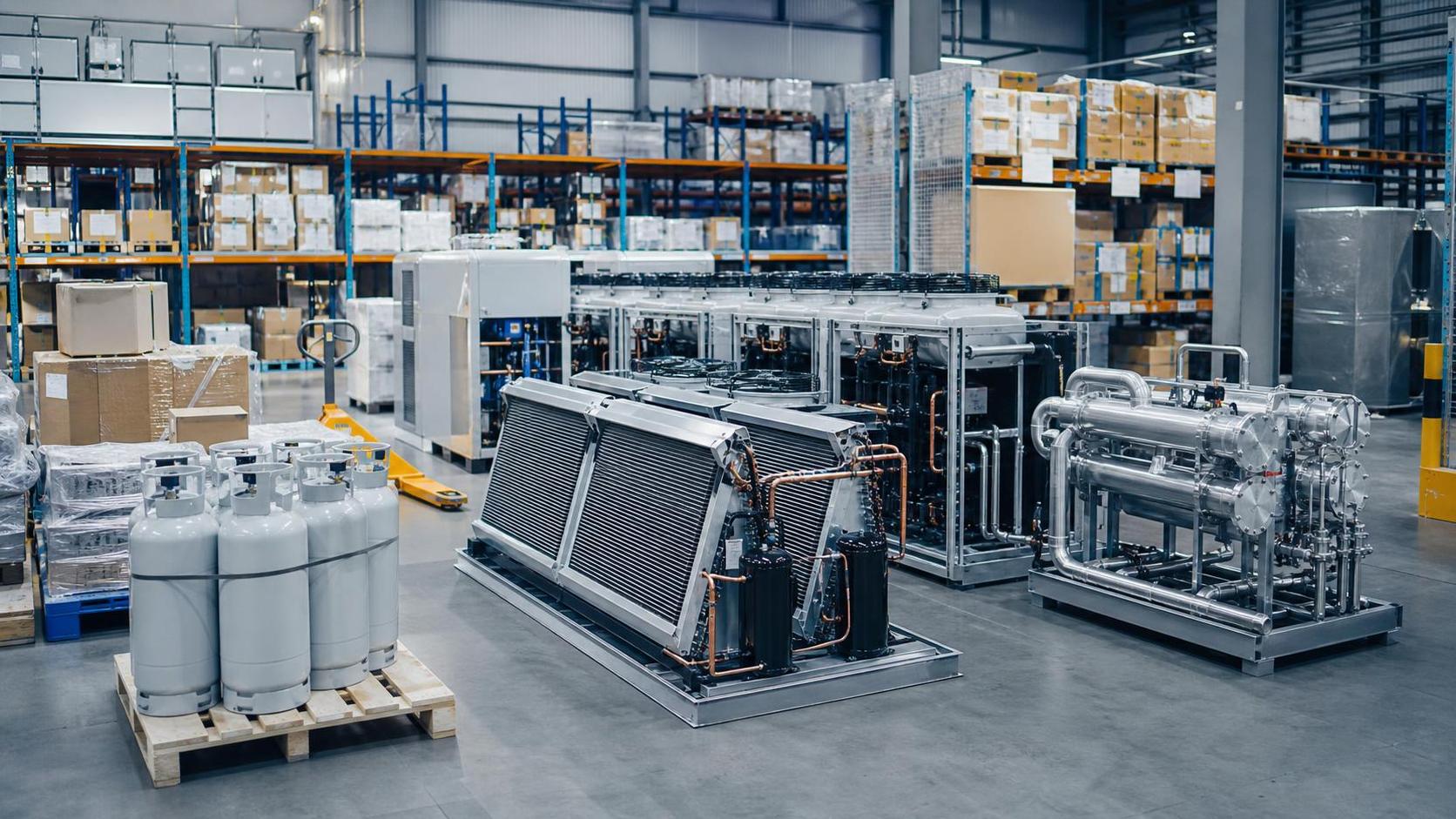
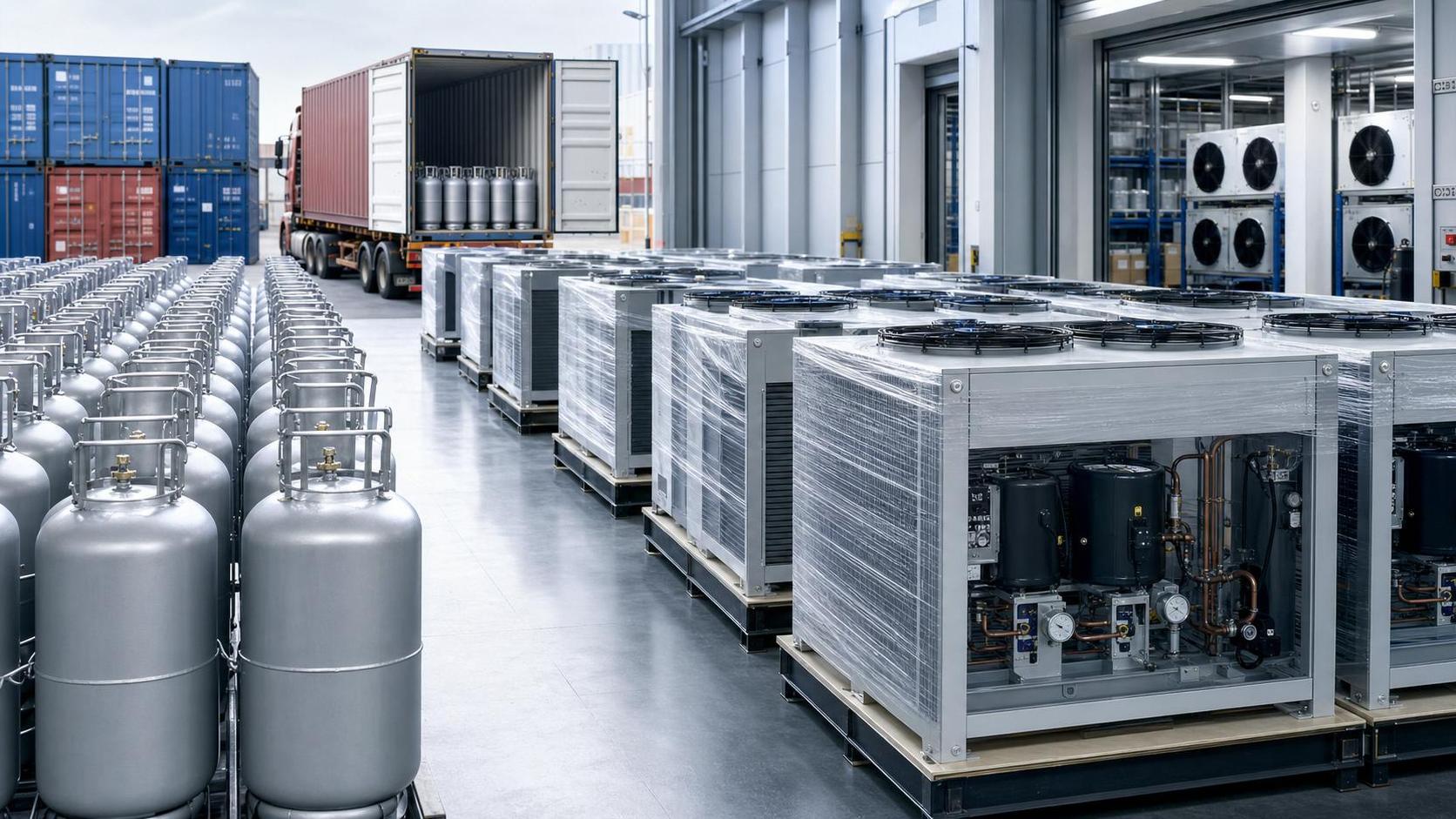
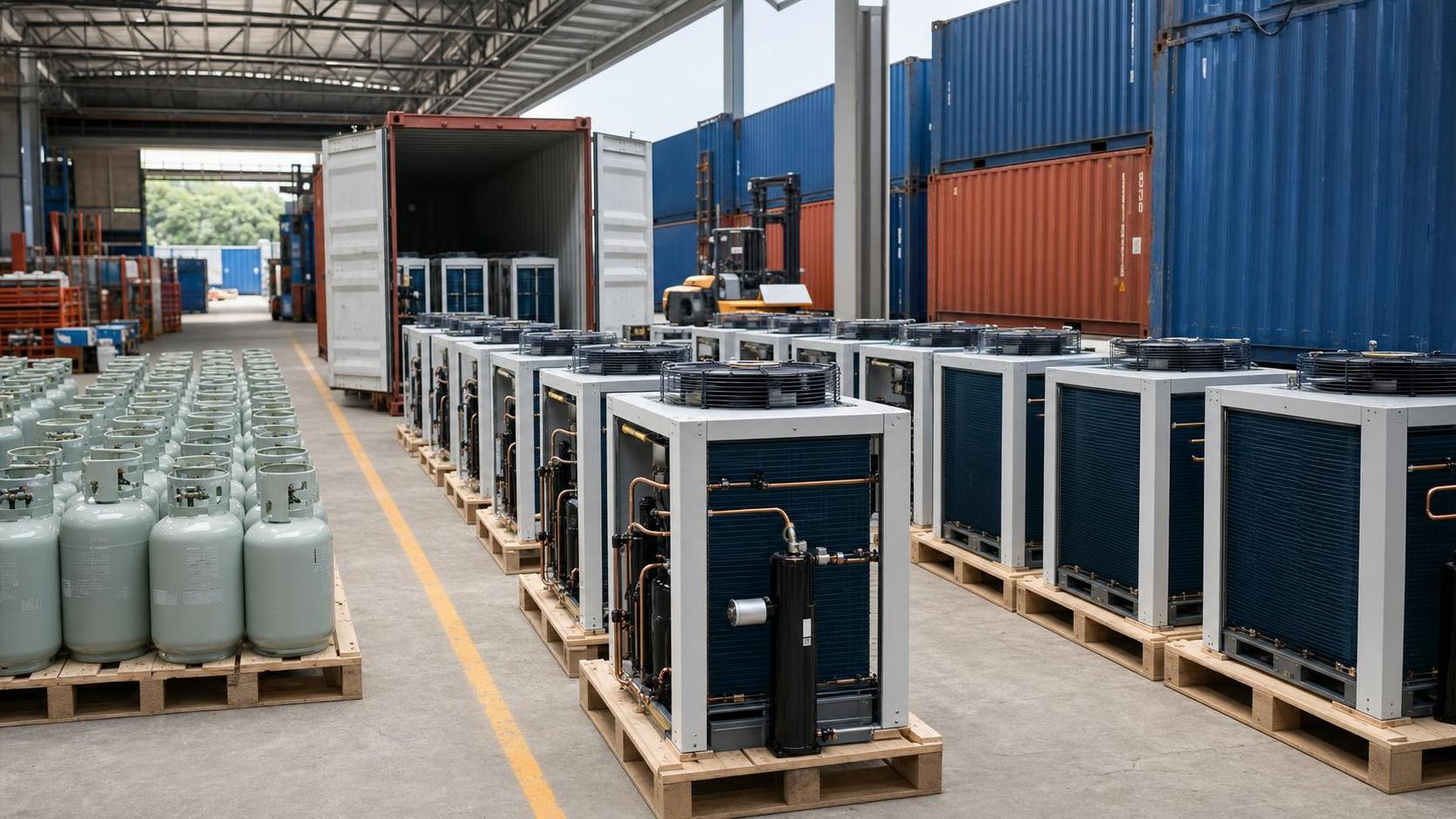
Cylinder tracking is often underestimated. Across multiple facilities, the same container may move from central warehouse to site storage, then to a contractor vehicle, then back with partial contents or recovered material. If tare weight, gross weight, seal condition, and refrigerant identity are not captured consistently, stock records become unreliable. A software deployment is far more defensible when cylinder movement and service event logging share a connected record structure.
Installation and commissioning records also matter. New equipment should enter the system with asset tag, manufacturer model reference, circuit details where relevant, design charge, installed location, and baseline service date. If assets are added only after the first maintenance issue appears, early refrigerant history will already be incomplete. That weakens later analysis of chronic leakage versus startup adjustment or installation defects.
Maintenance workflow matters just as much as database structure. A good process usually includes a preliminary service note, supervisor review for abnormal quantities or repeat events, attachment of final contractor documentation, and closure only when required fields are complete. Without that sequence, digital records can become fast but careless. Speed alone is not the outcome being purchased.
When the investment can wait
There are cases where software is premature. If the asset base is small, refrigerant types are limited, service work is handled by one disciplined provider, and internal documentation is already standardized, then the immediate gain may be modest. The smarter move in that situation may be to tighten naming conventions, improve service forms, and establish a single controlled register first. Software becomes more compelling when those controls exist but no longer scale across sites or stakeholders.
The practical threshold is not defined by a single asset count. It appears when record confidence starts falling faster than the portfolio grows. Once compliance discussions regularly turn into document hunts, once recurring losses cannot be verified without manual reconstruction, and once inventory movement is separated from maintenance evidence, the case for refrigerant management software is no longer abstract. It becomes a matter of operational control.