ASHRAE 90.1-2025 Enforces 18% Higher Efficiency for Commercial Cooling Towers




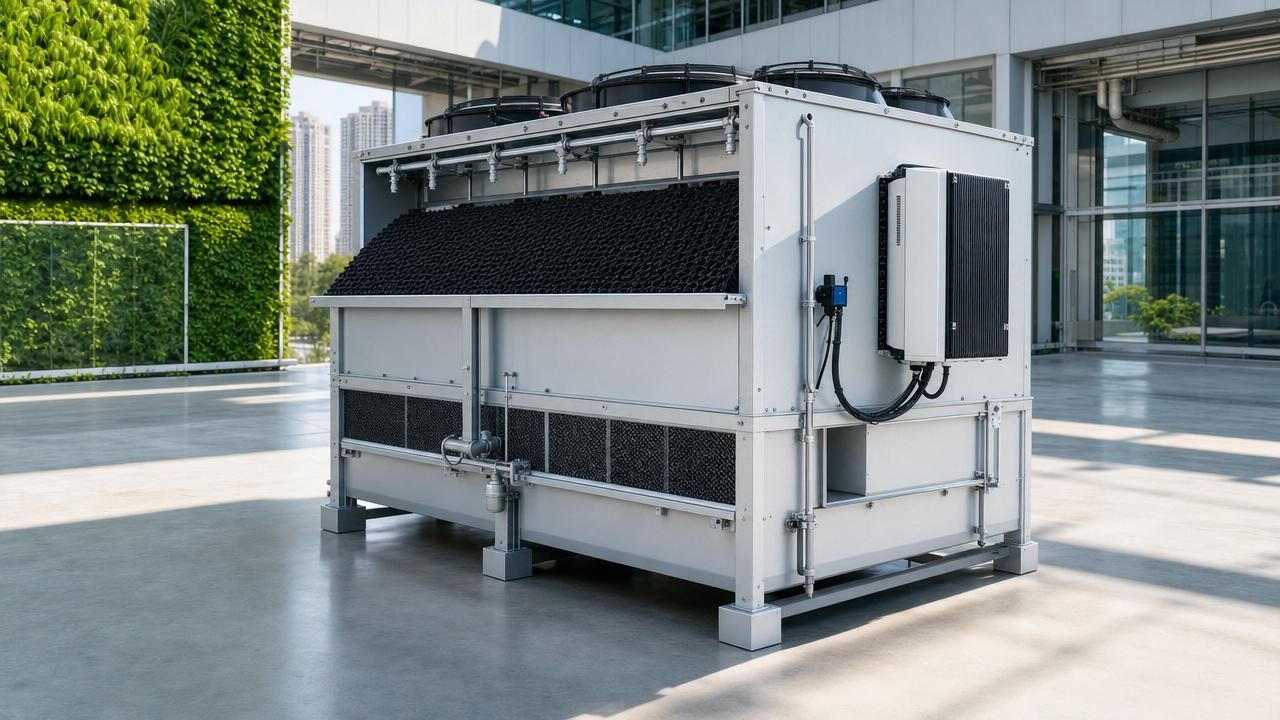
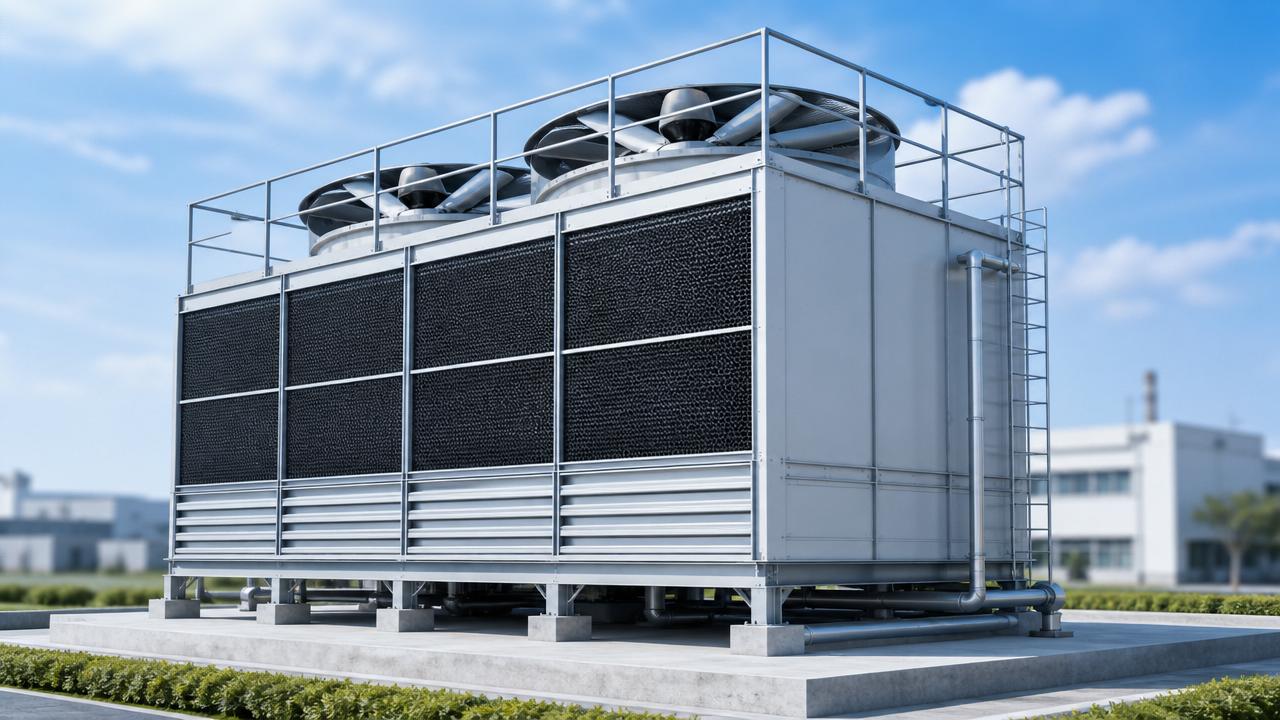
Starting May 1, 2026, the ASHRAE 90.1-2025 standard will take full effect across the United States, raising minimum energy efficiency requirements for commercial open-circuit cooling towers by 18%—measured as EER per IEC 61850-7-42—and mandating variable frequency drives (VFDs) and intelligent water level control. This update directly affects manufacturers, exporters, and project integrators supplying to U.S. commercial building markets, especially those targeting LEED-certified projects or state government procurement.
Event Overview
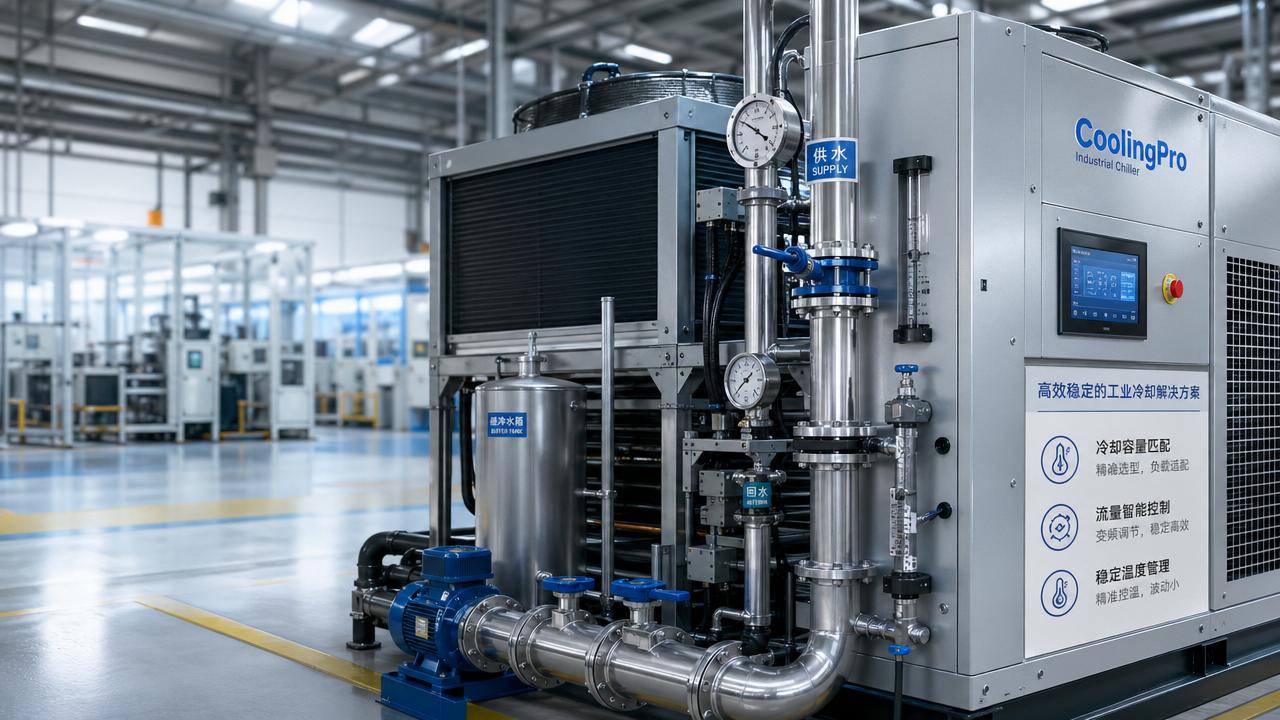
Effective May 1, 2026, ASHRAE Standard 90.1-2025 becomes nationally enforceable in the United States. For commercial open-circuit cooling towers, the standard raises the minimum EER (Energy Efficiency Ratio), as defined under IEC 61850-7-42, by 18%. It also introduces two new mandatory technical provisions: (1) requirement for variable frequency drive (VFD) integration, and (2) implementation of intelligent water level control. As of current public data, only approximately 17% of commercially available cooling tower models manufactured in China have achieved UL 1995-2026 certification. Non-compliant units will be excluded from U.S. LEED-certified construction projects and from eligibility for inclusion on state-level government procurement lists.
Industries Affected by This Update
Direct Exporters and OEMs
Exporters and original equipment manufacturers (OEMs) supplying cooling towers to the U.S. market face immediate compliance risk. Since LEED project eligibility and state procurement access depend on adherence to ASHRAE 90.1-2025, non-certified models may lose entry to key high-margin segments—including federal and municipal infrastructure tenders and green building developments.
Component Suppliers and Drive Integrators
Suppliers of VFDs, water level sensors, and control logic modules are affected indirectly but significantly. The mandatory VFD and intelligent water level control requirements shift design responsibility upstream: component compatibility, pre-integration validation, and firmware interoperability with ASHRAE-defined operational profiles become prerequisites—not optional upgrades.
Testing and Certification Service Providers
Third-party certification bodies and testing laboratories see increased demand for UL 1995-2026 verification services. However, capacity constraints and evolving interpretation of IEC 61850-7-42 alignment with ASHRAE’s EER calculation methodology may lead to extended turnaround times for certification cycles.
Engineering Contractors and MEP Firms
Contractors specifying cooling towers for U.S.-based commercial projects must verify model-level compliance prior to submittal. Absence of UL 1995-2026 certification—or lack of documented VFD/water control integration—may result in rejected submittals, change orders, or delays in permitting and commissioning.
What Enterprises and Practitioners Should Monitor and Do Now
Track official interpretations from ASHRAE and AHRI
ASHRAE and the Air-Conditioning, Heating, and Refrigeration Institute (AHRI) are expected to issue clarifications on enforcement scope—especially regarding legacy installations, field retrofits, and transitional allowances. Monitoring their technical bulletins and public comment periods is essential for accurate compliance planning.
Verify UL 1995-2026 status for active product lines
Manufacturers and distributors should audit current catalog models against publicly listed UL 1995-2026 certifications—not just general UL listing. A model certified under UL 1995-2022 or earlier does not satisfy the 2026 requirement, even if physically identical.
Distinguish between regulatory signal and procurement enforcement timelines
While ASHRAE 90.1-2025 takes legal effect on May 1, 2026, individual states and local jurisdictions may adopt it at different speeds. Likewise, LEED v4.1 and v5 rating systems reference ASHRAE 90.1 but allow some flexibility in documentation timing. Understanding the gap between code adoption and actual project-level enforcement helps prioritize response efforts.
Prepare supply chain and specification documentation in advance
VFD suppliers and control system integrators should prepare technical datasheets, UL certification reports, and functional test protocols aligned with IEC 61850-7-42 EER calculation logic. Engineering firms and contractors need ready-to-use submittal packages that explicitly declare compliance with both VFD and intelligent water level control provisions.
Editorial Observation / Industry Perspective
Observably, this update functions less as a sudden regulatory shock and more as an acceleration of an ongoing efficiency trajectory—consistent with prior ASHRAE 90.1 revisions since 2013. Analysis shows the 18% EER uplift reflects tightening tolerances rather than a step-change in technology; however, the addition of VFD and intelligent water level mandates shifts compliance from a passive performance threshold to an active system-integration requirement. From an industry standpoint, the low UL 1995-2026 adoption rate among Chinese-manufactured models signals a preparedness gap—not necessarily a capability gap—that may widen unless addressed before Q1 2026. This is best understood not as a barrier, but as a formalization of performance expectations already emerging in premium U.S. commercial HVAC specifications.
In summary, ASHRAE 90.1-2025’s cooling tower provisions represent a calibrated tightening of U.S. commercial building energy policy—not a wholesale redesign mandate, but a concrete operational benchmark with enforceable consequences for market access. Current readiness levels vary significantly across supplier tiers, making proactive verification, documentation alignment, and jurisdiction-specific adoption tracking the most rational priorities for affected stakeholders.
Source: ASHRAE 90.1-2025 Standard (publicly adopted version); UL 1995-2026 Certification Program documentation; AHRI Public Guidance Notices (Q4 2024–Q1 2025).
Parts requiring ongoing observation: State-level adoption timelines, ASHRAE Interpretation Letters on VFD control logic scope, and UL’s published list of certified models updated beyond March 2025.
Related News
- ASHRAE 90.1-2025 Enforces 18% Higher Efficiency for Commercial Cooling TowersAuthor :Thermodynamics Analyst

- ASHRAE 90.1-2025 Enforces 18% Higher Efficiency for Commercial Cooling TowersAuthor :Thermodynamics Analyst

- Industrial Cooling Systems: Common Sizing Errors and How to Avoid ThemAuthor :Thermodynamics Analyst
![]()
- DOE Adopts ASHRAE 90.1-2025: Cooling Tower Efficiency Up 18%Author :Thermodynamics Analyst
![]()
- Industrial Cooling Solutions: Common Sizing Mistakes to AvoidAuthor :Thermodynamics Analyst