How to Compare Automatic Centrifugal Separators by Throughput and Solids Load




How to Compare Automatic Centrifugal Separators by Throughput and Solids Load
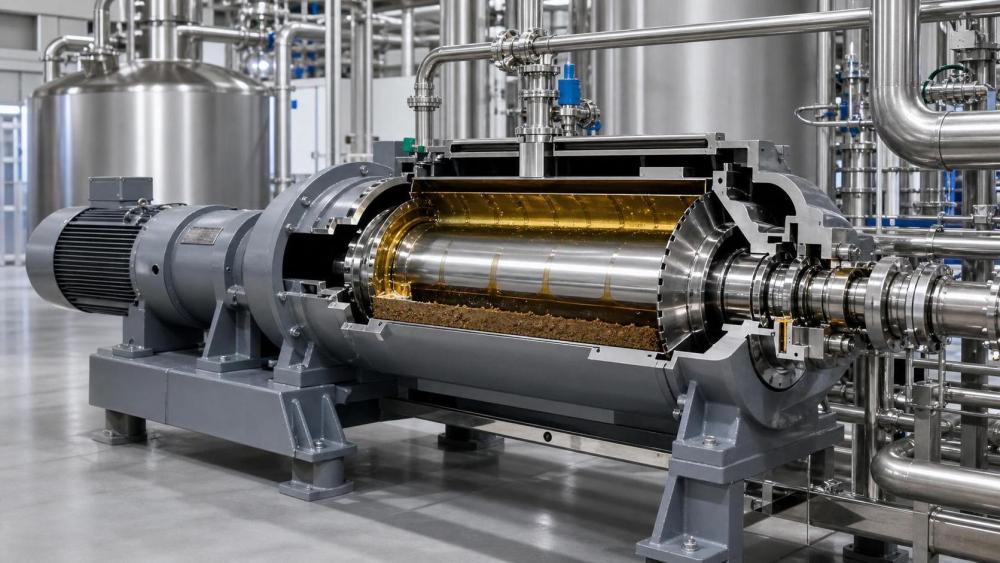
When comparing automatic centrifugal separators, throughput and solids load should lead the discussion. These two variables shape separation quality, bowl stability, cleaning frequency, and total operating cost.
That sounds straightforward. In practice, it rarely is. A separator that looks strong on nameplate capacity can still struggle when solids concentration rises or feed conditions shift during production.
For GTC-Matrix, this matters because industrial decisions now sit under tighter energy, uptime, and quality targets. Equipment selection is no longer just about peak performance. It is about stable, efficient performance over time.
A useful comparison starts with one principle: throughput and solids load must be evaluated together. Looking at one without the other often leads to undersized equipment, unstable discharge cycles, or avoidable maintenance pressure.
Start With the Real Meaning of Throughput
Throughput is often treated as a single headline number. That is risky. In automatic centrifugal separators, throughput only has value when linked to feed viscosity, temperature, density difference, and required clarification level.
A vendor may state a nominal flow rate. That figure usually assumes a favorable product profile and controlled inlet conditions. Once feed quality changes, actual capacity can fall faster than expected.
This is why comparison should focus on effective throughput, not brochure throughput. Effective throughput means the flow rate at which the separator still meets solids removal, liquid clarity, and discharge stability requirements.
Ask for performance curves across multiple conditions. A flat capacity claim does not reveal enough. A real evaluation needs throughput data under low, medium, and high solids loading.
Questions That Clarify Throughput Claims
- At what feed temperature was the rated throughput measured?
- What was the solids concentration during the test?
- Was the target polished separation or basic bulk clarification?
- How much did discharge events reduce net flow?
- What performance margin remains during feed variation?
Why Solids Load Changes Everything
Solids load is more than solids percentage. It is the actual mass of solids entering the separator over time. That load controls how quickly the bowl fills, how often discharge occurs, and how stable the separation zone remains.
Two automatic centrifugal separators can have similar flow ratings but very different solids handling behavior. One may tolerate shock loads well. The other may lose efficiency once solids rise beyond a narrow operating band.
This is where many comparison exercises go wrong. They compare liters per hour, but ignore kilograms of solids per hour. For real selection work, solids mass flow is usually the sharper decision metric.
More importantly, solids character matters as much as quantity. Fine, sticky, fibrous, abrasive, or compressible solids behave differently inside the bowl and can affect discharge efficiency in very different ways.
Key Solids Load Factors to Compare
- Average and peak solids mass flow
- Particle size distribution
- Solids compressibility and stickiness
- Abrasiveness and wear potential
- Daily or seasonal feed variability
Compare Automatic Centrifugal Separators as a Throughput-Solids Pair
The most reliable method is to compare automatic centrifugal separators using a throughput-solids matrix. This avoids the common mistake of selecting equipment only by maximum flow.
Build three operating cases. Use normal production, peak production, and upset production. Then test each separator option against all three, using the same separation target and discharge assumptions.
This approach quickly shows which model has real operating headroom. It also reveals whether capacity falls because of hydraulic limits, solids storage limits, or poor discharge response.
Look Beyond Capacity to Net Operating Performance
A separator may process a high inlet flow and still deliver weak net performance. Frequent discharge cycles, high recirculation, product losses, or unstable bowl conditions can erode the value of nominal throughput.
That also means the best automatic centrifugal separators are not always the largest. In many plants, the stronger choice is the unit that holds efficiency across variable solids load with fewer process interruptions.
From a selection standpoint, net operating performance usually includes five linked outcomes: separation quality, uptime, product recovery, energy use, and maintenance intensity.
Metrics Worth Requesting From Suppliers
- Net throughput after discharge losses
- Residual solids in clarified liquid
- Specific energy per processed volume
- Wear part life under expected solids type
- Control response during feed concentration shifts
Check Control Logic and Discharge Strategy
Automatic centrifugal separators depend heavily on control logic. If discharge timing is too fixed, the unit may underperform when solids load changes quickly during production cycles.
A smarter system uses pressure, torque, turbidity, vibration, or solids trend data to adapt. This can protect throughput while preventing overfilling, product contamination, and excessive discharge frequency.
In actual operations, adaptive discharge strategy often separates average equipment from resilient equipment. The difference becomes more visible in food processing, chemical production, and wastewater streams with unstable solids patterns.
This is also where digital monitoring adds value. Better control data helps teams compare automatic centrifugal separators on real stability, not just static design figures.
Match the Separator to the Process Risk Profile
Not every process needs the same performance balance. Some lines prioritize maximum throughput. Others care more about low product loss, low wear, or consistent downstream protection.
A practical selection review should map the process risk profile first. Then compare automatic centrifugal separators against the failure modes that matter most in that environment.
For example, pharmaceutical and fine chemical applications may place more value on stable clarity and low contamination risk. Mining or heavy slurry duties may focus more on solids handling resilience and wear management.
Process Risks That Should Influence Selection
- Lost production from overload events
- Downstream fouling from poor solids removal
- Excess water or product loss during discharge
- Unexpected wear from abrasive solids
- Energy penalties from oversized equipment
A Simple Evaluation Framework for Better Decisions
To compare automatic centrifugal separators well, use a structured scorecard. Keep it practical. The point is to connect process data, supplier claims, and operating risk in one view.
- Define target clarity, recovery, and uptime requirements.
- Measure average and peak throughput with real feed conditions.
- Calculate solids mass flow, not only concentration percentage.
- Test each option against normal, peak, and upset scenarios.
- Review discharge logic, wear protection, and automation depth.
- Compare lifecycle cost, including downtime and maintenance exposure.
This framework keeps the decision grounded. It also reduces the chance of choosing a separator that performs well in vendor literature but poorly in day-to-day production reality.
Final Takeaway
The best way to compare automatic centrifugal separators is to treat throughput and solids load as one operating equation. Capacity alone is incomplete. Solids handling alone is also incomplete.
A strong decision looks at effective throughput, solids mass flow, discharge behavior, control adaptability, and lifecycle impact together. That is where reliable separation performance actually comes from.
As industrial systems face tighter efficiency and quality expectations, this combined view becomes even more important. It supports cleaner operation, steadier output, and more defensible capital decisions.
Before shortlisting equipment, build the throughput-solids matrix, pressure test supplier data, and compare automatic centrifugal separators under realistic operating variation. That is usually where the right choice becomes clear.
Related News
- How to Evaluate High Capacity Centrifugal Separators for Throughput and Solids RemovalAuthor :Thermal Energy Strategist

- How to Compare Automatic Centrifugal Separators by Throughput and Solids LoadAuthor :Thermal Energy Strategist

- Centrifugal Dewatering Wastewater Sludge: What Affects Cake Solids Most?Author :Thermal Energy Strategist

- India's Gold Import Pause Shifts Centrifuge Demand to Battery RecyclingAuthor :Thermal Energy Strategist