



Centrifugal Dewatering Wastewater Sludge: What Affects Cake Solids Most?




Centrifugal Dewatering Wastewater Sludge: What Affects Cake Solids Most?
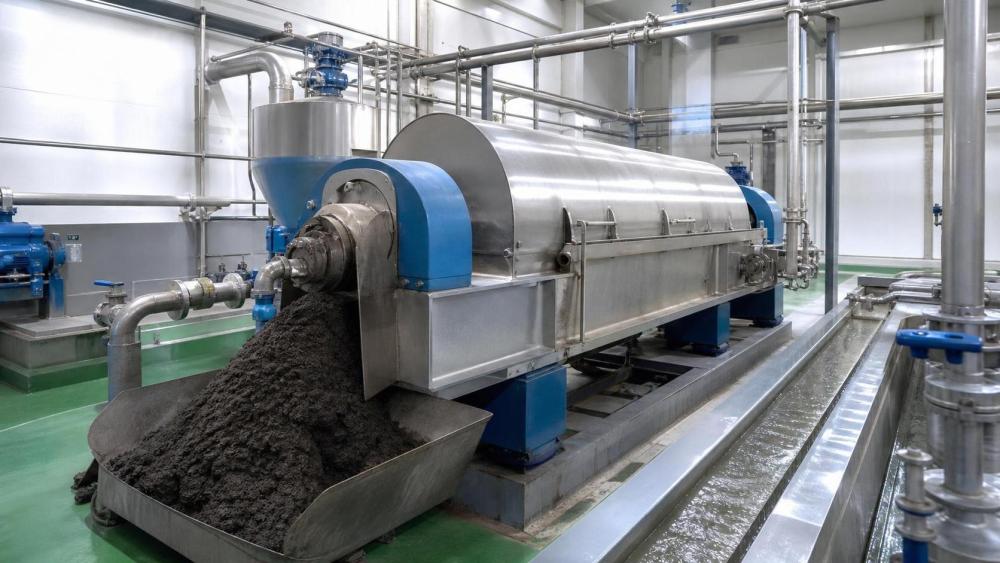
In centrifugal dewatering wastewater sludge, cake solids can shift more than many teams expect.
Two plants may run similar equipment, yet produce very different cake dryness.
That gap usually comes from sludge condition, not from centrifuge size alone.
For daily operation, cake solids matter because every extra percent reduces hauling, storage, and downstream handling costs.
It also affects odor control, incineration efficiency, landfill acceptance, and dryer load.
So when discussing centrifugal dewatering wastewater sludge, the real question is practical.
Which variables actually move cake solids the most, and which ones only fine-tune the result?
The short answer is clear.
Feed consistency, polymer performance, sludge biology, bowl speed, and differential speed carry most of the weight.
Everything else supports those fundamentals.
Why Cake Solids Change So Much
Centrifugal dewatering wastewater sludge is a balance between separation force and solids transport.
The centrifuge must capture particles, release water, and discharge solids before the cake breaks apart.
When one part of that balance drifts, cake dryness drops quickly.
A wetter cake does not always mean the machine is underperforming.
It may mean the feed became harder to dewater.
This is common after storm dilution, process upsets, seasonal temperature change, or biological instability.
That is why troubleshooting centrifugal dewatering wastewater sludge should start upstream, then move into machine settings.
1. Feed Solids Concentration Often Sets the Ceiling
Among all factors, feed solids concentration often has the strongest influence on cake solids.
If feed is too dilute, the centrifuge spends energy moving water instead of building a dry solids bed.
A weak solids blanket reduces compaction and shortens effective dewatering time.
In many plants, stable thickening ahead of centrifugal dewatering wastewater sludge improves cake dryness more than aggressive centrifuge adjustment.
Typical warning signs are easy to spot:
- feed solids fluctuate hour by hour
- polymer demand rises suddenly
- cake solids drop after rain events
- centrate clarity worsens during flow peaks
A practical operating target is not simply “higher feed solids.”
The better target is stable feed solids with low short-term variation.
Stable feed gives the operator a reliable base for polymer and scroll control.
2. Polymer Selection and Dose Drive Water Release
In centrifugal dewatering wastewater sludge, polymer is rarely a minor detail.
It shapes floc size, floc strength, drainage behavior, and solids capture.
Wrong chemistry can produce a cake that looks formed but still holds too much bound water.
Too little polymer causes poor capture and wet cake.
Too much polymer can trap water and raise cost without adding dryness.
The most useful approach is jar testing followed by live machine confirmation.
Lab screening narrows chemistry, but full-scale shear conditions decide real performance.
Mixing quality also matters.
Even the right polymer underperforms if activation time is short or dilution water quality is poor.
When centrifugal dewatering wastewater sludge becomes inconsistent, polymer make-down should be checked before major mechanical changes.
3. Sludge Type and Biology Can Override Settings
Not all sludge responds the same way inside a decanter.
Primary sludge, waste activated sludge, digested sludge, and blended sludge each have different dewatering behavior.
Waste activated sludge is often the most difficult because it contains more biological water and compressible solids.
Filament growth, rising sludge age, low dissolved oxygen history, or nutrient imbalance can all reduce cake solids.
From an operating view, this means the centrifuge may be reacting to process biology rather than causing the problem.
A few upstream signals deserve attention:
- sudden drop in volatile solids reduction
- higher capillary suction time
- sticky cake or stringy discharge
- high centrate suspended solids despite normal torque
When these appear together, changing bowl speed alone usually gives limited benefit.
4. Bowl Speed Increases G-Force, But Not Without Limits
Bowl speed is one of the first adjustments used in centrifugal dewatering wastewater sludge.
Higher speed raises G-force and can improve solids capture and liquid clarification.
In many cases, it also improves cake solids.
Still, more speed is not always better.
Excessive G-force can compact soft biological solids so tightly that water release actually slows.
It can also increase power use and wear.
The better method is step testing.
Raise speed gradually, hold feed stable, then compare cake solids, centrate quality, torque, and polymer consumption.
That full picture prevents chasing one improvement while another cost rises quietly.
5. Differential Speed Controls Residence Time
If bowl speed sets separation force, differential speed sets solids residence time.
This is a major lever in centrifugal dewatering wastewater sludge.
Lower differential speed keeps solids in the bowl longer.
That usually gives the cake more time to compact and drain.
However, if differential speed is too low, torque climbs and blockage risk increases.
If it is too high, solids exit early and cake becomes wetter.
Operators usually see this tradeoff quickly during load swings.
A useful rule is simple.
Adjust differential speed with torque trend, not by fixed habit.
That makes centrifugal dewatering wastewater sludge more stable across variable feed conditions.
6. Temperature, Throughput, and Pond Depth Also Matter
Several secondary variables can noticeably affect cake solids.
Lower sludge temperature raises viscosity and often reduces dewatering efficiency.
High throughput shortens effective separation time.
Pond depth changes the balance between clarification area and beach exposure.
These factors may not dominate every case, but they often explain seasonal changes.
During winter, many facilities see lower cake solids from the same centrifuge settings.
That is not unusual.
It usually reflects colder sludge and slower water release.
So for centrifugal dewatering wastewater sludge, seasonal operating windows are often more realistic than one fixed annual setting.
A Practical Ranking of What Usually Affects Cake Solids Most
Every site is different, but the field pattern is fairly consistent.
- sludge characteristics and biology
- feed solids concentration stability
- polymer type, preparation, and dose
- differential speed and torque control
- bowl speed and G-force
- throughput, temperature, and pond depth
This ranking helps narrow troubleshooting.
It prevents over-adjusting the machine when the root cause sits upstream.
How to Improve Centrifugal Dewatering Wastewater Sludge in Daily Operation
A structured routine usually beats constant trial and error.
- Track feed solids, cake solids, centrate solids, polymer dose, torque, and flow every shift.
- Review trends together instead of judging one number alone.
- Standardize polymer make-down concentration and aging time.
- Change one operating variable at a time.
- Retest polymer when sludge source or season changes.
- Coordinate with upstream process staff when sludge quality shifts.
This approach makes centrifugal dewatering wastewater sludge more predictable and easier to optimize.
It also reduces the common cycle of chasing dryness with excessive polymer or unstable scroll settings.
Final Takeaway
In centrifugal dewatering wastewater sludge, cake solids are shaped most by sludge condition, feed consistency, and polymer performance.
Machine settings matter, especially bowl speed and differential speed, but they work best after the basics are under control.
For stronger results, start with stable feed, confirm polymer quality, and tune the centrifuge using trend data.
That is usually the fastest path to higher cake solids, lower disposal cost, and steadier centrifugal dewatering wastewater sludge performance.
Related News
- How to Evaluate High Capacity Centrifugal Separators for Throughput and Solids RemovalAuthor :Thermal Energy Strategist

- How to Compare Automatic Centrifugal Separators by Throughput and Solids LoadAuthor :Thermal Energy Strategist

- Centrifugal Dewatering Wastewater Sludge: What Affects Cake Solids Most?Author :Thermal Energy Strategist

- India's Gold Import Pause Shifts Centrifuge Demand to Battery RecyclingAuthor :Thermal Energy Strategist