Vietnam to Enforce GB 18613-2025-Level Rules




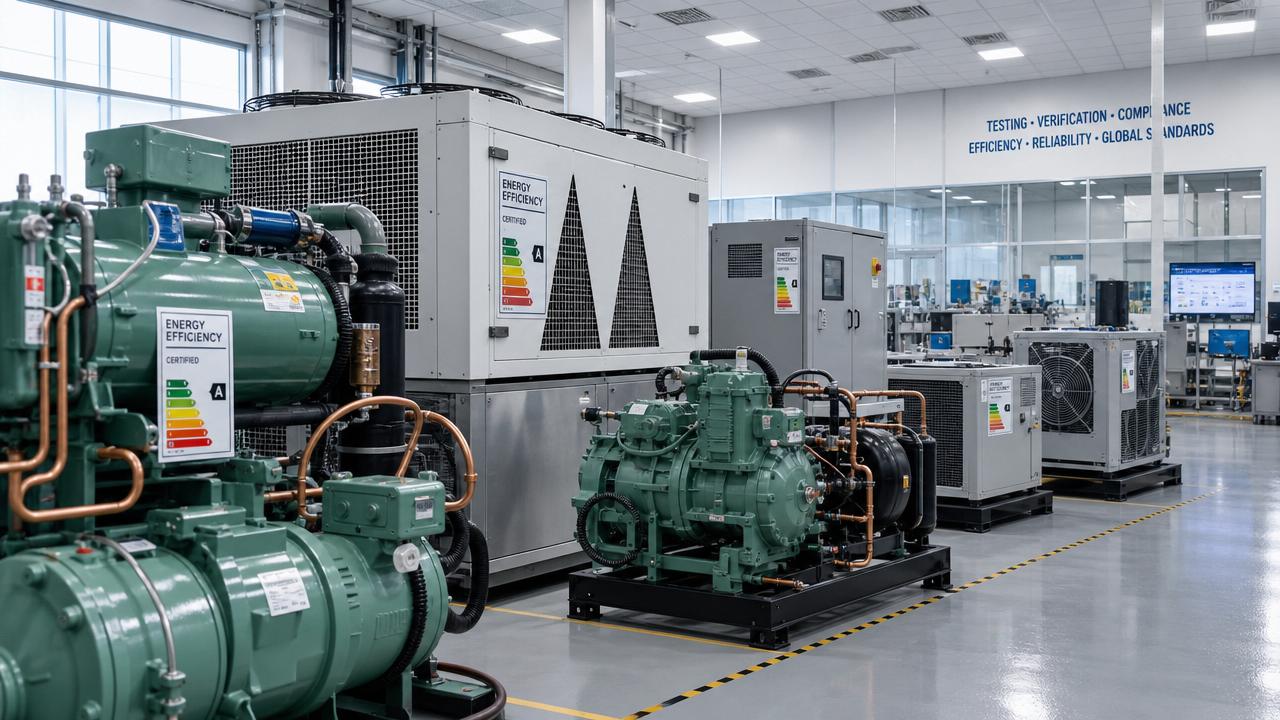
On June 10, 2026, Vietnam’s Ministry of Industry and Trade (MOIT) signed Circular No. 28/2026/TT-BCT, introducing a new energy labeling requirement for imported industrial refrigeration compressors, chillers, and condensing units from September 1, 2026. For companies trading into Vietnam, manufacturers supplying this market, and compliance teams managing product certification, the development deserves close attention because it links Vietnam’s minimum energy performance threshold directly to a standard equivalent to China’s GB 18613-2025 Grade 1 level while also adding a stricter local testing point for R290 leak rates.
What the new circular confirms
According to the information provided, MOIT signed Circular No. 28/2026/TT-BCT on June 10, 2026. The rule requires all imported industrial refrigeration compressors, chillers, and condensing units to carry a Vietnam energy efficiency label starting on September 1, 2026.
The same information states that the covered products must also meet minimum COP thresholds equivalent to China’s GB 18613-2025 Grade 1 energy efficiency level. One example provided is a minimum COP of 3.8 for screw units under the -10°C operating condition.
It is also confirmed that this is the first time the Vietnam measure has taken a Chinese energy efficiency standard as a direct benchmark. At the same time, Vietnam testing bodies are noted as applying an additional stricter clause for R290 leak rate testing.
Where the pressure points may emerge across the supply chain
Exporters now face a narrower compliance window
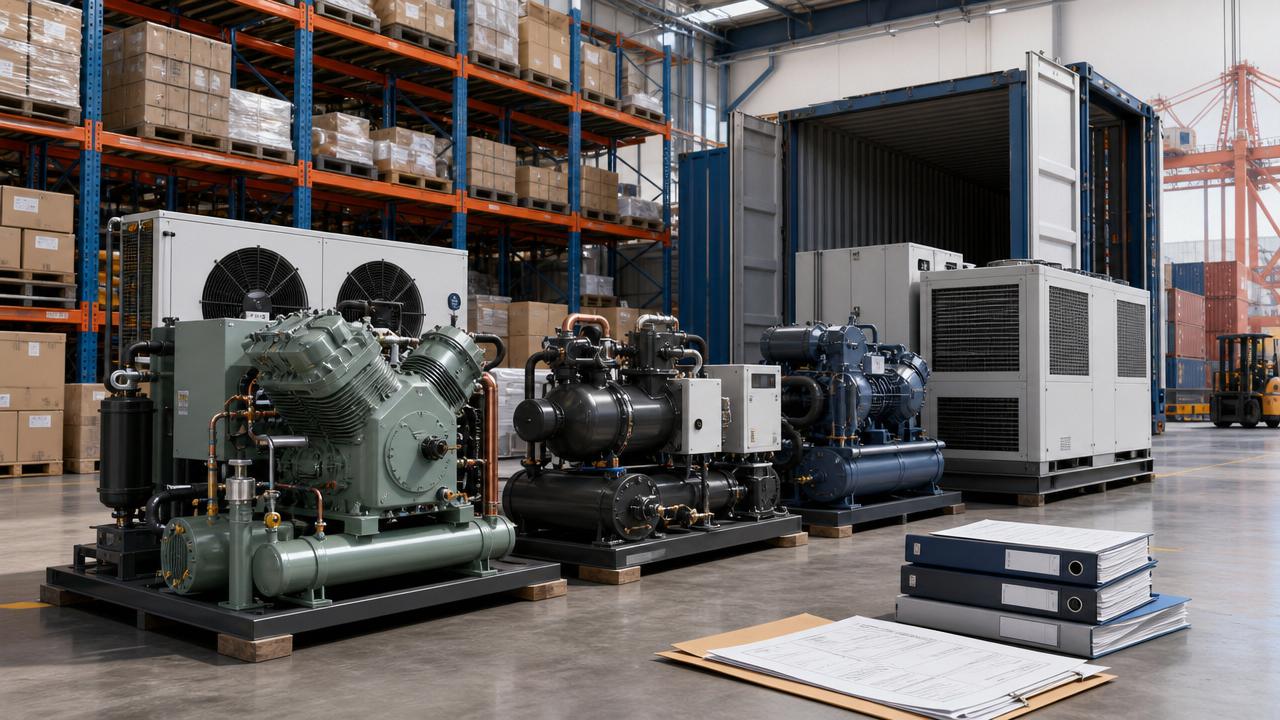
From an industry perspective, exporters of industrial refrigeration equipment into Vietnam are the first group likely to feel the impact. The reason is straightforward: the requirement is not limited to labeling, but also ties market access to a defined minimum COP level. In practical terms, the affected business links are product selection, compliance document preparation, testing coordination, and shipment scheduling for equipment intended for Vietnam after September 1, 2026.
Manufacturers need to connect design claims with test readiness
Analysis shows that equipment manufacturers supplying compressors, chillers, and condensing units may need to pay closer attention to whether their existing efficiency claims line up cleanly with the benchmark equivalent to GB 18613-2025 Grade 1. What deserves closer attention is that lower localization certification cost does not remove the need to prepare for Vietnam-side testing expectations, especially where R290-related verification is involved.
Distributors and project channels may need earlier model screening
For channel partners and project-based equipment suppliers, the likely impact is concentrated in model confirmation, quotation validity, and delivery planning. If a product family intended for Vietnam does not align with the required label or the minimum COP threshold, the risk is not only regulatory but also commercial, because model substitution and delivery coordination may become more difficult close to the implementation date.
Testing and supply-chain service providers gain a larger execution role
Observably, service providers handling testing, certification support, customs documentation, and cross-border delivery may become more central in execution. Their work may be affected because this policy combines a labeling requirement with a performance threshold and an additional R290 leak-rate testing concern, making timeline control and document consistency more important for market entry.
What companies should review now
Check whether Vietnam-bound models match the applicable threshold
Companies with Vietnam-focused product lines should first sort their covered models and confirm which imported compressors, chillers, and condensing units fall within the scope described in the circular. The immediate practical issue is whether those models can be presented against a benchmark equivalent to GB 18613-2025 Grade 1, including the COP requirement cited in the provided information.
Separate easier benchmark alignment from local test execution risk
Analysis shows that the direct benchmarking to a Chinese standard may reduce localization certification cost for Chinese exporters, but the policy signal and the actual execution burden are not identical. What deserves closer attention is the Vietnam-side stricter clause on R290 leak rate testing, because that may become the point where otherwise qualified products face added review complexity.
Prepare documents and delivery plans around the September 1 date
For sales, compliance, and supply-chain teams, the implementation date matters operationally. Orders, declarations, labeling arrangements, and shipment timing for Vietnam-bound goods may need to be checked against the September 1, 2026 enforcement point so that product documentation, labeling status, and testing records remain consistent.
Keep customer and supplier communication tightly scoped to confirmed facts
Because the rule combines confirmed obligations with areas that still require ongoing verification, companies should keep external communication disciplined. Supplier qualification, testing coordination, and customer notifications should distinguish clearly between what is already confirmed in the circular and what still needs follow-up confirmation, particularly around local testing interpretation.
Why this looks like more than a simple labeling update
Observably, this development is not only about adding a Vietnam energy label to imported equipment. It also signals a more specific alignment path by using a standard equivalent to China’s GB 18613-2025 Grade 1 level as the direct benchmark. That makes the measure relevant not just for regulatory teams, but for product planning and cross-border commercial decisions as well.
Analysis shows that this is better understood as both an immediate compliance change and a longer-term policy signal. The immediate change is clear because the effective date and covered products are already specified. The longer-term signal lies in the choice of benchmark, which may influence how suppliers evaluate product readiness for Vietnam going forward. At the same time, the stricter R290 leak-rate testing point means the market still has a practical detail that deserves continued observation rather than premature conclusions.
How the market may need to read this update
At this stage, it is more appropriate to understand the circular as a concrete near-term compliance requirement with broader strategic implications still unfolding. The rule already matters for import planning, model qualification, and certification workflows, but some of the real business impact will depend on how testing and implementation are handled in practice. A measured reading is therefore more useful than either underestimating the change or assuming outcomes that have not yet been confirmed.
Basis of this article
This article is based on the user-provided news title, event date, and event summary concerning Vietnam’s new industrial refrigeration equipment energy labeling circular signed on June 10, 2026.
For this type of update, commonly relevant source categories may include official government notices, corporate compliance announcements, industry association information, authoritative media coverage, and standards-related documents. The specific official source link was not provided in the input, so further verification remains necessary.
For ongoing observation, readers should continue tracking any subsequent official wording, implementation clarifications, and testing-related interpretations connected to the Vietnam energy label requirement and the stricter R290 leak-rate testing clause.
Ready when you are. Send us a message to get started.
Related News
- Vietnam to Enforce GB 18613-2025-Level RulesAuthor :Pneumatic Power Engineer

- EU F-Gas Enforcement Tightens Compressor Import TimingAuthor :Pneumatic Power Engineer

- Pneumatic Power Systems: Common Sizing Mistakes to AvoidAuthor :Pneumatic Power Engineer