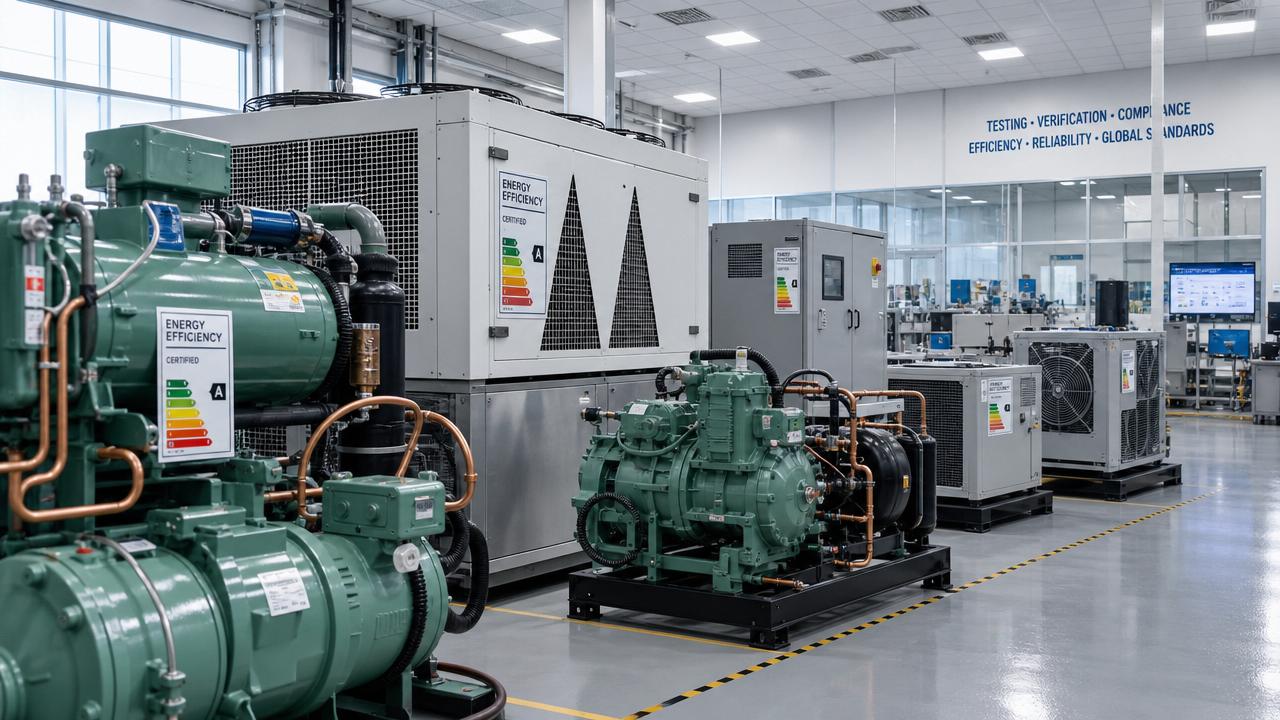
EU F-Gas Enforcement Tightens Compressor Import Timing




From July 1, 2026, the revised EU F-Gas rules move into mandatory enforcement for imported industrial refrigeration compressors, turning low-GWP refrigerant adaptation and documentation into a direct customs clearance issue rather than a technical preference. For exporters, buyers, certification-related service providers, and delivery teams linked to Piston Units, Screw Compressors, and Industrial Chillers, this matters because compliance timing may now affect whether shipments can enter the EU on schedule.
What the new import requirement confirms
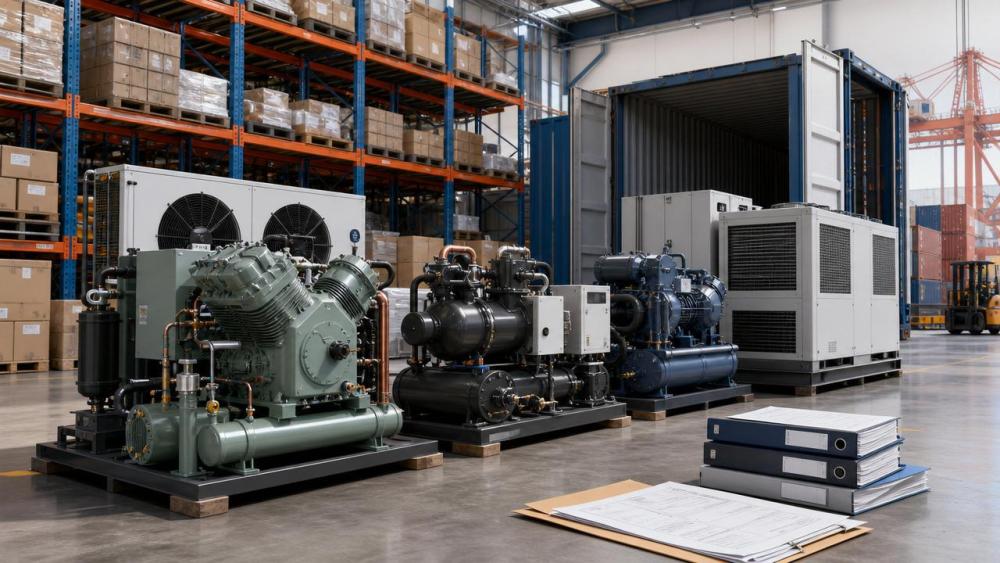
According to a June 12 notice on the European Commission website, the revised F-Gas regulation enters the compulsory execution stage on July 1, 2026. From that date, all industrial refrigeration compressors imported into the EU, including piston, scroll, and screw types, must complete a dedicated type certification for compatibility with low-GWP refrigerants such as R290 and R744 and must also submit a full life-cycle GWP declaration. Products that do not obtain the required certification will not be able to clear customs. The notice directly affects the compliance and delivery rhythm of Chinese exporters of Piston Units, Screw Compressors, and Industrial Chillers.
Where the pressure is likely to appear first
Export delivery is now tied more closely to certification completion
From an industry perspective, exporters are likely to feel the impact first because shipment readiness is no longer determined only by manufacturing completion or commercial documentation. The new requirement places dedicated type certification and life-cycle GWP declaration into the pre-shipment compliance chain, which means delivery planning, customs preparation, and handover timing may all depend on whether the required files are complete and accepted.
Procurement teams may need to reassess supplier readiness
For procurement-side participants, the practical issue is not only product selection but also whether suppliers can support the added compliance path for R290 and R744 adaptation. What deserves closer attention is the risk that purchasing schedules, project ordering windows, and receiving timelines may be affected if technical files or certification status are still pending when goods are ready to move.
Certification and testing support functions may become a bottleneck
Analysis shows that certification-related service providers and internal compliance teams may face more coordination pressure because the rule specifically links import eligibility to a dedicated certification outcome and a documented GWP statement. Even without additional implementation details in the current input, the rule change indicates that document preparation, technical review, and product-to-file consistency will become more sensitive points in export execution.
Channel and after-sales participants may need cleaner traceability
Distributors, project integrators, and after-sales teams may also need to pay closer attention to traceability, because products entering the EU market under a stricter compliance framework may require clearer alignment between model configuration, refrigerant adaptation, and retained technical records. Observably, this is less about routine marketing access and more about whether downstream parties can demonstrate that the imported unit matches the certified and declared compliance basis.
What companies should watch in current operations
Review whether targeted models are already inside the new compliance scope
Companies handling piston, scroll, screw compressor, or Industrial Chiller exports should first review which product lines are intended for EU delivery after July 1, 2026 and whether those models require dedicated certification for R290 or R744 adaptation under the announced enforcement approach. This is especially relevant where the same platform is sold across multiple refrigerant configurations.
Check whether document packages are complete before shipment release
What deserves closer attention is the completeness of technical and trade documentation before goods are dispatched. The current confirmed facts mention dedicated type certification and a life-cycle GWP declaration, so exporters and buyers should closely check whether these materials are ready, internally matched, and available at the point when customs-related submission becomes necessary.
Track how customers and tender documents begin to reflect the rule
Because the input does not provide detailed execution wording beyond the mandatory requirement, it is more appropriate to understand this stage as a firm enforcement signal while continuing to monitor how customers, importers, and project documents incorporate the new requirement. Companies may need to watch for changes in specification alignment, supplier qualification wording, or delivery conditions tied to certification status.
Reassess delivery promises and supply chain sequencing
Analysis shows that the extension of import certification timing may not only affect compliance review but also shipment sequencing, booking decisions, and delivery commitments. Businesses with EU-bound orders may therefore need to reassess lead-time assumptions and communication with customers where certification completion sits close to planned shipping dates.
Why this looks more like an enforcement signal than a distant policy topic
Observably, this development is better understood as an implementation-stage rule change rather than a general policy discussion. The reason is straightforward: the announced requirement is tied to customs clearance, which places compliance directly into the physical movement of goods. At the same time, analysis shows that the market still needs to watch how detailed certification practice, document review standards, and transaction-level execution are interpreted in real business scenarios, because those operational layers are not fully described in the current input.
How the market may best read this stage
At this point, the event is most appropriately read as a confirmed compliance threshold for EU-bound industrial refrigeration compressor trade from July 1, 2026, with immediate relevance for certification scheduling, document preparation, and delivery coordination. It should not yet be overstated into broader market conclusions, but it clearly signals that affected exporters and supply-chain participants need to treat certification readiness and GWP documentation as part of shipment feasibility, not as a later administrative step.
Basis of this article and what still needs verification
This article is generated from the user-provided news title, event date, and event summary. For developments of this type, commonly relevant source categories include official notices, regulator publications, customs or trade authority updates, industry association materials, standards-related documents, and reporting by authoritative media. The specific official source link was not provided in the input, so continued verification is still necessary. What still needs close observation includes detailed implementation wording, certification interpretation in practice, changes in tender and procurement documents, market feedback, and how affected companies execute the requirement in actual export delivery.
Ready when you are. Send us a message to get started.
Related News
- Vietnam to Enforce GB 18613-2025-Level RulesAuthor :Pneumatic Power Engineer

- EU F-Gas Enforcement Tightens Compressor Import TimingAuthor :Pneumatic Power Engineer

- Pneumatic Power Systems: Common Sizing Mistakes to AvoidAuthor :Pneumatic Power Engineer