Vacuum System Selection: Rotary Vane vs Liquid Ring for Daily Operations




Choosing a vacuum system for daily production is rarely a simple equipment decision. Rotary vane and liquid ring technologies can both support stable plant performance, yet they behave very differently under moisture, contamination, duty cycle, and utility cost pressure. In sectors tracked by GTC-Matrix, from food processing to pharmaceuticals and general manufacturing, that difference often shows up first in uptime, maintenance routines, and energy use rather than in catalog specifications alone.
Why this comparison matters on the plant floor
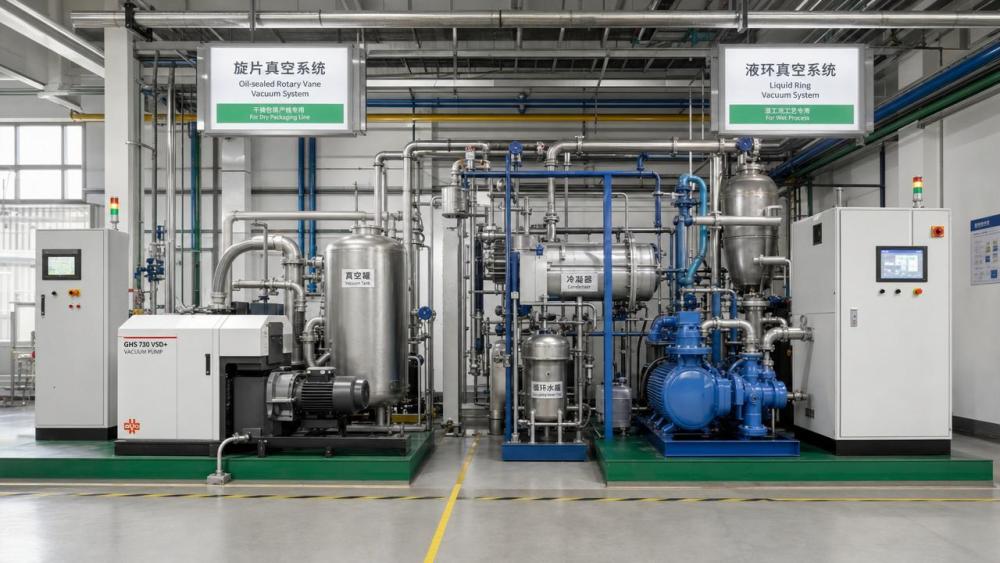
A vacuum system influences product quality, process stability, and operator workload every shift.
In packaging, it affects sealing speed and repeatability. In chemical handling, it shapes vapor tolerance and cleaning frequency. In heat treatment, drying, and filtration, it can decide whether a line runs smoothly or stops for service.
This is also why the topic has gained more attention across the broader industrial market. Energy costs remain volatile, water use is under closer review, and plants increasingly want equipment that supports both efficiency targets and reliable daily operation.
From the GTC-Matrix perspective, vacuum choices now sit inside a larger conversation about thermodynamic efficiency, resource circularity, and practical decarbonization. The best selection is not the most powerful unit on paper. It is the system that matches process reality with the lowest operational friction.
Two common paths to the same objective
Both technologies create negative pressure, but they reach that result through different internal mechanics.
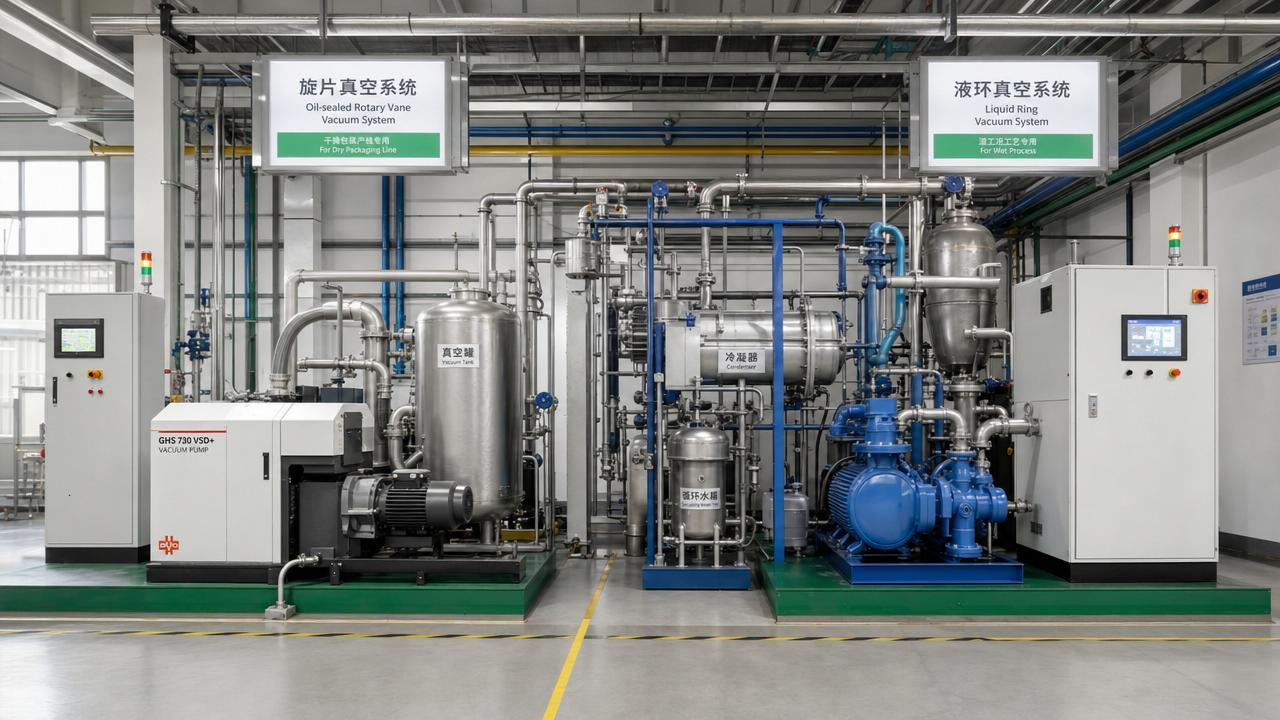
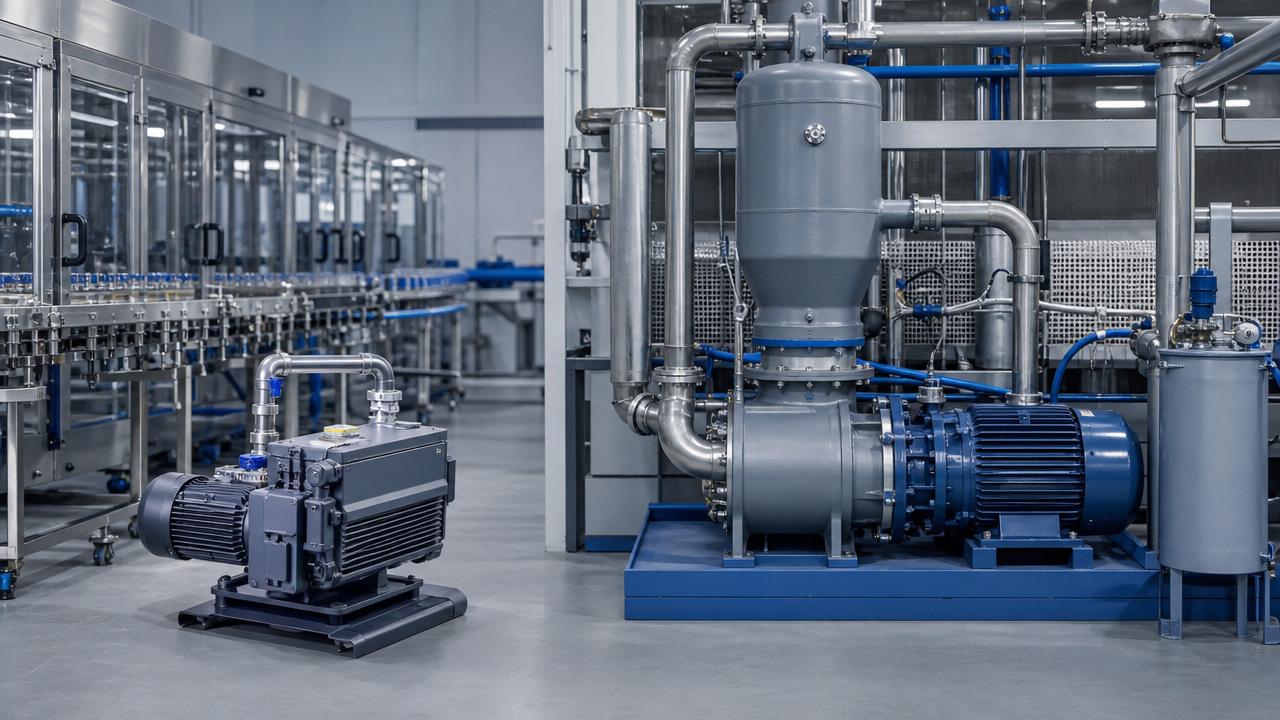
A rotary vane vacuum system uses rotating vanes inside a chamber to trap and compress gas. It is widely chosen for steady vacuum levels, compact installation, and good efficiency in clean, dry applications.
A liquid ring vacuum system uses a rotating impeller and a sealing liquid, often water, to form a ring that compresses gas. That structure makes it more tolerant of wet gases, condensable vapors, and process carryover.
Neither design is universally better. The useful question is where each design keeps its performance with the least disruption to routine production.
A practical comparison
Where rotary vane systems usually make sense
A rotary vane vacuum system is often preferred when vacuum demand is consistent and the gas stream is relatively clean.
Common examples include pick-and-place handling, packaging, CNC hold-down, laboratory support, and enclosed production steps where moisture ingress is limited.
The attraction is easy to understand. These units can deliver stable performance, fast response, and a smaller footprint. In facilities with limited space, that matters as much as pump efficiency.
There is also a lifecycle advantage when process conditions stay controlled. Lower utility demand and simpler integration can reduce daily operating cost.
The tradeoff appears when process gas carries vapor, particles, or aggressive contaminants. Without proper filtration, separation, or condensate control, maintenance intervals can shorten quickly.
What to watch in routine use
- Oil condition often signals internal stress before performance visibly declines.
- Filter loading can raise energy draw and reduce effective vacuum level.
- Frequent start-stop cycles may require controls review, not only pump review.
- Unexpected moisture often points to upstream process changes.
Where liquid ring technology earns its place
A liquid ring vacuum system tends to perform well in harsher environments. It is commonly used in chemical processes, pulp and paper, food evaporation, vacuum filtration, distillation, and any duty involving saturated gas.
Its biggest strength is resilience. When vapor condenses or droplets enter the pump, operation can remain stable where another vacuum system may struggle or require extensive protection.
This does not mean it is maintenance-free. Liquid management becomes the center of attention. Water quality, recirculation design, corrosion resistance, and disposal strategy all shape the actual cost of ownership.
That point matters more today because sustainability targets are no longer separate from operations. GTC-Matrix has highlighted the growing need to connect equipment decisions with energy balance, water usage, and environmental compliance.
In other words, a liquid ring solution may protect uptime in difficult service, but the full vacuum system must be judged with its seal liquid loop, heat load, and treatment requirements included.
The real selection issue is process fit
Daily operations rarely fail because a pump catalog was inaccurate. Problems usually come from a mismatch between process behavior and equipment assumptions.
A clean packaging line may overpay for a rugged liquid ring setup it does not need. A wet filtration line may suffer repeated rotary vane service because the vacuum system was sized without considering vapor load.
A useful selection review should look beyond ultimate vacuum and motor power.
Questions that improve the decision
- Is the gas stream dry, humid, condensable, or contaminated?
- Does the process need deep vacuum or only moderate vacuum?
- Is the duty continuous, intermittent, or highly variable?
- How costly is downtime compared with utility consumption?
- Is water available, recoverable, or restricted at the site?
- What upstream separators, coolers, or filters are already installed?
When these questions are answered early, the vacuum system choice becomes much clearer. The comparison shifts from brand preference to operating logic.
How current industry pressures change the choice
Selection criteria are evolving. Plants are no longer judging vacuum equipment only by purchase price and nominal capacity.
Three pressures are shaping decisions across industries covered by GTC-Matrix.
- Energy visibility is higher, so inefficient part-load operation stands out faster.
- Water stewardship matters more, especially for liquid-dependent systems.
- Process purity standards are tightening in food, pharma, and electronics.
That combination is why vacuum system selection now overlaps with broader thermal and compression strategy. A pump is no longer isolated hardware. It is part of a utility ecosystem that includes cooling, controls, filtration, and recovery options.
A practical way to compare daily operating value
For many sites, the best comparison method is a simple operating matrix rather than a long specification sheet.
This kind of review often prevents overengineering. It also helps explain why a vacuum system that performs well in one department may not be the right answer elsewhere in the same facility.
What to review before the next equipment decision
A sound next step is to document actual process conditions over a normal week, not just during ideal operation.
Track vacuum level, product load variation, moisture carryover, utility consumption, and maintenance events. That operating picture usually reveals whether the current vacuum system is misapplied, oversized, or simply unsupported by the right accessories.
It also helps to compare direct pump performance with system-level design. Sometimes the better answer is not switching from rotary vane to liquid ring, but adding separation, improving controls, or adjusting recovery and cooling arrangements.
For plants balancing reliability with energy and water accountability, the strongest decisions come from matching technology to routine conditions rather than occasional peak events. That approach keeps the vacuum system aligned with production reality, which is where daily value is actually created.
Ready when you are. Send us a message to get started.
Related News
- Vacuum System Selection: Rotary Vane vs Liquid Ring for Daily OperationsAuthor :Vacuum Process Fellow

- Vacuum Technology Solutions: Rotary Vane or Liquid Ring?Author :Vacuum Process Fellow

- 5 Ways to Improve Vacuum Process Efficiency Without Major DowntimeAuthor :Vacuum Process Fellow

- Practical Ways to Improve Vacuum Process Efficiency Without Major RetrofitsAuthor :Vacuum Process Fellow