Selecting Environmentally Friendly Refrigerants for Food and Cold Storage Sites




Selecting an environment friendly refrigerant for a food plant, distribution center, freezer warehouse, or mixed-temperature cold store is no longer a narrow compliance exercise. It is a decision that affects product integrity, worker safety, operating cost, serviceability, capital planning, and the site’s ability to adapt as refrigerant policy changes.
For technical evaluators, the pressure is real. A refrigerant with an attractive global warming potential (GWP) may impose a higher safety burden. A fluid that performs well in a low-temperature application may not be the most practical answer for a medium-temperature packing hall. A familiar retrofit route may reduce initial disruption but leave the facility exposed to future availability constraints or efficiency penalties.
The better question is not, “Which refrigerant is the greenest?” It is: Which refrigerant-system combination delivers dependable temperature control with an acceptable environmental, safety, economic, and regulatory risk profile over its useful life?
Begin with the refrigeration duty, not the refrigerant name
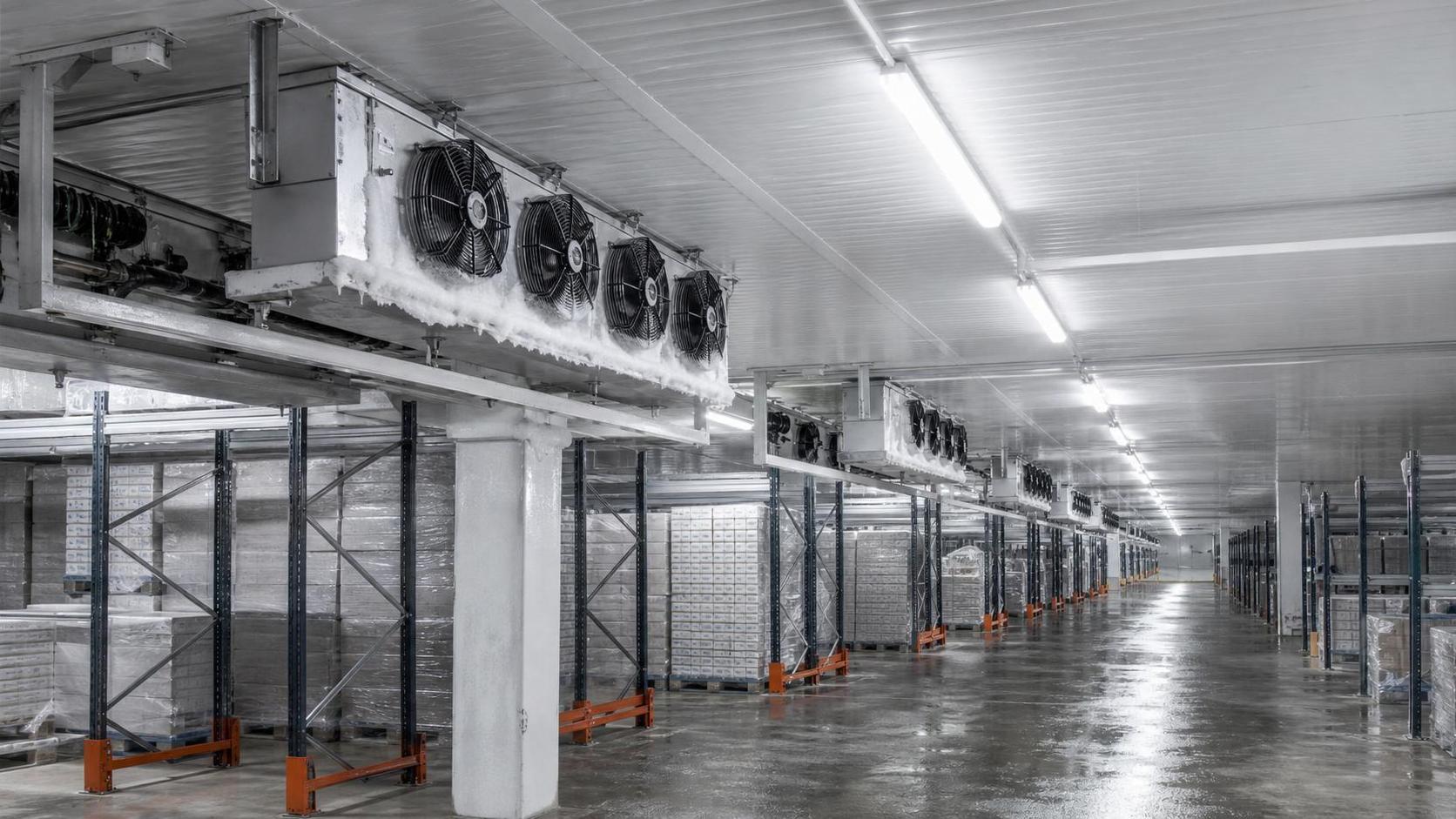
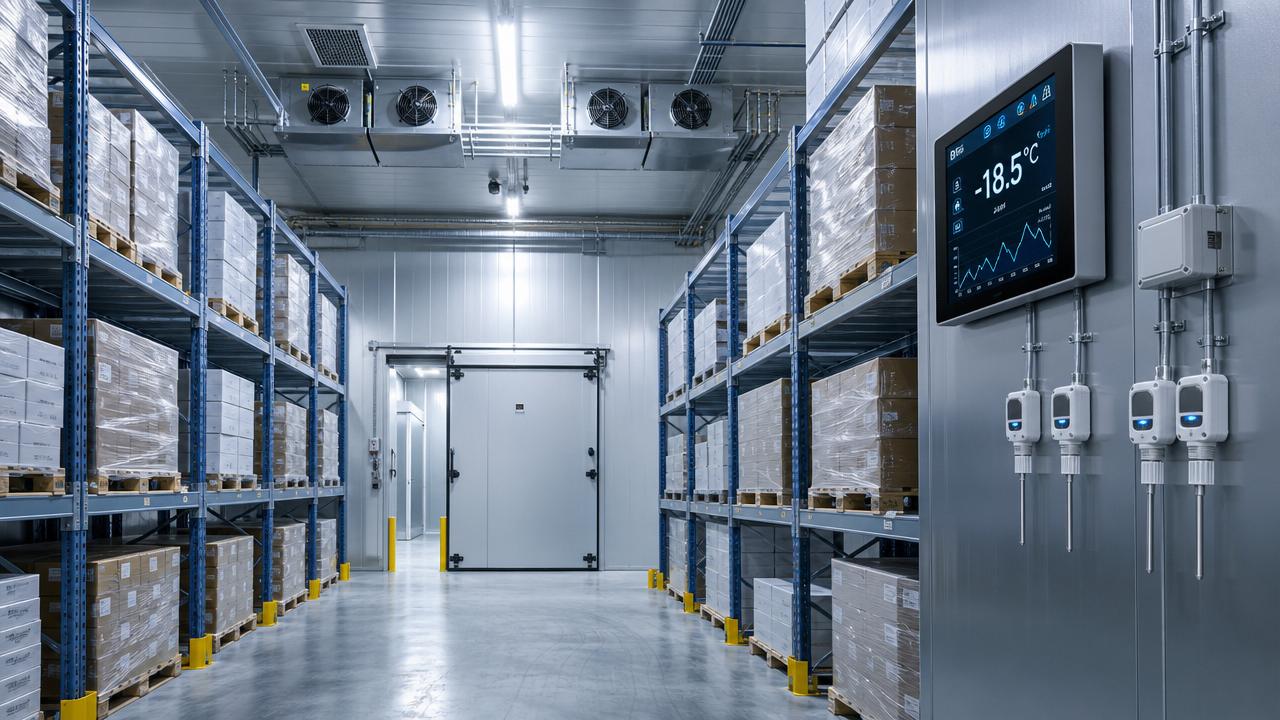
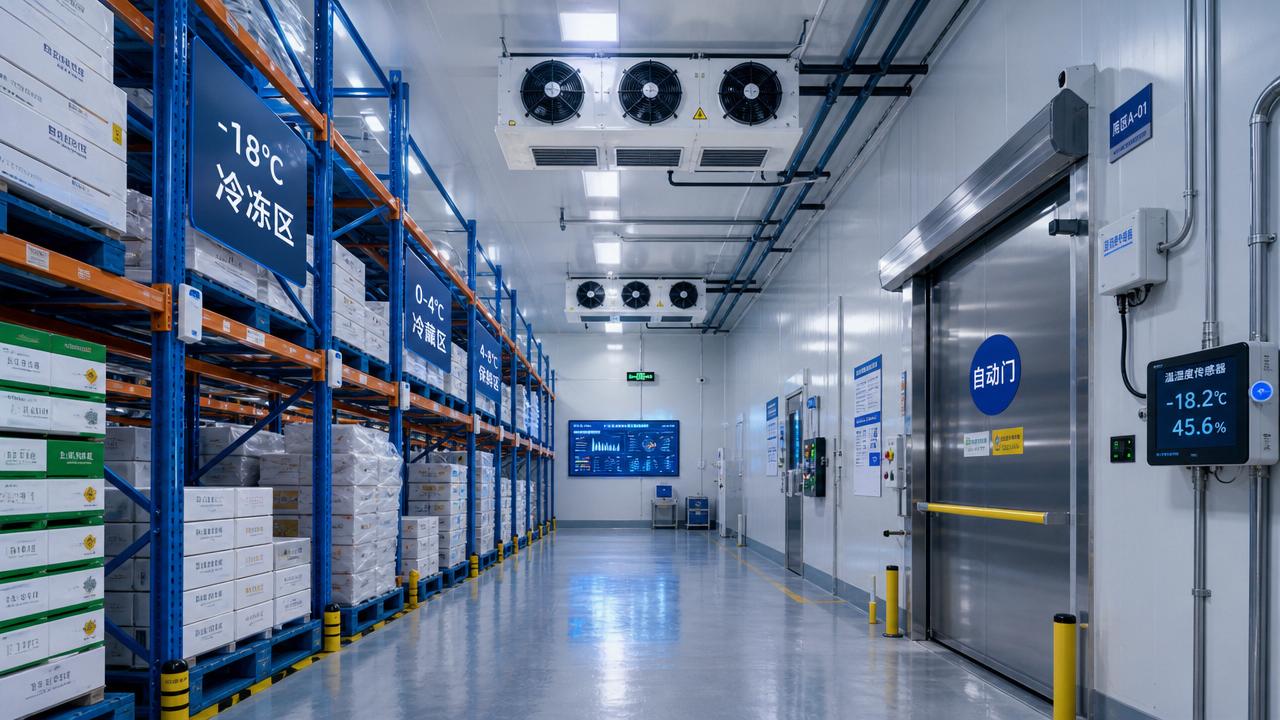
Food and cold storage sites are often discussed as though they are one category, but their refrigeration loads vary sharply. A chilled produce room, a blast freezer, a dairy processing line, a meat distribution center, and an ice cream warehouse can have very different evaporating temperatures, load profiles, humidity requirements, pull-down demands, and defrost patterns.
Before comparing candidates, define the actual duty envelope. This should include the required storage temperatures, supply-air tolerances, ambient design conditions, annual operating hours, peak load periods, and whether the system serves a single temperature level or a network of chilled and frozen zones. Process loads also matter: loading docks, door openings, washdown areas, product pull-down, and production schedule changes can create transient demands that a steady-state calculation will miss.
For instance, a refrigerant choice that looks efficient for a continuously loaded freezer may perform less favorably in a distribution facility where frequent door traffic drives moisture ingress and defrost demand. Likewise, a system optimized for overnight frozen storage may not respond quickly enough for a processing area with repeated production shifts.
A useful evaluation brief should therefore describe the site in operational terms:
- Required temperature ranges and product criticality;
- Evaporating and condensing temperature assumptions;
- Annual load profile rather than design load alone;
- New-build, expansion, replacement, or retrofit scope;
- Machine-room location, occupied spaces, and ventilation paths;
- Expected service capability at the site and in the local market;
- Planned asset life and likely future capacity changes.
That brief becomes the foundation for a defensible selection decision. Without it, refrigerant comparisons tend to become lists of GWP values detached from the equipment and people that must live with the outcome.
Environmental impact is broader than GWP
Low GWP is essential, especially as phasedown mechanisms, quota systems, and procurement expectations reshape the market. Yet GWP measures the warming effect of refrigerant released to the atmosphere; it does not measure the full environmental performance of a refrigeration installation.
For food refrigeration, indirect emissions from electricity consumption can be as important as direct emissions from leakage. A low-GWP fluid used in a poorly designed, badly controlled, or inefficient system may deliver a weaker lifecycle outcome than expected. Condensing pressure management, compressor part-load performance, heat exchanger design, suction pressure control, defrost strategy, fan energy, heat recovery opportunities, and leakage management all influence total impact.
Technical teams should assess both sides of the equation:
This lifecycle perspective is particularly important when comparing natural refrigerants with lower-GWP fluorinated alternatives. There is no universal winner independent of site conditions. The right answer emerges from the application, architecture, safety strategy, and local regulatory environment.
Match refrigerant families to the site’s risk tolerance
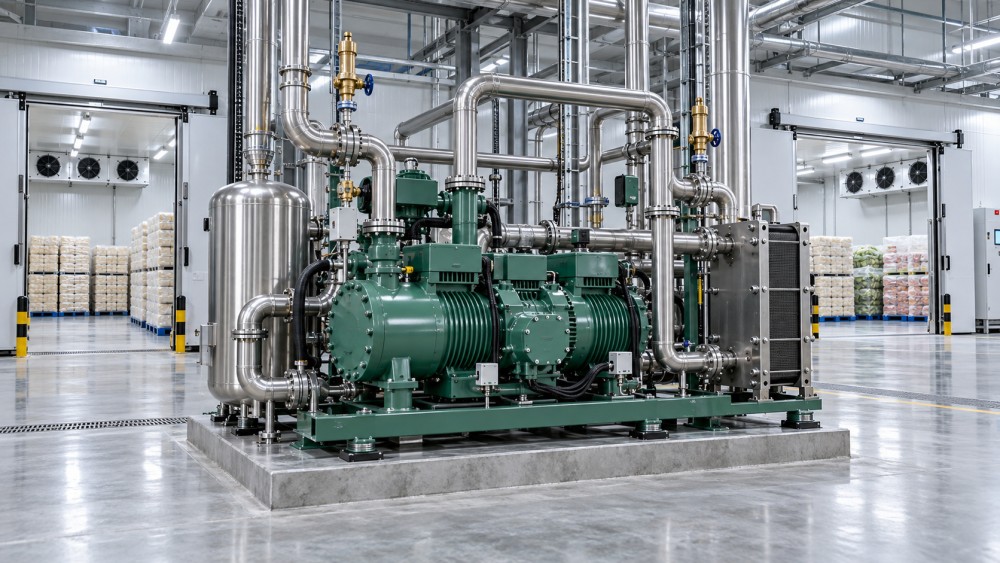
Ammonia, carbon dioxide, hydrocarbons, and lower-GWP HFO or HFO-blend refrigerants are all part of today’s decision landscape. Each brings a different balance of thermodynamic characteristics and operational constraints.
Ammonia: strong industrial performance, higher responsibility
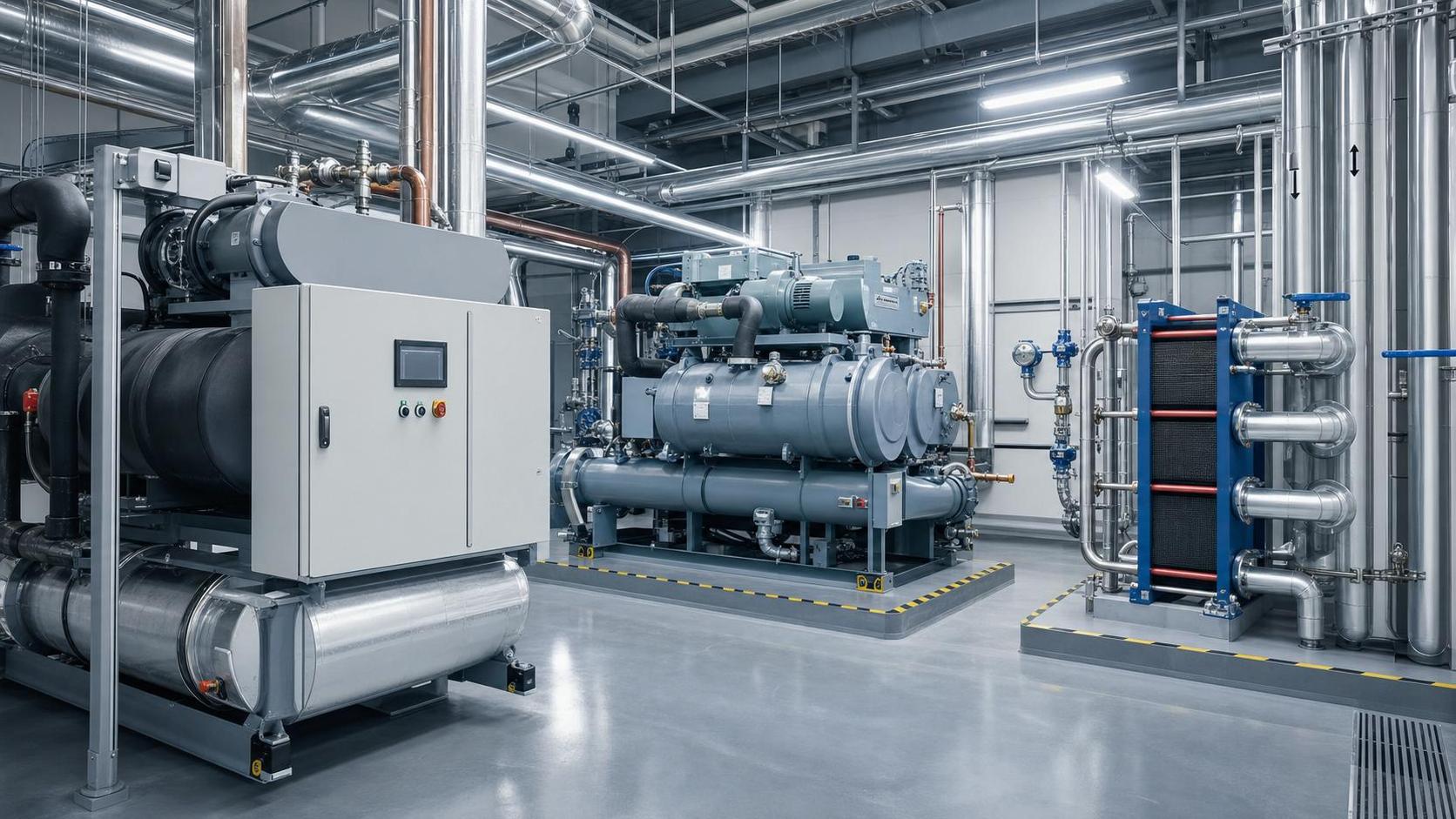
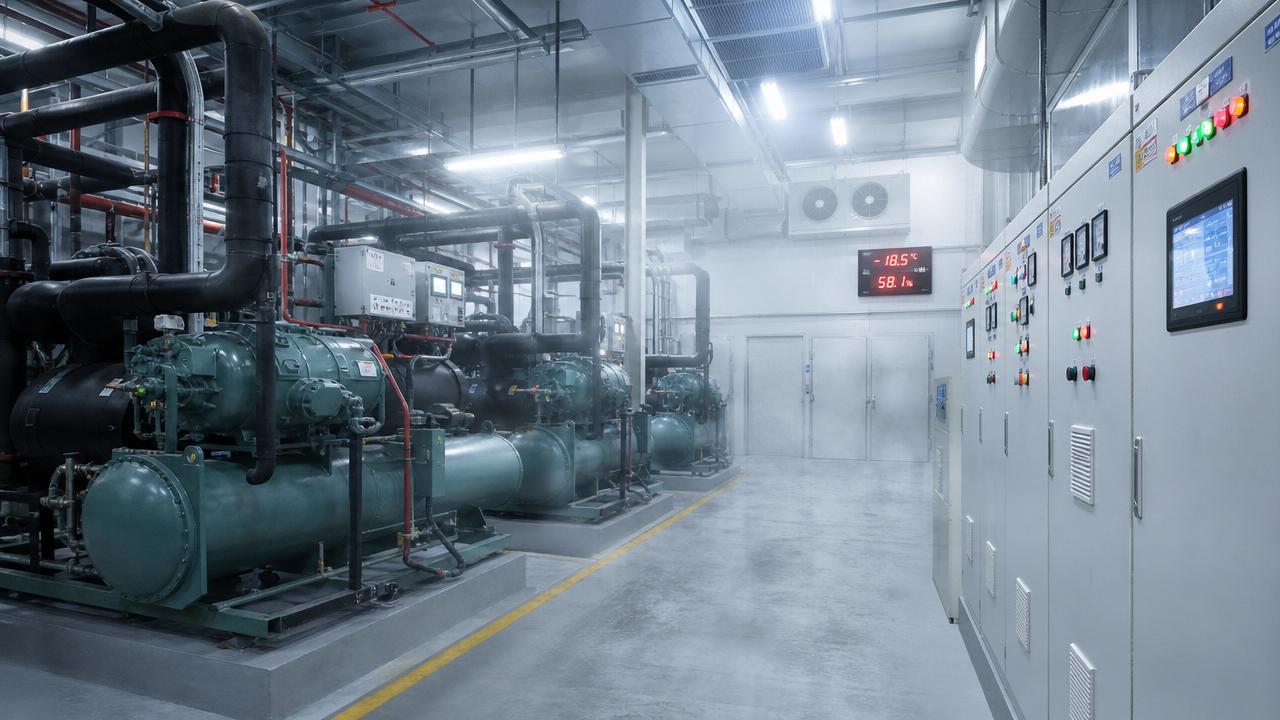
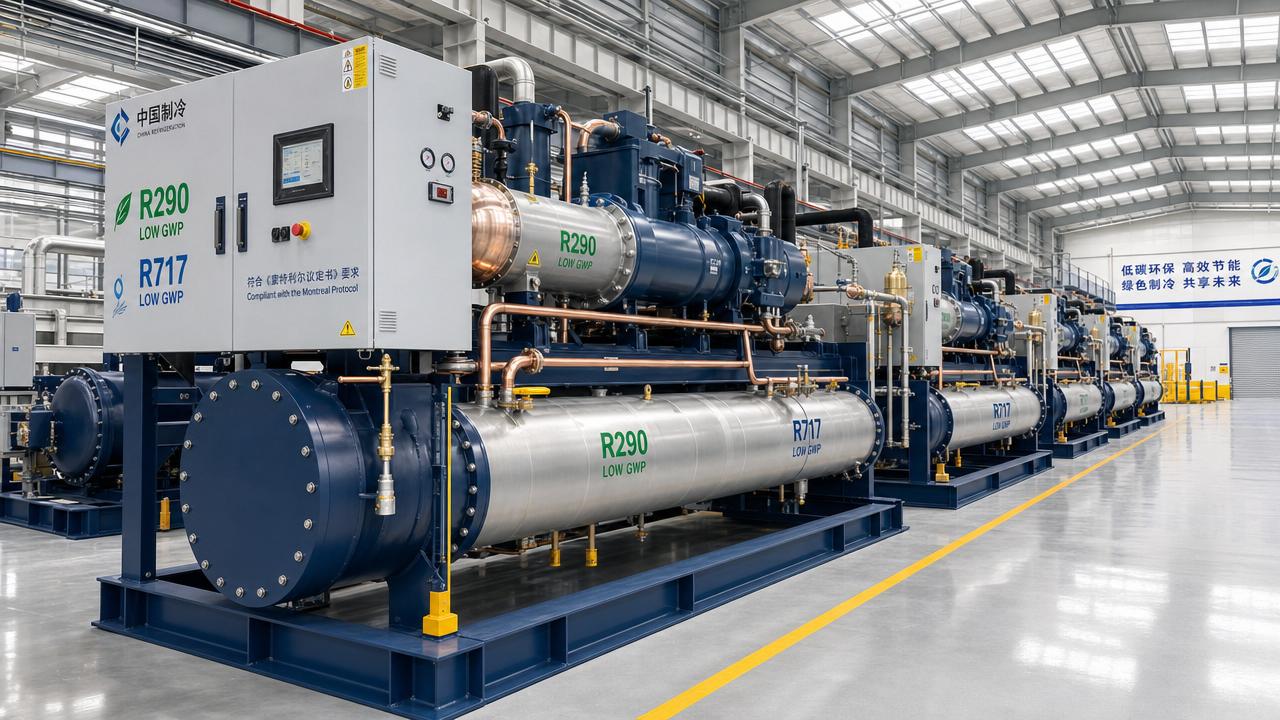
Ammonia (R-717) remains a major choice for industrial refrigeration because of its favorable thermodynamic properties and zero GWP. It is especially established in larger facilities where skilled operators, dedicated machine rooms, and formal safety management systems are available. Its high efficiency potential can be compelling for large freezer and cold-storage applications.
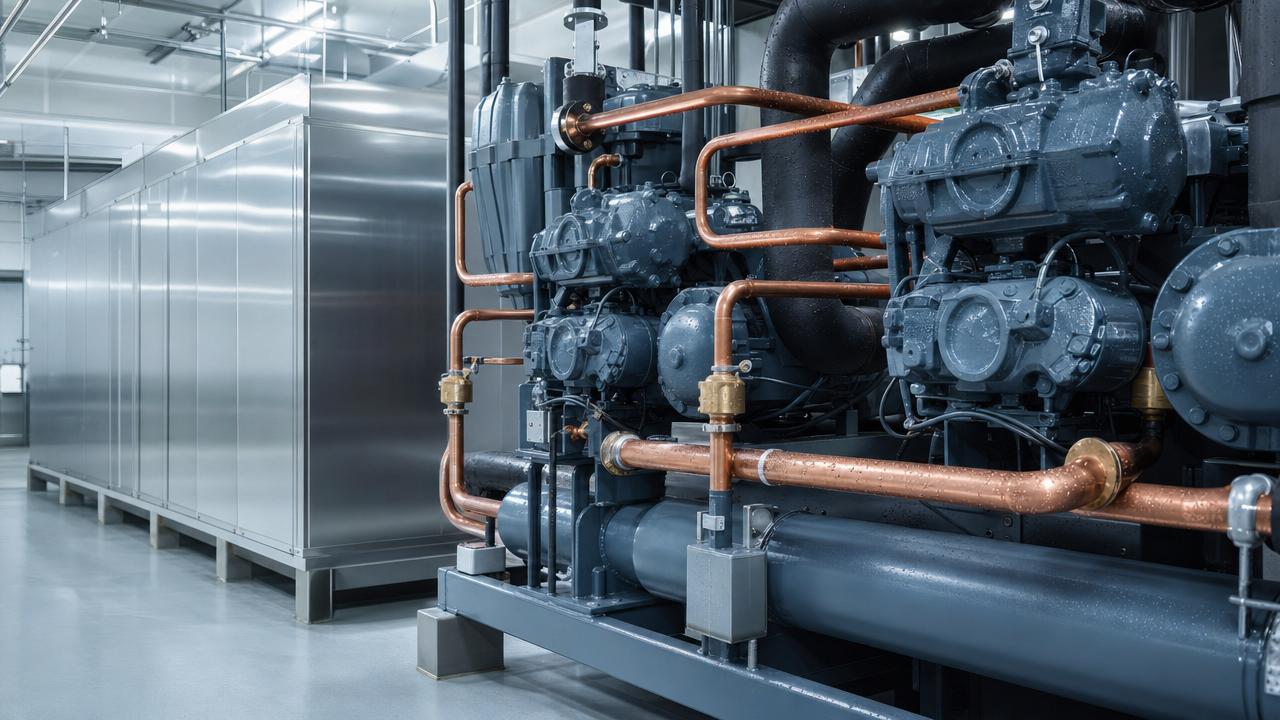
However, ammonia is toxic and mildly flammable. The selection cannot be separated from machinery-room design, detector placement, ventilation, emergency procedures, training, maintenance discipline, and local code requirements. Reducing the ammonia charge through packaged systems, indirect loops, or low-charge designs can change the risk profile, but it does not eliminate the need for robust engineering and governance.
Carbon dioxide: a versatile low-GWP option with design sensitivity
Carbon dioxide (R-744) has a GWP of 1 and is non-flammable, making it attractive where environmental performance and occupied-space safety are central considerations. It is widely used in food retail and increasingly considered for cold storage, processing, and distribution applications. CO2 can serve as a pumped secondary fluid, in cascade arrangements, or within transcritical systems depending on the site.
Its challenge is operating pressure. CO2 systems require components, controls, installation practices, and technicians capable of managing significantly higher pressures than many conventional refrigeration systems. In warmer climates, transcritical operation needs careful optimization through gas coolers, parallel compression, ejectors, adiabatic support, or other measures where appropriate. A simplistic claim that CO2 is always more efficient can be misleading; climate, load profile, heat rejection design, and control quality all matter.
Hydrocarbons: efficient at small charge, limited by flammability management
Hydrocarbons such as propane (R-290) and isobutane (R-600a) offer very low GWP and strong efficiency potential. They are increasingly relevant in self-contained cabinets, small packaged units, and carefully designed systems with limited charge sizes. For specific food applications, they can be an excellent environmental solution.
Because they are flammable, hydrocarbon use is tightly connected to charge limits, equipment certification, ignition-source control, ventilation, zoning, and local standards. For a large central cold store, the decision is more complex than for a stand-alone unit. Evaluators should be cautious about transferring conclusions from small commercial equipment directly to industrial-scale applications.
Lower-GWP fluorinated options: practical transition routes, but verify the horizon
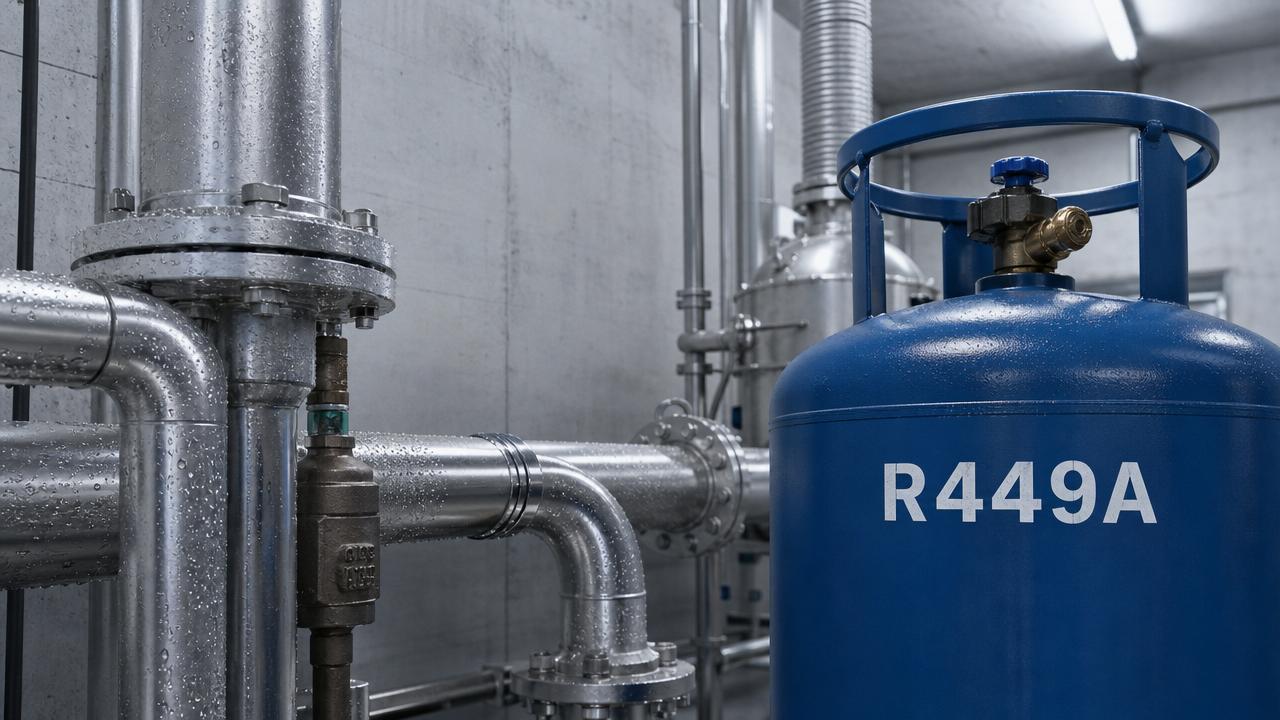
HFOs and blends can offer lower GWP than legacy HFC refrigerants and may provide a practical route for certain retrofits or new systems. They may also preserve familiar system architectures, though this depends on the candidate fluid and equipment design. Many are classified as mildly flammable, requiring an assessment of charge size, occupancy, room volume, ventilation, and applicable safety standards.
These options should be assessed with particular care for long-term policy exposure. “Lower GWP” does not automatically mean unrestricted availability in every region or market segment. Check current and anticipated regulations, supplier support, reclaimed refrigerant availability, and the possibility that a future policy revision could change the economics of the installation.
Safety classification should shape system architecture
A refrigerant’s ASHRAE safety classification is not merely a label for a specification sheet. It influences where equipment can be located, how much refrigerant can be present, what alarms and ventilation are required, and how the facility responds when a fault occurs at 2 a.m. during a holiday shipment period.
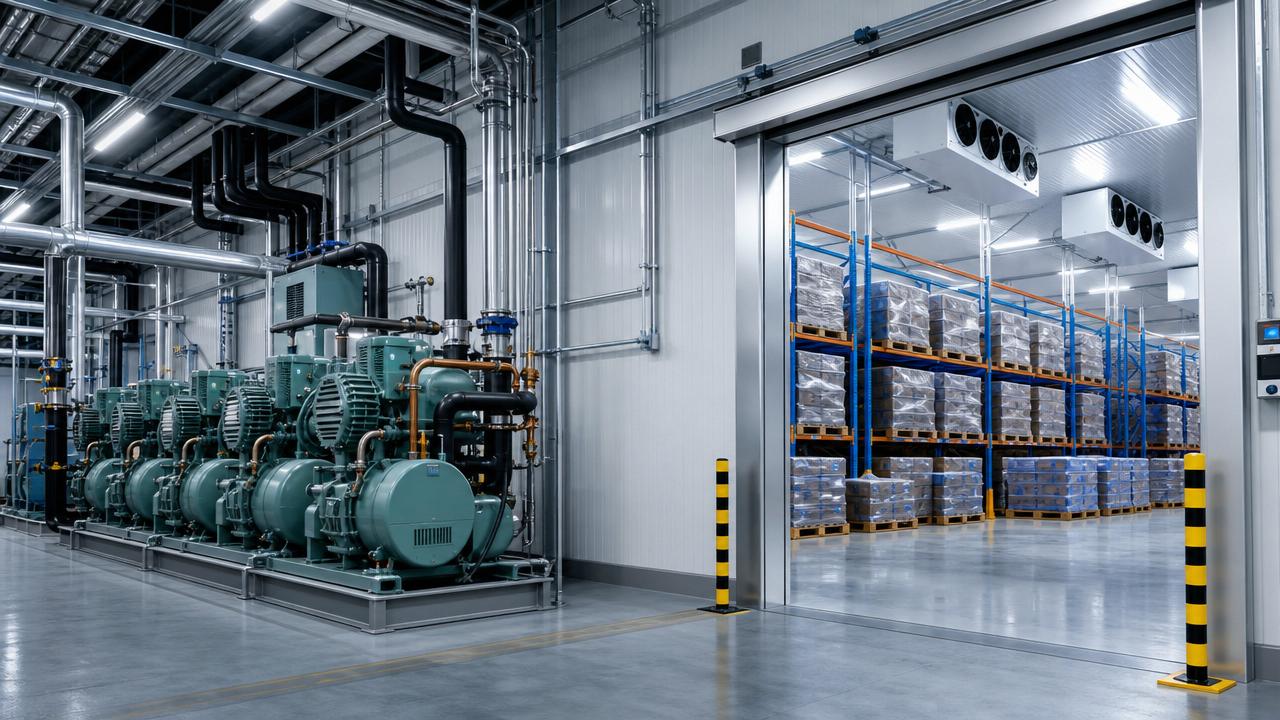
For food sites, the practical questions are often spatial. Is the machinery room separated from production? Could a leak migrate toward occupied areas? Are there enclosed evaporator zones? Does the site have a trained emergency response team, or is it reliant on third-party contractors? Can access be controlled during maintenance? These answers may favor a centralized plant, distributed packaged units, an indirect system, or a cascade configuration.
Do not treat safety measures as an add-on after refrigerant selection. Detector coverage, ventilation capacity, pressure relief routing, electrical classification, shutdown logic, and emergency drills should be evaluated during concept design. A technically attractive refrigerant becomes a poor choice if the site cannot operate it safely and consistently.
Retrofit decisions deserve more skepticism than a compatibility chart
When an existing HFC-based system is approaching replacement or faces refrigerant cost pressure, a retrofit may appear to be the least disruptive solution. Sometimes it is. But “drop-in” language can obscure important engineering questions.
Changes in refrigerant mass flow, volumetric capacity, discharge temperature, pressure ratio, oil behavior, expansion valve performance, and compressor operating envelope can alter real-world performance. Glide in blended refrigerants may affect flooded evaporators, temperature-sensitive duties, charging practice, and leak composition management. Existing heat exchangers, pressure relief devices, controls, piping, seals, and safety systems may also need review.
A credible retrofit assessment should include a condition survey of the current asset, predicted capacity at actual design conditions, compressor-map verification, oil and material compatibility confirmation, and a plan for commissioning and post-conversion monitoring. If the existing plant is nearing the end of its mechanical life, investing heavily in a stopgap refrigerant conversion can delay rather than solve the strategic decision.
Use total cost of ownership, not refrigerant price, as the financial lens
The refrigerant itself is only one line in the economic model. Food facilities should compare options over a realistic planning horizon, including installation cost, electrical demand, expected maintenance, inspection obligations, training, controls upgrades, downtime risk, refrigerant replenishment, and end-of-life recovery.
Energy modeling should not be limited to a single full-load point. A cold store may spend much of the year at part load, while ambient conditions and warehouse activity change daily. Evaluate annualized energy use and consider how each option behaves during peak summer conditions, low-load winter operation, defrost cycles, and partial equipment outages.
Resilience also has a value. A system that protects product temperature during a compressor failure, permits staged maintenance, or reduces dependence on a constrained refrigerant supply may justify a higher initial investment. For frozen food, pharmaceuticals with cold-chain requirements, and high-value perishables, avoiding a temperature excursion can outweigh modest differences in first cost.
A practical selection sequence for technical evaluators
Rather than scoring refrigerants in isolation, create a weighted decision matrix for complete system concepts. Include environmental performance, annual energy use, safety burden, regulatory fit, service readiness, capital cost, lifecycle cost, product-risk exposure, and expansion flexibility. Assign weights that reflect the actual priorities of the site rather than generic industry assumptions.
Then challenge the leading options through a design review. Ask what happens during a power interruption, high ambient event, leak alarm, defrost failure, or future warehouse expansion. Confirm that the local service ecosystem can support the chosen equipment and refrigerant. Review applicable national, regional, and municipal rules early, as code interpretations can materially affect layout and cost.
It is also wise to distinguish between a refrigerant strategy and a decarbonization strategy. Better insulation, door management, floating head pressure, variable-speed drives, optimized evaporator fans, heat reclaim, leak prevention, and intelligent controls may produce significant gains regardless of the selected fluid. The refrigerant should support these measures, not distract from them.
Making the decision durable
An environment friendly refrigerant choice for food and cold storage must withstand more than today’s compliance review. It should make sense under changing energy prices, tighter emissions expectations, evolving safety standards, and the operational reality of keeping food at the right temperature every hour of the year.
The strongest decisions are transparent about trade-offs. Ammonia may offer compelling efficiency for a properly managed industrial site. CO2 may align well with low-GWP goals where high-pressure expertise and climate-aware design are in place. Hydrocarbons may suit smaller, charge-limited equipment. Lower-GWP fluorinated refrigerants may offer useful transition paths where compatibility and implementation risk dominate. None should be selected by reputation alone.
At GTC-Matrix, the refrigeration transition is best viewed through the combined lens of thermodynamic performance, compression technology, policy movement, and operating economics. For evaluators, that integrated view turns a difficult refrigerant decision into a structured investment case—one that protects food quality today while leaving the facility better prepared for the next phase of the cold-chain transition.
Related News
- Selecting Environmentally Friendly Refrigerants for Food and Cold Storage SitesAuthor :Cryogenic Systems Expert

- How pharmaceutical temperature control monitoring prevents cold-chain excursionsAuthor :Cryogenic Systems Expert

- How to Size a Blast Freezer for Industrial Refrigeration Capacity and Pull-Down TimeAuthor :Cryogenic Systems Expert

- MPA Opens Fast-Track Cold Chain Inspections in SingaporeAuthor :Cryogenic Systems Expert

- GCC Cold Storage Imports Face GCC-CLIMAT 2026 RuleAuthor :Cryogenic Systems Expert

- Industrial Refrigeration Equipment Evaporator Selection: Capacity, Frost, and Energy TradeoffsAuthor :Cryogenic Systems Expert

- Industrial Refrigeration Equipment: Cost Factors to CompareAuthor :Cryogenic Systems Expert

- Manzhouli Rail Hub Sets Weekly Reefer RecordAuthor :Cryogenic Systems Expert

- Manzhouli Rail Cold-Chain Volume Hits Weekly HighAuthor :Cryogenic Systems Expert

- High-Precision Temperature Control for Stable Cold StorageAuthor :Cryogenic Systems Expert
![]()
- High-Precision Temperature Control in Cold StorageAuthor :Cryogenic Systems Expert

- Japan's METI Mandates AI Energy Models for Cold StorageAuthor :Cryogenic Systems Expert
![]()
- Fruit Attraction Madrid 2026 Booths 91% Booked; Smart Cold Storage Now EU Entry GateAuthor :Cryogenic Systems Expert

- Fruit Attraction Madrid: 90% Booths Booked; Smart Cold Storage Now EU Entry GateAuthor :Cryogenic Systems Expert
![]()
- How Global Energy Costs Are Changing Cold Storage PlanningAuthor :Cryogenic Systems Expert

- High-Precision Temperature Control in Cold StorageAuthor :Cryogenic Systems Expert

- Hema's Discount Brand 'Chao He Suan NB' Expands to Southeast AsiaAuthor :Cryogenic Systems Expert

- State Council Approves Urban Renewal '15th Five-Year' Plan, Boosting Cold Storage Retrofit DemandAuthor :Cryogenic Systems Expert

- Colombia Upholds Anti-Dumping Duties on Chinese Acrylic SheetsAuthor :Cryogenic Systems Expert

- PSA Launches Express Lane for Industrial Thermal EquipmentAuthor :Cryogenic Systems Expert

- Smart Thermal Systems for Cold Storage: Control Gains That Cut Energy WasteAuthor :Cryogenic Systems Expert

- PSA Launches Express Lane for Temperature-Critical CargoAuthor :Cryogenic Systems Expert

- Pure Power Sources: What Matters Most for Cold Storage ReliabilityAuthor :Cryogenic Systems Expert

- Brazil Grants Unilateral Visa-Free Access to Chinese CitizensAuthor :Cryogenic Systems Expert

- India BIS Proposes Mandatory Low-GWP Verification for R449A in Cold StorageAuthor :Cryogenic Systems Expert

- US BIS Adds 3 Cold Storage Controller Makers to Entity ListAuthor :Cryogenic Systems Expert

- High-Precision Temperature Control in Cold Storage OperationsAuthor :Cryogenic Systems Expert

- India BIS Proposes Mandatory Low-GWP Verification for R449A in Cold StorageAuthor :Cryogenic Systems Expert

- US BIS Adds 3 Chinese Cold Storage Controller Makers to Entity ListAuthor :Cryogenic Systems Expert

- China Expands HCFCs Phase-Out Verification for Cold Storage ExportsAuthor :Cryogenic Systems Expert

- Smart Thermal Systems for Cold Storage: What Delivers PaybackAuthor :Cryogenic Systems Expert

- China Expands HCFCs Phase-Out Checks to 127 Chiller PlantsAuthor :Cryogenic Systems Expert

- Shanghai Port Reefer FEU Rates Surge Past $12,800 Amid Red Sea DiversionAuthor :Cryogenic Systems Expert

- Red Sea Crisis Pushes Shanghai-Rotterdam Reefer Freight to $12,520/FEUAuthor :Cryogenic Systems Expert
![]()
- What Intellectualization Means for Smarter Cold Storage OperationsAuthor :Cryogenic Systems Expert