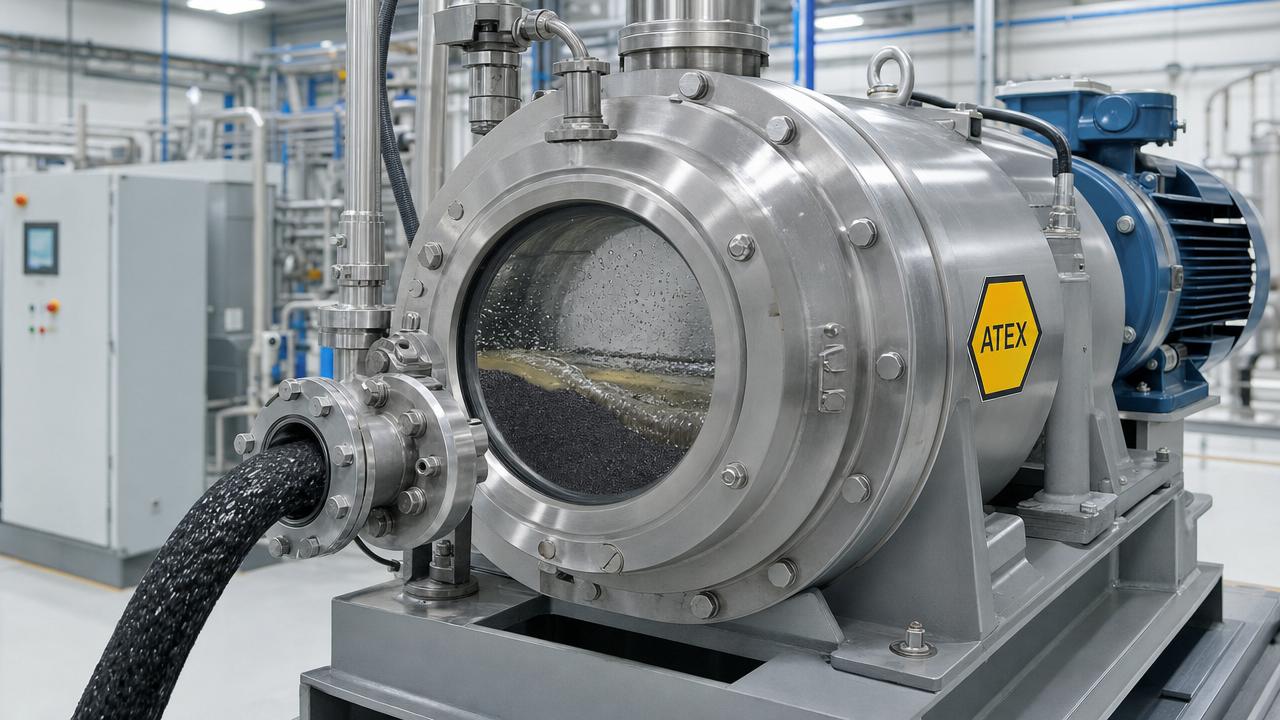
How does capacity affect the price of a centrifugal separator?




Higher-capacity centrifugal separators generally cost more because they require larger or more complex separation equipment, drives, structures, and sometimes auxiliary systems. The increase is not necessarily proportional to throughput: doubling a stated flow rate does not automatically double the purchase price, and two units with the same nominal capacity can carry very different quotations.
The purchasing difficulty is that capacity is not a standalone specification. A separator quoted for a high flow of easily separated material may be unsuitable for a lower flow containing fine solids or a difficult liquid mixture. To compare centrifugal separators price on a useful basis, establish the required throughput at the actual feed conditions and separation quality, then compare complete offers and operating costs.
Capacity is a duty, not just a number on a quotation
Suppliers may express capacity as liquid volume per hour, gas volume per hour, or solids mass per hour, depending on the equipment and application. That figure is meaningful only alongside the feed properties and the required outlet condition. A flow rating taken from a brochure may have been established under conditions that differ substantially from those at the installation site.
For a liquid-solid duty, particle size, solids concentration, density difference, and viscosity can all affect achievable throughput. Smaller particles, a smaller density difference, or a more viscous liquid can make separation harder and reduce the flow a given machine can handle at the required clarity. In gas-liquid service, pressure, temperature, droplet size, and allowable pressure drop are among the conditions that determine whether a stated gas capacity is relevant.
Start the request for quotation with the operating envelope rather than a single average flow. Identify normal and peak flow, minimum flow, expected variations in feed composition, operating hours, and the required quality of each outlet stream. Include the measurement basis: gas flow, for example, should be identified as actual or referenced volumetric flow, with the relevant pressure and temperature. A supplier can then state what capacity its offer is expected to deliver under those conditions.
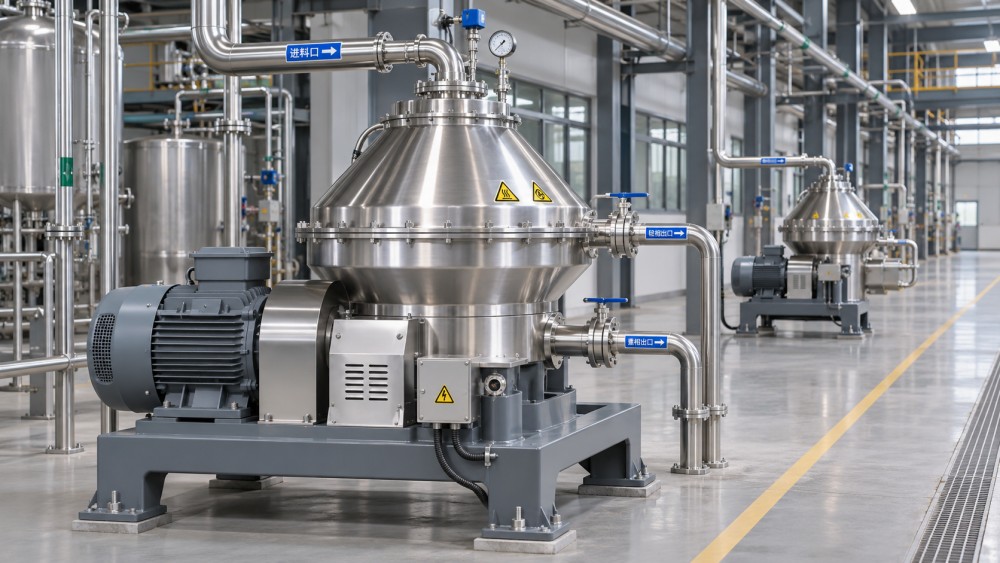
Why the price does not rise in a straight line
A larger duty can require a bigger rotating assembly, a more powerful drive, heavier supports, and components designed for the resulting mechanical loads. It may also call for larger inlet and outlet connections, more substantial foundations, or additional controls. These changes increase cost, but machine sizes are offered in discrete ranges rather than as an infinitely adjustable scale. A modest increase in required capacity may therefore move a purchase into a different model or configuration.
Some project costs do not increase at the same rate as rated throughput. Controls, engineering, delivery, and installation may have fixed elements, so a larger machine can sometimes have a lower purchase cost per unit of rated capacity. That apparent economy is useful only when the additional capacity can be used without compromising separation or creating excessive operating expense.
There are exceptions in both directions. A higher-capacity quotation may be relatively economical because it uses a standard configuration. A smaller unit may be expensive because its duty needs corrosion-resistant wetted parts, containment, specialized discharge arrangements, or demanding outlet quality. Capacity is one price driver, not a reliable substitute for a complete specification.
Compare like with like before calculating a unit cost
Divide the quoted equipment price by the capacity guaranteed or otherwise stated for the specified duty, not simply by the largest flow shown in a catalog. Label the result clearly: equipment price per unit of hourly capacity is a comparison of upfront cost, not the cost of processing material. Ask whether the rating applies continuously and whether it includes any allowance for expected feed variation.
Check the denominator as carefully as the price. One offer may state inlet feed flow while another states recovered liquid flow; a machine handling a dilute feed may process a different mass of solids from another machine at the same liquid flow. Normalize the offers to the same feed, outlet requirements, and operating basis before treating a lower ratio as a saving.
Translate production demand into a quotable capacity
Begin with the quantity that must be processed during the available operating window. Divide that quantity by the practical operating hours, allowing for planned cleaning, maintenance, changeovers, and other interruptions. The result is the average processing rate needed while the separator is running. It should then be checked against the highest sustained feed rate and any short peaks the surrounding process cannot buffer.
A buffer tank or other suitable upstream storage can sometimes separate peak production from separator feed, allowing a steadier flow and potentially a smaller machine. Storage also has a cost and may be unsuitable if material settles, changes properties, or cannot be held for the required period. Compare the installed cost of storage and feed controls with the cost of additional separator capacity; do not assume either arrangement is cheaper.
Capacity margin should address an identifiable uncertainty, such as variation in solids loading or a documented production increase. Ask suppliers to show the operating range of the proposed unit, not just its maximum. Oversizing without checking turndown can lead to unstable operation, inefficient use of auxiliaries, or separation performance outside the intended range, depending on the equipment design.
Where feed characteristics are uncertain, provide representative samples or operating data when available and ask what evidence supports the sizing. A trial may help establish performance, but its value depends on whether the sample, test conditions, and acceptance criteria represent the intended duty. Confirm who pays for testing and how the results will be used in the final quotation.
One larger separator or several smaller units?
Splitting the duty between parallel units can provide operating flexibility and make it possible to maintain one unit while another remains available. It can also increase the number of drives, controls, valves, connections, and maintenance items. The combined purchase price is therefore not necessarily lower than the price of one larger machine.
Define the availability requirement before requesting prices. Two units that each handle only part of peak flow are not equivalent to a duty-and-standby arrangement in which either unit can handle the full required load. Include shared pumps, pipework, controls, and utilities in the comparison: a shared component may still interrupt both trains.
Separate the machine price from the installed price
A quotation for a separator alone can look attractive until the exclusions are added. Request an itemized scope so that capacity-related costs are visible and competing offers can be reconciled. The relevant items depend on the separator type and duty, but the following distinctions often affect the comparison:
- Equipment package: Clarify whether the drive, starter or variable-speed drive, local controls, instruments, guards, and discharge equipment are included.
- Process auxiliaries: Identify required feed pumps, lubrication or cooling systems, flushing arrangements, and any storage or handling equipment outside the main package.
- Installation: Establish responsibility for foundations, lifting, piping, electrical connections, commissioning, and site access. Larger equipment may impose different space and handling requirements.
- Materials and construction: Compare wetted materials, seals, wear protection, and pressure or temperature design conditions. Differences here can outweigh a modest capacity difference.
- Commercial scope: Check delivery terms, freight, taxes where applicable, documentation, training, spare parts, warranty conditions, and exclusions.
Ask each supplier to identify the utilities required at normal and maximum duty, including electrical demand and any cooling, flushing, or compressed-air requirements. A motor nameplate alone is not a reliable estimate of actual consumption. Request expected operating power at the agreed duty and the assumptions behind it; auxiliaries should be included separately if they are not part of that figure.
Calculate the cost of capacity actually used
For a purchasing comparison, use a consistent evaluation period and the same expected throughput for every offer. An equipment price divided by rated capacity can reveal an upfront price difference, but the financial decision also depends on how much material is processed over time.
Illustrative calculation method: total evaluated cost = installed purchase cost + energy and utility costs + planned maintenance and consumables + other agreed operating costs over the evaluation period. Divide that total by the expected quantity processed during the same period to estimate cost per unit processed.
This is a comparison framework, not a prediction. State the assumed operating hours, load profile, energy tariffs, maintenance intervals, labor basis, and expected throughput. If the organization uses discounting or a cost of capital for investment decisions, apply the same financial method to all offers. Consider disposal, product recovery, or downtime costs only where a defensible basis exists and the scope is consistent.
Pay particular attention to utilization. A larger separator with a lower purchase price per unit of rated capacity may cost more per unit processed if it usually runs far below its rating or draws substantially more power at the normal load. Conversely, a smaller unit operating close to its limit may leave too little time for cleaning or struggle when feed conditions deteriorate. Compare costs at normal, peak, and a credible lower-demand scenario rather than relying on one annual average.
Put the capacity claim into the purchase documents
Before placing an order, turn the selected quotation into a clear performance basis. Record the feed flow and properties, operating pressure and temperature where relevant, required separation result, and the point at which flow and product quality will be measured. Specify whether the stated capacity is continuous, what operating services must be available, and which components are included in the offered package.
Agree on an acceptance procedure that is practical for the installation. It should identify the test conditions, sampling and measurement methods, duration or operating period, and treatment of feed that falls outside the agreed envelope. Where a supplier cannot guarantee a particular outcome without representative testing, distinguish a preliminary sizing estimate from a binding performance commitment.
Finally, review the commercial consequences of a capacity shortfall or a change in feed before signing. A low initial price is less useful if the offer excludes the components needed to achieve the specified duty, or if its capacity applies only to conditions the process cannot maintain. The strongest comparison is the one that makes those limits visible before the equipment is purchased.
Ready when you are. Send us a message to get started.
Related News
- How does capacity affect the price of a centrifugal separator?Author :Thermal Energy Strategist

- How to Evaluate High Capacity Centrifugal Separators for Throughput and Solids RemovalAuthor :Thermal Energy Strategist

- How to Compare Automatic Centrifugal Separators by Throughput and Solids LoadAuthor :Thermal Energy Strategist

- Centrifugal Dewatering Wastewater Sludge: What Affects Cake Solids Most?Author :Thermal Energy Strategist

- India's Gold Import Pause Shifts Centrifuge Demand to Battery RecyclingAuthor :Thermal Energy Strategist